
Holy Week unites York County white, black churches
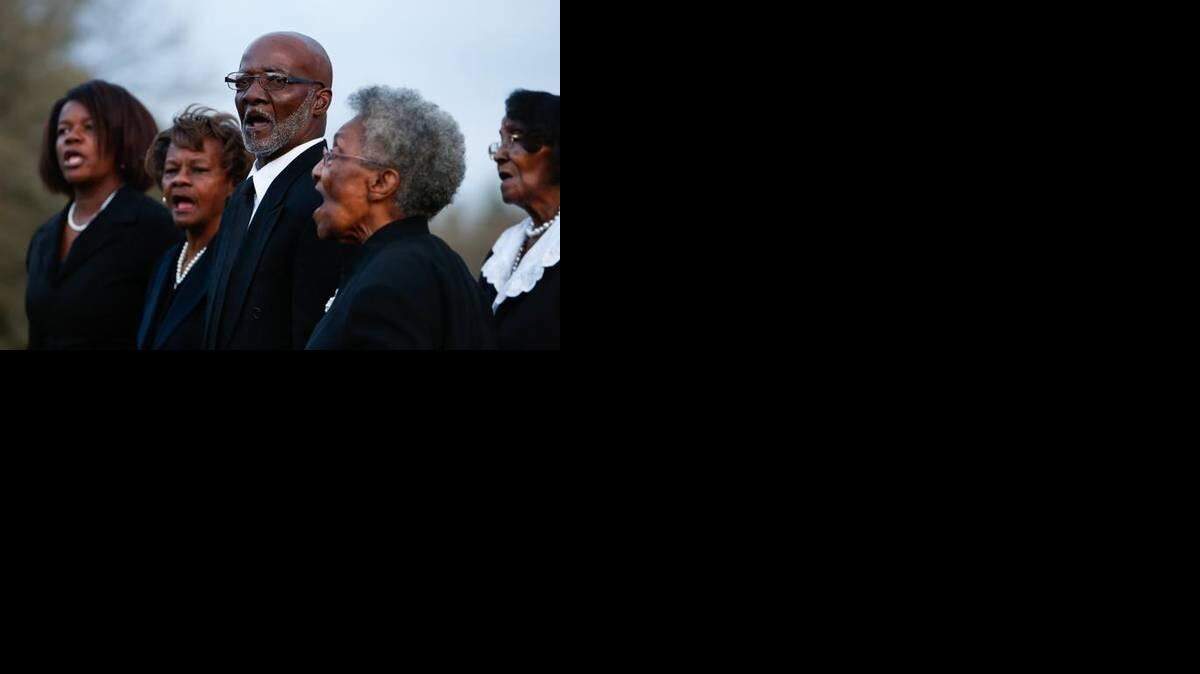
Cars stopped, and people stared. On Thursday night – Maundy Thursday, the date of Jesus’ last supper with his disciples – blacks and whites sat together outside the historic Allison Creek Presbyterian Church on busy S.C. 274.
“The expression of people who are driving by is the best part!” shouted the Rev. Sam McGregor, pastor at Allison Creek who waved at the stunned and shocked seeing unity in a world so often fractured and divided and broken by race and skin.
The blacks and whites at this evening service sat together.
They prayed together.
They sang together.
They held hands.
They broke bread together – even as it started to rain.
They did it all a hundred yards from where a white cemetery with names on the stones and a black cemetery with almost no names and stones sit next to each other. The graves and the dead date back to when whites owned blacks, and to when the hope of freedom filled the church too.
The cemetery is filled with blacks who lived and died without dignity, as property, with almost nothing except their descendants to show they had lived in America, a country founded on freedom.
But this service on a Thursday night showed that the past can be buried too.
McGregor held the service with pastors from three nearby black churches that formed after emancipation, with former slaves and freed men as members. The descendants of those in the churches in the late 1800s are buried in that graveyard.
The whites and blacks who gathered Thursday even collected Bibles, and money, to send to Liberia in Africa, where many descendants of those nameless slaves went to form a free nation. Many of those people at Christ Missionary Assembly in Liberia are descendants of those who toiled as slaves right here in York County.
McGregor told the crowd that the unity message and assistance to Liberia from this church not far from the Catawba Nuclear Station shows a power that is not local, but worldwide.
Freedom and equality came hard, and slow, in this neck of the woods. But it is now cherished by all colors, and whites and blacks sang loud and proud Thursday night under a sunset that turned to rain. But nothing washed away the shared joy.
The Rev. Thelma Gordon of Liberty Hill AME Zion Church brought many from her congregation. She spoke beautifully of how “we all need to do this more, be together in Christ and in life, than during Holy Week.”
Gordon challenged all to try harder, be better, love more.
The Rev. Carlton Brown of New Home AME Zion brought more people. He spoke of love, and Jesus, and he read from the Bible as white people read with him.
And the Rev. Ronnie Baxter of Union Baptist Church, just down the road a few miles, brought many more, to show any who wanted to look that the human spirit in Holy Week can aspire to the teachings of Jesus Christ, who preached that all men and women are equal in the eyes of God.
“Jesus is love,” Baxter said.
The pastors said the teachings of Jesus were without color, creed, country. Jesus loves all – period.
The pastors made it clear – Jesus died for all.
The bluegrass musicians from Allison Creek played, and the black people sang along. The praise dancers and gospel choirs from the black churches danced and sang, and the white people sang right along and clapped louder than anybody.
The moment, as the sun set, was magic.
The last words were spoken by Michael Scoggins, historian for the Museum of York County who knows this area as well as anybody. A historical marker, showing the importance of people of both colors, the churches of both colors, the area for both colors, stood just feet away.
The words about those slaves and freemen lost to anonymity and now claimed by both black and white rang out. The crowd said many of them, too.
The words are the reason for churches, and fellowship, that after so much hate and slavery and awful acts bring love and the possibility of unity in an America where race threatens to tear it apart every day of every year.
But not at this spot, where blacks and whites held hands.
“Lord God, maker of heaven and earth, we pray that this graveyard continues to create and sustain new relationships. ... We lift up the names and faces of people we do not know who are buried here but who toiled on this earth against their free will,” Scoggins said.
“We commit ourselves to building a better and more just society. ...This marker represents the cornerstone which is found in Jesus Christ.”
The rain then fell in sheets.
Many people, before they rushed for cover, held their hands out to the sky and pushed their faces toward heaven and let the rain wash away the past.
Andrew Dys • 803-329-4065 • adys@heraldonline.com
This story was originally published April 5, 2015 at 6:41 PM with the headline "Holy Week unites York County white, black churches."