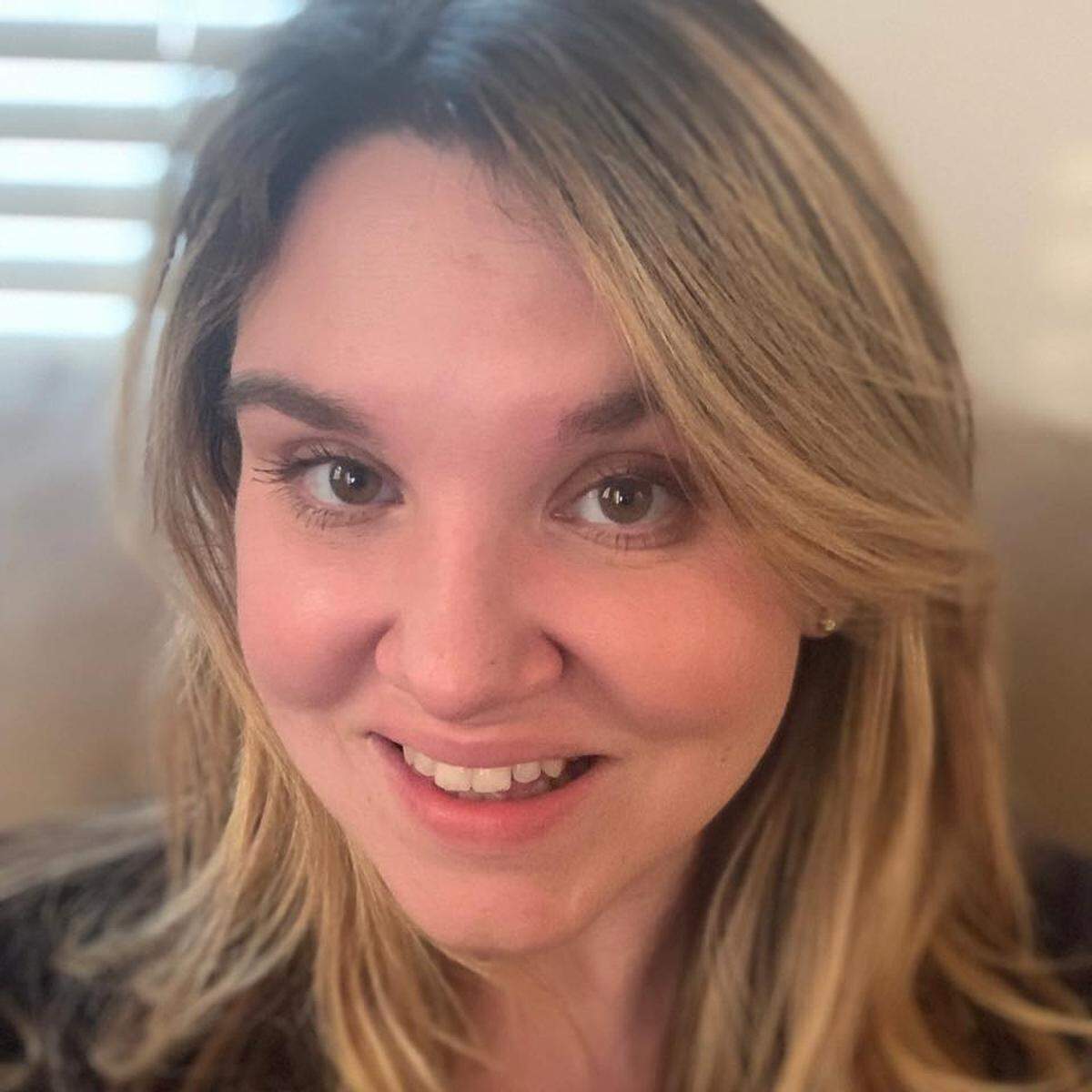
SC’s first female sheriff has ambitious plans and vocal critics. She won’t back down.
Kristin Graziano sank into the white leather sectional in the middle of her living room. It was a Friday afternoon, two weeks and three days after winning her race for Charleston County Sheriff.
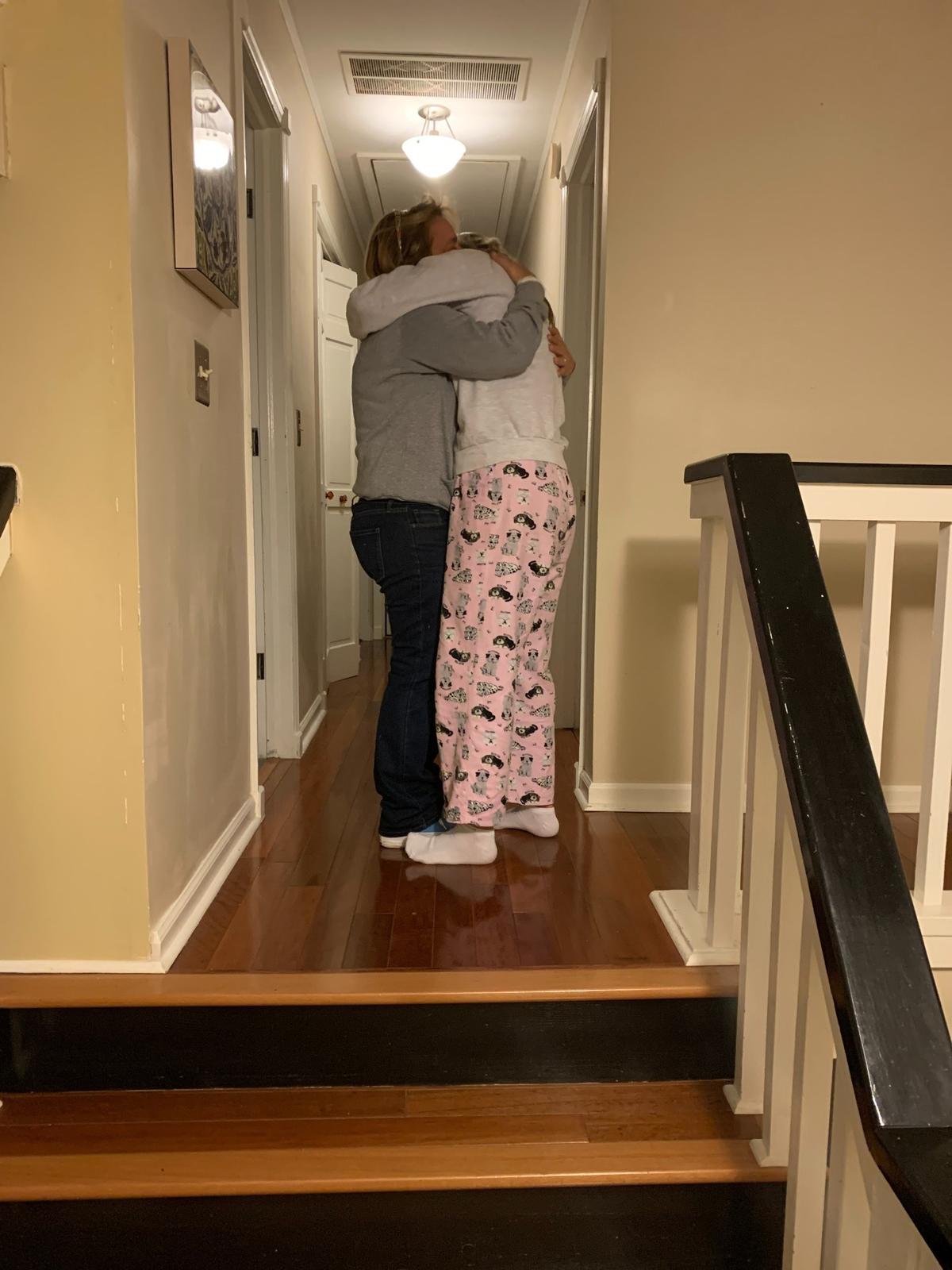
On election night, at the top of the stairs, Graziano had hugged her wife in a tight embrace, both of them acknowledging the historic nature of her win — becoming the first woman and first openly gay person elected to a sheriff’s office in South Carolina — without saying a word. Now, as the sun began to set, Graziano checked her voicemail and sighed.
It was another reporter calling for comment about the email.
For hours, Graziano had been fielding questions about the biting missive sent by Assistant Sheriff Mitch Lucas. The 530-word memo had been sent to the entire Charleston County Sheriff’s Office. It questioned Graziano’s plans for reform, her communication with deputies and her law enforcement experience.
“On a daily basis I hear questions about what you are going to do when you are sworn in,” Lucas said, outlining rumors he had heard.
He claimed deputies worried she would relinquish control of the jail, stop construction on the new juvenile detention center and disband specialized units.
Lucas said the sheriff’s office deserves “to have a sheriff who at least tries to be a good sheriff. The jury will be out for a while on whether you ever actually become a good sheriff.”
He bolded those last three words — “a good sheriff” — for emphasis and said her election had moved up his plans to retire in 2021.
Graziano wrote back: “Why wait?”
Was this a sign of trouble? Had Graziano’s campaign for sweeping reform already created doubts in the department about her ability to lead?
Graziano, 53, refused to give the email any power. She dismissed it. In an extensive interview with The State newspaper, she called it “bulls---” and “noise.” In her written reply to Lucas and members of the sheriff’s office, Graziano called the allegations a “condescending and truthless tirade.”
And if she were a man, Graziano said while sitting in her living room, none of this would be happening.
“This is a male-dominated profession, always has been. For some reason, our opinion and our point of view are seen as less valid than our male counterparts. That email Mitch Lucas sent out was a classic example. This is what we’ve been enduring for years,” Graziano said.
No more, she promised.
Graziano, who ran as a Democrat, will usher in leadership change at one of the largest law enforcement agencies in the state for the first time in 32 years. She hopes to transform it into a more transparent and accessible agency.
It will also be the first transfer of power at the Charleston County’s Sheriff’s Office in more than a generation, as Al Cannon, a figure synonymous with the office itself, hands over the roughly $80 million enterprise to Graziano.
“They are not going to tear my department — my agency — apart. I’m not going to allow that to happen,” Graziano said of her detractors.
She waved her hand as if shooing away a fly. “I’m almost Teflon these days. I’m so hardened by it and so used to it,” she said.
Then, for an instant, she softened.
“But I can’t even enjoy the moment,” Graziano said, “and that’s the sad part.”
Running on her own terms
Two years ago, after witnessing the historic wave of Democratic women elected to Congress, Graziano began to envision herself one day running for sheriff.
For years, Graziano had joked with her fellow deputies that when she was sheriff things would be different. Suddenly, the idea no longer seemed funny. It seemed possible.
Not that Graziano believed in the word “impossible.”
When her little sister was kidnapped while walking home from a babysitting job in 1979, Graziano ran out of her family’s cottage in Virginia and jumped into her 14-foot jon boat.
She thought she could find her. She believed she could overpower the waves with a 7.5-horsepower Ted Williams motor. But the waves beat against her, obliterating the hope that she could single-handedly rescue her sister.
Graziano was 13. She never made it off the beach.
She turned back home, where waiting felt like agony.
Two Charlottesville police officers found her sister alive five days later near a park and brought her home. After that, Graziano said her family was never the same. Something had changed in her, too.
“I said I would never let anybody, any family, go through this again. That was the moment I knew I had to pursue whatever that calling was that would put me on that path,” she said.
In 1988, she joined the Charlottesville Police Department. The two officers who saved her sister would one day serve as Graziano’s partners on the force.
In 2002, she moved to Charleston to take a job with the Charleston County Sheriff’s Office, where she most recently worked on the Special Weapons and Tactics (SWAT) team.
Some of her past assignments with the agency include serving as a school resource officer, providing courtroom security, serving on an anti-terrorism task force and working on marine patrol.
This year, Graziano was one of five women who ran for sheriff in South Carolina.
Jarrod Bruder, the executive director of the South Carolina Sheriff’s Association, said he could not recall a time when more women had run for county sheriff in the state.
“Over the years, there has been a push to get more minorities, in general, into the law enforcement profession so we can be more reflective of the communities we serve,” Bruder said. “And I’m sure there are more females interested in running for sheriff.”
The women who ran for the top law job this year came from disparate parts of the state. Though each woman had her own distinct platform, there were similarities among their messages, such as a renewed focus on communication and a commitment to building trust.
Jody Lynch, a Democrat, called for transparency and accountability in her Florence County campaign. Amanda Tinsley, a Republican in Oconee County, pledged to focus her message on “people and purpose.”
Brenda Carpenter, a Republican who ran for sheriff in Edgefield County, her hometown, said she would demand that officers be respectful, dedicated and trustworthy.
Yet, those three women saw their efforts end in June when they did not secure enough votes to win their party’s nomination in the primaries.
Only Graziano and Alyssa Bodison, a Colleton County Democrat and the only Black woman who ran for sheriff in the state this year, took their message all the way to the general election.
Graziano emerged the lone victor.
‘I wanted to be a part of that’
Graziano defeated longtime Sheriff Al Cannon, the man responsible for modernizing the Charleston County Sheriff’s Office into the agency it is today. During the campaign, Cannon touted his experience as “proven leadership for uncertain times.” Graziano focused her message on what she thought the agency could become.
Her vision includes a slew of reforms at the sheriff’s office, such as diversifying the agency by race and gender, as well as establishing an independent community advisory board that would meet regularly with the sheriff’s office to review data, inspect the jail conditions and make recommendations about how law enforcement responds to incidents.
Graziano has called for a racial bias audit and a financial audit of the law enforcement agency. When the racial bias audit is complete, Graziano said she wants to establish a “truth and reconciliation council” to work through the results with the community.
She has also pledged to end Charleston County’s participation in a federal immigration enforcement program with Immigration and Customs Enforcement (ICE). Known as 287(g), the program allows county sheriffs to help federal authorities deport immigrants living in the United States without authorization.
Though she had never run for public office, Graziano outraised and outspent Cannon. Pre-election financial reports show Cannon raised $65,539 for his reelection bid, while Graziano took in $79,304. Two sheriff’s deputies gave to her campaign.
Master Deputy Rickie Biggs, a school resource officer at Murray-LaSaine Montessori School, donated $187.50 to Graziano’s campaign.
In December 2018, Biggs sued the Charleston County Sheriff’s Office on allegations of workplace sexual harassment. The case is still in court.
“I ended up taking a year and a half off, and I didn’t plan on coming back to law enforcement, but Kristin called me,” Biggs said. “She told me she was running and all the changes she was wanting to make, and how she had heard what happened to me. She called it unacceptable. I wanted to be a part of that.”
Biggs also said she would have supported Graziano if she were a man.
In the Charleston County Sheriff’s Office, women are somewhat hard to find.
According to figures provided by the agency, just 47 of 304 sworn deputies are women. At the detention center, the figure is higher, with 131 female detention officers out of 365 total detention officers.
Of the 943 people employed by the agency, including civilian positions, women account for 34% of the workforce.
Biggs, 35, began her law enforcement career in 2012 as a detention officer. She became a patrol deputy after graduating top of her class at the South Carolina Criminal Justice Academy.
Biggs, who returned to the sheriff’s office earlier this year, said she has the “utmost respect” for Cannon. “But the times are changing, and we need someone who is going to change with the times. We deserve that as police officers,” Biggs said.
Voters agreed. Official results from the state election commission show Graziano received 51.6% of the vote to Cannon’s 48.3%.
And in the final stretch of her campaign, Graziano literally ran.
She ran 1 mile each day in a different part of Charleston County until she had logged 26.2 miles, the distance of a marathon race. On the morning of Election Day, Graziano ran one extra mile at 6:30 a.m. and then sprinted the final two-tenths of a mile to her polling place in West Ashley.
She did so while wearing pearls and holding a figurine of the late U.S. Supreme Court Justice Ruth Bader Ginsburg.
“This was the biggest risk I had ever taken in my life,” Graziano said.
Former Charleston County Democratic Party Chairman Brady Quirk-Garvan said he had tried and failed to recruit at least five other candidates to challenge Cannon at the ballot box since 2016. None would do it.
“Some people end up in a fight not knowing that that’s where they will end up. She knew the moment she started thinking about this that (Sheriff Cannon) would come after her,” Quirk-Garvan said. “And that speaks to her tenacity.”
On the day Graziano was asked to turn in her badge, there was no turning back.
A question of fairness
It was Feb. 25, just after four o’clock in the afternoon, when Graziano received an urgent message telling her to go see the sheriff. She was off duty at the time and had just met with a captain, but she couldn’t disobey an order.
In her 18 years working at the Charleston County Sheriff’s Office, Graziano said she had never met with Cannon, but she sensed what was coming.
She phoned her attorneys and told them plainly, “It’s happening.” Then, she called her wife, Elizabeth. “When you leave, swing by and come get me,” Graziano said.
Her campaign website had gone live a few days before. By running for sheriff, she was running against her boss. It was an undertaking few had attempted.
Under South Carolina law, deputies serve at the pleasure of the sheriff. That legal framework gives sheriffs wide latitude in determining who they want working for them — and who they don’t.
“As a long as the sheriff is not firing or terminating someone for a discriminatory reason, he or she can largely do as they wish when it comes to their personnel,” said Bruder, the executive director of the state sheriff’s association.
For more than 45 minutes, Graziano waited. When she was called into Cannon’s office, she took a seat. The sheriff put a piece of paper down in front of her. She picked it up and began to read. Another deputy stood in the room to serve as a witness.
“Your campaign website claims you are ‘running in 2020 because it’s time for a change,’” the letter said, zeroing in on three words that appeared on Graziano’s website: transparency, accountability and fairness.
“By implication,” Cannon wrote, “you are stating that my policies are not fair or accountable. That statement alone undermines my programs and policies.”
Graziano was being put on unpaid administrative leave.
“You know,” Cannon told Graziano during this meeting, “people ask me, ‘When you die, what do you want on your tombstone?’”
Already, his name was ubiquitous in Charleston County. Cannon had been sheriff since 1988. He ran first as a Democrat, later as an independent and, since 1994, has identified as a Republican.
He never lost and was rarely challenged. Cannon ran unopposed in eight general elections. His last serious challenge was in 1996, when he faced three challengers in a Republican primary.
Before Graziano, Cannon also had a brief challenge in 2012, when one of his deputies ran against him after Cannon faced public scrutiny for slapping a handcuffed suspect after a 120 mph car chase. When Cannon was charged with misdemeanor third-degree assault and battery for it, he was fingerprinted and booked in the county jail that bears his name.
“I want people to say that he was a fair man,” Cannon said to Graziano.
Graziano looked at him and summoned the only words she could.
“Sheriff,” Graziano asked. “Do you think this is fair?”
Cannon did not waver, and Graziano was put on leave effective immediately. She turned in her badge, her guns and her patrol vehicle that day, but she said she did not give up on her commitment to public service.
Calls for change
In the weeks after his loss, Cannon said he has often reflected on the principle of fairness. Now 74, Cannon said he still hopes to be remembered as fair long after he leaves office in January.
“In that one word, it captures what I think law enforcement and what my personal values are,” Cannon said in an early December interview with The State. “If you look at Lady Justice holding the balance of those scales, what I see is the commitment to a fair system. I look at that fairness in terms of my responsibilities for my people, my responsibilities to my community, my responsibilities to this noble profession, and also to myself and my family.”
During his tenure, Cannon oversaw the merging of the Charleston County Police Department and the Charleston County Sheriff’s Office after voters overwhelmingly approved the idea in a 1990 referendum.
He also led Charleston County through some of its most challenging chapters: The devastation of Hurricane Hugo, the North Charleston police shooting death of Walter Scott on April 4, 2015 and, two months later, the June 17 massacre at Charleston’s Mother Emanuel AME Church.
.JPG "northcharleston shootin_2 (4).JPG")
Given his long-standing relationships within the community, Cannon said he did not think he was going to lose to Graziano. In his mind, Cannon said, he had already planned to continue working in the sheriff’s office for the next four years.
He also said he had a succession plan in mind, too, but declined to mention any officers by name who he had hoped would run for sheriff after he retired in 2024. The 2020 election results handed Cannon a different timeline and verdict.
“I say what’s on my mind, and I do not speak what I think people want to hear,” Cannon said. “Some of the positions that I took obviously have opposition. Immigration, for example, is probably one of the biggest examples. The ‘defund the police’ movement and changes in law enforcement that some are recommending is another.”
Cannon said he had been leading reforms rather than being reactionary. From 2014 to 2019, jail bookings had been cut in half and the inmate population had dropped by 20% percent. Under his leadership, he said, officers and deputies had been ordered to issue citations for low-level misdemeanors, like simple possession rather than putting people in jail.
“It’s not the kind of job where three to four issues should determine who’s elected. That’s not all there is. There’s a whole lot more beyond that that comes into play on a day-to-day basis,” Cannon said.
He also said he felt “betrayed” by the American Civil Liberties Union of South Carolina’s involvement in the race, noting that the group’s legal director had served on the Charleston County Criminal Justice Coordinating Council. He did not fill out the ACLU’s candidate questionnaire, which he described as being “grossly unfair.”
“It was almost drafted in such a way as to favor the views of my opponent,” he said.
Graziano’s vision aligned with many of the ACLU’s stated hopes for criminal justice reform in Charleston: To end the county’s involvement in the 287(g) program, to renew a focus on police accountability and to end the practice of over-policing. There were some areas where they disagreed, though.
Graziano said she will not commit to ending the use of tear gas. She also wants to keep deputies stationed in Charleston County public schools. Graziano, in the candidate questionnaire, said she would not ban consent-based searches of vehicles and civilians during routine stops.
The ACLU reached approximately 100,000 Charleston County voters through mailers, texts, phone calls, digital ads and radio ads. The organization spent around $350,000, which is three times the amount Cannon and Graziano spent on their campaigns, combined.
“Ever since the summer, Charleston has been a stronghold in South Carolina where people are demonstrating and demanding change,” said Ali Titus, a spokeswoman with the South Carolina chapter of the ACLU.
After the May 25 death of George Floyd, protesters around the nation took to the streets to demand justice in a massive wave of sustained protests not seen since the civil rights era. His death, which was captured on a cellphone video, showed a distressed Floyd handcuffed and pinned to the ground as a Minneapolis police officer pressed his knee into his neck.
The image of a white man pressing his knee into the neck of a Black man ignited a national reckoning over police brutality and systemic racism in America. Charleston joined in the protests and in its own cries for justice.
After peaceful demonstrations devolved into a riot in downtown Charleston on the weekend of May 30, Cannon held a press conference to make a statement.
He had watched the video of Floyd’s death, which he called “horrible.” Cannon said he was appalled by the actions taken by Minneapolis police officers and called their behavior “totally unacceptable police procedures.”
When Graziano saw the video of Floyd’s death, she threw up.
Bruder said he does not think the summer of protests is responsible for Graziano’s win, but he said the issues raised after the deaths of Floyd and of Breonna Taylor, in particular, got voters to take a closer look at what their law enforcement agencies were doing.
“If it did anything, it made them ask questions back home about some of those things that they saw,” Bruder said, citing practices like chokeholds and no-knock warrants. “In some cases, voters weren’t happy with the results. That led to some folks doing things they weren’t doing before. In some agencies, it’s led to leadership changes.”
In the months after the protests, Cannon doubled down on his pitch as a proven leader, while Graziano continued to call for reform.
Cannon called Graziano’s proposal to conduct a racial bias audit “a waste of money” that would create more problems. Graziano said audits are necessary to rebuild trust between law enforcement and Black and brown communities.
“Leadership fails to see that and fails to listen. We need to own our responsibilities,” Graziano said. “It wasn’t my knee on his neck, but it was what we represent. Until we start taking ownership of that in law enforcement, and start acknowledging that we play a part in this, we can’t fix it.”
And in a county where five years earlier a bystander had captured the shooting death of a Black man by a white North Charleston police officer — footage that disproved the initial incident report provided by authorities — Graziano’s message for change began to resonate.
Looking back, Cannon heard it, too.
As protesters marched in the streets in downtown Charleston this summer, Cannon said they chanted, “Hey hey, ho ho, Al Cannon has got to go!”
Changes ahead
When Cannon called to concede to Graziano, she missed it. She was out on a run. In the message, Cannon suggested they set up a time to talk.
“I’ll help you in any way I can,” Cannon promised in the voicemail.
Since that phone call, Graziano and Cannon have met with one another, but they describe the outcome of that conversation differently.
Graziano said their meeting consisted of him telling her how things needed to be, what she should and shouldn’t do, and that he warned her to be careful about her words. Cannon said she had asked him “very few” questions but had requested a list of assets at the Sheriff’s Office.
“We’ve done nothing to make it difficult,” Cannon said of the transition.
When asked about the email sent department-wide by his assistant sheriff Mitch Lucas, Cannon said it was something Graziano should have expected.
“It may not have been the best choice of words, but the fact is there is a great deal of uncertainty in the sheriff’s office right now, and people have come to me and the assistant sheriff with those concerns. To deny that that’s happening denies human nature,” Cannon said.
He continued, “If she didn’t expect that, she didn’t give this a lot of thought. That’s not being ugly to her, that’s being truthful.”
Graziano said she has also been meeting with deputies to address their concerns directly during this transition. She established a three-member transition team, which is being led by three lieutenants in the sheriff’s office. A community advisory team is also underway.
Already, Graziano is facing choices about what to prioritize and how she wants to communicate with staff at the agency she will soon lead.
In a meeting with deputies the week after her election, Graziano was asked if she really believed there was systemic racism within the agency. Graziano responded by saying that she knows there is and said it is at the highest ranks.
When Graziano requested a transition budget from Charleston County Council that also included funding for a racial bias audit, she said it was rejected.
“We’ll do it, but it’s just not going to be done at the speed I wanted. I’ll figure it out and how to accomplish that,” Graziano said of the audit. “I have a tremendous amount of support from around the country — not Charleston, not South Carolina — but around the country to see that it gets done here.”
Still, Graziano admits she is concerned about leading the agency through its first transfer of power in decades. She’s asking her transition team and staff to be patient and give her a chance.
When Cannon asked her to consider how she wanted to be remembered on the day he put her on administrative leave, Graziano said she gave it thought.
“I want people to say that she left this world a better place than she found it. That’s all I want,” Graziano said. “That’s all I care about, and I think that’s the distinct difference between us: The idea of ‘I want a legacy’ versus ‘I want to be somebody that cared.’”
Answering the call
When Graziano called Sheriff Garry McFadden to ask for advice on Friday, Nov. 13, he told her no need to talk. He could be in Charleston by Tuesday.
Two years ago, McFadden was elected sheriff of Mecklenburg County, one of North Carolina’s largest counties that is also home to Charlotte. He said he knows the challenges that await Graziano.
He was a history-maker, too. When voters elected Black sheriffs in eight of North Carolina’s counties, McFadden was one of them. They objected to hardline immigration policies. Together, they were called “the magnificent eight.”
“She’s going to go through a lot of what we went through,” McFadden said in an interview with The State. “We supported each other. We had each other, but I don’t know if sheriffs here are going to support her like that. But I sure hope they will and, if they don’t, we will.”
McFadden was born in Sumter, S.C., but grew up in rural Elliott, S.C., population 220. He worries that sheriffs in the Palmetto State will chastise Graziano for her sexuality, but he said he’s confident that she will not be distracted by those who seek to tear her down.
“She’s a little bit mean, which is scary,” McFadden said, laughing, “but she is going to be good. You talk about out of the box? That’s her, and that’s what I love about her.”
During his visit to Charleston, the two of them went to one of the juvenile pods in the county jail. When Graziano walked in, McFadden said, he knew the kind of leader she would be. He said they cheered for her when the door opened.
“She sat down with them, on their bunks, and asked them, ‘Why you here so long? And what have you been doing?’ Then, she did a card trick and she blew their minds,” McFadden said. “But for them to cheer, to say, ‘We love you, we support you, we got your back’? Well, that told me they wanted change, too.”
McFadden said he had followed Graziano’s campaign from afar. Like him, Graziano had pledged to end the county’s participation in a federal immigration enforcement program.
When he was elected in 2018, the first thing McFadden did on his first day in office was end the 287(g) program that allowed ICE to operate within the Mecklenburg County Jail. He said he believes that the program erodes trust in communities, especially Latinx and hispanic communities.
“She is what Charleston County needs because Charleston County says they need her,” McFadden said. “She’s just answering the call.”
For now, Graziano is diving into the work she can do immediately. The sheriff’s office approved her request for a project officer, a position that can do things like research model policies on various issues.
She’s meeting with community members, reaching out to deputies to answer questions, hopping on Zoom calls, working with her transition team and preparing for her first day next month.
Graziano wants to keep her swearing-in ceremony small. She’s asked to have no more than 20 people inside the historic Charleston County Courthouse when she takes the oath of office at 10 a.m. Jan. 4.
“I’m not a politician, but I’m in a political role,” Graziano said. “I know I have political capital, and I intend to spend it wisely to help women and minorities and other groups of people that have been oppressed for far too long.”
Asked if she identified with the Biblical story of David and Goliath, Graziano smiled.
In the Old Testament tale, David, a young shepherd, defeats Goliath, a staggering, mighty warrior.
Graziano, a 5-foot, 2-inch woman with dark blond hair, crossed her legs and leaned forward on her white sectional.
“I’m Goliath,” Graziano said.
This story was originally published December 8, 2020 at 5:00 AM.