
Columbia couple did ‘everything’ to avoid coronavirus. They died just hours apart
When the coronavirus outbreak first hit, Arline and Gerald Polinsky took every precaution.
The retirement community where the couple lived in Hollywood, Florida, after leaving Columbia went into a lockdown. Visitors were kept away. Dining services were closed. The only people they saw were caregivers and staff at the retirement home.
Still, the virus found a way to reach them. First, 89-year-old “Jerry” was diagnosed with an infection. Later, 86-year-old Arline was found to have coronavirus as well. Within days, the couple were moved into the same hospital room and placed on oxygen. They held hands and waved at family members through an iPad.
On the night of April 13-14, the pair passed away just hours apart.
“They did everything they should have done,” said daughter Joanna Berens, who lived nearby in Hollywood. “And this still happened.”
The Polinskys had lived in Florida for the last six years. But for 45 years before that, they were staples of Columbia’s Jewish community. The family moved from Iowa in 1968, when the St. Louis-born Gerald became a history professor at Voorhees College in Denmark. He later moved to Morris College in Sumter, and later in life, worked as a consultant for historically black colleges across the South.
But Arline insisted the family live in Columbia while Gerald commuted to work, marked as they were by Gerald’s last job in a small college town where there were only three Jewish families. Years later, Berens still remembered driving an hour so they could attend the closest Iowa temple.
“Mommy was from Boston and dad was from St. Louis, so they wanted to be in a city with some culture and a Jewish community,” said daughter Nancy Johnson, who was 10 when she moved to South Carolina with her parents and sister.
Johnson’s early impressions of the Palmetto State had a lasting impact. “I don’t think there’s anything more beautiful than South Carolina in the first week in April. We fell in love with South Carolina,” she said.
While Gerald built a career, Arline threw herself into her new home, making friends at the Tree of Life Congregation and promoting the arts. In the late 1970s, she organized Columbia’s first designer showhouse as a fundraiser for the Columbia Symphony Orchestra, with each room of the large Heathwood home displaying a different designer. A teenaged Berens served as a docent, and Johnson credits its dining room design with inspiring the navy-blue space in her own home.
“She was always quick on the go, ready, willing and able,” friend Susan Lourie remembers of Arline, who would go on to earn a design degree and become a real estate agent. “She was a beautiful lady, inside and out.”
The couple became charter members of the Jewish Historical Society of S.C., and Arline served on the organizing committee that set up the EdVenture Children’s Museum. In 2000, she founded the Jewish Film Festival that still plays annually at the Nickelodeon Theatre, one of the Polinskys’ favorite venues for their frequent dinner-and-a-movie dates.
“She really taught me how to make an event work,” said Larry Hembree, director of the Nickelodeon at the time. “Part of the festival is a brunch, and she made a big deal out of doing the brunch right. The salmon had to be from somewhere (special). The flowers had to be perfect. She knew how small details matter, and she surrounded herself with people who knew what they were doing.”
Arline was so successful at somehow tracking down films from smaller distributors, Hembree said he would get calls from bigger festivals to ask about their programming.
“They would say, ‘how is Columbia pulling this off? Are there any Jewish people there?’” Hembree said.
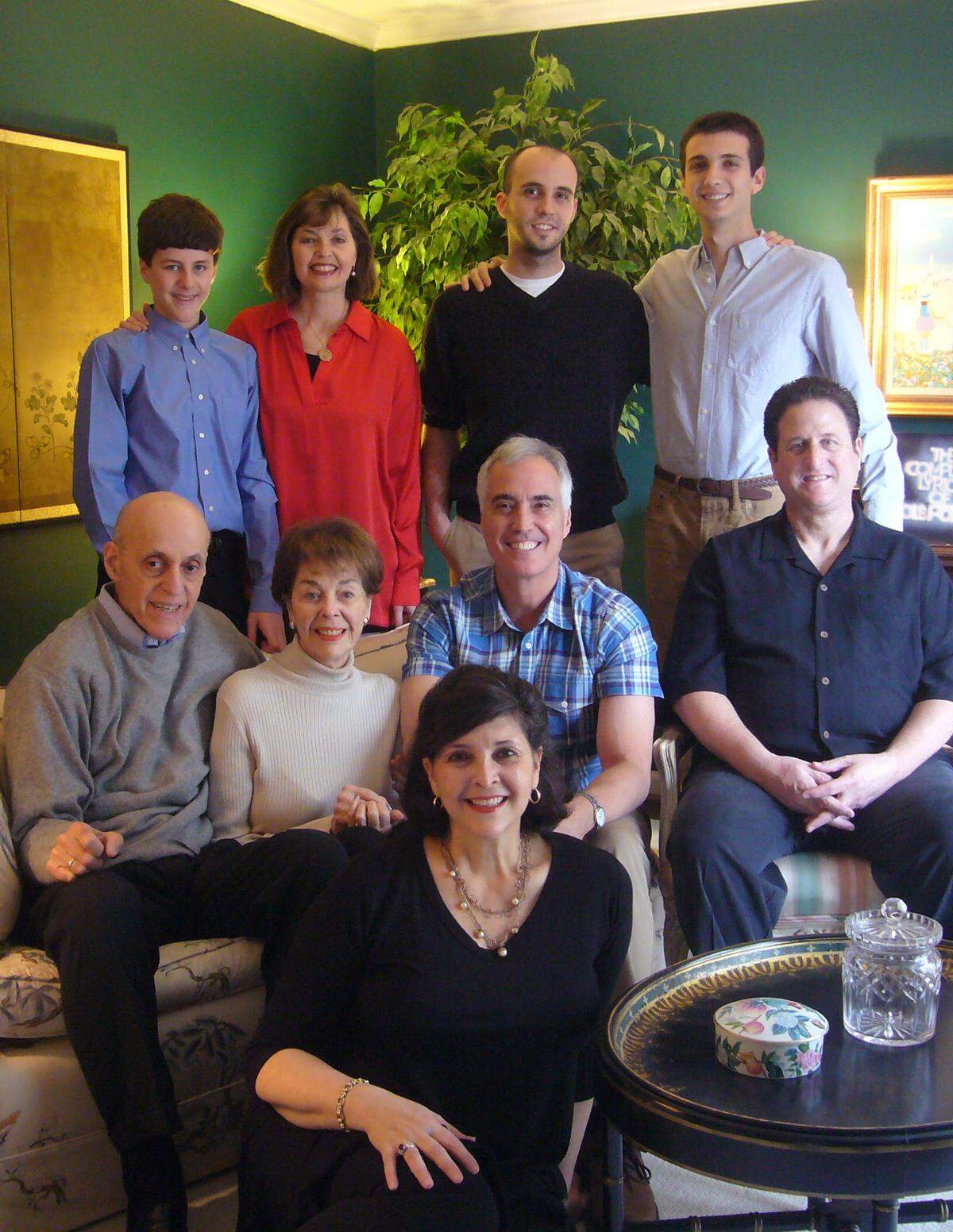
The Polinskys became some of Hembree’s most dependable customers, showing up for a show once a week, with Gerald carrying a cushion for Arline’s seat.
“She and her husband were both the definition of elegance and sophistication,” he said. “I like to talk, but I would just shut up with them, because they could talk about anything.”
Cydney Berry and her husband were regular movie guests of the Polinskys, which she remembers often came with Gerald’s commentary.
“He would narrate the whole movie,” Berry said, “as if Arline couldn’t follow along.”
But that was par for the course when dealing with the talkative professor.
“He had a knowledge of everything,” Berry said. “You could ask him a question, and he’d take 30 minutes to give the answer. I think that’s just how he saw things as a teacher.”
Despite her activities in Columbia, Arline may have received even more fame in Johnson’s adopted home town of Pittsburgh, which Arline visited so frequently after her grandchildren were born that friends there were surprised to learn she still lived in South Carolina.
Johnson invited her on a cooking show she hosted on local public TV station WQED. Arline showed viewers how to make her famous cream cheese pound cake. The show was both a Mother’s Day special and an extra-long telethon fundraiser for the station. The show was later divided into 30-minute episodes that were regularly rebroadcast for years, transforming Arline into “the pound cake lady” for public TV viewers in western Pennsylvania.
Her pound cake recipe, long a family favorite, also made it into a cookbook published as a companion to the WQED show, spreading her fame even further.
“Even today, when my husband and I are out and someone comes up to us, he’ll lean over and say, ‘this is gonna be about the pound cake,’” Johnson said.
While Gerald didn’t have such a high profile, he was well-known for his dry sense of humor and penchant for puns. Every year, he would write Arline a humorous Valentine’s card that would end up circulating widely among family and friends.
“When I became a college student, I saw my dad through a different lens,” Berens said. “I said, ‘Daddy, I want to see you in action.’”
So Berens attended a night class Gerald taught at the University of South Carolina, after he drove back home from his day job teaching at another school.
“I was wowed, because U.S. history is kind of dying as a subject... and here he was trying to bring it to life for a group of bored night students,” she said.

When his grandson Samuel entered the University of Florida, Gerald would tutor him online, quizzing him on the world map on the wall behind him.
“He would pick three countries and quiz him on every aspect of their currency, society, government structure,” Berens said.
Even after both daughters moved away, the family still came together in Columbia every Passover, starting what Berens called a very “non-Jewish, non-kosher” tradition of eating out at Little Pigs Barbecue.
“Only Southern Jews will understand,” Berens said.
The Polinskys didn’t lack for company when their children left home. They had a wide circle of friends, including Carol and Isadore Bernstein. Their daughter Michele was friends with the Polinskys’ children growing up. When she got engaged to her current husband, David Perrick, after her parents had died, it was their old friends the Polinskys who took the couple out to celebrate their engagement.
“Over and over again they made such an impact on people’s lives,” Michele Perrick said. “Everybody they interacted with felt important and loved.”
When the coronavirus reached south Florida this year, the Polinskys were no longer in the best of health. Arline had been diagnosed with Alzheimer’s. Gerald was receiving chemotherapy for the early stages of leukemia.
At the beginning of April, Gerald fell in the apartment he shared with Arline and couldn’t get up. He was taken to a hospital for routine treatment, and seemed no worse for wear from the fall. At admission, his temperature was normal, but when he was checked again before discharge, it had spiked to 102.
Doctors ordered a coronavirus test. It came back positive.
For a week, the daughters worried equally about their father, whose condition began to deteriorate in the hospital, and their mother, who had tested negative for coronavirus but was now quarantined alone at home without the man who served as her primary caregiver.
On April 11, nine days after Gerald was admitted to the hospital, Arline also suffered a fall and was taken in for treatment. Doctors found evidence of coronavirus in her lungs, and the two were reunited in the same hospital room. Frustrated by being unable to visit them, family members at least took comfort from the fact they were together.
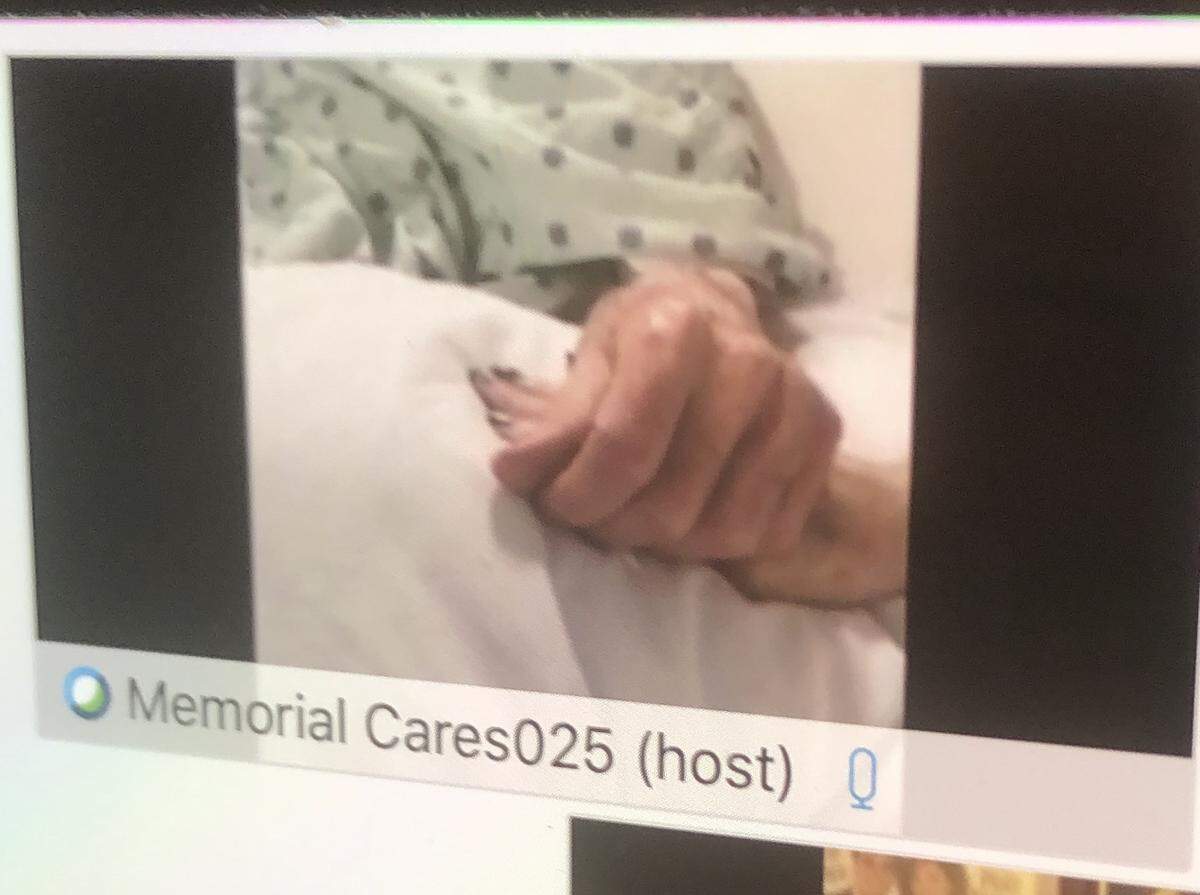
Around 10:30 the night of April 13, Gerald passed away, and the nurses came to take him out of the room. One nurse told Johnson that her mother was awake and was trying to say something.
“The only two words she could make out were ‘together’ and ‘Gerald.’”
Just four hours later, Arline died as well.
The impact of coronavirus on the Polinsky family didn’t stop with their parents’ deaths. The couple came home to Columbia for burial at the Hebrew Benevolent Society Cemetery. But unable to leave Florida because of the lockdown, Berens and her son delivered eulogies via video link to the funeral. When the family sat shiva, the traditional Jewish mourning ritual, they could only grieve with fellow mourners online.
Their old friend Berry said it was appropriate the couple passed during the season of Passover, commemorating the biblical plagues unleashed on Egypt.
“I call it a plague,” Berry said. “There were seven plagues, and this is the next one.”
While the family is unsure how Arline and Gerald contracted the virus, they hope their story highlights the dangers it poses to the most vulnerable members of society.
“Young people think they’re invincible, but we’re doing all this for the elderly,” Berens said. “We can’t let our guard down.”
Johnson said she’s heard that her parents were the first people many actually knew who died from coronavirus.
“I feel more connected to it somehow,” she said. “If sharing our story helps, if it makes it more real for people, I’m happy to keep telling it.”
This story was originally published May 4, 2020 at 5:00 AM.
.jpg)