South Carolina’s COVID-19 tests to nearly double under new DHEC plan by end of May
The Department of Health and Environmental Control says it will nearly double the amount of coronavirus tests being performed in South Carolina under a plan that focuses on checking for COVID-19 in nursing homes, minority communities and rural areas across the Palmetto State.
The agency says so far, slightly more than 1% of the state’s roughly 5.1 million residents — or about 68,000 people — have been tested in DHEC’s public lab and private labs combined.
DHEC’s plan is to increase testing to 2% of the state’s population in each of the next two months, officials said Wednesday. The agency will increase testing to 110,000 tests per month, or 220,000 in May and June combined.
“The goal for each month is 110,000 South Carolinians, which represents 2% of the population,’’ DHEC chief of staff Jennifer Read told The State. “As we participate in Accelerate SC and we start taking steps to open the state back up, it’s very important we hit that threshold of testing.’’
DHEC’s plan was released Wednesday as efforts to test more widely are ramping up statewide. The University of South Carolina announced that it had the capacity to test every student and faculty member who arrives back on campus this fall. Meanwhile, the Medical University of South Carolina has set up testing stations in key parts of the state.
Increased testing for the coronavirus will help determine how extensive and persistent the disease is as the state moves to open businesses and loosen restrictions prompted by the disease. More tests make it easier for infectious disease investigators, known as contact tracers, to track where the virus is being spread.
Since early March, about 300 people have died from the coronavirus and nearly 7,000 have been infected, but some areas of the state have had fewer testing efforts than others. DHEC’s testing plan will complement existing efforts by universities and healthcare providers, agency spokeswoman Laura Renwick said.
DHEC officials say the agency will target the central S.C. counties of Barnwell, Chester, Saluda, Fairfield, Clarendon and Lee for testing and help. Rural eastern Richland County also is included in the priority areas, according to DHEC. The announcement drew praise from legislators who have been pushing for more rural testing and testing for minority populations that are being affected disproportionately by the disease.
Testing sites, similar to one established in Darlington County this week, will be set up and anyone wanting a test — whether the person is sick or not — can get one, Read said. The rural testing effort announced by DHEC follows a recent story in The State that outlined the struggles rural communities are having with COVID-19.
High risk urban areas of Columbia, Charleston, Greenville and Myrtle Beach also will be targeted for more testing, Read and DHEC health division chief Joan Duwve said.
“We expect to encounter individuals who would not have been tested under the previous testing’’ program, Duwve said. “We are going to identify people who don’t have symptoms; we are going to identify people who have mild symptoms.’’
Part of the DHEC program also is to test //the roughly 40,000 residents and staff members inside nursing homes and long-term care facilities around the state, as those are places with people who are more vulnerable to having complications from COVID-19.
Getting more people tested requires more outreach and possibly a change in the messaging strategy said Thomas Tsai, assistant professor in the Department of Health Policy and Management at Harvard.
“We’ve been telling people to stay home with mild symptoms,” Tsai said. “We need to change that message and say ‘if you have any type of symptom, come and get tested.’ ”
A rural focus
DHEC will perform the testing effort in collaboration with local hospitals, the governor’s office, lawmakers and health care providers.
“This is a momentous goal, but it’s a very important goal,’’ agency director Rick Toomey said, noting that “DHEC is part of the solution, but we cannot do it by ourselves.’’
“It’s going to be a challenge,’’ Toomey said. “As we accelerate South Carolina and as we return to the new normal, however that is going to be defined, we and our partners will be expanding the testing.’’
DHEC’s announcement comes as other partnerships have launched testing sites in rural communities.
Prisma Heath and DHEC have partnered to offer free one-day testing in communities where people may have trouble coming to existing drive-thru testing locations.
The Medical University of South Carolina has started mobile testing sites area outside of Columbia and Sumter, with plans to add four more sites in rural areas around the state.
MUSC has done virtual screening with local specimen collection, “but you have to get to the people. For rural areas, (the) lack of internet, lack of transportation all are problematic. So the mobile testing sites are strategically being deployed,” said MUSC President David Cole.
“It’s a matter of getting to the people so the testing could occur,” Cole added.
Cole said the testing in the state has improved, but is not perfect.
“Diagnostic testing efforts have increased significantly in the last several weeks, across all dimensions, and will continue to improve as we move forward,” Cole said in an email. “As we work to expand this testing capability, we must also improve timely testing of at-risk populations and consistent reporting of COVID-19 positive tests across the state. This is going to require everyone — local leaders, business leaders, public health experts, state agency leaders, health system and hospital leaders — to find ways to think out of the box and work collaboratively to accomplish this.”
Duwve said the expanded testing in rural and under-served areas would include providing medical attention that people may not otherwise have. DHEC staff will help those who test positive find access to health care, Duwve said. An agency staff member will stay in touch with anyone infected to see if their conditions worsen, she said.
People in rural areas of the state sometimes struggle to have adequate access to health care, a challenge caused in part by hospital closures in some communities. Poor access to broadband also presents an obstacle to using telehealth to treat patients, a strategy used increasingly as doctors meet virtually with patients to limit the spread of the virus.
State Rep. Wendy Brawley, a Richland County Democrat who has called for an increase in testing rural areas, said DHEC is making the right call. People in rural areas want more access to testing, but have not been able to get it, she said.
Brawley said testing that started at an eastern Richland County park Wednesday drew an overwhelming response from people in the rural Hopkins area.
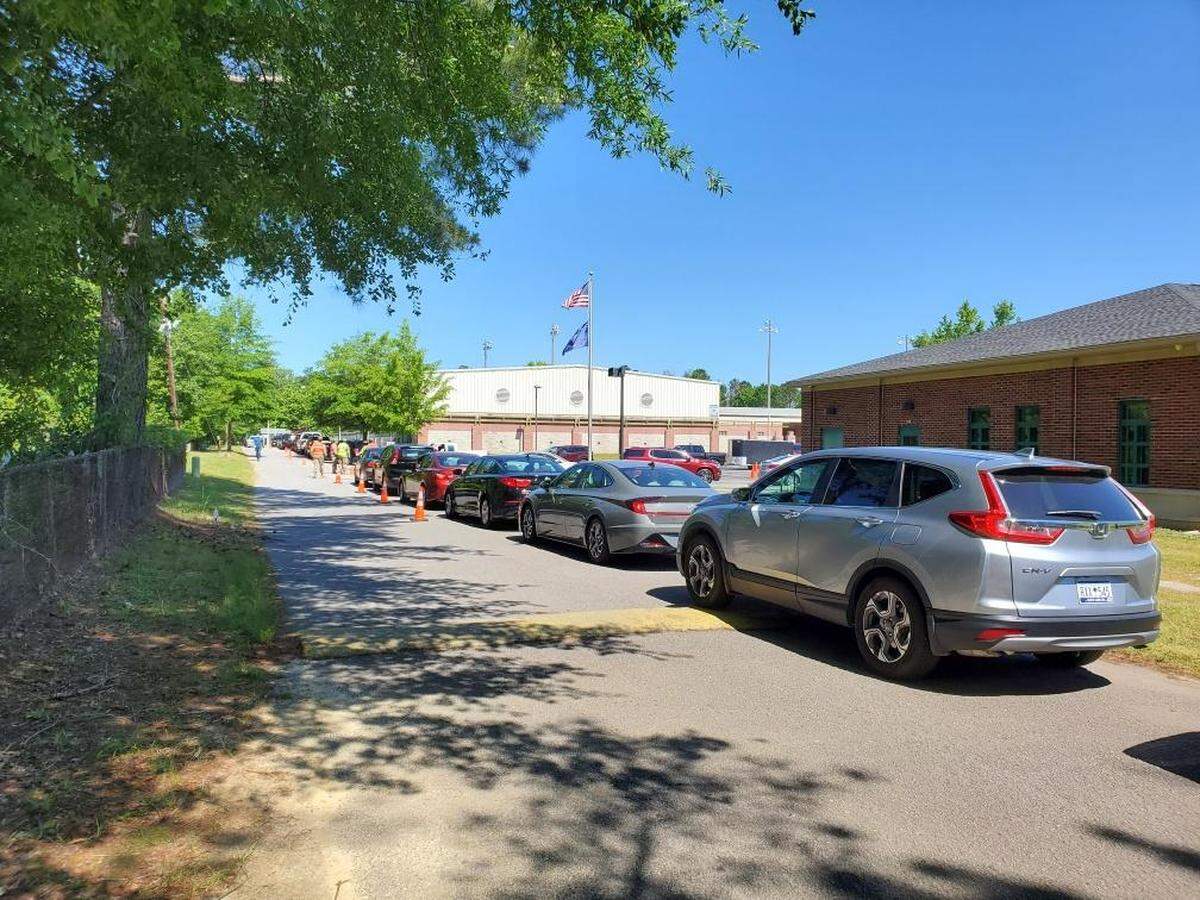
“Cars were snaked around the park, all the way down Lower Richland Boulevard,’’ she said. “They were waiting at 8 a.m. for testing that started at 10 (a.m.). So there is a great desire to get tested and the ability to have the tests delivered to them in their community.’’
Other metrics to watch
The testing targeted for low-income, rural areas comes as Gov. Henry McMaster looks to reopen the economy. He has lifted his ‘home or work’ order, allowed some businesses to reopen at reduced capacities, allowed outdoor dining at restaurants, and open public boat docks and beaches.
To ease restrictions, however, experts recommend more than strategic testing plans.
Contact tracing is key to tracking the spread of the virus and preventing outbreaks, experts say.
On Wednesday, DHEC’s Duwve said the agency has 230 contact tracers and plans to hire 770 more, bringing the total “army” or tracers to 1,000.
According to the Harvard Global Health Institute, the United States needs between 500,000 and 600,000 tests a day by mid-May, to have a more accurate picture of what’s happening with disease spread in the country and safely reopen the economy.
When the Health Institute takes into account population density, it estimates South Carolina needs about 1,600 tests performed per day. Over the last week, DHEC has reported between 2,000 and 3,500 tests per day.
Another key metric to look at is the percentage of tests that come back positive. A goal to strive for is a decrease in the percentage of tests coming back positive for COVID-19, Harvard’s Tsai said.
In South Carolina, nearly 10% of tests have come back positive, according to DHEC.
Tsai said the state should set goals to lower the positive rate.
He gave the example of getting it to 5% in two weeks, and then down to 2% two weeks after that.
“It’s hard work, but possible,” Tsai said.
This story was originally published May 6, 2020 at 2:04 PM.