
Friend. Father. Confidant. Remembering Lexington County man who died from COVID-19
A dozen years ago, Frank Hester was praying for friendship. A different kind of friendship. He was looking for an accountability partner, a mentor, someone who could listen without judgment, who could speak truth to him. Working in a ministry has its challenges, and sometimes it’s difficult to find someone in which to truly confide.
One day, his phone rang. The voice on the other line belonged to Randy Spires, a man Hester had run into a few times around Lexington County, where Hester works as the area director for the Fellowship of Christian Athletes, an organization that ministers to local coaches and athletes.
“It really was an answer to prayer,” Hester said of the call. “Randy said, ‘The Lord put you on my heart. I wanted to call and check on you and see how you were.’ Randy was really, honestly, a gift from God in my life. It was an answer to prayer — that phone call. I told him, ‘Randy, you’re not going to believe this, but I’ve been praying for somebody.’”
In that moment, a deep, meaningful friendship was born. Hester found a mentor in Spires. A big brother. A confidant.
Then again, that’s who Spires was to nearly everyone.
Born and raised in West Columbia, Spires liked to describe himself as “a bricklayer’s son,” a description that sells his impact short. He went to Lexington High School, graduated from Midlands Technical College and spent most of his life working as a salesman for Southeastern Concrete Products in Cayce. He was a shrewd businessman who valued his Christian faith, family and friends above all else.
Beloved in Lexington County
Spires had hundreds of friends in Lexington County. Maybe thousands. He was the rare kind of person who had the charisma to befriend pastors, judges, football coaches and politicians. He was also a friend to everyday people who were struggling in life and needed help. He had a servant’s heart and a natural love for people.
“I don’t know of anybody that didn’t like Randy Spires,” said George Nicholson, a retired attorney and a longtime friend of Spires. “Hold on a second, let me change that: I never knew of anybody who didn’t love Randy Spires.”
For years, Nicholson ate breakfast with Spires almost every morning, joining a couple of other friends at restaurants up and down Knox Abbott Drive. Nicholson used to watch in awe as Spires would walk into the restaurant and greet six or eight people by name. He’d chat up everyone, because he knew everyone. Spires relished those breakfasts and lunches with friends, and he’d routinely host fish fries at a building on his property. When he wasn’t out dining, Spires could be found in the stands at high school football games or Gamecocks basketball games. He and his wife, Karen, especially loved cheering on the South Carolina women’s basketball team.
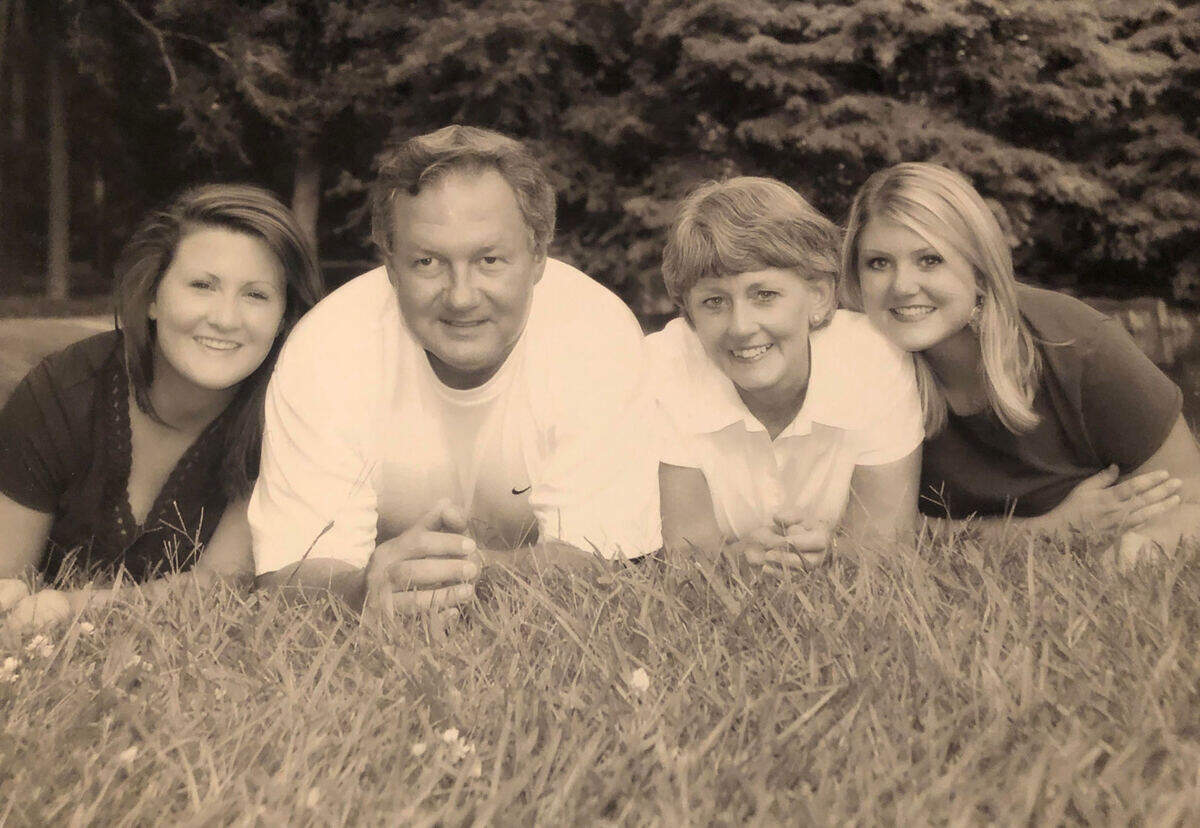
Spires married Karen in 1980, and the couple raised two daughters, Whitney and Meredith.
“We describe him as the ultimate provider as a dad and as a family man and fiercely protective of his family,” said Whitney Davis, the Spires’ oldest daughter. “He’d do anything for us. He’d go to bat for us.”
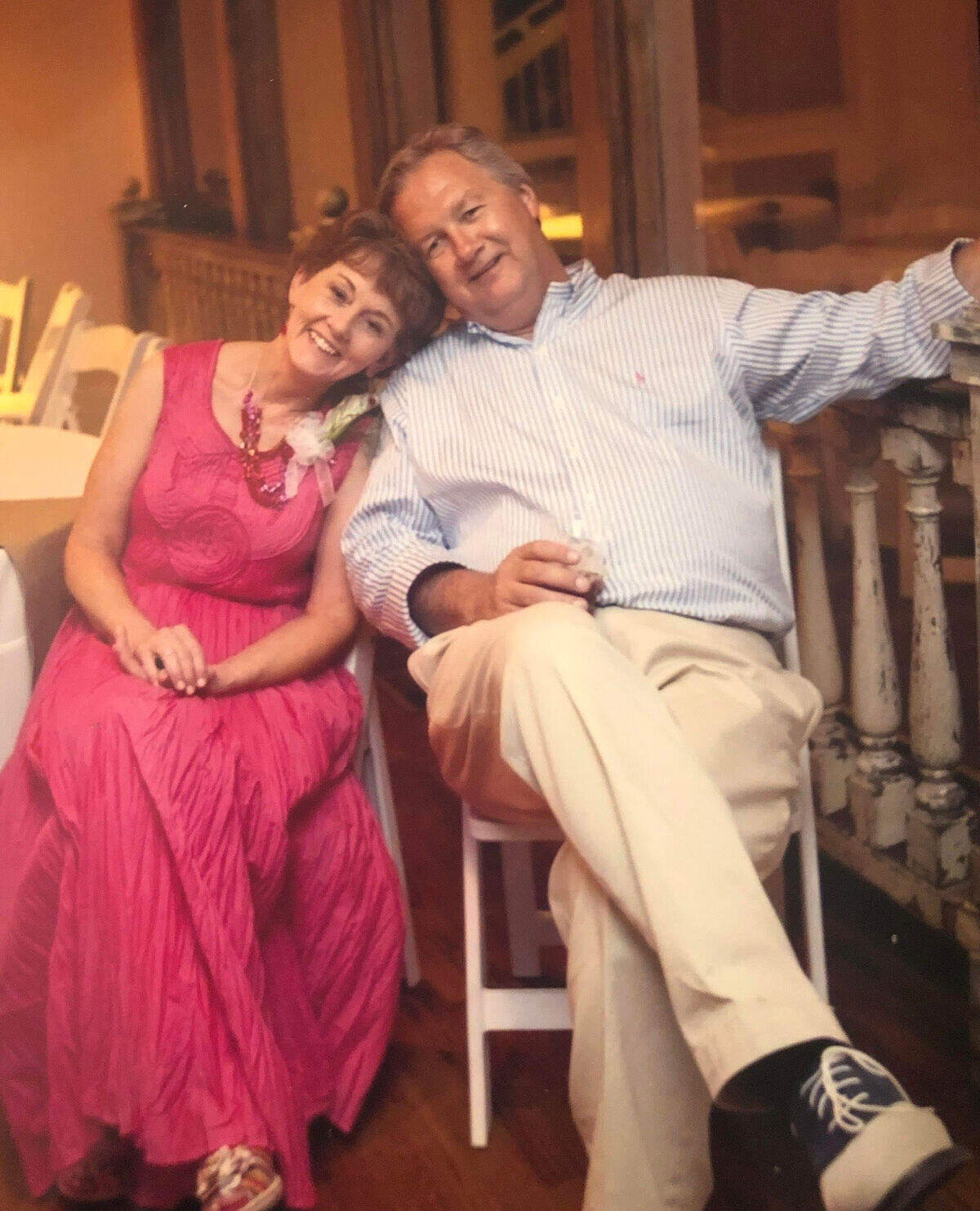
As much as Randy loved West Columbia, and as much as West Columbia loved him, his wife and daughters always came first. So when both Whitney and Meredith relocated to Oklahoma City with their husbands and children, he made the difficult decision to leave the only city he’d ever known. He retired from Southeastern Concrete Products in September of 2018, and moved with Karen to Oklahoma.
“That transition was hard for him, leaving family, leaving home, but the investment that he got to make in our kids, his grandkids, in the last year and a half, it’s just priceless to us now,” Davis said. “Even with the sacrifices and how hard it was for him to move, those are just precious memories that my kids have.”
For the last year and a half, Randy’s six grandchildren had their own personal Uber driver. He shuttled them back and forth to school and pool parties and wagon rides and treat them to afternoon trips to McDonald’s or Braum’s for ice cream.
Of course, he made his fair share of trips back to West Columbia, too. Every few weeks, he’d fly back just so he could shoot the bull with his friends again and see family. Nicholson usually was the one to pick him up from the airport.
“In fact, when he came here the last time, his purpose was to buy a lot,” Nicholson said. “He was going to move back.”
Nicholson last saw Randy in March. The plan was for him to stay in West Columbia for a week or two, but when the coronavirus crisis began to escalate nationally, Randy cut his trip short and flew back to Oklahoma.
By the end of the month, Randy was hospitalized with COVID-19.
The COVID-19 diagnosis
The entire family got sick.
Randy came down with a cough and fever on March 21, and within a day or two, Karen, Whitney, Meredith and the rest of the family started showing symptoms, too. The virus affected everyone in different ways. Davis said the virus felt worse than any flu she’s ever had, keeping her bedridden for days with aches and a fever.
But COVID hit Randy the hardest. At 63 years old, he had no pre-existing conditions and wasn’t immunocompromised, yet by March 28 he had become disoriented and weak enough to merit a trip to the emergency room.
Within three days, doctors at Mercy Hospital Oklahoma City moved Spires to the intensive care unit, and when his oxygenation dropped to dangerous levels, they placed him on a ventilator.
Randy spent 18 days on a ventilator as his family watched from afar, only able to see him through a live stream from an iPad in his room. Even though he was sedated, they’d send him songs and videos and messages from pastors. Friends in West Columbia did the same.
All the while, with the COVID-19 crisis still in its early stages, doctors scrambled to treat his symptoms.
“‘We just don’t know,’ we heard over and over and over. ‘We just don’t know,’” said Davis, a former nurse for 12 years. “What a time to go through for physicians and health care workers, doing everything they can and probably spending all of their downtime just searching for anything they can find to try that might be working somewhere else.”
Twice, Randy received convalescent plasma transfusions from recovered COVID-19 patients. And at first, it appeared as though those transfusions would work, as doctors were able to remove him from the ventilator and back to a regular hospital room.
But COVID-19 also attacked his immune system. Bone marrow suppression left him with very few white blood cells, limiting his ability to fight off the virus. Even 40 days after first expressing symptoms, he was still testing positive and his symptoms weren’t letting up. Before long, doctors moved Randy back to the ICU. On May 4, his body could fight no more.
He made people ‘feel safe’
The hospital staff allowed Whitney, Meredith and Karen to spend a couple of hours with Randy before he died, and they were able to share a few quality moments together as a family while he was still conscious — a blessing Whitney said she and her family are grateful for.
As would be expected for a man who had hundreds of friends, there’s been a steady outpouring of support and a constant exchange of stories and good memories over phone calls and texts.
“A couple of my friends wrote and said that ‘The times I was at your house playing while growing up, I always envisioned your dad being there and he was always happy, and he was always smiling, and I always felt safe there,’” Davis said. “And I’ve heard that word like two or three times from friends of mine, and I’m like, ‘Gosh, what a word.’ To make someone feel ‘safe.’”
Randy had that effect on people. For so many in West Columbia, Spires was a source of comfort, camaraderie and love. A mentor. A listener. A fast friend and a best friend. He would call just to let you know he cared, greeting everyone he talked to with his trademark, “Whadya say, buddy?”
“He had a joy and a peace about him that you could just tell something was different about him when you met him,” Hester said. “And that something different was that he was a child of the King. And he lived it out every day.
“His life mission was to help make other peoples’ lives better. And that could be as simple as a pat on the back or a warm hug or who knows how many people Randy helped financially through the years, whether through counseling or however he could help. He just kind of had that gift. When you met him, if you spent any time around him, you felt loved.”