
‘I can’t hug people.’ From visitations to meals, SC funeral rites still muted by COVID
Mother Laura Frances Washington Ashe had been called home, as they say.
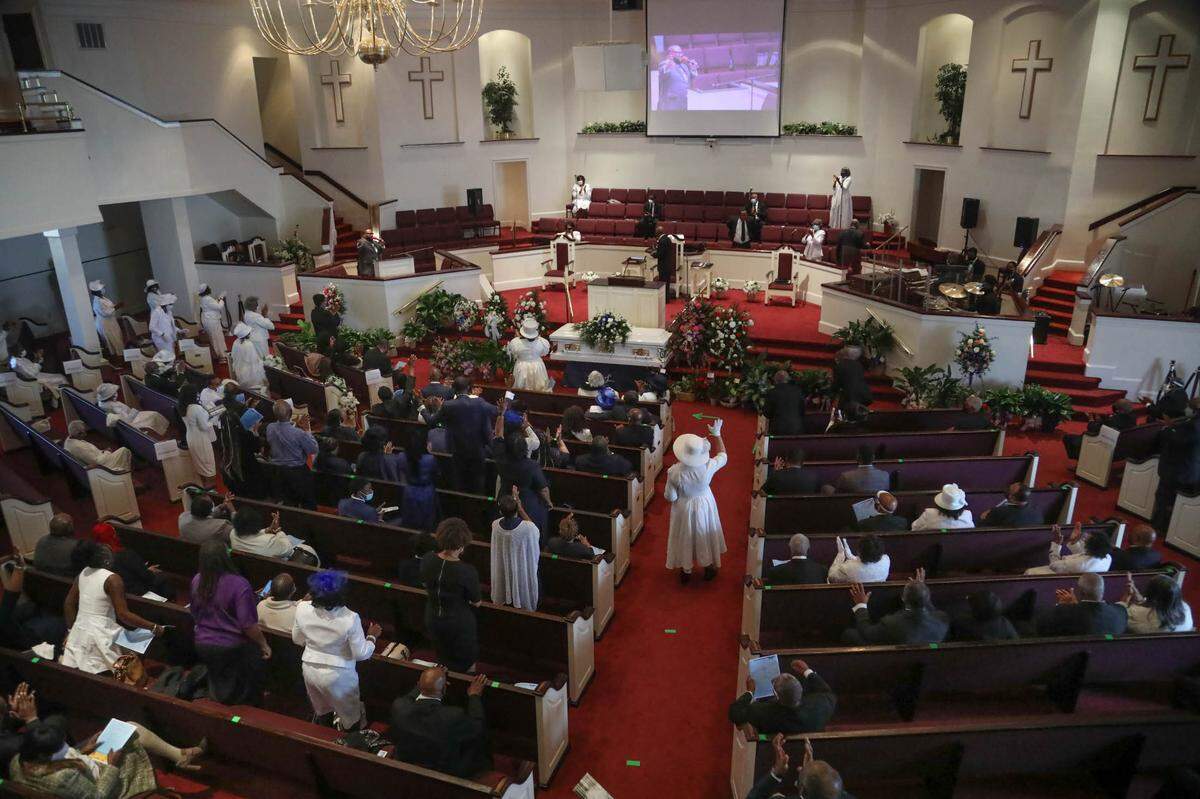
Sprays of white, pink and red flowers flanked her white casket and filled the space in front of the altar at the Progressive Church of Our Lord Jesus Christ in Columbia.
Ministers who Mother Ashe had worked with and friends she knew for decades spoke, as did one of her daughters, who recounted memories of all six children. In her 92 years, Ashe led an impactful life.
Under ordinary circumstances hundreds, if not a thousand mourners, would have attended her homegoing. Cousins and extended family and people whose lives she touched would have come from all over the country for what would feel like a family reunion. The family would have waited for them.
A funeral is a shared grief, an honor to a life well lived. A good send-off makes a restful spirit.
But this is COVID time. The Southern way of death bears little resemblance to what it has been for generations.
In the South, among Black and white families alike, funerals are a rite as deeply important as a baby’s birth and a couple’s marriage. The long-held belief is if you knew the deceased at all, you not only go to the funeral, you go to the gravesite and the reception.
Gayden Metcalfe and Charlotte Hayes wrote a book about the way Southerners say goodbye, “Being Dead Is No Excuse.” And while much of the book is funny, there is a serious undertone. There are rules, and mourners need fellowship. Without it, grieving is hard.
For a year now, and possibly for some time to come, “COVID has affected our entire business,” said Greg Jones, general manager of the Wood Mortuary in Greer.
Leevy’s Funeral Home
Chris Leevy Johnson has been in the mortuary business full-time for nearly 25 years, but he’s worked at his historic family business, Leevy’s Funeral Home, since he was 15.
Never in that time has he had to completely rethink his business as he has during the COVID-19 pandemic, fighting against an unseen virus that now, a year after it was first found in South Carolina, medical experts still don’t know everything about how to be safe around it.
Johnson, who contracted COVID last fall, said others who work for him have gotten it as well. He was out of work for two weeks with moderate symptoms.
And he got it even with the extreme safety measures the funeral home has put in place.
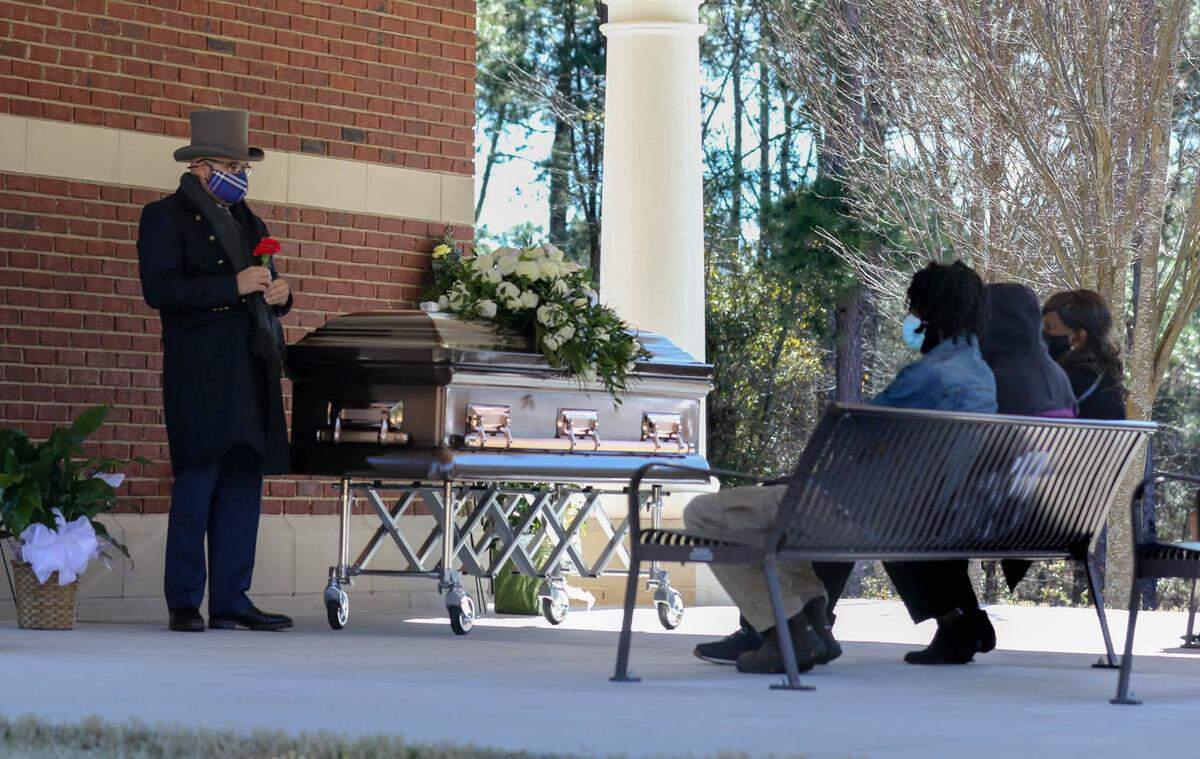
No longer is there open visitation. No setting up the house with chairs and funeral books and wreaths. No family cars.
No hugging. That’s the part that bothers him most.
“I can’t hug people I’ve known all my life and loved,” he said.
Johnson said many families have elected to have a graveside service only, something unthinkable pre-COVID. Very few are gathering in a church, and some pastors are not allowing funerals in their churches, many of which still are not having regular in-person services.
He thinks about recent funerals that were a shadow of what they would have been in ordinary times, such as Deacon Calvin “Chip” Jackson, a Richland County Council member. Probably 2,500 people would have attended Jackson’s funeral, Johnson estimated. Instead, people watched a livestream video on Facebook. The crush of funerals is so great, Leevy’s has two pages on Facebook where people can watch funerals online.
“He did not get the send-off he deserved,” Johnson said.
Johnson described his business as a sacred ministry.
Mourners have suffered from it. Where they would normally go to a home or church for a home-cooked meal provided by friends and fellow parishioners to honor and remember the person who died, now they and their family members go home to grieve alone.
“It’s very hurtful,” Johnson said.
In January — usually the worst month for deaths in any year, COVID or not — Leevy’s Funeral Home held 80 funerals.
“I felt like a zombie,” Johnson said.
Recently, he arranged the funeral for a man, and the man’s wife died the next day.
Johnson will not turn a family away.
In Black culture, funerals must be done well, or the spirit does not rest, Johnson said.
The Wood Mortuary
Jones, who runs Wood Mortuary in the small Upstate city of Greer, said he handles a COVID death at least weekly, and some weeks daily. Once, they had seven funerals in one day.
The pressure is immense, from safety to serving families properly to running a business with new and unexpected expenses such as personal protective equipment.
Employees wear protective gear from the hearse to wherever the body is — at home, a nursing home or hospital.
Jones said a year ago, when the pandemic began, he gathered his staff and brainstormed everything they needed to do.
“We had to figure this out on our own,” he said.
They stopped having families come into the office but at the same time had to make the families feel like nothing had changed. That hometown feel was developed 120 years ago by John D. Wood, and losing it was non-negotiable.
Generations of families have turned to Wood.
Jones said the funeral home suspended visitation, although people could come in and sign the guest book. Attendance at services was limited to 50 people in the chapel.
Many families decided to wait until the pandemic is over to have a formal service. After all, Jones said, “We all thought this was going to be over in two weeks.”
Others waited and then decided the wait was too long and went ahead with the service.
“We’re wondering about a wave of memorial services in the future,” he said.
The number of cremations, which once was not a consideration for most Southern families, has increased through the years, but COVID forced people to choose cremation even more.
Besides the size of services, there is the concern about keeping everything clean. Even with a limited number of people entering the mortuary, workers fog rooms every day with a disinfecting spray. They wipe all surfaces, including handrails and door knobs.
Jones has seen husbands and wives and multiple members of a single family die of COVID within a short period of time.
“Most people have been touched,” he said.
Livestreamed and distant
At Mother Ashe’s funeral at the end of February, much of what could be considered traditional happened. Gospel music rang through the church. Pastors she had helped in the beginning of their ministry preached rousing, fiery messages. She wore a fine hat and a lovely dress, with her hair and makeup done just so.
Bishop Theodore Jenkins reminded people that Ashe had sacrificed much in service of her Lord.
I.S. Leevy Johnson, Chris Leevy Johnson’s father who served for 10 years in the state House of Representatives, said, “I am who I am today because Mother Ashe loved me.”
Columbia Fire Chief Aubrey Jenkins presented the family with a proclamation naming that day Laura Ashe Day in Columbia.
Her daughter Frances Ashe-Goins told of her mother’s love to shop, especially at Dillard’s and Belk, and times the family spent on Sandy Island, where Ashe spent part of her childhood.
What was markedly different were the cameras recording the service. The video was streamed on Facebook, where more than 300 people watched. Many commented on Ashe’s life and sent messages in the chat room to family members.
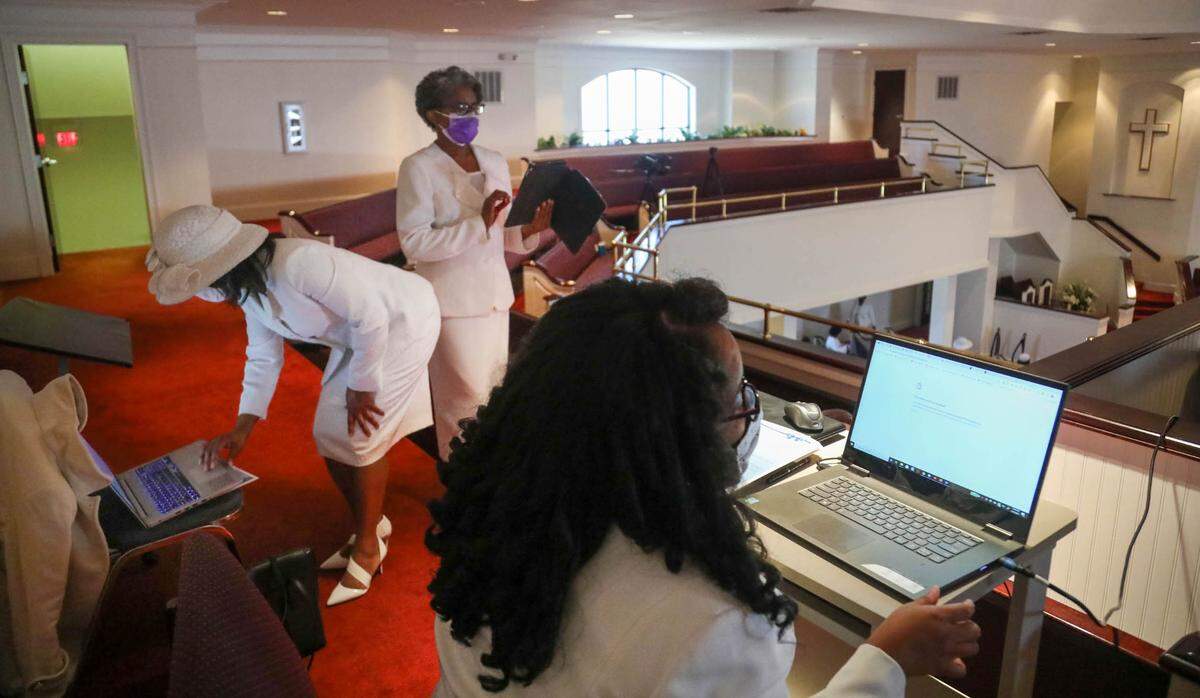
And in the pews, friends and family collected in pods, with gaps between them.
“It is hard to offer a ministry of comfort by being distant,” Johnson said.
This story was originally published March 12, 2021 at 5:00 AM.