
$15 million in changes to hit Richland County main library
For five centuries, books have been the main vehicle for how people tell stories, learn and gather and spread information.
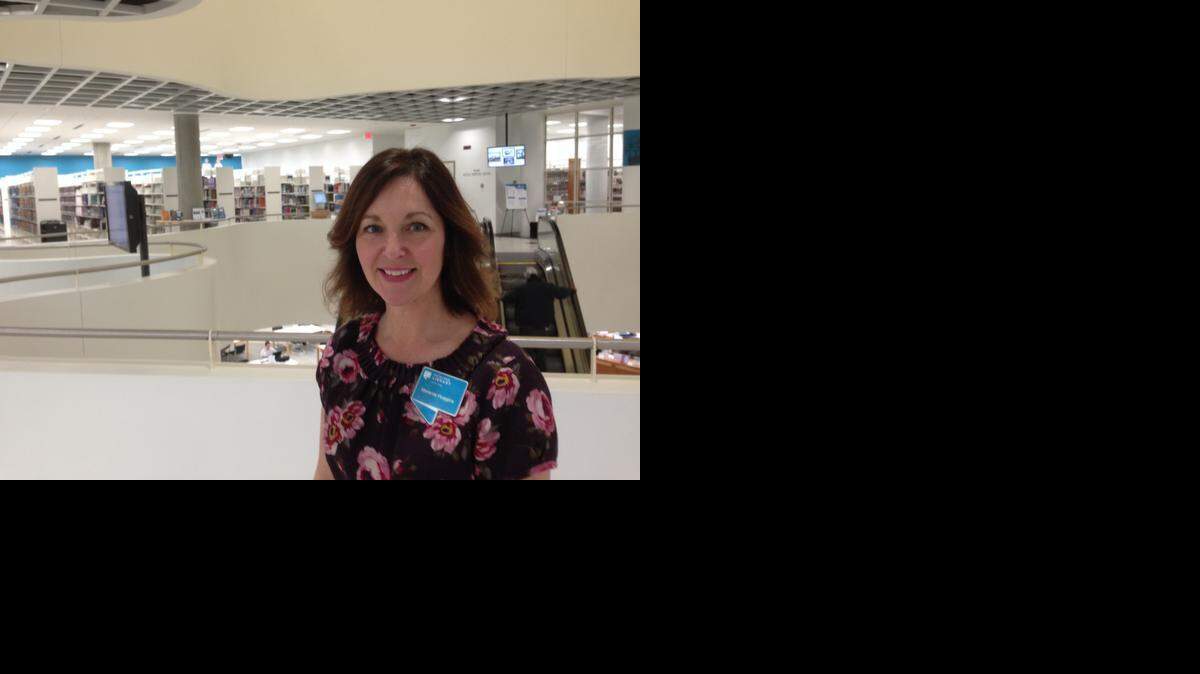
“Books are technology, too, and suddenly we have all these new ways people are doing the things books have been used for,” says Melanie Huggins, director of Richland County public library system, one of the state’s largest.
These days, Huggins, the library and the county’s 400,000 residents are at a rare historic moment: Not since Gutenburg invented the printing press around in 1450 has the world been hit by so many new technologies – from the Internet to the smartphone to Twitter – that revolutionize mass communication.
Another rare aspect to this moment: Huggins and the library system suddenly have $59 million in taxpayer money to renovate and upgrade Richland libraries – money authorized by voters in a 2013 bond referendum specifically for multiple upgrades at 10 library branches. To finance the changes, residents in 2013 agreed to a property tax increase of about $12-14 a year for the owners of a home valued at $100,000.
“It doesn’t happen all the time where you get an influx of capital where you can make changes for the next 50 years,” Huggins says. “Flexibility is the key, because we don’t know exactly what libraries will look like in 50 years. When this building (the main branch) opened in 1993, no one foresaw the explosion of technology, the need for more outlets in the floor,” for example.
Some $15 million of the $59 million is going to upgrade the interior of the Richland County main branch on Assembly Street, which has hundreds of thousands of books and is already a hive of activity –from a teen center to book clubs to authors’ visits. It’s a place where people can get help writing resumes and learning about the Affordable Care Act and children have numerous activities designed to get them to be readers.
Construction on the main library begins in June – a floor at a time, from the third floor on down. It will take 24-27 months to finish.
“What exactly are they going to do with that $15 million?” asked longtime library patron Lee Henderson Monk (no relation to the reporter) as she left the main library Friday, clutching four books, including John Sandford’s latest thriller, “Deadline,” and a non-fiction work, “Great Houses of Ireland.”
“I hope they get more books,” says Monk, who has been going to the county library since she was 9 growing up in Columbia.
On April 24, library officials will answer that question. That day, they will host public meetings at the main library to unveil plans and designs of how they intend to upgrade the three-story signature glass structure built in 1993. The plans are the products of months of study and input from library users in focus groups and forums.
Here are some highlights:
▪ Most of the $15 million will be spent on the first floor and garden level, whose main feature is a spacious children’s room awash in natural light and highlighted by a huge Maurice Sendak “Where the Wild Things Are” mural. The teen center, now on the first floor, will be brought to the garden level. The Bostic Auditorium, now on ground level, will move to the first floor.
▪ A new Assembly Street entrance with a ramp will be built on the building’s south side (facing Gervais Street) to a downstairs entrance. Its purpose: so families and young people, as well as bus loads of school children, can more safely enter the young peoples’ area without going through the main lobby. The main lobby entrance, at a busy street corner of Assembly and Hampton streets, will remain.
▪ A new system of shelving and the doing away with the traditional Dewey Decimal System, a method of classifying books invented in 1876. The new system is known as BASIC, but librarians are calling the local version ACCESS. It’s based on the way that bookstores classify books, with theoretically more reader-friendly classifications than Dewey. Books are organized by major topic, so, for example, the books on weddings would be together, instead of scattered in photography, attire or planning.
▪ More meeting and gathering spaces. Right now, the main library has only eight meeting rooms. Plans call to expand that to more than 30, some small, some large. And, many 7-foot-plus-tall bookshelves will be reduced to about 4 feet and have the covers of many books facing outward. The idea is promote an inviting feeling and make books more accessible.
Along with the physical changes to the Assembly Street structure, the idea of a library is changing.
Previously, libraries have been judged on the size of their collections, which made librarians not want to throw anything away, Huggins says.
“That’s not the way we think about success any more,” she says. “It’s about the way you are inspiring a child to become a reader, about whether you’re helping someone get a job, about introducing someone to a new local author.”
There will be fewer books, Huggins said, “because we be putting more space toward people. Definitely, we will be looking at the collection with different priorities.”
Huggins says many of her ideas parallel ideas found in a recent library study by the Aspen Institute, “Re-Envisioning Public Libraries.
Its main idea: that printed books will be just one “platform” of many in what the study deems to be a 21st-century multidimensional learning and knowledge center.
Such a center will retain a library’s core function of what a book can do: tell stories, impart information, disseminate knowledge, Huggins said. But it will carry out those missions on many “platforms,” she says.
There are features of the main library that won’t be tampered with and only added to, if at all, Huggins says. They include:
▪ Book topics. “This will still be an arts and literature kind of library,” Huggins says. Collections will be moved around.
▪ The Walker Local History room, which she calls one of the library’s jewels. Huggins didn’t make any commitments about what might happen to four old wooden magnificent handmade study tables, with wide surfaces for scholars to spread materials on.
▪ The Children’s Room, with its large windows, huge “Wild Things” mural and vast collection of children’s picture books and “chapter books,” which have fewer photos. In the renovation, it will have more spaces designed with children and how they learn to read in mind, more opportunities for creative play and enhanced spaces for caregivers. Current plans call for the print collection to stay the same.
HOMELESS
The downtown library still will continue to attract the homeless every day of the week. They come in droves to use computers and to read at the numerous chairs and tables.
“They are citizens, too, with rights,” Huggins said. “Anyone who comes in here and follows the rules is allowed to be here.”
Officials stress a main feature of the main library is that it is safe, with video surveillance and a robust plainclothes security staff.
Watchful radio-equipped officers are visible on each floor. Police headquarters and a major hospital are within blocks.
And last year, Huggins helped pass a state law that gives libraries the right to expel disruptive patrons and in extreme cases, ban them from returning. Huggins feels strongly that homeless are citizens, and have the right to be in the library but that everyone also has the right to a safe experience in the facility.
JoAnn Turnquist, who chairs the library’s board of trustees, said: “I love the changes that are coming. One of the library’s missions is to be the preferred destination for information and entertainment, no matter how folks access that. The changes that we are making will broaden that access.”
Calling herself a “print person,” she said the main library’s print collection won’t be substantially reduced and the library will be more than ever a free, safe place that is a drawing card, attracting people and business to the region.
“That’s why the bond referendum passed overwhelmingly – people see the library as a safe bastion of inspiring learning,” Turnquist said.
Seth Rose, a Richland County Council member who helps appoint the library’s board of trustees, said he is looking forward to the April 24 unveiling to learn details of plans for the main branch.
As for now, Rose said, he loves taking his soon-to-be-4-year-old son, Cole, to the children’s room regularly, where they listen to story time and check out picture books.
Rose likes books, too. “When I ran for office,” he said, “I checked out a book. It was ‘How to Run for Office.’”
Huggins knows Richland’s library lovers are watching to see what they get for the $59 million countywide. She said she is determined to do it right. “We only get one shot at this,” she said.
WHAT’S COMING
Planned upgrades include more meeting spaces and teen centers at most branches. Here’s how much is planned to be spent at each branch:
Sandhills branch. $10.4 million. Now at 10,000 square feet, it is being replaced by a 30,000-square-foot facility.
North Main Street branch. $3 million. Plans call for an additional 2,700 square feet.
Ballentine branch. $5.4 million. A new 15,000-square-foot facility.
Blythewood branch upgrades. The current 4,000 square feet will be expanded to 6,900 square feet.
Cooper branch. Current 10,000-square-foot building to be enlarged by 2,000 square feet.
St. Andrews branch. Some 4,300 square feet will be added to the current 13,000 square feet.
Southeast branch. The current 20,000 square feet will be expanded by 4,340 square feet.
Northeast branch. The current 15,000-square-foot facility will add nearly 3,000 square feet.
Wheatley branch. The current 4,000-square-foot-facility will add 1,200 square feet.
The Eastover branch underwent a $1.6 million upgrade in 2013.
Key changes at the main branch
The auditorium moves to the first floor.
There will be about 30 meeting rooms, large and small, instead of eight.
A new ramp on the south side will lead to the children’s room and new teen room area.
Shorter shelves and books whose covers face patrons should make for a better browsing experience. It also will mean fewer books.
This story was originally published March 20, 2015 at 8:28 PM with the headline "$15 million in changes to hit Richland County main library."