
Oconee County Sheriff: Chances of solving Hipps' case ‘slim'
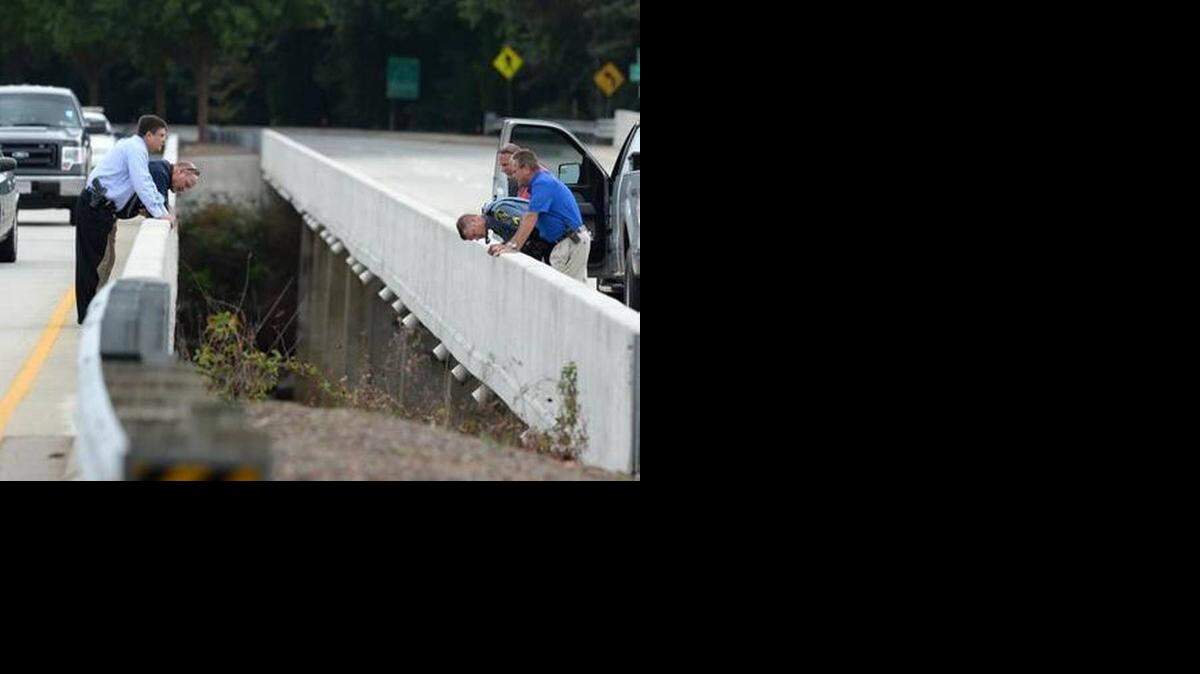
“The chances of us at this point being able to tell Tucker Hipps’ story are slim, I admit that,” Oconee County Sheriff Mike Crenshaw told the Independent Mail on Tuesday.
Hipps, 19, died after falling from a bridge into Hartwell Lake while on a 5:30 a.m. run on Sept. 22. He was with 26 fellow pledges and three members of Clemson University’s Sigma Phi Epsilon fraternity. Hipps was president of the pledge class, a graduate of Wren High School and was admired for his athleticism, mentoring of younger students and friendly nature.
The sheriff said the surviving 29 fraternity members and pledges have been notably consistent in their account of what happened on Sept. 22.
“We look for inconsistencies, to see if something is the truth,” Crenshaw said. “The inconsistencies are not there.”
Some of the pledges on the run had gone to high school with Hipps and told investigators they had no allegiance to the fraternity over their friend, Crenshaw said.
Polygraphs were also part of the investigation, Crenshaw said, for the first time publicly. He declined to release those results.
Hipps’ parents filed a lawsuit March 30, with allegations that fraternity members had deleted phone information, that fraternity members talked about punishing Hipps and that one member had confronted Hipps over his failure to bring McDonald’s breakfast for fraternity members that morning.
“I don’t know that there was anything in the civil case that we were shocked to see,” Crenshaw said. “I don’t think it’s appropriate to confirm or deny allegations in the civil suit. But I can say I don’t think we were shocked.”
The lawsuit is seeking $25 million from three individual fraternity leaders, Clemson University and the local and national branches of the Sigma Phi Epsilon fraternity.
Oconee County Sheriff’s Office investigators and prosecutors knew in early March that they had stalled in the Tucker Hipps investigation after six months but waited two weeks in hopes that a last-minute addition of a $20,000 reward would prove fruitful.
The reward, offered anonymously March 20, was nearly 10 times what had been offered previously, but no new tips came in.
“There was no good time to say we’re at a dead end,” Crenshaw said.
The day after the lawsuit was filed, Crenshaw and 10th Judicial Circuit Solicitor Chrissy Adams announced the investigation had stalled and would continue as an unsolved case.
Crenshaw declined to comment on most specifics in the lawsuit and has declined to open the case files, saying he expects depositions of the fraternity members to reveal much of the investigative information as the civil case unfolds.
“One advantage for us still withholding the contents of the case file is these boys will be giving depositions so there may be something through the civil case that could prove to be beneficial,” Crenshaw said.
He said a forensic pathologist found no evidence that Hipps was held by his ankles over the bridge and that there were no signs of a physical struggle. Investigators do not know how Hipps ended up in the water, whether he fell, was pushed or through force or coercion tried to jump the eight-and-a-half foot span between the twin bridges or tried to jump down.
A coroner and a forensic pathologist have determined that Hipps died of a traumatic brain injury but how his brain was injured remains undetermined.
“In my heart of hearts do I believe somebody intentionally murdered Tucker Hipps?” Crenshaw said. “I don’t want to believe that because you had some of his friends with him that you think would’ve told that story. But just as we can’t rule out that he was told he had to jump or was dared to jump or was some part of a hazing event, we can’t eliminate that in our investigation.”
Follow Mike Ellis on Twitter @MikeEllis_AIM
This story was originally published April 14, 2015 at 9:41 PM.