
Lexington County fire chief wanted strong department. In the process, it softened him

Lexington County Fire Chief Brad Cox only has less than a month left as head of the county’s fire service. He’s retiring in January after almost eight years as a formidable leader in the public safety realm, and in his wake, he leaves a stronger, faster fire service and inspired colleagues.
Cox became known among firefighters and local leaders for holding himself to the same standards he held everyone else to and for always aiming to be the best.
“He led this organization to believe that we could change ourselves, that we didn’t need people to change us,” deputy fire chief David Fulmer said.
Cox wanted to show that Lexington County isn’t just Columbia’s younger brother. But how he got here in the first place was by following his gut down a winding, unconventional path.
Earlier in his career, Cox tried and failed three times to become the fire chief in his hometown of Greensboro, N.C., despite working in the department for decades. He retired from the fire department in 2004, disheartened by how few close relationships he had formed there.
But retirement grew stale before long, and he took a job at a golf course to stay busy. That job led to another at a Myrtle Beach course, which led him to find another South Carolina job: working in the grants department at the State Law Enforcement Division. With a foot back in the door of public safety, Cox soon found himself applying for an a job as “fire coordinator” at the Lexington County Fire Service in 2010.
“Halfway through the interview,” he said, he realized he was applying to be fire chief. And he got the job, beating out two other men who worked in the department at the time, both of whom would be there when Cox walked in on his first day.
Cox was an outsider coming into Lexington County, a place that in 2010 was even more wary of strangers than it is today.
He signed on to stay with the department for three to five years.
By 2013, two years into his tenure, Cox said he realized he wanted to stay longer. He took the rent money he was “throwing out the window” and bought a house down the street from the fire department in the town of Lexington.
“That’s when we knew we had him a little longer,” said David Kerr, the county’s public safety director.
After years of trying to figure out what his next chapter would look like, Cox found a home — and a house — in Lexington County.
Cox soon learned he needed to be vulnerable and open if he wanted to be effective as chief. That meant talking more than he wanted to, as an “introvert,” and being more flexible and playful when he was not working.
“Everything is about relationships,” he said. “If you went back and interviewed people in Greensboro, they would say, ‘He was aloof.’ I kept my nose to the books, kept my nose to the grindstone. I would go to certain functions, but as far as people knowing who I was and what my heart was, they didn’t.”
By connecting with the men and women he oversaw and worked with, Cox transformed the Lexington County Fire Service.
He said he planned to spend the first few months on the job “not making a move” — just observing.
On his sixth day as chief, an 8,000-gallon gasoline tanker rolled over on North Lake Drive and Sunset Boulevard. He stood back and watched his new team at work.
“We were there for 12, 13 hours, and I got to see what our guys were capable of, how the service worked,” he said.
From that emergency, Cox was able to assess the department’s strengths and weaknesses. He analyzed how different fire departments from around the county worked together on the scene, how efficient traffic control was, how firefighters placed the hoses, how members of the press were handled.
Cox visited every fire station in the county, met one-on-one with county leaders and identified areas for growth, he said. He brought with him to Lexington County some Greensboro methods, such as recording and measuring everything, from response times to how long it takes firefighters to get out of bed, dressed and in the trucks.
Cox then assembled a committee of fire captains, battalion chiefs, firefighters and fire truck drivers to develop a strategic plan.
Over the next several years, Lexington fire would accomplish many of its goals. In four years, its ISO rating — a measure of a fire department’s excellence that helps establish home insurance rates — would rise from a 7 to a 3.
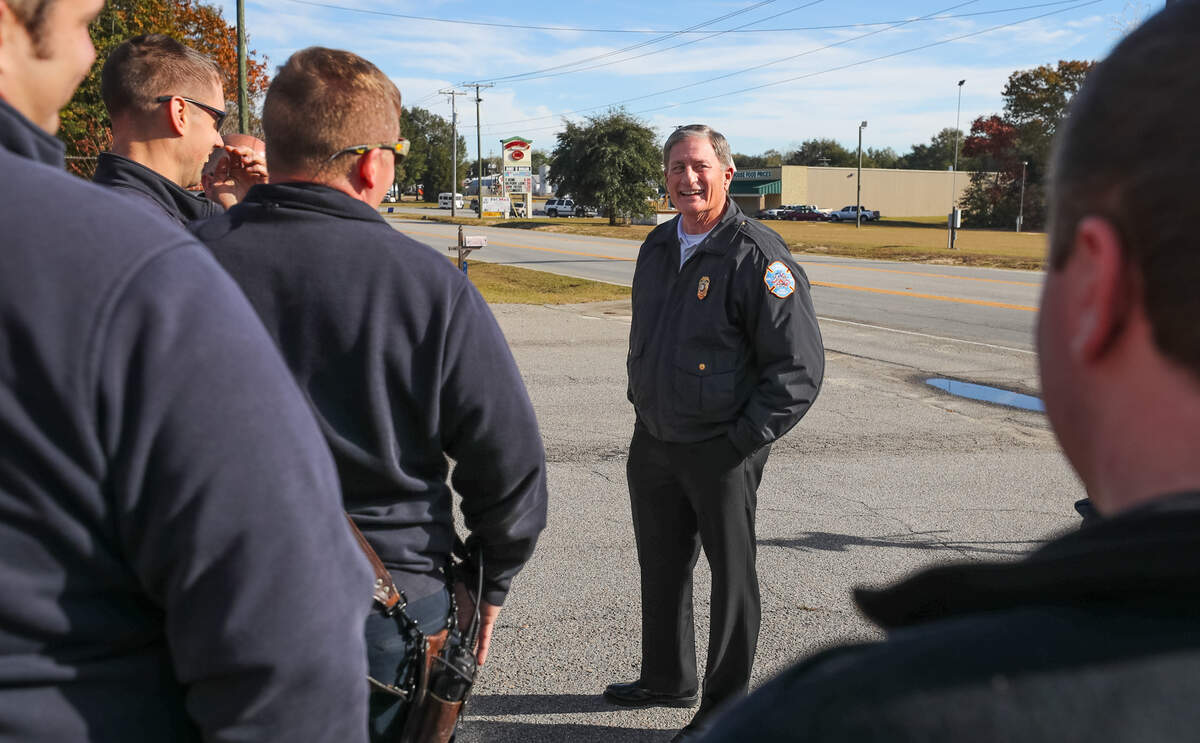
Cox instituted rigorous new training standards, which include at least one hour of exercise per day for firefighters. Multi-company drills with other public safety teams started happening more frequently.
Each week, firefighters must inventory the trucks and be able to find any tool in a short amount of time.
Firefighters also do walk-throughs at local businesses to get familiar with the property, the owner and the structure. If there is an emergency there in the future, they have a full report on the property that they can pull up before arriving.
“It makes it second nature on an emergency scene,” Cox said.
Group workouts in the station and at a local gym became customary, too.
Claudia Weidman, 47, owns the gym where firefighters, the chief and other public safety officials have trained for the past five years. As a former police officer, she understood the demands of their job.
Though at first the daily training was tough for some, Weidman said it became an escape, “almost like a break from the everyday workday.”
And Weidman saw the chief’s leadership in her gym, too. Despite being the oldest person in the group, 65-year-old Cox kept up with workouts. The man can do a 24-inch box jump.
“He went above and beyond because his theory was, ‘If I am asking them to do it, then I need to be able to do it myself,’” Weidman said.
Each firefighter in Lexington County now averages 250 to 260 hours of training a year, Cox said. All that training was good for building camaraderie among fire servicemen, but it also helped Lexington County cut down on response times and provide a better service, he said.
The strategic plan calls for more fire stations and more personnel, especially in the upper half of Lexington County, which makes the most calls for service, Cox said. The county has purchased land for three additional stations, one of which is set to open in February.
To Cox’s colleagues, such as Kerr and county administrator Joe Mergo, the plan sets the fire service up to continually improve and expand, even once Cox is gone.
“He has laid a tremendous foundation for the next chief that comes in the door to allow us to even grow further,” Mergo said.
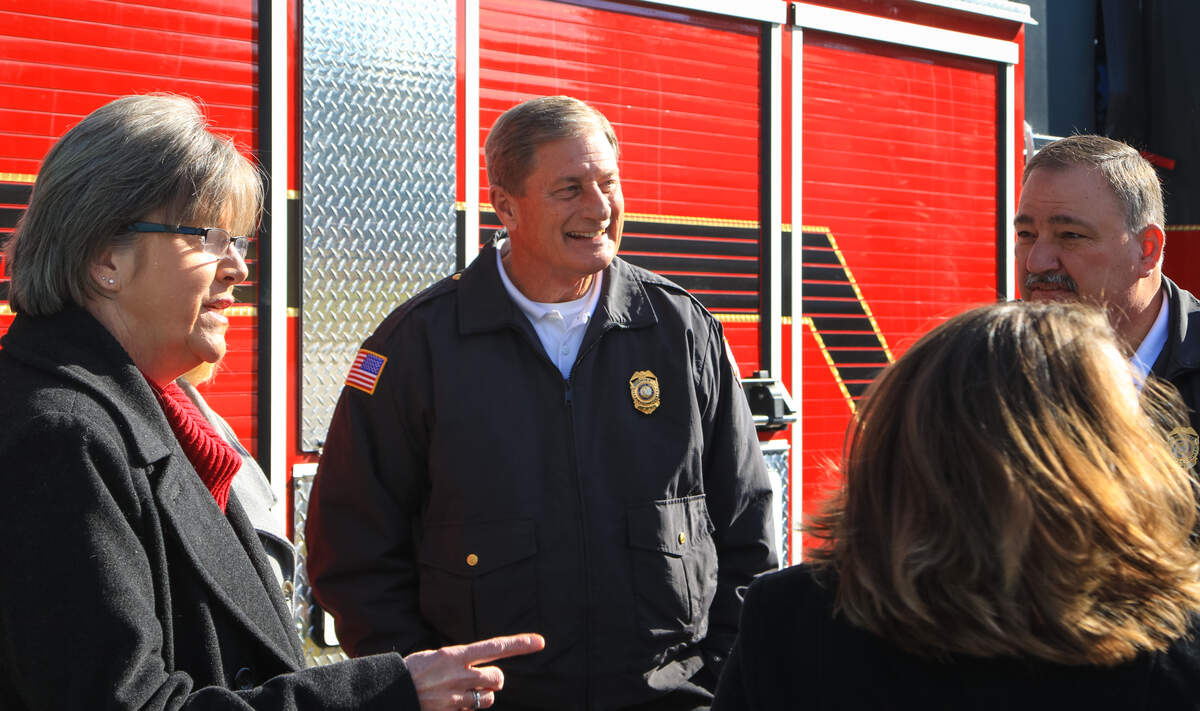
With Mergo, as with other county leaders, Cox forged a deep, trusting friendship in his tenure.
“When you first meet him, it’s like you’ve known him your whole life. … There’s only certain people you meet in your life that can put you at ease like that,” said Chris Samellas, a deputy county solicitor.
“A lot of what we deal with in our profession you can’t talk about with anyone else,” Samellas said.
Fulmer, the deputy chief, is a longtime Lexington County guy — and one of the men Cox beat for the job of chief. Yet Fulmer extended an olive branch to Cox, telling him he would support his work and leadership.
And despite having “totally opposite” personalities, Fulmer said, he and the chief built a strong relationship, both professionally and personally.
When Cox bought his house, Fulmer and two other fire service employees helped Cox move in.
A few years into their partnership, Fulmer’s father died. He said Cox went up to his mother at the funeral, apologized for her loss and said, “If you need an old man to boss him around, I’m here.”
Cox and Fulmer are only 10 years apart in age, but the chief became a mentor to Fulmer, teaching Fulmer how to be “tougher” but offering a caring, nonjudgmental demeanor when needed.
For the county fire service as a whole, Fulmer said, Cox instilled a sense of self-confidence and a can-do attitude.
Yet the chief, the same one who looks “embarrassed” when presented with awards at department banquets and who spends weekends at home, reading history books because “fiction is a waste of time,” said his second retirement is just part of the cycle.
“Nobody is indispensable. This place is going to keep rolling right along,” Cox said.
County leaders have begun the process to find a replacement chief. Mergo said he hopes the incoming chief will be able to shadow Cox before he retires at the end of January.
For Cox, what’s next is a move back to North Carolina, where his three children and four beloved grandchildren live. He said he looks forward to playing a lot of golf and being a “full-time granddad,” though not a grandpa, because “grandpas are old.”
This story was originally published December 14, 2018 at 5:00 AM.