
Grand finale at the Capital City Stadium
Eidtor’s note: This story was originally published on July 31, 2014
When Pittsburgh Pirates owner Barney Dreyfuss had Capital City Stadium built just off Assembly Street before the 1927 season for one of his minor league affiliates, he probably didn’t imagine baseball in some form would be played on the site for the next 88 years.
Dreyfuss, an innovator who played a role in the creation of the World Series and was later inducted into the Baseball Hall of Fame, left the city of Columbia a long legacy that came to a quiet end Thursday night.
The Columbia Blowfish, a summer collegiate team in the Coastal Plain League, played the Thomasville HiToms in a game that is expected to be the swan song for the ballpark, which eventually will be torn down after the city sold it and the surrounding land to Atlanta developer Bright-Myers for a mixed-used complex.
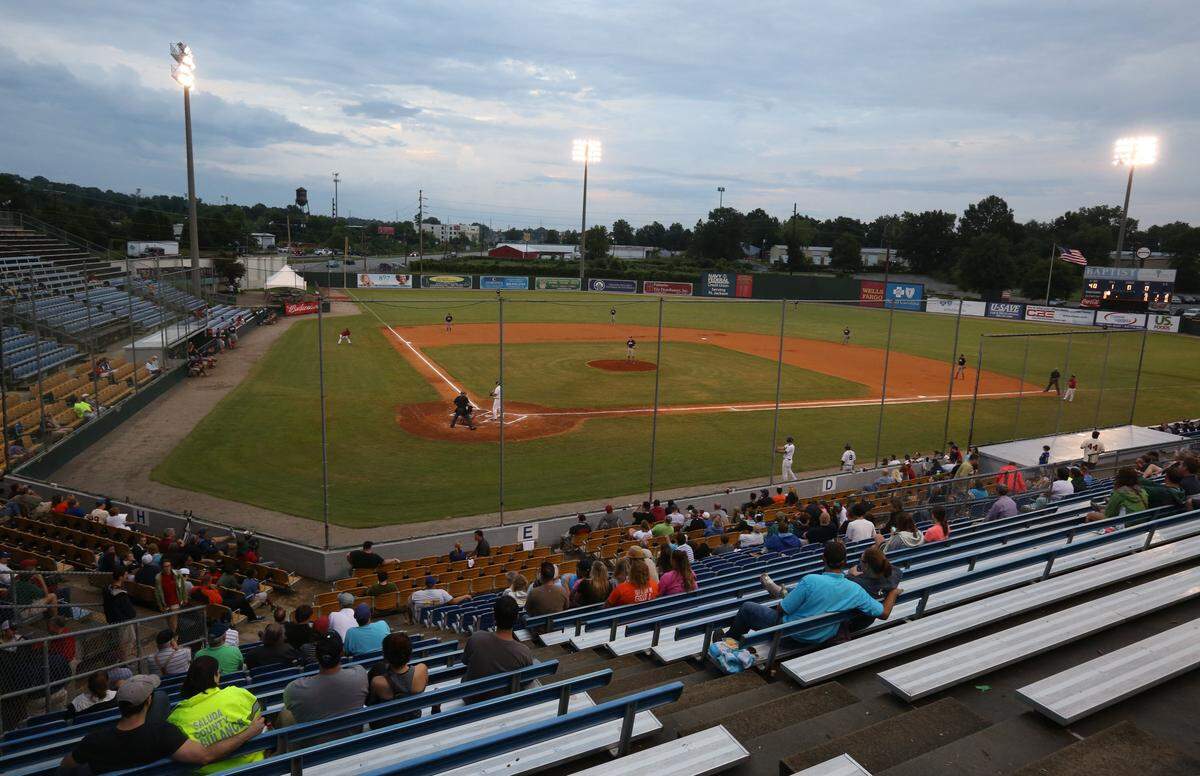
The Blowfish, who began playing here in 2006 after the last professional team left in 2004, will head to Lexington County next season, while Columbia awaits a new minor league baseball park that will be built at the Bull Street development for the 2016 season.
“It’s venerable ground,” said Columbia Blowfish owner Bill Shanahan, who served as the general manager of the Capital City Bombers, a minor league affiliate of the New York Mets, in the 1990s. “All the fans who have come here are connected to Barney Dreyfuss. We’re connected to Frank Robinson. We’re connected to Hank Aaron. These greats and this ballpark are all interwoven into one big memory.”
Robinson played for the Columbia Reds, as did greats such as Ted Kluszewski, while the Mets teams featured players such as Randy Myers and David Wright. Visiting team stars across the years included Aaron, Chipper Jones, Tom Glavine, Derek Jeter and Mariano Rivera.
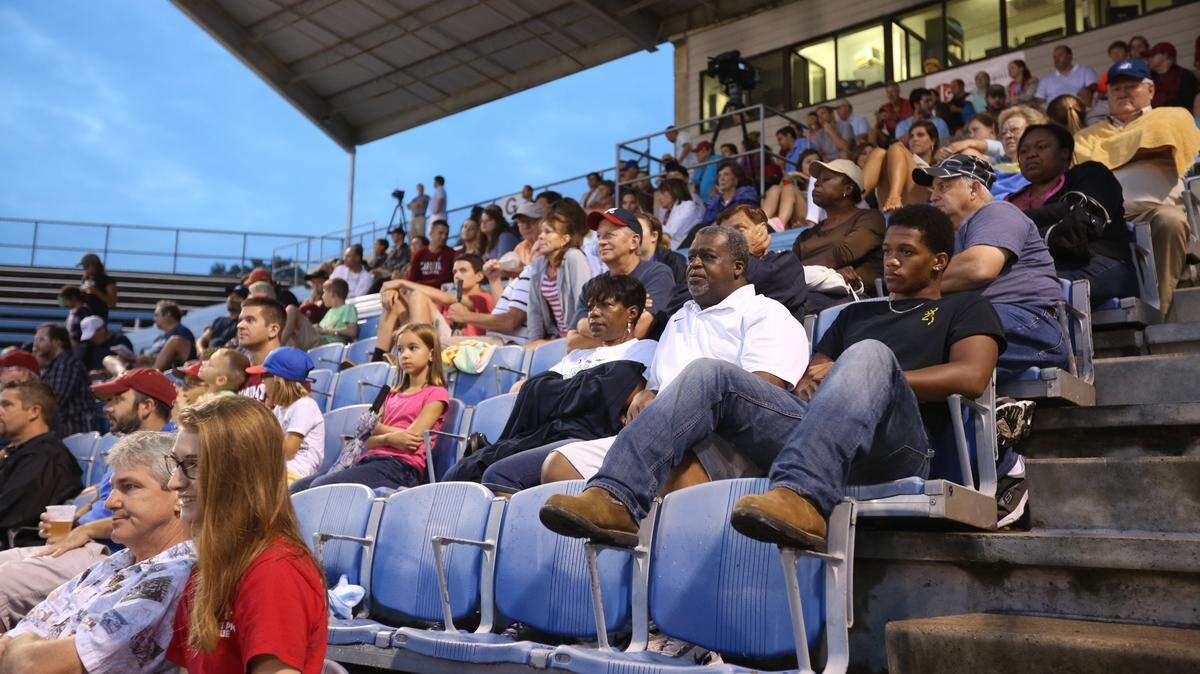
Bob Somogyi, the ballpark’s unofficial historian, has taken his place in the front row behind home plate with wife Fran since the Mets came to town in 1983.
“The thing I worry the most is it’s going to be forgotten in total when, in essence, in the history of Columbia, this ballpark has more history than numerous historical sites and buildings,” said Somogyi, who has a huge collection of Columbia baseball memorabilia.
He looks back at the memories and the friendships made with players and fans over the years with wistfulness. He calls the up-close experience something that can’t be had in major league stadiums.
Some people take vacations. The Somogyis come to the ballpark.
“This has been our summer home for 32 years. This is our front porch,” Somogyi said.
Shanahan presented plaques with keys to the ballpark to Bob and Fran Somogyi as well as to Joe and Evelyn Williams and Dot Prescott, who have worked at the ballpark since the 1980s. Those three have done everything from taking tickets to handing out souvenirs to selling food to checking the restrooms for cleanliness. The Williams have spent nearly 30 years of their 50-year marriage here, while Prescott is now 94 years old but still helping in any way.
“I’m going to miss all the people and all the good times,” Joe Williams said. “I wish they could stay here, but I know it’s not going to happen.”
Evelyn Williams talked of how the two would ride over to the park in the winter months just to see how things were going.
“We’ve got a lot of memories here,” she said
So does Jerry Martin. His father Barney pitched for the Columbia Reds in the 1950s while the family lived in Olympia. Jerry Martin, who would go on to play in the major leagues from 1974-84, could watch games from the sycamore tree in his grandparents’ yard over the outfield fence as a youngster.
Martin knows something about historic ballparks, having played in old Yankee Stadium, Wrigley Field, and Fenway Park. He realized that he couldn’t miss the last game at Capital City.
“I wanted to make sure I was here in Daddy’s honor because he pitched here in the old Sally League,” Martin said. “My brother and I played Colt League and American Legion here. Being from the Olympia community here, the Capital City ballpark was always a big part of it.”
Blowfish manager Jonathan Johnson has enjoyed the opportunity to compete at Capital City Stadium for his two seasons at the helm.
“No matter what your profession is, if you don’t respect the history of it, then you don’t deserve to be a part of it,” Johnson said.
Shanahan’s emotions ran the gamut as he watch the Blowfish record a 4-2 win. He arrived in 1991 not fully understanding how attached he would become to the ballpark.
“When you look back in your life, you remember good times and good friends, and you remember places where you were able to establish those things. Capital City Stadium is the place where that has occurred for me personally,” he said. “Walking through this ballpark, it’s like my home. It will be a very, very sad day when the bulldozers start knocking down the walls.”