
What Richland County Council members didn’t vote on this month... even when they should
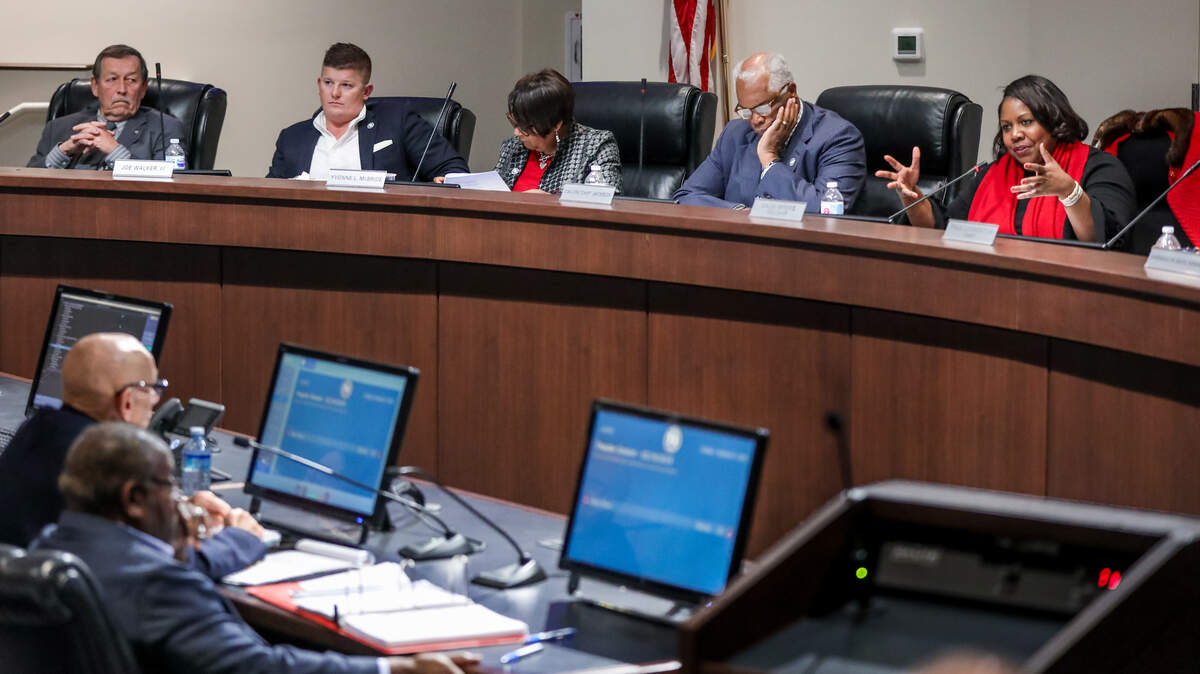
At their Nov. 5 meeting, Richland County Council members voted on 37 issues, ranging from closing railroad crossings to approving money for new school resource officers.
Or rather, some of the members voted. On 35 of those votes, at least one council member didn’t vote. On one – whether to issue up to $35 million in utility system revenue bonds – a majority of the council, six members, either abstained or didn’t even cast a vote.
With all 11 members present, the motion passed 3-2.
When Richland County voted on whether to move forward with tax credits for a new apartment development in Columbia’s BullStreet district, roughly a third of the county’s voters were unrepresented when their council members — Joyce Dickerson, Gwen Kennedy, Jim Manning, Yvonne McBride — didn’t vote.
It’s not unusual for council members to not vote. In fact, Councilman Jim Manning did not vote or abstained on 30 of the 37 items decided by the council that day.
Non-voting has become so widespread that some council members said they have had enough. Last week’s council meeting had barely gotten underway before members argued about whether council members should vote — and what members are required to do if they don’t.
The skirmish broke out as the council was deciding whether to approve the official minutes of the Nov. 5 meeting. The minutes are the official record of what happened at each meeting, and approving them is usually routine. But Councilman Bill Malinowski was incensed that so many people didn’t vote on Nov. 5.
“A pet peeve of mine is members who don’t even vote,” Malinowski told The State.
Malinowski argued the county shouldn’t accept the minutes of the meeting until the members who abstained submitted written explanations for their non-votes, as county rules require.
He cites the rule requiring members to vote when present, except when they have “a personal or pecuniary interest” in the matter under discussion, or when voting “might create the appearance of impropriety.”
“Some must be pretty important if they think it would look improper to vote on all these things,” Malinowski said of his county council colleagues.
Councilman Joe Walker asked that his fellow council members try to stick more closely to the rules. S.C. ethics law requires members to disclose any conflict of interest on an item before the council and to place a written statement in the meeting minutes.
County rules further require a non-voting member to explain any abstention on a vote in the minutes.
Both Malinowski and Walker objected that the Nov. 5 minutes did not include any statements from the non-voting members.
“This has been going on for years and years, and I’m saying we’re not doing it right,” said Walker, who is in his first year as a council member. “I’m not going to let it go on like business as usual... If we pick and choose which rules we’re going to follow, that’s dangerous.”
Walker points to the council’s decision earlier this year to end the county’s relationship with the consortium running the penny tax roads program. The $1 billion roads program has come under fire for more than three years after the state Department of Revenue determined some money was improperly spent. Last year, the state Supreme Court agreed with the DOR, ruling that the county could be required to return some of the money.
State Rep. Kirkman Finlay said earlier this month that a recent DOR audit indicates the county could be required to return $40 million to the penny roads program.
Nobody has accused the consortium of wrongdoing. Still, when the council voted on whether to transfer management of the program to county administrators, four members abstained: Paul Livingston, Chip Jackson, Gwen Kennedy and Yvonne McBride. The other council members voted 6-1 to make the change.
Walker questioned why members would abstain on such an important vote. Most members who abstained on the vote could not be reached for comment by The State. Kennedy told The State she would have to look back at the decision to recall why she chose not to vote on it.
For a county council member, voting is pretty simple. The voting system places three options on a touchscreen at each council member’s desk: one for yes, one for no, and one for abstain. When a vote is call, the council member can select one of the options.
But on many votes, council members don’t push any of them, even the one marked “abstain.”
Walker says he doesn’t want to “encumber staff with a historical research project” on past votes, but says the council should try to follow the rules moving forward.
But last Tuesday, several council members still didn’t vote. A vote on extending a county bond issue deadlocked 5-5, with Councilwoman Joyce Dickerson not voting.
A modified version of the extension later passed, with Dickerson voting.
Dickerson said she often doesn’t vote on issues when she doesn’t have enough information to cast an informed vote.
“If I abstain, it’s because I’m not supporting it or I have questions about whether or not we should be voting on it,” she said. “I either need more information, or we didn’t get it in time, or I don’t like the way we got the information.”
Dickerson said she supports members supplying statements after they abstain, and that she intends to provide those statements on her seven abstentions Nov. 5 when she has a chance to review them.
The minutes indicate Dickerson abstained on votes in which she questioned an agreement for a business to pay fees instead of taxes and a plan to give infrastructure credits to the BullStreet Apartments. Her other abstentions were also on economic development or bonding issues.
A bigger problem than abstentions, Dickerson said, is members who simply don’t vote. She wants non-votes to also require a statement from members.
At the Nov. 5 meeting that caused so much consternation this week, 10 members did not vote on at least one issue. Only Malinowski voted on each one.
Councilman Jim Manning, the most frequent non-voter, missed 30 votes, abstaining on one.
Manning said he often doesn’t vote on non-controversial matters because, under county rules, a non-vote is counted toward the prevailing side on an issue. But the council’s official meeting minutes list non-voters as “present but not voting.”
“When people ask me how I voted, I tell them when it says ‘present but not voting,’ that means I voted with the majority,’” Manning said.
Manning said he prefers not to vote on items prior to final action because he’s still unhappy with the county council’s current voting system, which was added a couple of years ago. Before, preliminary action was taken by an unrecorded voice vote. He disagreed with adding the touch-screen voting system.
“I’m still being a bit of a curmudgeon about it,” he said.
At the Nov. 5 meeting, among the five items Manning voted on was amending the penny-tax program’s greenway program. He also voted in favor of holding the council’s annual retreat next year in Charleston on Jan. 23-24.
Gwen Kennedy had the next highest total of missed votes at the Nov. 5 meeting, with 13 missed votes, including one abstention.
▪ Chakisse Newton missed 11 votes, including one abstention.
▪ Joyce Dickerson and Yvonne McBride missed 10, including seven abstentions each.
▪ Chip Jackson missed nine, including eight abstentions.
▪ Alison Terracio missed five, including two abstentions.
▪ Joe Walker missed five.
▪ Dalhi Myers missed four.
▪ Paul Livingston missed one.
Walker explained his non-votes as his opposition to the way the county votes on hospitality tax spending, which is divided up by district, and then the full council votes on the recommendations of that district’s council member.
State law isn’t as stringent as Richland County’s rule book, only requiring elected council members to make a declaration if they have a conflict of interest.
Individual members choosing not to vote is “beyond the scope of the State Ethics Act,” said Meghan Walker, director of the State Ethics Commission.
Malinowski said he plans to continue to call out future minutes that do not have written explanations for non-votes.
“I hope I don’t have to,” he said. “I hope there’s enough sense among my colleagues to want to stand up and have their say,” he said. “But we should be mature enough to make a decision.”
This story was originally published November 25, 2019 at 9:42 AM.
.jpg)