Which Midlands grocery stores have the lowest prices? We hit 12 to find the cheapest
For some people, grocery shopping is a chore — an aggravating necessity like laundry or mowing the lawn. They’d rather wash the car.
For others, it is a joy, a stroll through aisles of produce, fresh meat and fish, baked goods and dairy, dreaming of the meal that awaits. They wouldn’t mind going every day.
For others, it’s a science, a balance of budget to price and meals to paycheck for the week ahead. It’s sort of a shopping Sudoku.
And the grocery shopping experiences are as varied as your mood.
A run through Lidl feels like a quick spin through an IKEA kitchen. It’s perfect for the clinical types who seek efficiency and price.
Lowes Foods is like a long countryside hike, surrounded by acres of food as varied as the imagination. It is idyllic for the culinary dreamers.
And then there are the standards like BI-LO or Food Lion. You know exactly where the Triscuits and hot dogs are. If shopping is a chore, go with what you know.
But there is a common denominator among the calculators, the dreamers and those who just want it all to be over:
Price.
Nobody, not even the dreamers, want to overpay.
So we (a calculator and a dreamer) went forth into the grocery firmament and find out who has the lowest prices. Here is what we found.
How did we compare prices?
We spread out across Richland and Lexington counties and price-checked a list of basic products at a dozen stores, each representing the major chain grocers in our area: Aldi, BI-LO, Food Lion, The Fresh Market, Kroger, Lidl, Lowes Foods, Piggly Wiggly, Publix, Trader Joe’s, Walmart Neighborhood Market and Whole Foods.
Our shopping list consisted of fixed quantities of 10 staple food items: whole milk, large eggs, white bread, ground beef, spaghetti, vanilla ice cream, bananas, all-purpose flour, canned green beans and canned tuna.
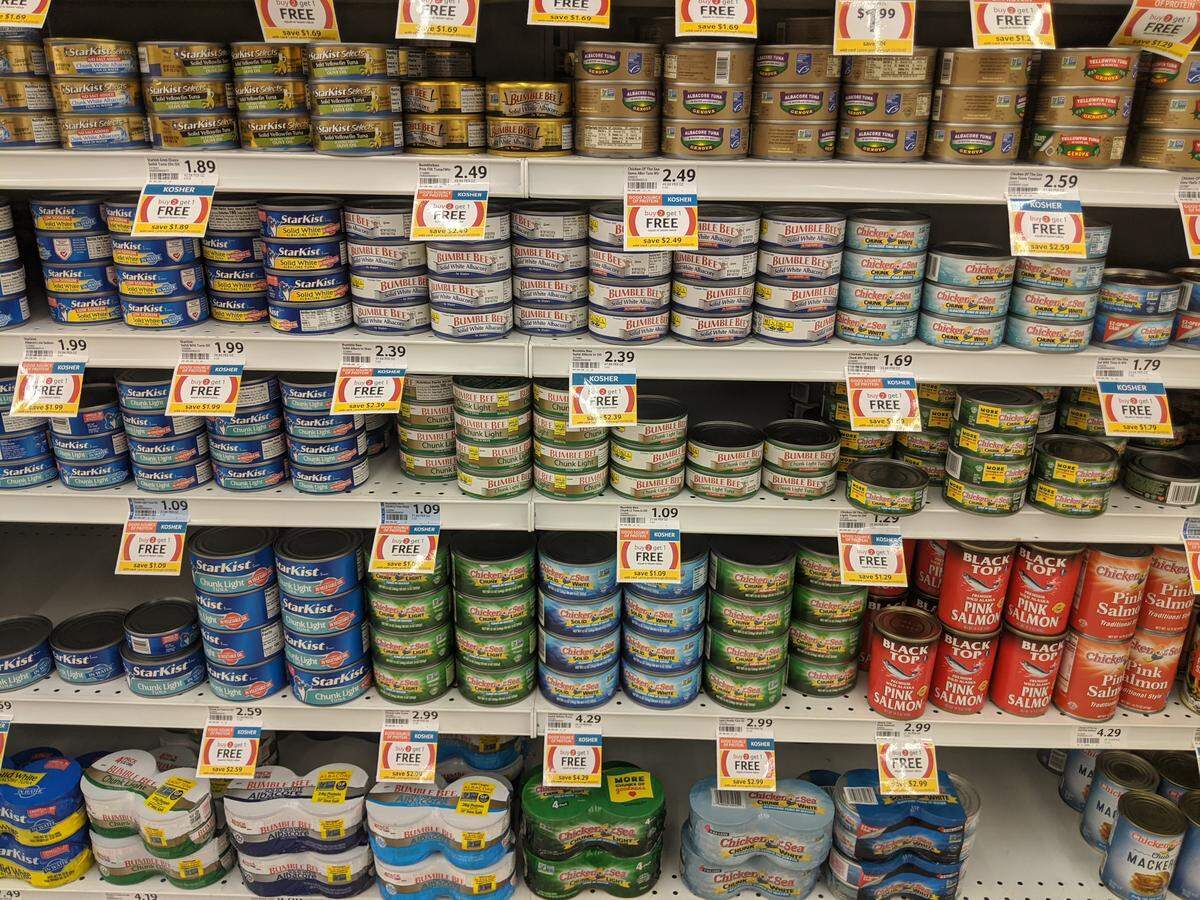
Between March 2 and 3, we recorded the prices of the cheapest available items at each store, regardless of whether they were in-house brands or name brands. We did not include sales prices or prices based on loyalty cards so as to keep the playing field level.
Now, here’s where things got a little tricky. At some stores products were sold only in larger quantities than we were seeking. For instance, you can buy a 2-pound package of spaghetti for $1.39 at both Aldi and Lidl, but you can’t buy just one pound (unless you bought a slightly more expensive organic option in a 1-pound package).
So, for the sake of simplicity and comparison, we went ahead and calculated the cost per pound.
We also made a few adjustments to accommodate comparable items at stores that did not offer exactly what we were looking for. For instance, Trader Joe’s did not have canned green beans, so we accepted the frozen bag of green beans.
We’ve highlighted all those adjustments in the notes of our price chart below.
The point here is simply to see who’s selling groceries for the cheapest prices all around, so we’ve done our best to even the playing field.
How did they all stack up?
The total bills for our 10 items ranged from $12.28 to $30.80
Two German stores, Aldi and Lidl, lived up to their reputations for price consciousness, coming away with the “cheapest groceries” prize by a fairly wide margin in our shopping experiment.
A mere 19 cents separated the two in our grocery bill comparison, with Aldi squeaking by as cheapest at $12.28.
“Bottom line, we won’t be beat on price,” said Krysta Cearley, Aldi’s Salisbury Division vice president. “We are committed to offering our customers the highest-quality food at the lowest prices, every day. Aldi is different for a reason, and we help our customers save time and money with our simplified shopping experience and innovative selection of Aldi-exclusive products that are as good as, or better than, name brands.”
The Aldi vs. Lidl competition goes way back. Both were founded in Germany shortly after World War II, and they’ve have been battling it out globally ever since.
Both stores employ a few similar tactics that help keep costs down. For instance, neither offers complimentary shopping bags; either bring your own, or pay a few cents to purchase paper or plastic.
Both stores also heavily lean on discount store brands with packaging that mimics national labels.
Company-wide, Aldi has doubled its sales over the past five years, Cearley said, and hopes to double them again over the next five.
Among the area’s mainstream grocery chains, we found Kroger to be the cheapest, at $15.23 for our 10 items, followed by Food Lion ($16.10) and Walmart Neighborhood Market ($17.97).
Whole Foods and The Fresh Market were the most expensive stores by a sizable margin.
The Fresh Market checked out at the top of the list at $30.80. But Whole Foods, at $29.70, still cost nearly $5 more than the next most-expensive store, Trader Joe’s. Generally, the quality of products and shopping experience help to drive up the prices at these more expensive stores.
“I think the perception is just because our quality is high that our price is high, but we have fresh deals every day of the week,” said Meghan Flynn, a spokesperson for The Fresh Market. “It’s value. And how do you define value? To me, value is something that’s high quality at a really good price. You get what you pay for.”
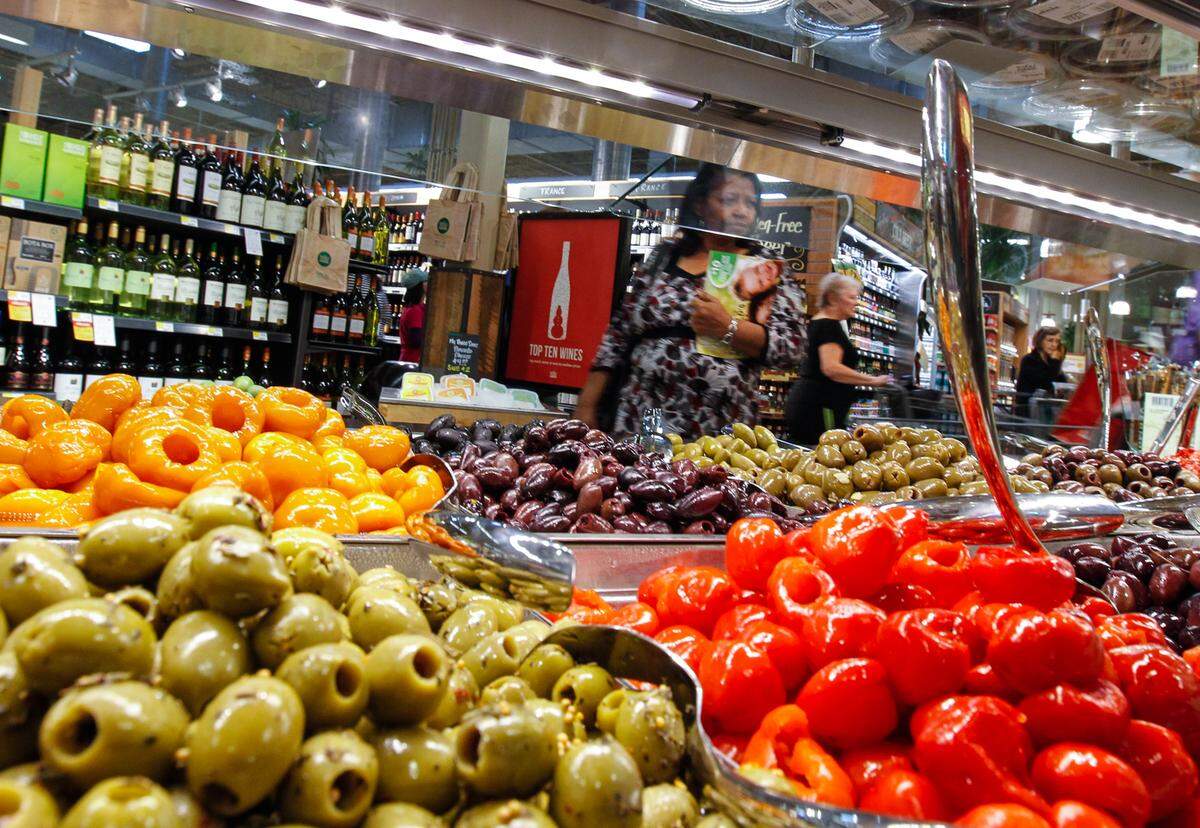
Both Whole Foods and The Fresh Market carry a variety of finer-quality, organic and otherwise specialty products. At The Fresh Market, for instance, you’ll find specialty chocolates, curated selections of cheeses, custom-roasted coffees and freshly sourced meal kits.
Whole Foods also has a wide array of store-brand products that often are comparable in price to other chain grocers’ house brands — for instance, a pound of spaghetti for $0.99 or a pound of bananas for $0.49.
A few more takeaways
The most expensive and least expensive stores were little surprise to us in our shopping endeavor; these stores’ reputations are well known.
However, we were a little surprised to see Trader Joe’s in the upper-middle tier of costliness, as the store is generally known for high-quality products at lower prices. Like Aldi, TJ’s doesn’t carry many name-brand products and carries a slimmer overall product selection, which keeps a lot of its prices lower. The products that seemed to push our bill slightly above the other middle-tier stores were ice cream, flour, tuna and green beans.
Here are a few other tidbits we took away from our shopping:
- There was little variation in the prices of spaghetti, bananas and canned beans across stores. In fact, one of the overall most expensive stores — Whole Foods — had some of the cheapest prices on both bananas and spaghetti.
- The biggest price spreads were for ice cream ($1.95-$5.99), ground beef ($3.19-$6.29) and tuna ($0.68-$2.99).
- If you want to hit as many stores as possible in the smallest possible area, head to Sunset Boulevard in Lexington, the epicenter of grocery shopping in the Midlands. Within sight of each other at Sunset’s intersection with Hope Ferry Road are Lowes Foods, Aldi, Lidl, Target and 14 Carrot Whole Foods (an independent store that is not affiliated with the Whole Foods chain). A couple minutes away are Publix and a Walmart Supercenter.
As with most household costs, you might have to adjust your grocery budget over the coming year. Food prices are predicted to rise as much as 1.5% this year, according to the Consumer Price Index forecast by the U.S. Department of Agriculture. Eggs are predicted to see a particularly large price jump, as much as 6%.
This story was originally published March 13, 2020 at 5:00 AM.