
Conflict of interest? Councilman with ties to Richland mega church pushed road project
Richland County Council member Chip Jackson voted nine times for improvements to Atlas Road in Lower Richland during the past three years, even though he worked for a church and its nonprofit arm that would benefit from the road work.
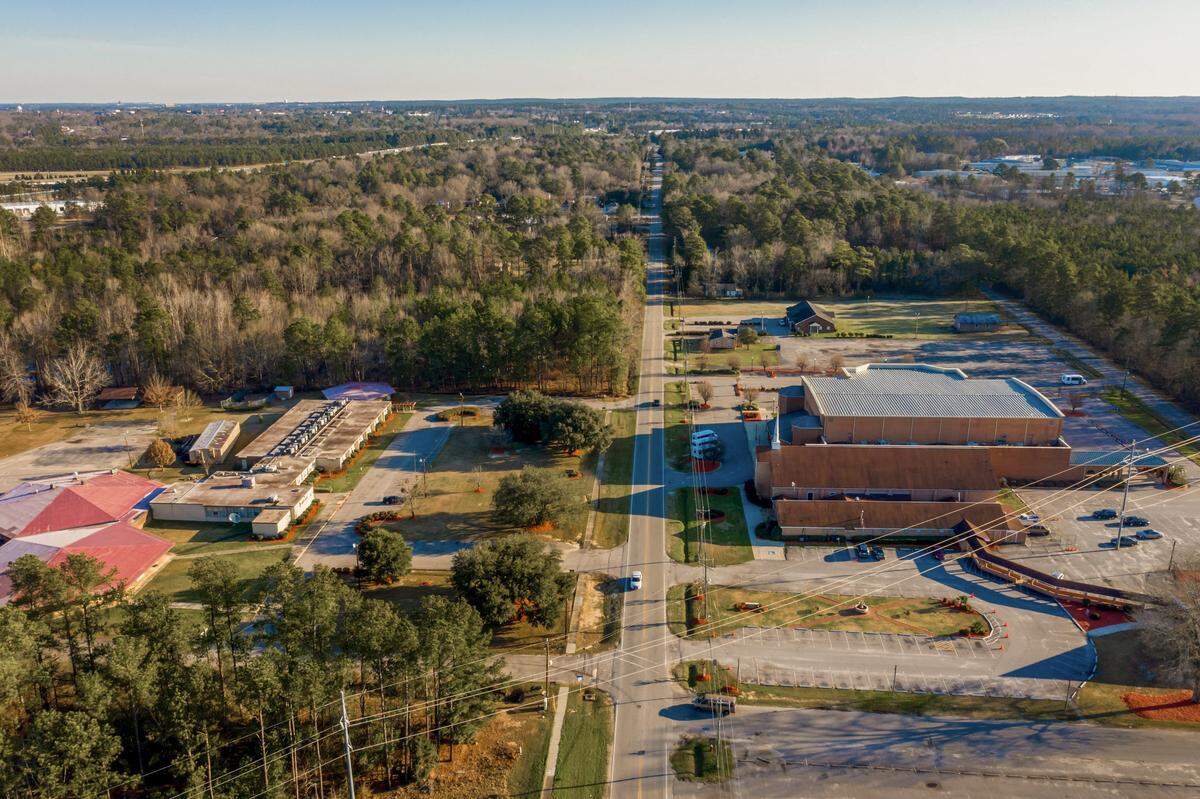
The popularity of the megachurch, Bible Way Church of Atlas Road, and its plans to sell surrounding property to developers, were part of the reason Atlas Road was originally slated for $17 million in improvements, according to the county’s transportation director. The money was to come from the county’s controversial $1 billion penny sales-tax program that voters approved in 2012.
Jackson’s dual roles as a council member and consultant for the church is a potential ethics violation, according to ethics and legal experts who spoke with The State Media Co.
Jackson did more than just cast votes for the road project. His involvement with the faith organizations ran so deep that he helped steer $1 million from the church’s nonprofit to an LLC he created in 2017 — unbeknownst to his fellow county council members — to further the church’s development goals along Atlas Road.
“To be selling something when you got a secret agenda, or the appearance of a secret agenda, is sleazy,” said John Freeman, a lawyer and ethics emeritus at the University of South Carolina.
Ethics laws bar elected officials from casting votes that give an “economic benefit” to themselves or organizations with which they are associated. An economic benefit doesn’t just mean money; It can be a motivator or an incentive that influences a vote, said Dan Wueste, a professor of ethical and political philosophy at Clemson University.
“It would be hard for me to imagine anyone with a straight face to say there’s not a conflict of interest,” he said of Jackson’s situation. “I’d say it’s obvious there is a conflict.”
Jackson, 64, denies having a conflict or doing anything intentional to benefit Bible Way Church of Atlas Road. He says he has acted in good faith while on county council, even recommending and voting in favor of a May 5 proposal to drop a portion of Atlas Road from the county’s list of road improvement projects. The now-shelved $9 million piece of the project would have widened the road in front of the church and several of its planned development sites.
Jackson said he’s taken other steps to follow ethics rules too.
Two months before taking office in February 2017, he said he resigned from his job as chief operating officer for the church “specifically ... to make sure that there wasn’t an appearance of any conflict” regarding the Atlas Road widening project.
But a review of records by the newspaper shows that he stayed on as a paid consultant and served as treasurer for the church’s nonprofit arm, Midlands Community Development Corporation, also located on Atlas Road. The nonprofit provides youth and senior programs and food assistance to the Atlas Road community.
When questioned by the newspaper on why he initially resigned from the church but stayed on as a consultant and continued to serve as a nonprofit board member, Jackson said he isn’t paid by MCDC. Furthermore, he said there was a big difference in his role as the church’s COO, overseeing the majority of the church’s operations, and his much smaller role as a consultant, where he only worked on an as-needed basis.
Since being elected, Jackson has served as chairman of the county’s transportation committee, which frequently discussed and made recommendations about Atlas Road. Additionally, he has cast votes about the road project as a member of county council.
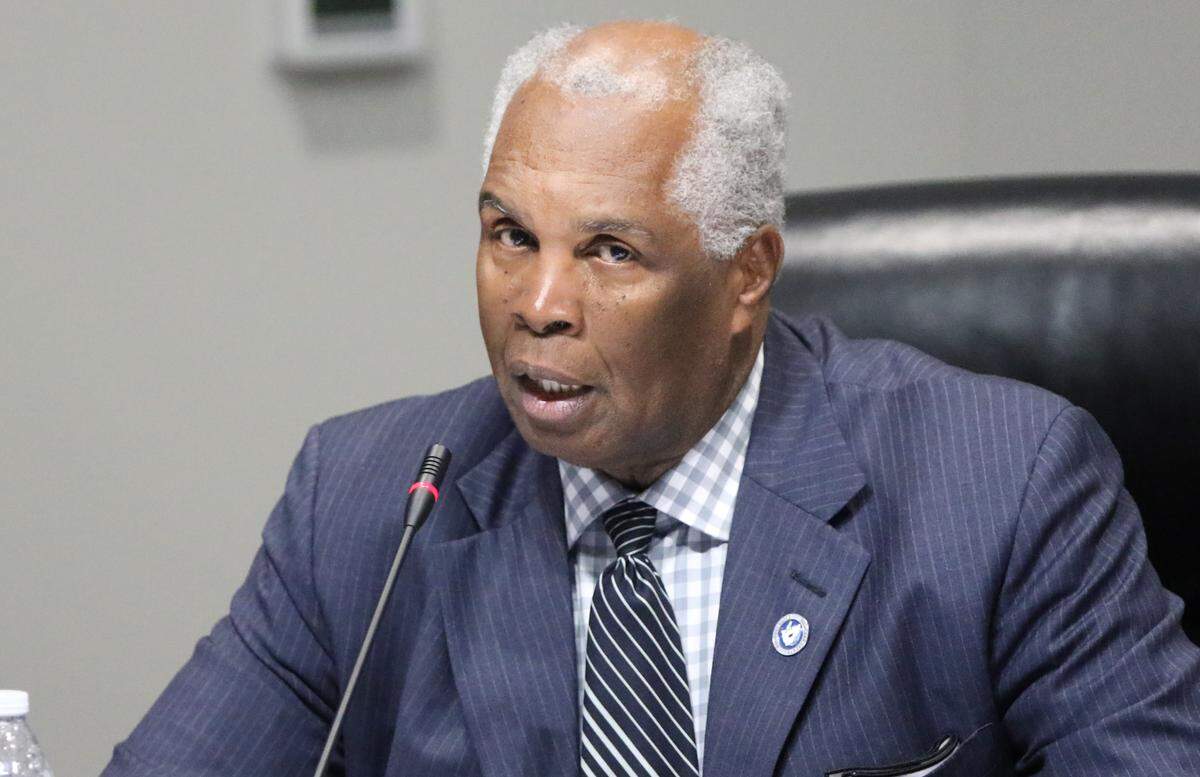
Jackson said he has not recused himself from Atlas Road discussions or votes because he did not think he was required to do so. And, he said, he has treated all of the county’s road projects the same and not given special treatment to Atlas Road.
“There was no attempt on my part to hide anything. I just didn’t even think about it like that,” said Jackson.
But some Lower Richland residents see it differently.
Resident Wilhelmina Watson-Colclough says she is troubled that Jackson voted for Atlas Road improvements while working for the church and nonprofit.
“I don’t care who you are, that is not right,” she said, adding that it is more proof the county has mismanaged its penny sales-tax program. More than $40 million generated by the program has been misspent, according to a 2019 audit by the S.C. Department of Revenue.
“Had I known that the penny tax was the way it is, I would’ve never voted for it,” she said.
Another Lower Richland activist, Mark Jackson Kirkland, said Jackson had a conflict that should have been disclosed.
“Transparency has never been a forte of politicians in our state,” she said. “You always find out after the fact.”
Development along Atlas Road
An analysis by the newspaper shows that Jackson worked behind the scenes to help the two faith-based organizations that employed him pay off debt and sell land to developers, while also voting for improvements to the road that the organizations front.
Jackson has served in various roles with the church and nonprofit, according to public records, including some that overlapped with his time in office that began February 2017. They include:
- Chief operating officer for administration at Bible Way Church from 2005 to 2016.
- A paid consultant for the church from 2017 to 2019.
- Treasurer for the church’s nonprofit, MCDC, since at least 2006 to 2019.
- Executive director of MCDC in 2017.
- Bible Way Church board member and vice chairman in 2017.
- Registered agent of Atlas Road Development LLC, a company formed in 2017 by the church and MCDC.
Longtime government watchdog John Crangle, who helped write the state’s ethics law, said elected leaders can seek free legal opinions from the state Attorney General’s Office and the S.C. Ethics Commission when potential conflicts arise. Officials for the AG’s office and ethics commission said they gave no such ruling to Jackson during his tenure in office nor did he request one.
“I think a lot of (elected officials) just don’t give a s***,” said Crangle. “Ethics is not a priority in South Carolina. It never has been.”
The ethics commission has also consistently ruled that elected officials should abstain from deliberations and votes when the organizations they work for have business before government bodies that they serve on. Those potential conflicts are also supposed to be entered in the minutes of board meetings.
In Jackson’s case, that didn’t happen.
The councilman initially told the newspaper in a December interview that he didn’t know why his economic interest forms — which elected leaders must submit to the state annually — show he was a paid consultant for Bible Way Church and said he didn’t know why tax records list him as treasurer for the church’s nonprofit, MCDC.
He also denied involvement in the church’s development planning and said he had not worked there since being elected to county council in 2017. Later that day, however, he said he was mistaken and acknowledged that he did work for the church while in office.
“My last check from the church for the development work was September 2018,” he said.
The amount Jackson has been paid while working for the church is unknown. Forms submitted to the state don’t require that level of detail. Church leaders wouldn’t share the information or show that he is on its board.
Jackson has argued that council adopted the list of road improvement projects, including the Atlas Road work, nearly four years before he took office. And he says his votes since then — to approve contracts, utility work and land acquisitions — never pushed the Atlas Road project along because construction never started.
“No projects that have exceeded the (original) referendum amount have been given the green light to be moved forward,” he said.
Actually, millions in public money has gone toward the project — about $6 million, according to county documents. And $27,500 of that was paid to the church and its nonprofit for right-of-way easements during a time that church officials were selling land to spur development. Opportunities for future developments were a top-grading criteria in how penny projects were selected.
Jackson, along with other council members, voted to push the project forward on multiple accounts, even as its cost nearly tripled from $17 million to $45 million. Initial cost estimates failed to take into account the relocation of utilities and more.
A million-dollar deal
Unknown to the public and to fellow council members who spoke with the newspaper, Chip Jackson did more than just vote on Atlas Road improvements. He played a role in a series of financial transactions involving more than $1 million between the church, MCDC and private developers.
While Jackson has said he isn’t closely involved with the organizations — other than attending the church — and has limited knowledge of the groups’ Atlas Road development plans, documents suggest otherwise.
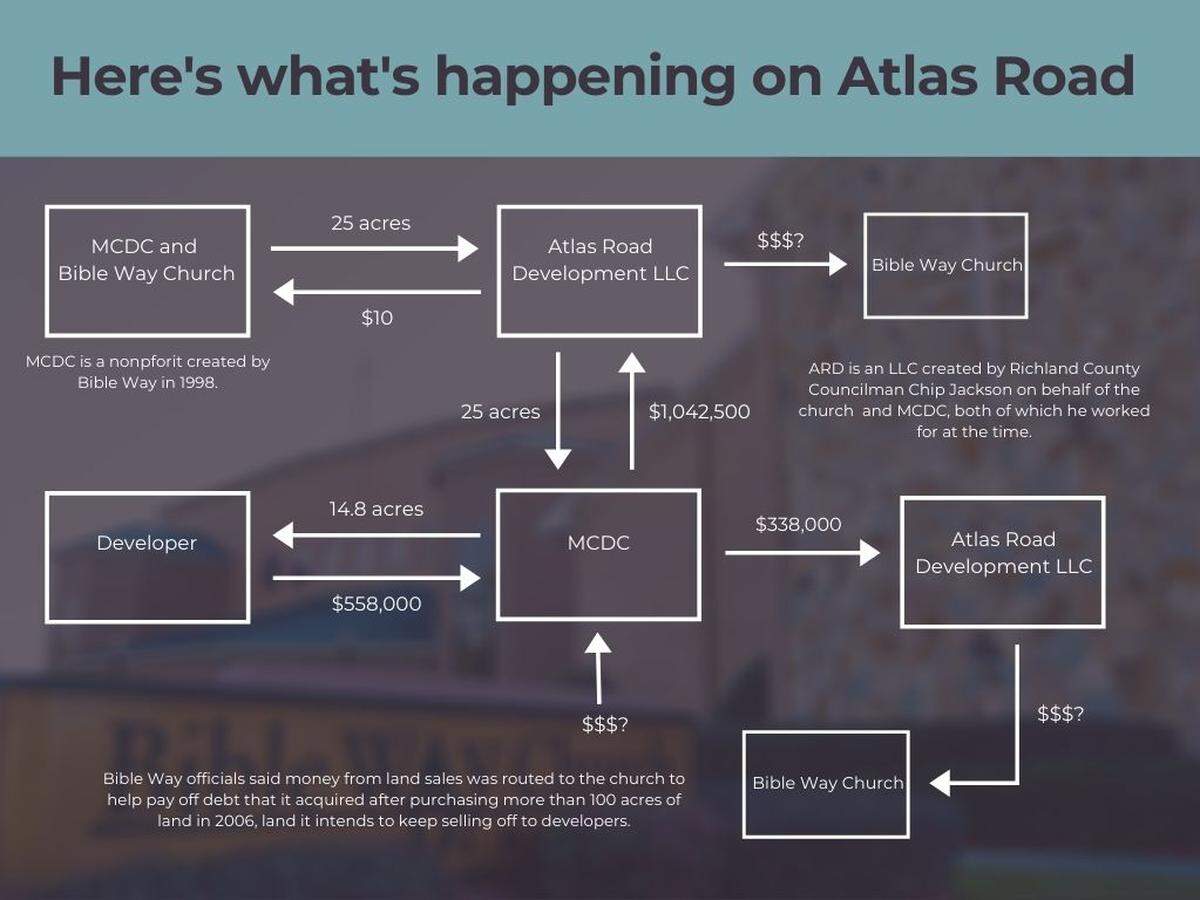
In September 2017, Jackson, who was a church consultant, director of MCDC and a member of county council at the time, signed paperwork to create the Atlas Road Development, LLC. He recently told the newspaper he didn’t know he was the LLC’s registered agent and didn’t know who owned it, despite signing documents showing who did.
The purpose of the new business? It was a way for Bible Way leaders to legally protect church assets while also selling pieces of the 100 acres it had recently purchased along Atlas Road to private developers, according to an attorney for the church and nonprofit. Documents obtained by The State show the church owns 80% of the LLC and the nonprofit owns the rest.
Over the years, the church and MCDC have sold about 32 acres to developers to build a housing community and a senior living facility. A grocery store is now in the church’s sights as its leaders work to revitalize the Atlas Road community. The LLC was used specifically for the church’s more recent transaction.
While a series of financial transactions routed though the LLC in 2017 are legal, according to attorneys interviewed by the newspaper, they are complicated to follow. For example, in just two days, the LLC received more than $1 million from the publicly funded MCDC. The nonprofit, with financial help from another organization — the S.C. Community Loan Fund — bought back land it and the church had jointly owned just a day earlier, land it practically gave away to the LLC for $10.
“I know that the purpose of (the LLC) was to establish an independent organization from the church to be able to pursue this development,” Jackson said. “The development itself was designed to create an opportunity in the Atlas Road community.”
But that particular transaction could be an issue. After MCDC sold a parcel of land to the senior living facility developer, it then directed some of the money — potentially hundreds of thousands — to the church.
As a result, the church is receiving an economic benefit from a publicly-funded nonprofit, something church leaders have said doesn’t happen.
“It does raise an eyebrow automatically. There’s a lot of questionable stuff going on here,” said Wueste, who also serves as finance chairman of the Association for Practical and Professional Ethics.
Sen. Darrell Jackson, Chip Jackson’s cousin and the senior pastor of Bible Way Church, has defended the transaction, saying the church is simply getting paid back, not financially profiting. Church leaders borrowed $2.6 million in 2006 to purchase the 100 acres and still owes about $1 million. Proceeds from the land sale are paying back the loan, he said.
Church and nonprofit leaders are on the hook to sell more land to finish paying off the debt. No taxpayer dollars are expected to be used for the purpose, said an attorney involved in the deals.
That’s important because the nonprofit has received at least $6.8 million from state and local government over the past two decades. If any of those public dollars benefited the church and its development plans rather than the nonprofit, it could be considered illegal.
Sen. Jackson has also said he didn’t have anything to do with the county’s Atlas Road widening project and that no tax dollars have been used inappropriately, adding that construction work to widen the road would have inconvenienced his church, not benefited it.
He has previously acknowledged that some state money may have been used to help with administrative costs for other development projects instead of their intended purpose.
Richland County funding
The nonprofit has benefited since Chip Jackson was sworn into office in February 2017.
MCDC has received at least $350,000 from Richland County taxpayers since then to pay for renovations to the C.R. Neal Dream Center where MCDC is housed, according to county documents. Chip Jackson voted in favor of at least $200,000 going to the center as part of the county’s 2018 annual budget.
As the nonprofit’s treasurer, the councilman would have presumably overseen the spending of those county dollars. He is still listed as MCDC’s treasurer, according to its most recent tax filings.
But Chip Jackson said that he hasn’t attended an MCDC board meeting in more than a year and probably shouldn’t be listed as a board member. He was unaware MCDC was receiving county money, he said.
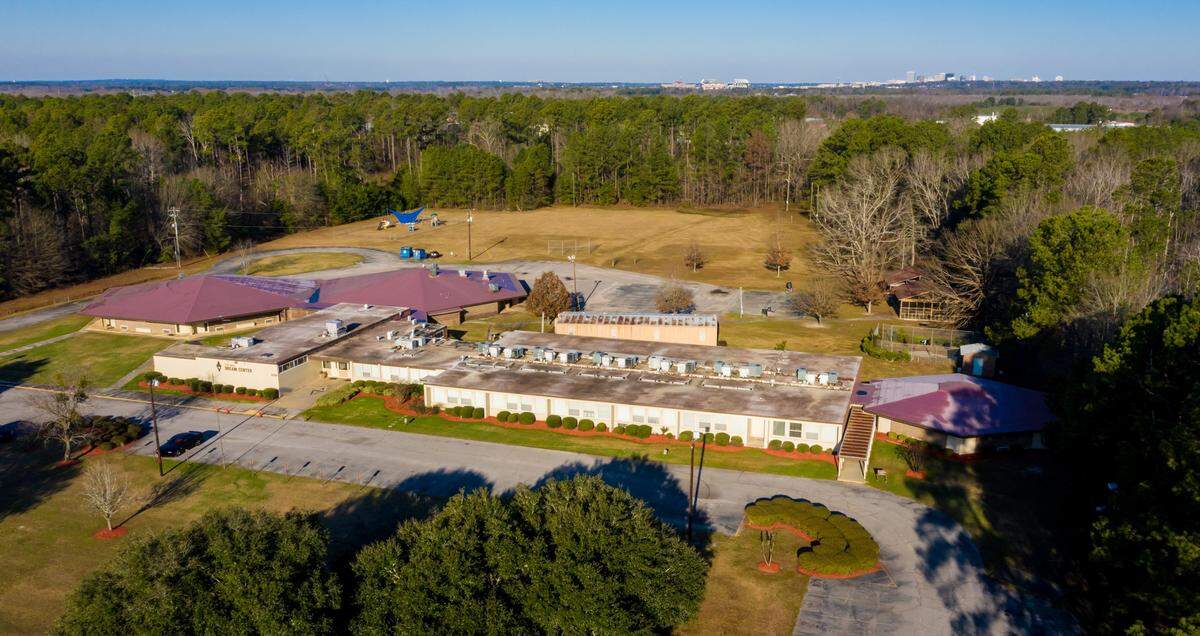
The C.R. Neal Dream Center is owned by the Richland 1 school district, which gave MCDC a 99-year lease for $1 a year, according to church leaders. So any upgrades given to the building don’t benefit MCDC, Chip and Darrell Jackson argue.
But two Richland County Council members, who wouldn’t go on record, say they’re troubled to learn that Chip Jackson is treasurer for a nonprofit receiving county dollars.
One who would speak publicly was Dalhi Myers, who in 2018 requested to send $1,500 in hospitality tax dollars to Bible Way Church for an anniversary celebration.
She said she’s known about her fellow councilman’s ties to the groups but was unaware of his voting record on Atlas Road, adding that she wasn’t overly concerned about it. Like Jackson, she said her main priority has always been keeping penny projects within their original estimated budget.
“If the public voted to have $20 million to do a project, then that’s what we got to do it,” Myers said.
Chip Jackson said he’s worked diligently to tackle many of the penny program’s issues since being elected and doubts that others on council didn’t know about his ties to the church.
In an email to The State, he said council’s recent decision to scrap nearly $200 million in penny project work, including $9 million from the Atlas Road widening from Shop to Bluff roads, where the church and nonprofit are located, is a “huge victory” for county taxpayers and one that can restore their trust in the program.
That decision, however, came months after The State first began questioning his role within the organizations.
“My goal was to make sure this program was performing in a manner that would not focus on silencing the critics (for whom many of their complaints were justified) but rather to ensure the program served the citizens as it was intended to do in 2012,” Chip Jackson wrote in the email, adding that the penny program moving forward will be handled in a “more transparent and fiscally responsible manner.”
This story was originally published June 18, 2020 at 5:00 AM.