
Lexington Co. candidate backed business park that cost taxpayers $16M, created 0 jobs
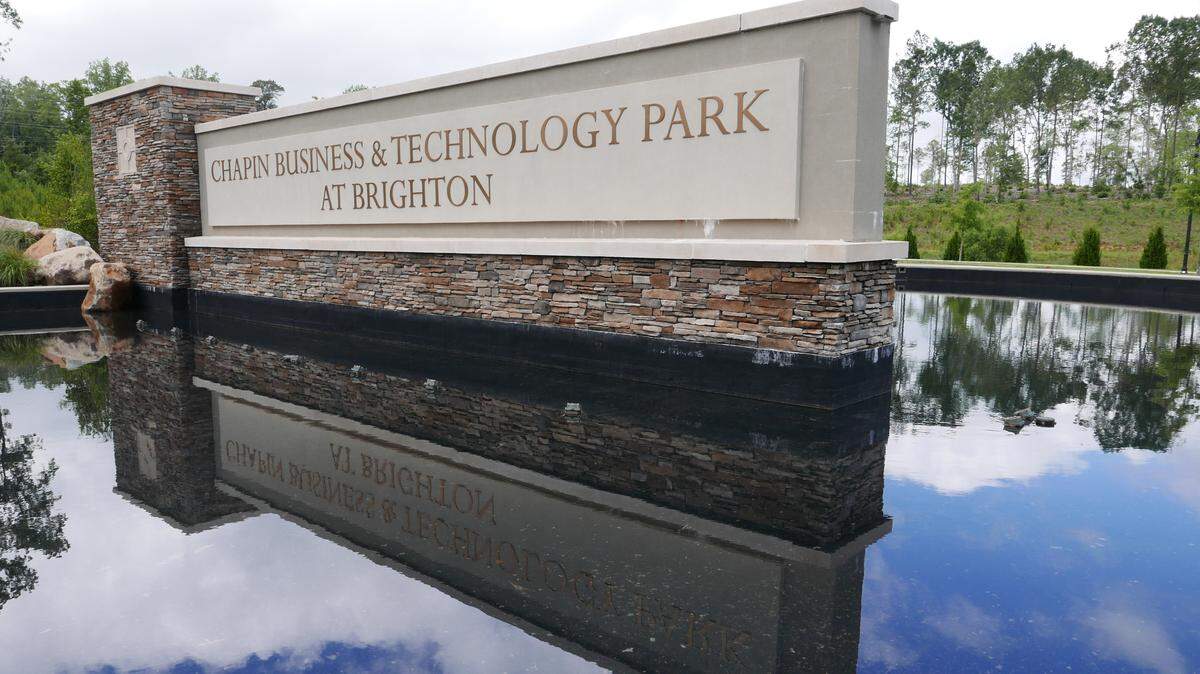
A former Lexington County Council member running for his old job was a key player in orchestrating an economic development project that has cost the taxpayers millions and so far created no jobs, county officials say.
Johnny Jeffcoat led the county into an irresponsible business decision in creating the Chapin Business and Technology Park at Brighton, said County Council member Erin Long-Bergeson, who for four years has represented Jeffcoat’s former district but is not running for reelection. The vision was for a modern version of an industrial park, one where office buildings, homes and retail businesses would be clustered in the same community.
But over a decade after the idea was conceived, Lexington County has spent more than $16 million on the park and the 200 acres sit empty, off the tax rolls, and costing taxpayers more money each year.
Records reviewed by The State also indicate that the county:
- Paid more for the land than officials believe it was worth
- May be able to use only about half of the land purchased
- Built an access road and paid for water and sewer service to the park that may also benefit a developer
Jeffcoat said he still believes the park can be successful.
“There’s no reason in the world that I can see why we don’t have business over there,” he said. “I really think it’s a real gem for the town of Chapin. I really do. And I think if built out, it could be a destination.”
During part of his more than two decades on Lexington County Council, Jeffcoat served as chairman of the economic development committee. He oversaw projects meant to spur growth and attract businesses to the county, but the Chapin park was the first of its kind that he brought to his own county council district.
“It’s touted as this great investment. And it’s one of the worst investments in history,” Bergeson said.
And the park will probably always be empty, Bergeson said, because it was a terrible deal. Bergeson, a CPA with experience on Wall Street, was tapped by family friend Jeffcoat to run for his spot on county council when he left in 2016. Jeffcoat said he’s known Bergeson since she was a young girl and thought she would be good fit for the job.
But once she got into office and started researching, Bergeson said she was so disturbed by the project that she cut off ties with Jeffcoat. She is instead endorsing Charli Wessinger, a Chapin educator and first-time candidate, in Tuesday’s Republican primary against Jeffcoat.
‘Probably not a bad idea’
The Chapin park was an ambitious idea: a public-private partnership to build a “live-play-work” neighborhood just east of Chapin, a lakeside town that serves as a bedroom community to Columbia.
Several of developer Stewart Mungo’s corporations had bought up land in the area along Columbia Avenue in the mid-2000s. Around 2012, the Mungo Co. drafted a master plan and the concept was presented to county leaders, according to two council members.
Mungo said the county, not him, pitched the idea for a business technology park.
Council members were sold on the idea, in large part by Jeffcoat’s emphatic recommendation that they pursue it, according to council member Debbie Summers, who served as vice-chair of the economic development committee.
“It was something that was highly encouraged,” she said. The property “was pushed or marketed in a way that it would be this phenomenal development.”
The county already had two county-owned industrial parks. Saxe Gotha industrial park in Cayce was for manufacturing and assembly, and it became home to Nephron Pharmaceuticals, which employs more than 650 people. Across the county, the Batesburg-Leesville park was intended for heavier manufacturing and agricultural work in a more rural setting.
The Chapin park would be different, meant for research and development, business, technology and “knowledge-based” employees who wanted to live near their jobs, county council members said.
“When it was presented as such, it did seem very interesting to us because we didn’t really have anything like that,” Summers said.
Similar mixed-used projects were taking off in other U.S. cities as demand from employers transformed boring suburban office parks into “villages” with amenities that would keep modern workers happy — coffee shops and nature trails, restaurants and beautiful employee break rooms. But most similar projects were privately developed. This would take public investment.
“That concept of having a facility close to some kind of mixed-use is probably not a bad idea. It is contemporary, certainly. It’s kind of unique,” said Mark Farris, president and CEO of the Greenville County Development Corp. Farris said he was not familiar with the Chapin technology park but he has helped create multiple industrial parks in South Carolina.
The thought process went like this, county council members said: Companies, especially international ones, want space quickly and easily, but each company has its different needs. Having a variety of parks would be an asset, upping the county’s chances of landing major companies expeditiously, according to council member Todd Cullum.
“Business doesn’t want to wait long enough for somebody to put pipe in the ground,” he said.
Chapin’s park would complement what already existed.
Mungo said he didn’t come up with the idea for the park, he just happened to be planning a mixed-use development next door and his timeline aligned with the county’s.
Jeffcoat said he and the county’s economic development director, Chuck Whipple, developed the idea for a technology park in Chapin after visiting similar parks around the state.
“My main idea at the time was to see that we could get a place to get a park started so that Chapin could have some jobs,” Jeffcoat said.
When the county needed access to Columbia Avenue, Jeffcoat said he reached out to Mungo and learned of his plans. Emails show that in mid-2012, Whipple spoke to Mungo about forging a public-private partnership.
“He said that he would prefer to sell but would entertain the concept,” Whipple wrote.
Documents obtained by The State and interviews with county officials showed Mungo was intimately involved in the project from early on.
Looking at the state of Chapin Business and Technology Park now, former state Commerce Secretary Joe Taylor said it’s an example of why government should get “out of the industrial park business.” Private industry is aggressive in its pursuit of return on investment. Government employees spending tax dollars don’t have the same sense of urgency, said Taylor, who helped net Amazon for the Saxe Gotha park.
“They get paid the same every Friday whether anybody goes in that park or not,” he said.
As of April, Lexington County had poured more than $16 million into the Chapin Business and Technology Park at Brighton. Documents show that county leaders overpaid for the land and left taxpayers on the hook for infrastructure that may also benefit the private developer.
Between summer 2012 and 2013, Lexington County spent $5.1 million on 221 acres, a combination of land from five different owners. The first round of purchases in summer 2012 was a patchwork of contracts:
65.98 acres for $23,000 an acre
8.75 acres for $22,000 an acre
65.5 acres for $19,750 an acre
20.1 acres for $18,000 an acre
In May 2012, county assessor John Morrow assessed the property’s value at $14,000 per acre on average.
The county spent $23,000 per acre on average, including a 10% “assignment fee” for each purchase. The full county council voted to purchase all of the property.
In spring 2013, county leaders spent $1.5 million on another 58 acres, this time from Mungo. At $26,000 per acre, it was again above fair market value of $18,000 per acre, according to county staff emails obtained by The State.
Bergeson, who was not on county council when the land was purchased, said she never got clear answers about why leaders bought extra land from Mungo, or why they overpaid for it.
Cullum said that when officials began laying out the property, they realized Mungo’s land “could be additional expansion for the park.” He said he did not remember why the county paid more than fair market value for the land.
Emails from July 2012 show that Whipple responded to Morrow’s assessment’s of the land’s value by saying the county could aim to buy 60 acres from Mungo at $20,000 per acre. Jeffcoat emailed back, insisting that he thought Mungo was unlikely to sell his “choice land” for less than $25,000 per acre.
Summers said buying additional land was “not unusual,” but that overpaying for the park property was a mistake. At the time, she believed the end result would be well worth the investment.
“For all the right reasons, it really seemed the right thing to do,” she said. “I just think we made some mistakes that we could have done better.”
But it took votes from all county council members to decide to buy the land at that price, Jeffcoat said — he couldn’t act alone. He said that if county leaders wanted to sell the technology park land today, the county could “get our money out of it, no problem.”
Summers said she still thinks the project is well-situated for future success, but others disagree.
The technology park land is flawed, according to Bergeson. The site receives water and sewer service through the town of Chapin, and doesn’t have the capacity to sustain manufacturing, the type of industry that most often brings many jobs to industrial parks. It is better suited for Class A office space, a kind of workspace that some real estate experts say could be in great peril in a post-COVID-19 world.
The topography of the land is also a detriment, Bergeson said. It is sloping and steep in some places, and there is a flood zone near the back of the park and wetlands near the front of it, according to county maps. Those issues, which can make construction more complicated and expensive, should have been seen as red flags during the county’s due diligence process, Bergeson said.
While Bergeson’s concerns applied to all of the land, Morrow, the county assessor, raised concerns about the land purchased from Mungo. In a February 2013 email, he pointed out that the section of the Mungo property that the county planned to buy was not the “most desirable portion.” County leaders bought it anyway.
Of the entire property for the technology park, just 121 acres are “usable,” according to county documents obtained by The State. County leaders spent at least $1.8 million on land that cannot be developed.
Jeffcoat said that’s to be expected when you buy a large tract of land. “It would be nice to use every single inch of it but that’s not practical and that just doesn’t happen,” he said.
Some question why the park was located in Chapin in the first place. The town and surrounding area have a relatively small workforce and many retirees. Other than background check company General Information Services, Chapin isn’t known for its business or its technology, said Bergeson, who grew up in Chapin.
Taylor, the former commerce secretary and developer, pointed to North Carolina’s successful Research Triangle Park, which sits between three research universities near Raleigh.
“If you’re going to build a technology park, do you build it in Chapin? Or over by the university or technical college?” Taylor asked.
County attorney Jeff Anderson expressed concern years before the county started on the park in earnest, emails show. In an early 2010 email to county Chief Administrative Officer Katherine Hubbard, Anderson said he pointed out the uncertain outcome of investing in Chapin to then-economic development director Chuck Whipple.
“I am at a loss as to why the county would consider the speculative nature of this project without more assurances,” the email said. “I told Chuck that I would have to tell Council that their investment would be very much at risk if they agree to put in the infrastructure on the front end with no assurances that anything will ever come there.”
Anderson and Whipple could not be reached for comment.
The park was built in Chapin because county leaders wanted to “spread the wealth” of opportunities, Summers said. The county council hadn’t invested significant funds in developing that corner of the county, Summers said.
But according to Bergeson, it was Jeffcoat’s pet project, and council members were accustomed to following his recommendations as economic development chairman.
“He told me he wanted a park in his district,” she said.
Can it still work?
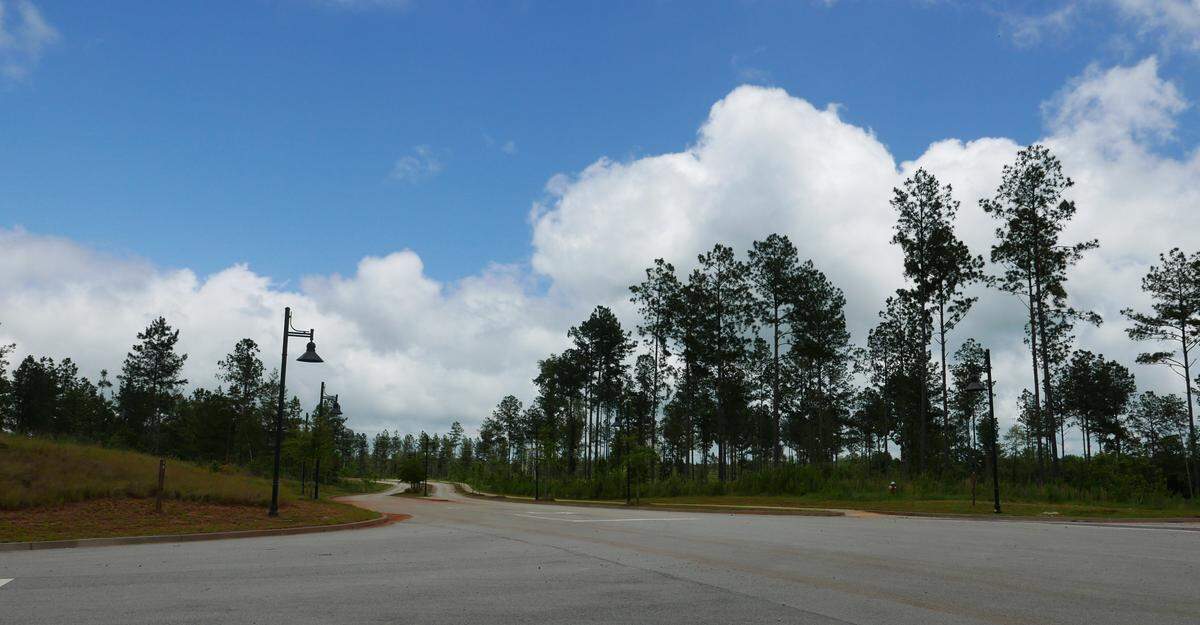
From 2013 until 2016, when Jeffcoat decided not to run for re-election and Whipple left his post, Lexington County spent millions on the park. The county and Mungo entered into various agreements, including one that gave the county easement access to construct a road through Mungo’s property to connect the business park with Columbia Avenue. The road cost the county $1.3 million, but Mungo paid nothing, although a site plan filed with the county showed it would serve as a main road for his development, too.
Cullum said he remembered discussions about the road being a “huge point of contention” because taxpayers would cover the cost for a road that could also help Mungo.
“Absolutely he’s gonna benefit from that,” Cullum said.
Mungo said he helped the county by giving them the easement for the road, which otherwise could have cost much more to buy. As of March, the county had spent more than $5 million on road improvements, and was still emailing back and forth with Mungo about whether the county would pay for turning lanes into the park.
“It would not be a good use of taxpayer funds to build turn lanes when there is currently no economic development project in the park,” said a March email from county administrator Joe Mergo.
The county also paid $751,533 for a fountain and signage at the entrance to the park in 2016, Bergeson said. The fountain, which has been broken for months, will cost $29,000 a year to maintain, according to a recent estimate.
The county also absorbed $458,150 in water and sewer upgrade costs that the Town of Chapin and Mungo were supposed to cover, according to documents and emails reviewed by The State. Bergeson and Summers said they don’t know why those bills were never sent, but that the costs would be recouped soon.
Mungo said he didn’t know why discussions about the Chapin Park were reemerging after so many years, and said it was “political.”
“After being two and a half years late, they’re going to send me a bill?” he said. “After Johnny left, they had very little leadership with all of it. It’s obvious.”
As for the rest of the money that’s been spent on the Chapin Business and Technology Park, some county officials hope the investment will still pay off, while others have doubts.
“I just want to hope that we can one day break even,” said Bergeson.
Summers said she thinks the park can still be successful, but economic development takes time — and the first recruit is always the hardest. Farris, the Greenville developer, said people are often surprised by his response when they ask him how long industrial parks can take to get going.
“The timeline is one that makes a lot of people nervous when they hear it, but it’s 10 years,” he said. “It’s going to be a long time.”
Cullum said he thinks the park was a good investment, but that the retail-residential portion of the community needs to be there in order to recruit companies.
“The success of this park is going to be basically everything that supports it,” he said.
Mungo has consistently voiced his complaints about the park to county officials in recent years, including at public county council meetings. He said the park is years behind schedule and “not a priority” at the county, so it slowed down his end of the work. Berkshire Hathaway acquired Mungo Homes in December 2018, meaning any future development plans are mostly out of his control, he said.
Still, there is potential to build a great community in Chapin if the county would turn its attention back to the technology park and promote it more, according to Mungo.
Building plans submitted April 1 to Lexington County by Civil Engineering of Columbia show “Brighton Hills” is slated to have 35 single-family homes completed by November 2020. The completion date of those homes has been pushed numerous times through the years, according to county documents.
For Jeffcoat, the problem is how little the county has kept up the appearance of the park and marketed it to prospective companies. He said if he is re-elected, the park will be his priority.
Others, like Taylor, say the county needs to cut its losses and find a way to get out from under the Chapin park. Even if county leaders find companies to take up residence at the park, it would still be far from getting a return on its $16 million, he said.
“How many jobs and how much new investment would they need to recapture the people’s money?” he said. “It’s insane.”