
The State Media Company sues USC for failing to comply with records request
The State Media Co. recently filed a lawsuit against the University of South Carolina for its failure to turn over public records, which could shed light on how the university’s projects, included in Richland County’s 2012 transportation referendum, received seemingly preferential treatment from county officials.
For 11 months, USC has failed to release documents for four record requests from the newspaper as required by the state’s Freedom of Information Act. For three of the requests, the university has not given an adequate response, acknowledging whether it has the requested documents. The State also has a fifth outstanding request sent Oct. 1.
A recent analysis of the county’s penny sales tax projects by The State found nearly one out of every $6 the county plans to spend from the referendum’s $656 million roadway fund will benefit the university and its sports facilities.
“We typically don’t comment on pending or active litigation,” USC spokesman Jeff Stensland wrote in an email to The State on Wednesday.
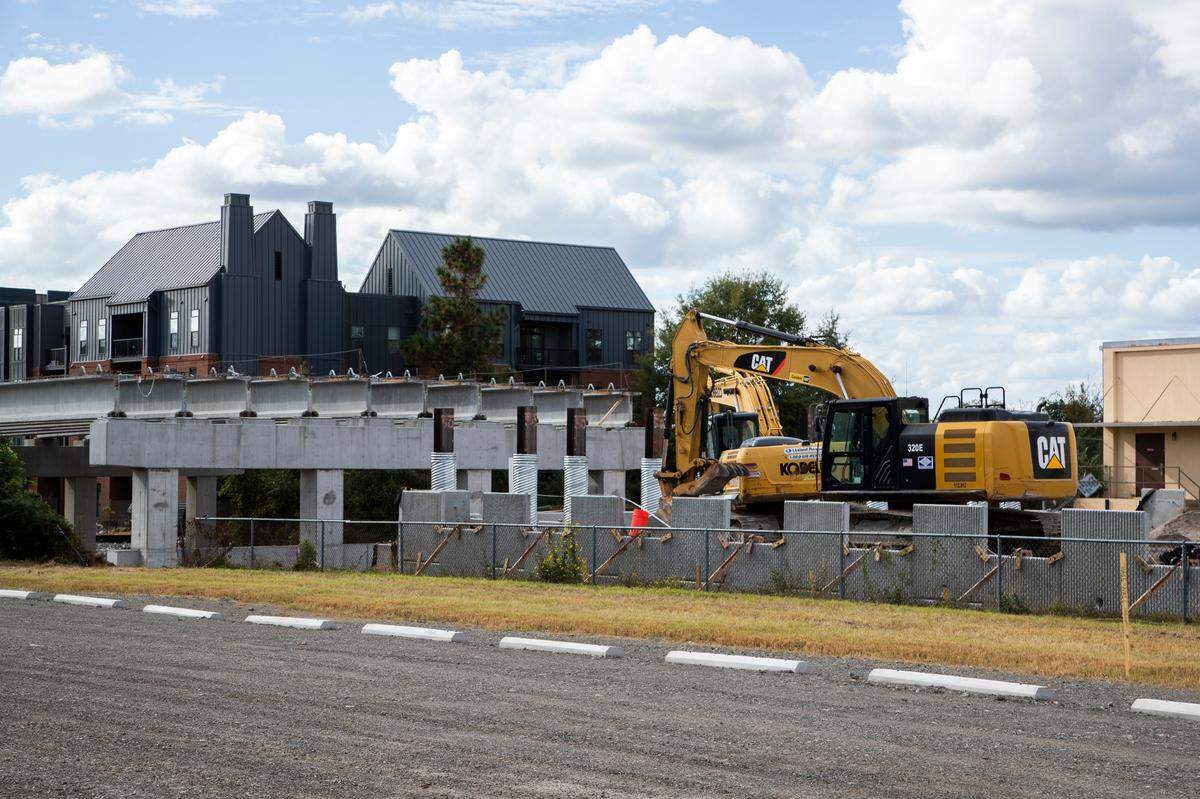
The largest USC projects are improvements to the Innovista, the school’s research campus, the creation of the Smith/Rocky Branch Greenway and the widening of Bluff and Shop roads near USC’s Williams-Brice football stadium.
Community activist and attorney James Carpenter of Greenville, who specializes in public interest law, filed the lawsuit on behalf of the newspaper.
“I think this is an important case because it seems USC has repeatedly ignored their legal obligations under FOIA and they need to be held accountable,” Carpenter said.
SC residents speak out
Taxpayers interviewed by the newspaper say they supported the referendum because their roads were to be fixed. But many residents still haven’t seen any real meaningful improvements eight years into the $1 billion roads program.
They want answers about why USC received much of the funding, while long awaited projects, like the paving of dirt roads and the widening of Pineview and Atlas roads, were significantly scaled back or scrapped altogether.
“We’re lost out here,” said Lower Richland resident Mary Rice. “We’re tired of promises not being met.”
In January, The State newspaper first made requests for documents, including contracts and payments made to university officials and marketing firms who promoted the county’s penny sales tax, as well as the university’s ties to groups that oversaw the construction of penny projects. A USC spokesman said the school was reviewing the requests but did not provide status updates when asked.
The newspaper also twice reached out to a USC attorney in May, five months after the requests were sent, asking him to intervene to ensure the school complied with the law.
Still, no documents have been furnished.
“There is no way it should take this long and be this hard to get a response to an FOI request,” said Bill Rogers, an advocate for open government and executive director of the S.C. Press Association, of which The State is a member.
The State has made multiple attempts over the year to ask USC for status updates for the other records and to interview administration officials about the school’s penny projects. Most of those efforts went unanswered.
“The requests started in January and concerned documents the public clearly has a right to see,” Rogers said. “This begs the question: Why is USC dragging their feet on this?”
In October, the newspaper made another request for payments made to a marketing firm involved in promoting the sales tax increase. By law, those records should have been fulfilled by November, but the newspaper has yet to receive any documents or a legally sufficient response.
The requests for penny-tax documents is not the first time USC has failed to follow the law and provide documents in a timely manner. The newspaper has also previously requested:
Communications between USC Board of Trustee members regarding the school’s $2.5 million purchase of land tied to a board member. USC never responded to that request made in March. Correspondence between USC board members is public record. USC has released similar documents previously, including in the wake of its controversial 2019 presidential selection.
Copies or access to video interviews with all presidential finalists. The school never responded to the July 2019 request.
Copies of USC President Robert Caslen’s daily coronavirus report. A spokesman acknowledged the Sept. 1 request but the records have not been provided months after the required legal time frame.
What the law requires
Taylor Smith, an attorney with the S.C. Press Association who specializes in FOIA law, said the law is clear; Public bodies have a duty to respond to written requests for information in the required time frame no matter if there are available records. If the agency believes the records are exempt, the public body must cite the applicable statute.
In South Carolina, the response time for records is generally 10 business days and the furnishing of any available records must be done within 30 calendar days of an official response, Smith said. More time is given for records that are older than two years.
“You can’t avoid your lawful duty under the state’s open records laws,” Smith said. “And ignorance is not a defense for a request for information.”
USC’s refusal to respond to public records requests goes back years.
In 2019, The State requested a copy of an investigative report concerning hazing and alcohol violations against the Women’s Club lacrosse team from a year earlier, which resulted in the group being suspended until 2022. After the statutory deadline to respond to the request had passed, The State followed up with USC and a spokesman said he would “follow up with the appropriate offices today.”
The State has still not received the records or an official denial of its request.
USC has consistently denied records requests from not only The State, but also other news organizations and private citizens. In spring 2019, a Charleston resident requested a log of all Freedom of Information Act requests USC had received and answered. He accused USC of not providing those records in the legally required time frame and filed a lawsuit. After the suit was filed, USC agreed to streamline its database of FOIA responses.
Despite the lawsuit and several articles pointing out USC’s violations, the state’s largest school continues to ignore some FOIA requests.
When the Post & Courier of Charleston sent USC a FOIA request in March, seeking information on potential sexual assault or Title IX violations, the school failed to turn over the information, months after it was required to do so, according to the newspaper.
In 2017, the South Carolina Policy Council, a libertarian think tank, conducted an audit of public agencies’ compliance with FOIA and found USC didn’t respond to its records requests.
S.C. Policy Council President Ashley Landess said USC in the past has argued it has proprietary information related to economic development exempt from FOIA, but rarely cites the necessary statute, as required by law. She said that’s because the exemption claim is weak and wouldn’t hold up in court, adding the university will ignore such requests instead, daring to be challenged.
“They are in direct violation of the law,” said Landess of the newspaper’s requests. “I don’t even see how that’s up for debate. And I don’t see how they are never held accountable for it.”