
Former journalist, state spokesman remembered as man of many interests who built bridges
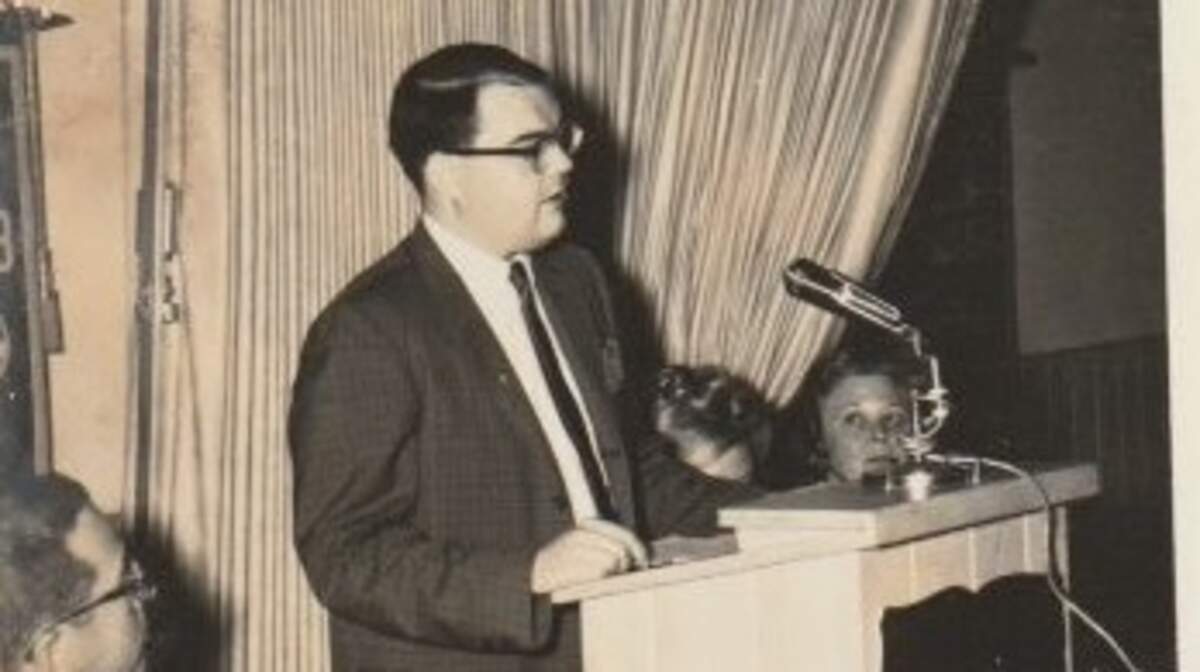
Sam McCuen told the truth.
He told the truth as a reporter in the pages of The State, as a spokesman for state agencies and to the business leaders he coached as a press consultant.
“’Never, ever lie’ was one of his commandments, ‘for you will be found out,’” said John Monk, a veteran journalist for The State, who called McCuen for information when he worked as a spokesman for the Department of Corrections.
His honesty was matched by an uncanny ability to connect with people, a characteristic that he used to encourage and help others.
“He’s going to help somebody — whether they want it or not — to be the best they can be and to get as far as they can,” said Sandra Holland, McCuen’s daughter and deacon of St. Andrew’s Lutheran Church of Columbia.
McCuen, 80, died on Dec. 29. A private service will be held on Sunday at St. Michael’s and All Angels Episcopal Church in Columbia.
McCuen worked behind the scenes and occasionally in the spotlight of many organizations that shape Columbia, the Midlands and South Carolina, including the Columbia Museum of Art, Palmetto Place Children’s Emergency Shelter and the South Carolina Center for Birds of Prey.
The Columbia World Affairs Council, which McCuen also worked with, joked that he served on possibly “every board of directors in the state.”
A man of eclectic tastes and experiences, McCuen recorded a garage rock doo-wop record, became an expert on a South Carolina turtle species and helped raise more than a million dollars for charities and cultural organizations.
“He was a stalwart and champion friend of all,” leaders of the Columbia World Affairs Council wrote in a statement. McCuen “gave all of himself to those people and causes in which he believed.”
‘He’s a friend of mine’
But before he sat on seemingly every board in South Carolina, McCuen sat behind a typewriter for The State newspaper.
He attended college at the University of South Carolina, where he studied journalism and graduated in 1963. He began writing for The State before he left college. McCuen had his first byline in The State on Dec. 22, 1962, with an article about a Dillon County senator’s improvements to the school system.
He wrote about crime, including the homicide of a Black teenage girl that went on to become the Midlands oldest cold case. The State revisited the case in a 2019 article.
McCuen also covered the civil rights movement. In 1963, he was one of a few reporters who wrote about Malcom X visiting and speaking in Columbia.
McCuen met Malcom X at the airport with a young, idealistic charm.
“I was so young and stupid, he probably didn’t figure I was very harmful,” McCuen told The State in 2013 for a retrospective about Malcolm X’s stop in Columbia.
After interviewing Malcolm X over the multi-day visit, McCuen’s ability to connect with people had made him a new friend.
At the end of a talk at a Columbia mosque, McCuen was the only white person left in the building. Malcolm X approach the reporter with his body guards. Malcolm X asked for McCuen’s car keys.
“”This is Mr. McCuen’,” Malcolm X told his body guards. “’He’s a friend of mine. Check his car and make sure there’s nothing in the back seat and the tires aren’t slashed, and watch until you see his tail lights disappear and report back to me’.”
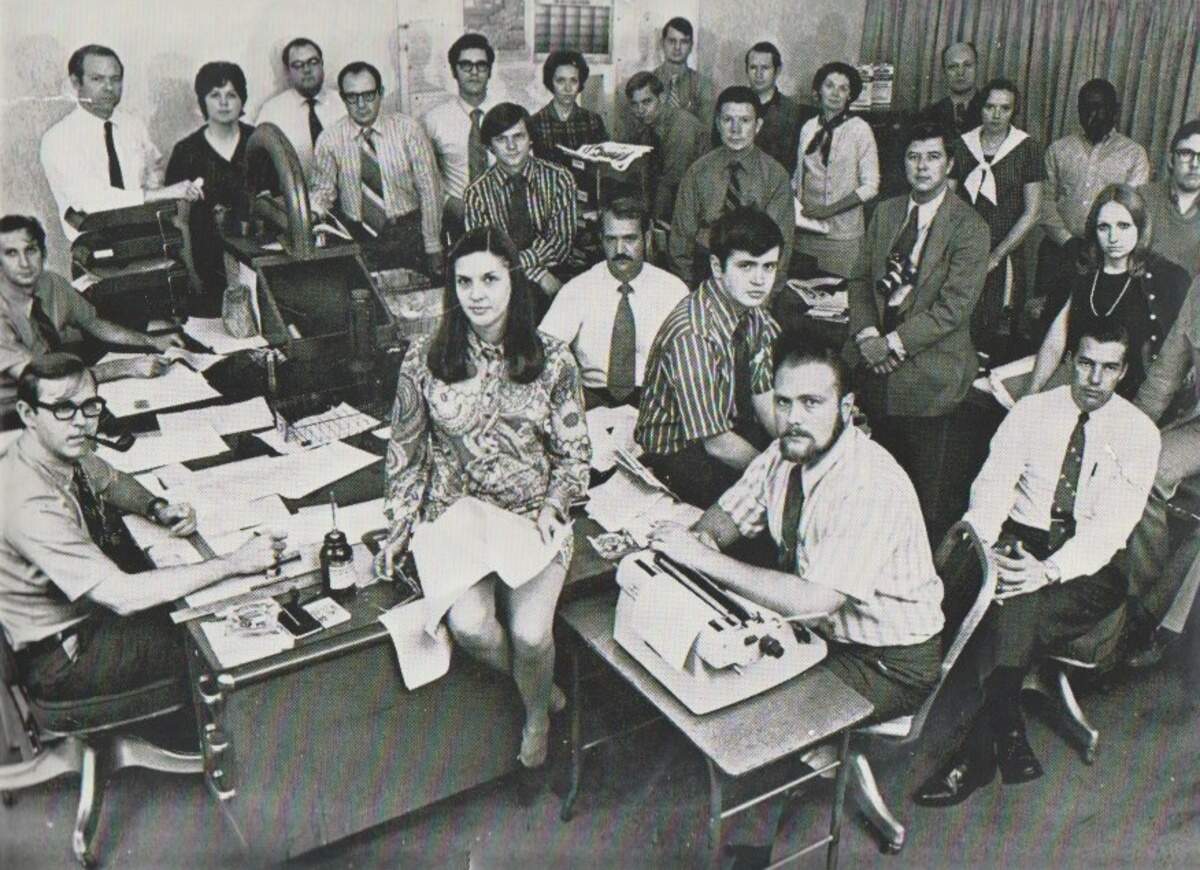
McCuen was a friend to many others in Columbia and across the state.
As a journalist, McCuen transcended the basic definition of a professional, said Henry Price, McCuen’s friend and colleague at USC”s journalism school and The State.
“I used to tell my students being called a professional journalist is not something you get by going into the job, it’s something you earn being in the job,” Price said.
McCuen earned his title as a professional.
McCuen continued to earn respect as a spokesman for the South Carolina Department of Corrections in the 1970s and 1980s and the Department of Transportation in the 1990s.
He was a “helpful go-between between the close-mouthed bureaucrats he worked for and reporters clamoring about the peoples right to know’,” said Monk, who has covered courts, crime and politics with The State for 25 years. “He was laid back, had a deep voice and a twinkle in his eye, and you couldn’t help but like him.”
McCuen had a friendly, low-key style and a good grasp of South Carolina politics.
He was easy for journalists to work with and often put reporters directly in touch with highway department staff for interviews, a trend that in recent years is less common as government agencies seek to control information more tightly.
During the 1990s, the Department of Transportation was rocked with scandal, including a bribery scheme involving highway contractors.
It was McCuen’s job to provide information to the media about those controversies, a task that wasn’t easy as the department faced withering criticism. He rarely declined comment when approached by the media.
McCuen never let people down if he thought he could help them. Monk remembered a time McCuen showed that quality.
“I was writing a story that had descriptions of the electric chair chamber at the old Central Correctional Institution in downtown Columbia,” Monk said. “When I told Sam I wanted to not only see the electric chair and take pictures of it, but also bring some thermometers in to see what the temperature was, he laughed, rolled his eyes and got permission to get me through layers of security and into the death chamber.”
“He always had a sense of humor but he would politely tell you where to get off if you were being too pushy,” Monk said.
Rock ‘n’ Roll, box turtles, and boards of directors
In a fax McCuen sent in 2008, he lists some of his accomplishments over the decades.
“Published and recorded Trampoline Queen on the Ember label” with the band Tandi and the Teammates in 1960.
“South Carolina expert on the Eastern Box Turtle for the New York Turtle and Tortoise Society.”
“With wife Gina raised more than $1.5 million for charitable and cultural organizations.”
The list reported he had a successful band booking agency as a teenager and was an award winning journalist for The State, among other milestones.
Even now, in McCuen’s apartment, stacks of files sit around on all sorts of topics and projects that he had an interest in, said Holland, his daughter.
He played drums, she said. ”Where there was a drummer who he could talk into letting him take the stage, he did it.”
Through the 1990s and 2000s, McCuen’s resume reads like a person steering Columbia and South Carolina away from apathetic and culture-less doldrums.
He served on boards for the S.C. Philharmonic Orchestra, Palmetto Place Children’s Emergency Shelter, S.C. Center for Birds of Prey, S.C. Humanities Council, S.C. Archives and History Foundation, USC’s Archaeological Research Trust, City of Columbia Parks Foundation, Allen University Educational Foundation, and Columbia Museum of Art, among others.
The art museum gave McCuen its 2019 John Richard Craft Leadership Award.
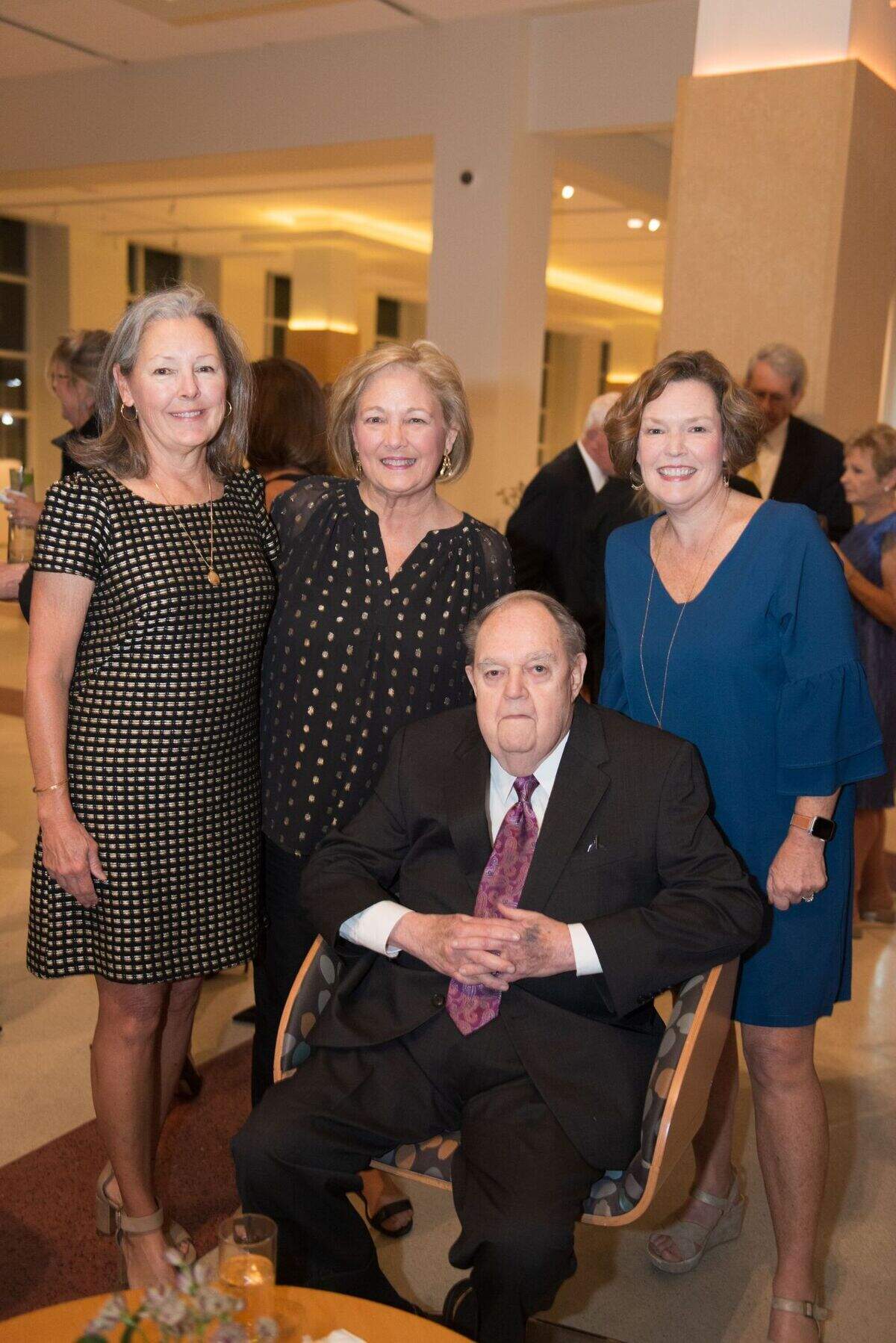
“Through dedicated board service, committee participation, premier membership, financial support, and assistance in raising truly significant capital funding for the museum, McCuen’s decades of contributions have helped to elevate the [the art museum] to excellence,” Midlands Biz reported.
Institutions wanted him on their boards of directors because his positive attitude helped solve problems, friends and family said.
In the 1990s, he began teaching the basic writing course at USC’s journalism school. Hundreds of would-be journalists learned the fundamentals of the profession from him.
Whatever McCuen did, he did it with a sense of humor that couldn’t be ignored, said Price, the retired journalism school professor. McCuen had a story for every occasion, most of which can’t be printed in The State.
McCuen was “multi-faceted” and “could really tell a story.”
“He was always a fascinating person,” Price said. As a friend, “Sam did not forget you.”
After retiring from teaching, McCuen put on seminars with Price that taught people to write better. Other seminars taught business and institutional leaders how to communicate publicly during a crisis. McCuen also taught “manners and etiquette,” he wrote.
But her father never said he was retired, Holland said. He was always working on a new project or researching a topic. He recently took an interest in Lowcountry Huguenot history.
“He never stopped working,” she said.
He involved himself in all these endeavors not only to explore his own fascinations but to connect with others he could help, his friends and family said.
He didn’t help others to get a favor in return, Price said. His good friend helped others because he cared about people.
“It was genuine,” Price said of McCuen’s passion for working with people. “He was an honest man”
When Holland was young, her father constantly repeated one lesson, she said.
“It’s connecting with people and having relationships — that’s what makes a difference in the world.”
This story was originally published January 2, 2021 at 11:07 AM.