Columbia looks to overhaul zoning maps for the first time in more than four decades
The 1970s were a long time ago.
Now the City of Columbia is looking to drag its zoning code out of the decade of Watergate and “Jaws” and into the 21st century.
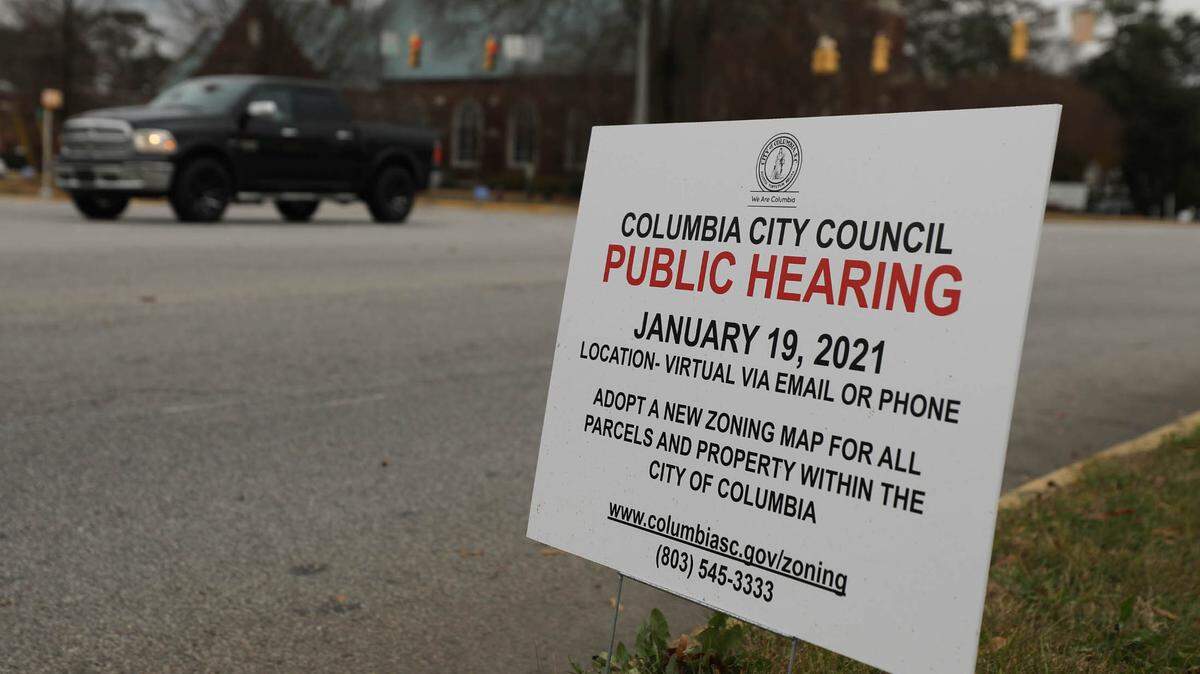
Columbia City Council is set to consider adopting new zoning maps, and will have a public hearing on the matter at 2 p.m. Jan. 19. That meeting will be streamed online at columbiasc.gov, and residents can offer input via telephone. Council will not take a vote on the matter that day.
The adoption of a new zoning map is the second piece in a two-step process. Back in August 2019, the council approved a new unified development ordinance (UDO), which consolidated zoning and land development ordinances and set up new or revised zoning classifications for the city. Now council members will consider the maps that would apply those applications. The new code would go into effect upon approval of the maps, which will likely come later this year.
A major overhaul of the city’s zoning code has been a long time coming, according to Columbia planning and development services director Krista Hampton. She adds that the current zoning code, which has been tweaked and twisted through the last four-plus decades, can be unwieldy for citizens and developers alike.
“It was very clear that it was difficult for not only citizens, but staff to use the ordinance,” Hampton told The State. “It was so patched and it required someone to interpret it for you, it was so difficult to understand. It was a matter of pulling the Band-Aid off and deciding we had to do it.”
Hampton said the city has been working on the overhaul since 2015.
Second-term at-large Councilman Howard Duvall thinks the new zoning code and subsequent maps will be beneficial.
“The new verbiage under the UDO and the maps city staff has prepared will really help citizens comply with zoning,” Duvall said. “They are much easier to understand, much more logical. They allow some things that will help us develop better, and they are more business-friendly.”
Both Hampton and Duvall stressed that residential districts in Columbia remain overwhelmingly unchanged, in terms of permissions and restrictions, in the new maps, though the name of a classification may change. For instance, single family residential districts currently are referred to as “RF” in the city code, but would be called “RSF” in the new ordinance.
“Residential largely stays the same,” Hampton said. “We didn’t really have any issues with our residential districts.”
But what is significantly changing are classifications within the commercial zoning category. The new maps encourage far more mixed-use districts, where commercial and residential could exist together, along some of the city’s main corridors.
Those mixed-use areas are referred to in the new code as “activity centers/corridors,” and are categorized as “neighborhood,” “community” or “region,” depending on the context of a given area.
For example, under the current zoning, much of the Two Notch Road corridor in the city has the broadest general commercial zoning. But in the proposed new maps, there is more mixed-use proposed along the the road, and more nuanced categories of commercial zoning. For instance, there is a stretch of Two Notch Road, from Chestnut Street to Schoolhouse Road, that is currently zoned general commercial. Under the new maps that stretch would be classified a neighborhood activity center/corridor.
“With neighborhood scale, you might get on your bike, or walk, and you are attracting a more neighborhood scale,” Hampton said. “A regional scale is more like Harbison. You might get people (from out of town) who drive there and stay the night. You will see larger formats of buildings, by necessity, in those different scales, but it’s more about who you attract.”
Residents who want to view the proposed new zoning maps can visit weplantogether.org/columbiareview and click on “View the draft zoning map.” The site allows users to toggle back and forth between the current zoning and the proposed zoning for a given address.
The new zoning maps could be approved by March 31, but city zoning administrator Rachel Bailey says that date is tentative.
“If the maps are approved in a time to give us an opportunity to update our system, our applications and everything by March 31, that’s when the map would come into effect,” Bailey said. “But if council needs a little extra time to discuss this with neighborhoods before moving the maps along, that date could shift a little bit.”
Duvall said that, after council has the Jan. 19 public hearing, it has six months to formally adopt the maps.