In a post-COVID downtown, will offices fill back up? Why Columbia has reasons to hope
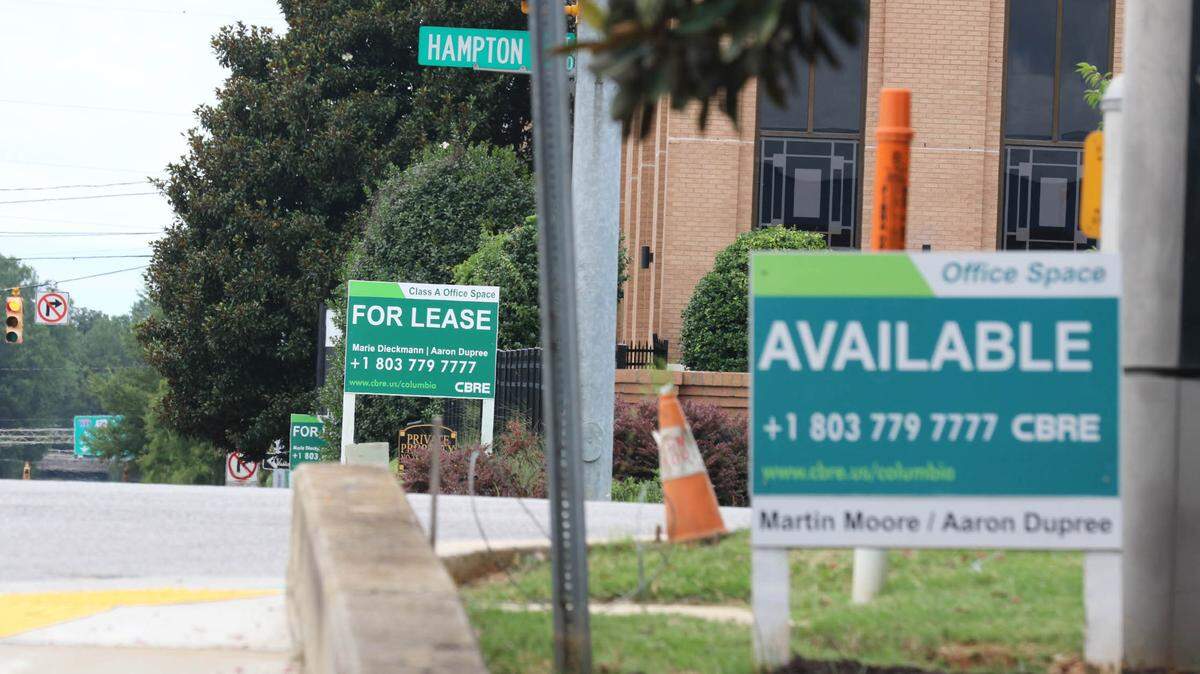
This time a year ago, Aaron Dupree wondered if he’d even have a job in 2021. As COVID-19 spread, in-person office work was largely taboo, which didn’t bode well for a commercial real estate broker in Columbia, like Dupree.
But despite warnings throughout 2020 that Main Streets across the country might never see office workers return — with many companies expected to lean into remote work permanently, and white-collar workers fleeing big cities for wide-open spaces where they could work from home far into the future — downtown Columbia has emerged in a pretty optimistic place, all things considered.
Rather than struggling to fill up deserted office buildings, some commercial real estate brokers like Dupree, a vice president for CBRE, say they are actually seeing a surge in interest from companies seeking Columbia office space. While the office market isn’t as chaotic as residential real estate, it is busy, Dupree says.
“It’s actually been as active as I’ve ever seen it ... in the last three months. I do think, personally, that that’s not really going to slow,” Dupree said, adding that he’s been on more commercial property tours so far this year than he recalls in any six-month period since the early 2000s. “2021 has been way more active than any of us ever expected.”
The swift return of downtown Columbia’s office population — think law firms, insurance, banking, marketing, local and state government — bodes well for the health of all of downtown, as restaurants, stores and other businesses rely on these workers, said Matt Kennell, president and CEO of City Center Partnership and the Main Street District, which advocate for businesses and help guide development downtown.
He has worried about the future of downtown offices over the past year. But Columbia’s sidewalks look every bit as active any day of the week now as they might have 18 months ago, and Kennell’s concerns about the post-COVID downtown have soothed some.
“It is a concern, and we’re really keeping our eye on that,” Kennell said. But, “there have been summers in the past where I get almost desperate phone calls (from downtown businesses) after the university shuts down for the summer, and I’m not getting them. I’m not getting them now coming out of the pandemic.”
Size is in Columbia’s favor
Just over 13% of office space in Columbia was unoccupied in the first quarter of this year, according to an analysis by CBRE. That’s about the same as the city’s office vacancy rate at the end of 2019, just before the pandemic. Vacancy actually decreased during 2020, according to CBRE, though that’s likely the result of a lag in reporting deals that were made pre-COVID, Dupree said.
The leasing price of downtown office space has remained fairly consistent through the pandemic, too, at around $21.30 per square foot, according to CBRE.
South Carolina’s capital city didn’t see a major exodus of office-oriented businesses during the pandemic, meaning there may be some increase, but not a huge increase, in empty space downtown. Most companies didn’t make a permanent decision to give up their offices last year, instead waiting out the storm for a few weeks or months while keeping their leases on the books, local real estate brokers say.
Given the types of companies that tend to be located in Columbia — local or regional firms or smaller, satellite locations for larger companies — there’s little reason for Columbia to have the same worries going forward as larger cities, particularly those in the northeast and western parts of the country.
“Columbia has a lot of local and regionally-based businesses that, frankly, value culture building, being in the office, collaboration to some degree,” said Peyton Bryant, an office real estate broker and a principal with NAI Columbia real estate in Columbia. “The people in the offices in the companies in South Carolina, they want to be together, and they want to meet with their clients.”
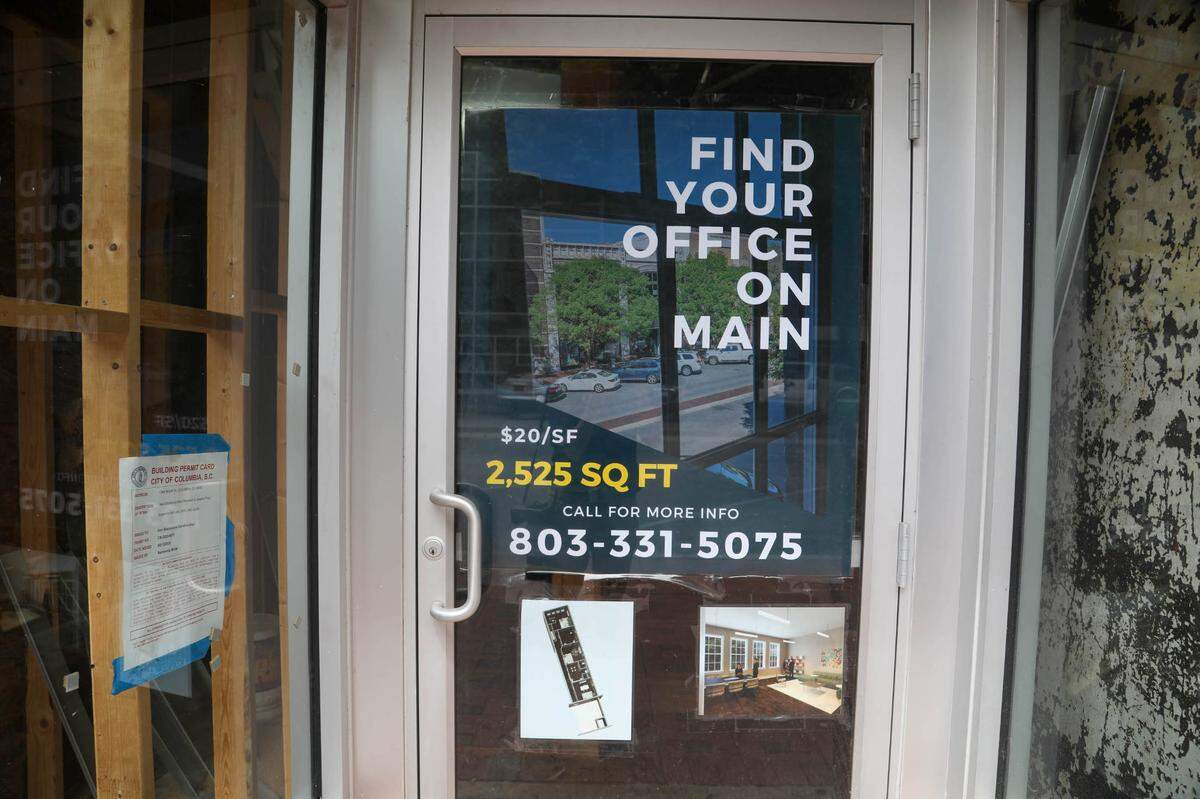
Unlike larger, national companies, smaller and mid-sized firms have been less hesitant to bring their workers back to the office, said Patrick Wright, director of the Center for Executive Succession at the University of South Carolina’s Darla Moore School of Business.
Wright works with human resources officers at dozens of Fortune 200 companies and says expectations for office work have shifted since the remote work craze early in the pandemic. Productivity and positive office culture both waned as remote work dragged on, he said.
“Most companies, they’re going to demand that people come back to the workplace, at least part of the time,” Wright said. “Will there be a need for as much real estate? Probably not. But is it going to be the massive shedding of real estate that we predicted early on? I don’t think so.”
There are several reasons Columbia appears to have weathered the pandemic rather heartily and stands to fare well going forward. The city’s size, in particular, weighs in its favor.
“Columbia is in a uniquely positive position because it’s large enough to offer the amenities of a city, but small enough that ... it doesn’t have the detrimental parts of being in a big city,” Wright said.
As a smaller city, NAI Columbia’s Bryant noted, Columbia generally doesn’t suffer as greatly as larger cities during economic downturns. It also doesn’t surge as high during economic booms, he added. Overall, the city’s pretty stable, he said.
“New York and California are very nervous about the future,” said CBRE’s Dupree. “For the same reasons, we (in Columbia) are very positive about the future.”
Future of offices in Columbia
Now and going forward, it’s true some businesses in Columbia are seeking smaller office footprints, real estate brokers say, as more companies permanently adapt to a hybrid model of in-person and remote work, needing fewer workspaces for their employees.
It’s also true that many local businesses are seeking office floor plans that are more or less the same — including the same density of workers — as before the pandemic, Dupree said. One post-COVID change Bryant has noticed is some clients seeking more closed-off offices as opposed to open-floor plans, in light of the concern over contagion.
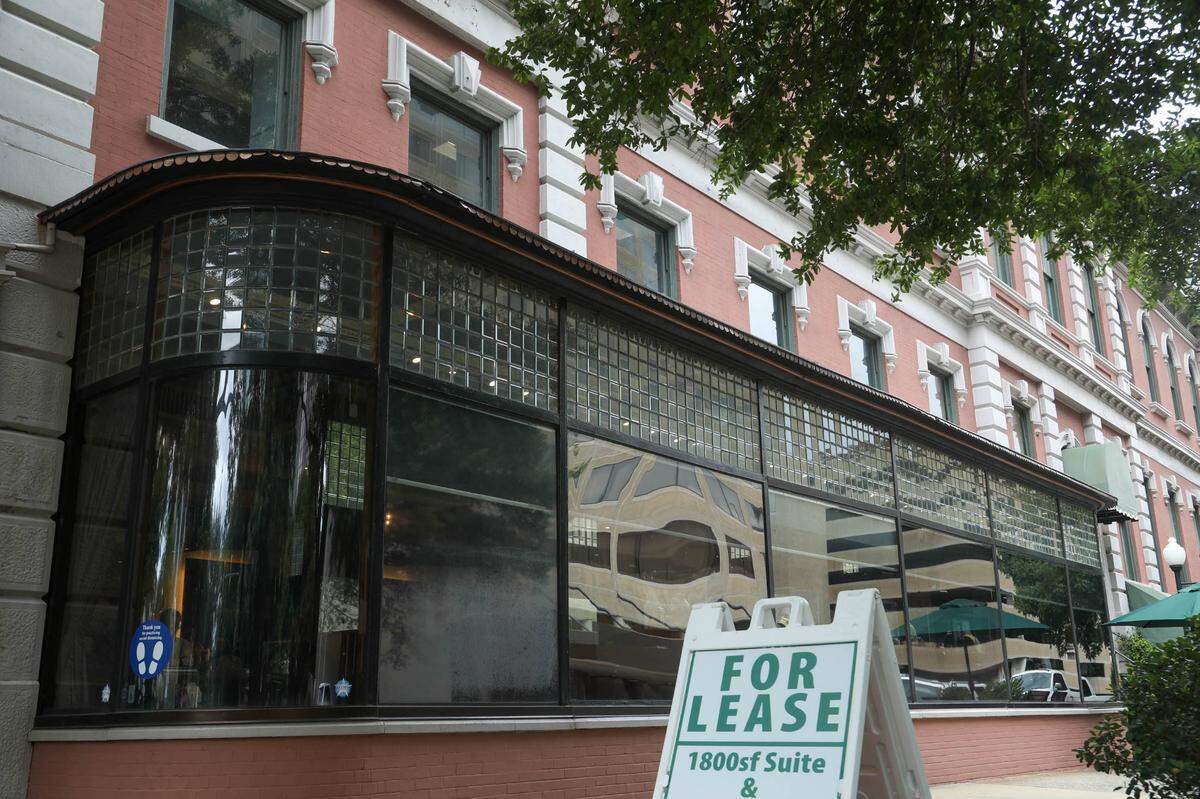
It’s not terribly hard to find available office space in the 4,000- to 5,000-square-foot range these days downtown, Dupree said. But it’s much harder to find the large, contiguous office footprint that a large company might seek.
One of Columbia’s opportunities going forward is attracting more small- to mid-sized companies that want to relocate from more expensive regions, as well as satellite locations for big national companies. This is particularly likely given the ongoing national migration trend toward the Southeast from regions including the northeast and California, Wright said.
“New York, New Jersey, California are the U-Haul capitals of the world right now because of their lockdowns and just drastic measures. So many people want to move to the, call them ‘freer’ states, particularly the Southeast. I think that’s definitely one of the things working to the advantage of a city like Columbia,” Wright said.
He added, “I think there’s definitely a movement, particularly with some of the more white-collar type places and knowledge workers, that a place like Columbia could be a good place to be setting up offices, not necessarily headquarters but certainly more satellite offices here. ... Now is the time when possibly some good marketing could help attract companies” to the city.
Reporter Connor Hart contributed to this story.
This story was originally published June 29, 2021 at 12:05 PM.