$7B city impact, 3 major hotels at stake if Columbia doesn’t expand convention center
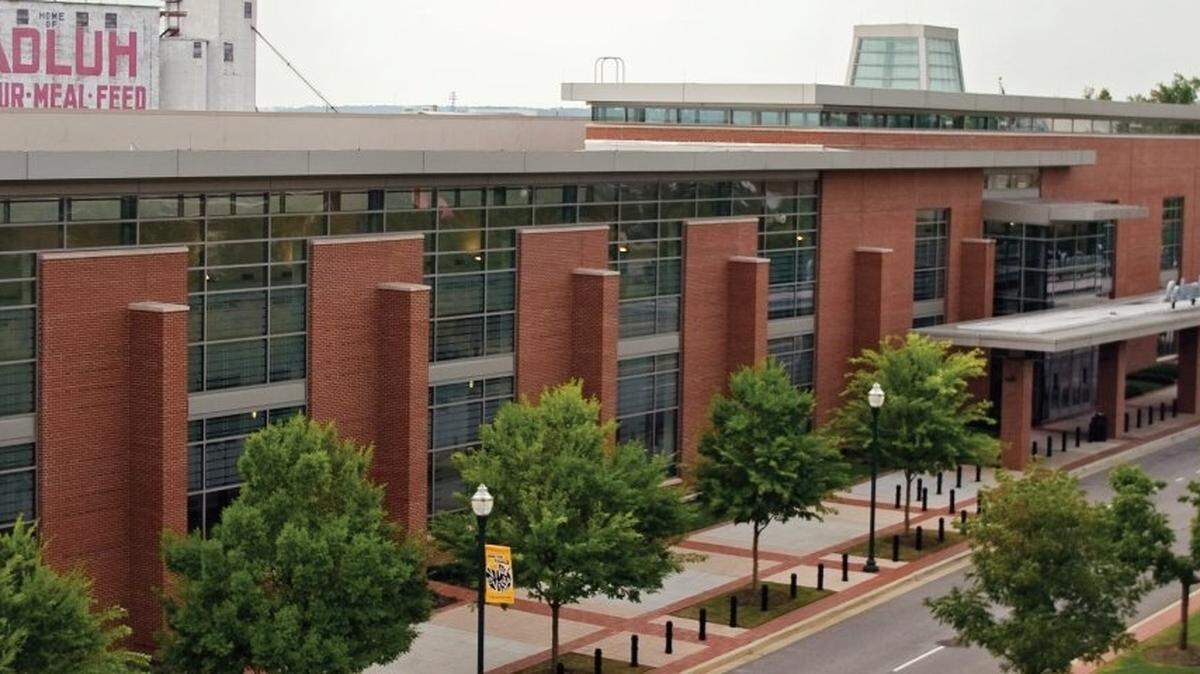
If Columbia and Richland County don’t commit soon to a planned expansion of the city’s vastly undersized convention center, Columbia could lose what has the potential to be one of the most consequential developments in the city’s history.
What’s at stake? Four new buildings with a total of 37 floors, 675 hotel rooms, 195 apartments, a 1,600-space parking garage, some 2,000 permanent jobs, 200,000 square feet of new office space, multiple restaurants and a projected $7 billion economic impact on the city over the next three decades.
All that would come alongside a quadrupling of the city’s current convention center exhibit space, which now is dwarfed by the city’s peers across the Southeast.
The grand scheme is likely at least a $70 million public and $300+ million private investment that could transform South Carolina’s capital in numerous ways: It would physically change the downtown skyline. It’s predicted to become a major economic driver. And it would give Columbia a chance to build a reputation as South Carolina’s business hub, supporters of the project say.
But the price tag is no small hurdle. It’s a problem some city and county leaders say they must tackle with urgency, though, to take advantage of historically low debt interest rates and to keep in step with Ben Arnold, a private developer who is ready to pull the trigger on the hotels, parking garage, apartments and other accouterments.
“This is a game-changer for Columbia,” said Arnold, CEO of Arnold Companies, which has made its mark on large swaths of downtown Columbia over the years. “If this thing goes through, Columbia has a whole different future than if it doesn’t.”
If the plans get locked in soon and financing secured, the entire convention center development could be fully built and operational by 2025, Arnold said. That timeline would align nicely for convention planners who are at this moment setting meetings for three years or so down the road, notes Bill Ellen, the head of the city’s tourism authority.
But if the local governments delay their end of the deal much longer, Arnold warns he might have no choice but to move on and take his part of the development in another direction.
It’s not quite all or nothing, and it’s not quite now or never — but it’s mighty close.
“Time is of the essence. I’m not just going to wait around,” Arnold said. “Taking your time is not going to work when the rest of the world is moving forward.”
2 problems to solve
By Bill Ellen’s thinking, there’s not a capital city in the U.S. — or very few — with a convention center smaller than Columbia’s.
Ellen, the president and CEO of Experience Columbia SC tourism and convention authority, has seen Columbia miss out on numerous events over the years, from a national Corvette convention to a Delta Sigma Theta sorority meeting to NCAA sporting events. The convention center’s roughly 57,000 square feet of exhibit and meeting space don’t hold a candle to the 150,000 square feet in Charleston or 131,000 in Myrtle Beach. Even Augusta and Athens, Georgia, have more space to offer.
There’s not a lack of interest in coming to Columbia, Ellen and others say. For the last few years, the center has hosted an average of nearly 400 events annually, Ellen said.
“The usage and demand is greater than what most people ever expected,” Ellen said. “I can tell you, they want to come to Columbia and our region. They like what we have to offer — the walkability of the Vista and the hotels and attractions nearby. ... We’ve got the package, we just need to get the facility.”
There are two things that keep Columbia from landing larger-scale and higher-profile events and meetings: The lack of exhibit space in the convention center, and a lack of full-service hotel rooms able to accommodate large blocks of meeting attendees.
The expansion plan on the table would largely solve both those problems. The convention center’s overall rentable space would approximately double, and the exhibit space alone would grow fourfold, to around 95,000 square feet from the current 23,000. Plus, Arnold would build three hotels surrounding the center, including one directly connected to it that would have the ability to block large groups of rooms for meeting attendees.
To pay for the public part of the plan, the city and the county likely need to finance around $70 million to cover the work on the convention center itself. While there seems to be little lack of enthusiasm to do the work, there’s uncertainty about how, exactly, the local governments will pay for it.
“We need to be assured that the financial risks are minimum for the city,” said City Councilman Howard Duvall, who represents the entire city as an at-large representative. “The thing that is holding the city back is to be assured we have the capacity to pay the debt off on the expansion center and the building of a garage to support both the convention center and the future development in that area.”
Duvall said he also wants to see continued improvement in Columbia’s economy as the pandemic eases and visitors begin to make more trips to the capital city.
Most local leaders appear to agree that none of the possibilities for funding the public portion of the development would require investment from local taxpayers. Rather, the bulk of the money likely would come from some combination of tourism development fees and accommodations taxes, both of which are charged to hotel stays and paid almost exclusively by visitors to the city and county.
“This is the perfect way for us to capture outside dollars for the benefit of our community,” Columbia Mayor Steve Benjamin said. “No taxpayers (are) paying for it. Those who come to visit and enjoy this amazing city we call home will pay for it, and we should appreciate that.”
The city also has sought help from the state government to cover the cost. The city hoped to receive $19 million out of the statewide budget in this new fiscal year, which began July 1. Instead, it got $9 million — though even that amount was briefly jeopardized. Convention center supporters, including Ellen and Benjamin, said they’re thankful for the help from the state, though disappointed that more money wasn’t committed.
By comparison, Greenville was granted $19 million in the state budget for a new downtown conference center (in addition to $7 million granted two years ago), and Sumter will receive $15 million for its opera house. State lawmakers also gave $1 million to Lexington County to explore building a separate convention center near Lake Murray in the capital city’s rural, neighboring county.
“The state needs to step up and give us parity with every other community, and we want that, but we’re committed to make this project happen,” Benjamin said.
Benjamin said he expects City Council and Richland County Council to “be having some serious discussions about how to take the next steps forward” with the convention center as soon as this month. It is an urgent matter, the mayor said.
“There’s a sense of urgency about making it happen, and it’s in the longterm interest of the Midlands region,” Benjamin said. “Unanimous support” is needed among state, city, county and Richland County school district leaders, he said, “to make it happen.”
A boon for the region
There’s a clear difference in the energy downtown and the success of businesses when there’s activity at the convention center compared to when there’s not — quite simply, “it’s better,” said Bill Dukes, who owns the Blue Marlin restaurant on Lincoln Street in the Vista, about a block from the convention center.
“The S.C. Firefighters Association had a convention here several weeks ago, right? Oh ho ho, was there some vibrancy going on in the Vista. Did we enjoy it? Absolutely. It’s just a direct effect,” said Dukes, who was a major proponent of the convention center’s initial construction two decades ago. Without it, he said, “You wouldn’t see the restaurants (downtown). You wouldn’t see the new hotel construction.”
Business, tourism and local government leaders largely agree there’s been a need to expand the convention center almost since the moment it opened in 2004. It was even built with expansion in mind — the south wall facing the Colonial Life Arena was made to be non-load-bearing so that it can be knocked out and built onto.
Supporters of the convention center expansion believe it would benefit not just the Vista area immediately surrounding the center, but the entire region, as meeting attendees would spread out to explore, with their wallets wide open. That’s what’s already happened in the years since the convention center opened, Dukes, Ellen and others say.
One feasibility study has predicted that an expanded convention center — and Arnold’s proposed development around it — would ultimately have a more than $7 billion economic impact on the area over the next 30 years.
“Where we need to keep our eye on the ball is that it’s not just a building,” said Carl Blackstone, CEO of the Columbia Chamber of Commerce. “It’s the things that go with the building that are a selling point for me. Will it help restaurants? Absolutely. Will it add more people to downtown Columbia? Yes. There aren’t many places in the Southeast where you have expansion opportunities so close to the (river) waterfront, so close to the State House, so close to the University (of South Carolina).”
Numerous business and development leaders signed letters of support to the governor and state legislature as the city sought convention center funding from the state, including the heads of the Midlands Business Leadership Group, the Vista Guild business association, City Center Partnership and the Vista property owners group.
A number of local government leaders have said they support the expansion, too, including Duvall, though he has reservations about the funding, and Paul Livingston, who chairs the Richland County Council.
“I am a proponent of expanding the convention center,” Livingston said. “I realize we are missing out on a lot of opportunities because we don’t have an expanded convention center. I was engaged and involved when we first built the convention center, and it was understood that it was structured in a way that we could make sure there could be expansion. ...
“If we are going to compete with other large cities, we are going to have to have a larger facility.”
Duvall, though he stressed the need for a deal that doesn’t overburden the city financially, said he thinks a convention center expansion and associated private development could be a game-changer for the state capital.
“It would be a huge investment for the city,” Duvall said. “The things that Ben Arnold is planning would be a great investment for all of us. But we have to figure out how we can pay for it at the same time.”
Some have expressed further hesitation.
City Councilman Daniel Rickenmann, who represents District 4 on the east side of the city, said he thinks now is not the time to take on such a large project.
“I think the city needs to make a list of all of its priorities and projects and see what it can do,” said Rickenmann, who is one of three candidates running for mayor in Columbia’s November election. “We just have a lot of unfinished projects and, at this point, to take on another one is not the best thing we should do. The convention center expansion, down the road, may be something. But the only people who have reached out to me, or I’ve heard from, all have financial interest.
“The general public hasn’t reached out to say, ‘Y’all have to push this.’”
Benjamin, who is not seeking reelection for a fourth term, sees it differently.
“We can’t fall into the default ‘no, no, no’ mode that so many people always advance,” the mayor said. “The ‘no’ crowd will never build Columbia.”
‘Can’t just wait around’
Ben Arnold is waiting and ready to go. His ducks are in a row and have been for some time.
Back in the ‘90s, his family’s Arnold Companies development group began assembling land in the Vista in the convention center area. The current plan is the result of years of planning and holding out for the best possible development option in this location. And this is it, Arnold believes.
“We have an opportunity to do something really positive for Columbia,” he said. “We need to define ourselves as something. ... One thing I think it could be, and it already has the beginnings of this, is the government and business hub of the state. If you’re going to do business in South Carolina, you need to come to Columbia to get it done.”
Arnold Companies is ready to spend more than $300 million for the convention center development, more than four times as much as the public investment needed from the local and state governments.
Arnold’s plan would bring a 4 1/2-star, a 4-star and a 3 3/4-star hotel to the city center, along with supporting restaurants and opportunities to partner with the University of South Carolina for job training and events, he says.
But if the city and county don’t commit to expanding the convention center, there’s no need for Arnold to build those three hotels; without the large meetings, there wouldn’t be enough demand to fill up those hotels.
Arnold said he believes there’s broad support for the convention center expansion plan and a will to make it happen. “And it will either happen in the next few months — at least, politically — or it won’t happen at all, because I can’t just wait around. This is the right thing for that property,” he said.
His architects, engineers and other project partners can’t wait indefinitely for the convention center development to pull through. If the city and county waffle too long, “I’ve got other things I could do besides that,” Arnold said.
“If you want a couple hundred apartments and no hotels, it won’t be good for the city or the tax base or me, but if that’s all that’s really feasible from a financial standpoint, then that’s what I’ll do,” Arnold said.
But that’s not what he wants. And it’s not what local leaders want to see either, they say.
“We have the right guy who knows and loves the Midlands, and we have to find a way to make this happen and make this happen post haste,” Benjamin said. “What we’re looking at (with Arnold) is the optimal situation, and that’s what we want to focus on.”
This story was originally published July 9, 2021 at 5:00 AM.