
Ex-Richland recreation director must pay back raises he OK’d for family members
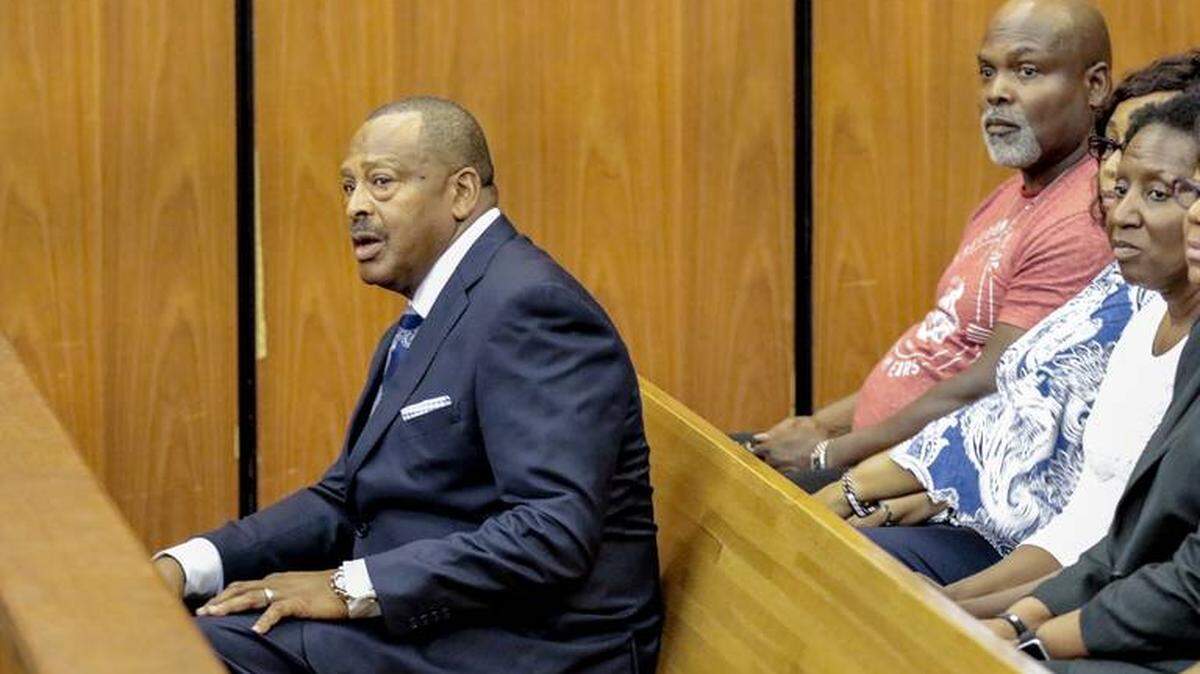
The controversial former director of the Richland County Recreation Commission has been convicted of several state ethics violations related to claims of nepotism at the county agency under his watch.
Former director James Brown must pay $35,750 in fines, fees and forfeitures to the S.C. Ethics Commission, according to documents issued by the commission in the case.
The decision, issued Feb. 9, stems from employment decisions Brown made when he was director of the county recreation agency from 2010 to 2016. At the time, the Recreation Commission also employed two of Brown’s children and his brother.
The county agency oversees youth and adult sports programs in Richland County and 40 public facilities, including swimming pools, summer camps and an 18-hole golf course.
The Ethics Commission determined Brown improperly took part in and approved decisions giving his relatives raises and promotions totaling tens of thousands of dollars on five separate occasions.
In 2012, James Brown approved a $3,000 raise for his daughter Tiffani Brown, raising her salary from $25,750 to $28,750. Just a year later, Brown approved a promotion for Tiffani Brown that raised her salary again to $36,000.
Witnesses testified to the commission that the first raise was part of an office-wide standard-of-living increase, but the latter decision resulted from Tiffani Brown being promoted from an administrative assistant at the Clyburn Technology Center to manager of the Garners Ferry Technology Center. One witness told the commission that James Brown said he planned to make Tiffani Brown manager of the center while it was under construction.
Also in 2012, Brown approved a cost-of-living increase of $3,000 for his brother Jeffrey Brown, up to $39,860, only to raise it again a year later to $45,860. The commission’s assistant executive director said he had not recommended Jeffrey Brown for a raise, but it was initiated by James Brown.
At the same time, Brown approved a $12,000 raise for James Anthony Brown, increasing his son’s salary from $58,000 to $70,000. The raise came as the younger Brown was named the new director of recreation for the agency. A department head and the Recreation Commission’s assistant director both testified that they had not recommended James A. Brown for the position. Rather, one said the director said he “was receiving pressure from his family” to promote his son.
In 2014, James Brown also improperly took part in a disciplinary action against Jeffrey Brown, issuing a five-day suspension to his brother, the commission found. Ethics officials found the agency’s policy at the time allowed James Brown to delegate the disciplinary decision to another employee, but he did not.
State law prohibits public employees from taking actions that financially benefit their family members, and in the relevant situation must make a formal declaration of a conflict of interest and follow Ethics Commission guidelines. The law also prohibits public employees from making disciplinary decisions regarding family members.
The commission ordered Brown to pay an $8,000 fine for the offense, and to repay $25,250 that had been paid to his relatives. Brown must also pay a $2,500 administrative fee to the Ethics Commission. The former director has one year from the date of the order to pay the money.
Brown was a controversial figure in his time at the Recreation Commission. He resigned in 2016 after being indicted by a grand jury on charges of misconduct and attempted sexual assault, following reporting by The State about an atmosphere of sexual harassment at the agency and a joint local, state and federal investigation.
Brown was tried in Richland County last year on a charge of attempted criminal sexual conduct, but was acquitted by a jury. The S.C. Attorney General’s Office subsequently dropped other charges of misconduct in office, coercing women to have sex and witness intimidation.
The State has reached out to Brown’s attorney for reaction.
Brown was paid $151,800 a year during his time as director, The State previously reported. He worked for the agency for 35 years.
.jpg)