
Invasive parachuting spiders are swinging toward SC. Here’s what to know
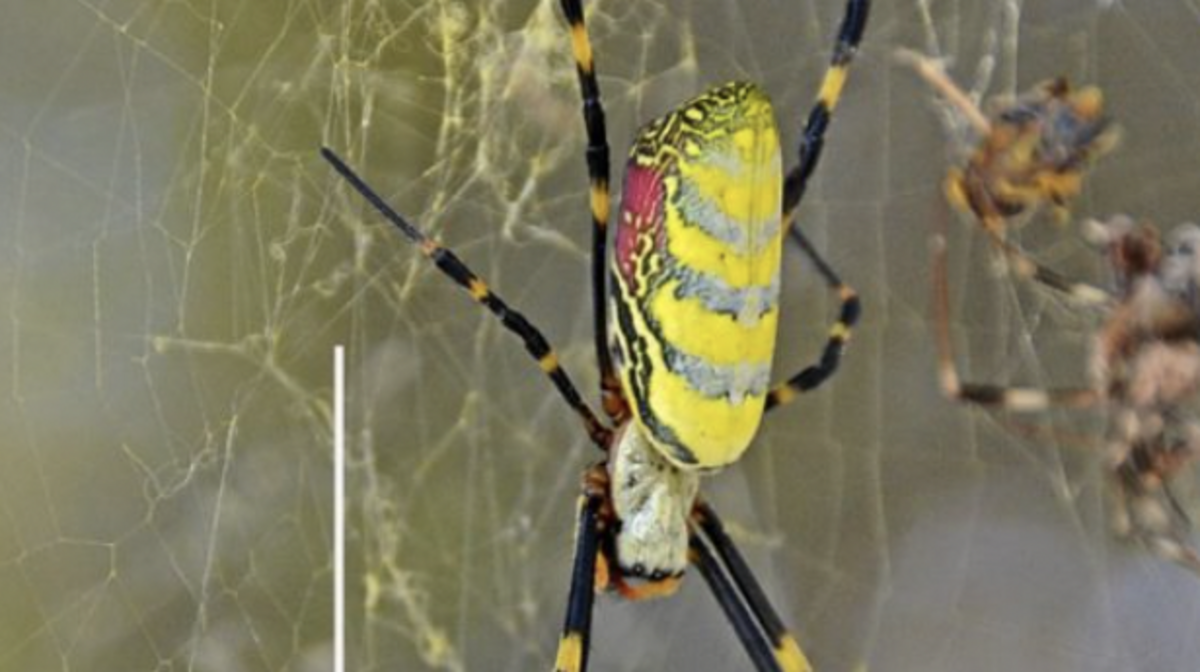
Yet another invasive species is making its way to South Carolina, this time a spider about the size of your palm — — thanks to their long legs, with a red belly that spins webs that look like golden strands.
It’s the Joro spider from Asia, thought to have hitched a ride to the U.S. on a container ship. It was first seen in Georgia along Interstate 85 in 2013 and it’s been spreading ever since, said Jon Storm, a biology professor at the University of South Carolina Upstate in Spartanburg.
Expect to see one or two or more on your porch or around your mailbox in the Upstate within the next few years, Storm said.
He said the spider has so far been seen in Georgia and nearby sections of North and South Carolina, but its method of spreading is efficient. The young spiderlings secrete strands of silk, 3 feet long or more, that get caught in the breeze and float the spider hither and yon.
“They can go for miles and miles,” Storm said.
Scientists call this ballooning or parachuting. Joros have been known to drop onto trucks and container ships.
Females attach their egg sacs to trees and other vegetation in late summer and hundreds of little Joros pop out in the spring.
Storm said more research needs to be done, but so far, the spider doesn’t seem to be a pest. It’s unlikely to bite and if it does, the effect is less painful than a bee sting.
It doesn’t harm native animals — in fact it eats another annoying creature, the brown marmorated stink bug, also from Asia, that destroys fruit. vegetables and other crops.. “The main concern that I would have is taking up habitat that would be used by a writing spider or garden spider,” Storm said.
They also tolerate freezing temperatures, which ensures their spread along the East Coast.
He hasn’t seen one in the wild yet — hasn’t gone looking — but he expects to see one soon in the Upstate.
“They are quite distinctive looking,” he said.
As is their three-dimensional golden web, measuring some 3 feet, holding the red-bellied female just waiting to catch summer’s bounty of Southern mosquitoes.
This story was originally published March 9, 2022 at 5:00 AM.