Yes, a new shop in Five Points is an Herbalife club, and they don’t care who knows
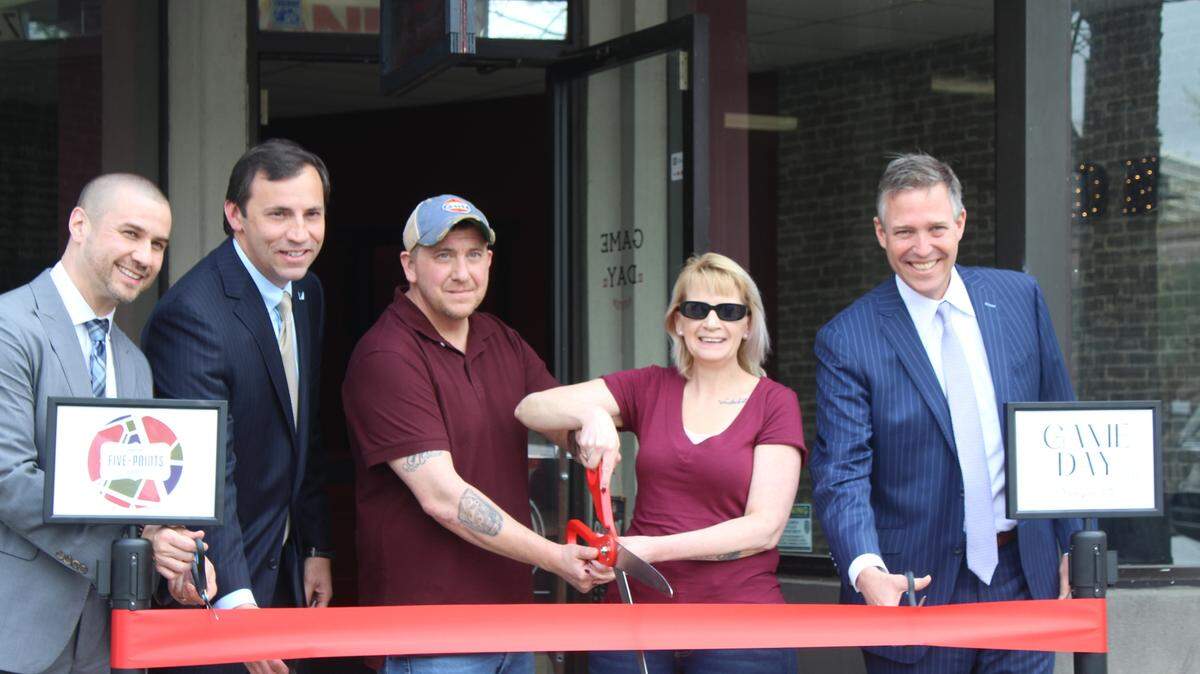
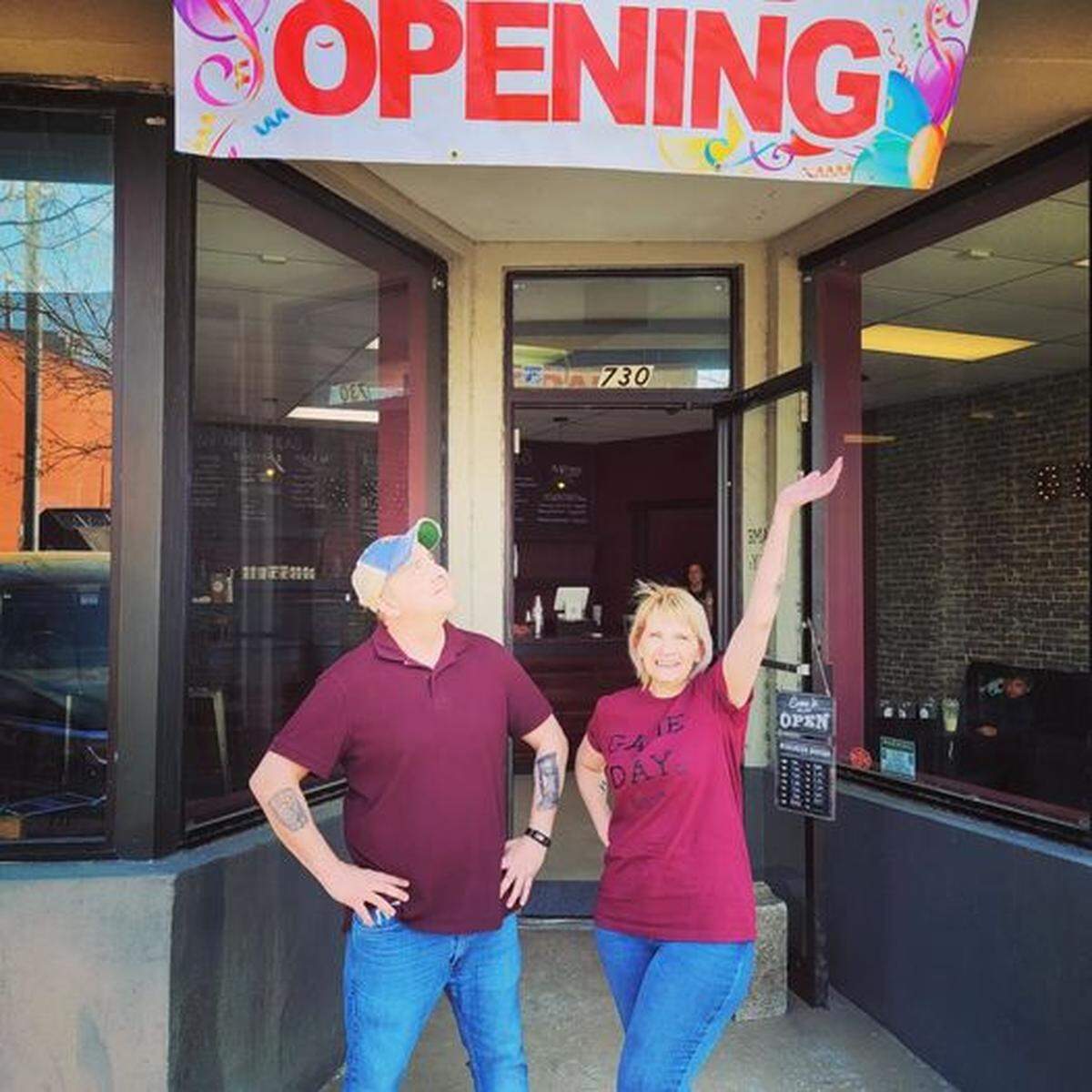
Amanda Murray and her brother Shawn Rhives spent 28 days renovating a storefront at 730 Santee Ave. – a timeline Murray is quite proud of – to prepare for their grand opening in early March.
They signed a three-year lease with a local landlord, and Murray permanently relocated to Columbia from Charleston to run the new business, a protein shake and “diet tea” shop called Game Day Nutrition.
Columbia Mayor Daniel Rickenmann and District 3 City Councilman Will Brennan attended a ribbon cutting ceremony for the establishment, complete with oversized scissors and an official city-issued press release.
“Game Day Nutrition picked one of the fastest growing areas of our city to open their second location and we are honored to have them. Community members from USC and the surrounding neighborhoods should be delighted to have a great option to add more healthy choices to their lifestyles,” Rickenmann said in that release.
Then, the online outrage began.
“New ‘small business’ blocked me when I asked if they use Herbalife. They hide what they use in their shakes and need to be held accountable,” read a now-deleted post in a Columbia-focused Reddit group.
“Will you disclose to your customers that you’re using Herbalife products in these drinks?” wrote a Facebook commenter in early March.
“Where’s the fruit? I’ve never heard of a smoothie and juice place that doesn’t have any produce,” wrote another person on Facebook.
Four days after the grand opening, Murray called Columbia police on a purported customer who she said entered the store and began aggressively asking about her business practices.
“He started yelling and told me to have good luck with my ‘effing pyramid scheme,’ and he left,” Murray said.
But when she closed for the day, the man was waiting for her near her car to continue decrying Herbalife and her business’s use of their products, Murray said. That’s when she called the police.
Columbia police confirmed that they were called to the shop on March 11 and returned twice the next day to check the property.
Some individuals have now taken to periodically calling the store to complain about the business, Murray added.
In a Five Points district where, not long ago, some 30 storefronts stood vacant — and many still do — new businesses that aren’t late-night bars are generally lauded. The vitriol against this particular new business came as a surprise, both to the business owner and Five Points leaders.
The problem all comes down to Herbalife.
“It’s not the people we don’t like,” explained Mark Whitesides, a vocal Herbalife opponent and a University of South Carolina alumnus who now lives in Washington, D.C. “It’s not the people. It’s the business and the way the businesses work.”
Murray says she is open about her products and about what brought her to Five Points. Her niece started a similar Herbalife-associated shake and tea shop in Mount Pleasant and got Murray hooked on the drinks. She credits the shakes with helping her lose more than 100 pounds. She started selling Herbalife because she believes in the products, she said.
She started helping her niece at that shop, and when USC students came home for the summer, they begged her to open a location in Columbia’s Five Points – walking distance from much of USC’s campus. So that’s what Murray did.
She doesn’t quite understand the backlash her shop has seen so far. Some have asked why she didn’t open a smoothie shop, if her mission is health-focused.
“We’re transparent about the product that we offer. Just like Burger King doesn’t serve McChickens, we don’t serve fruits and vegetables,” Murray said. “We just have our preference on what our products should be and how they’re made.”
What it is and why people care
Herbalife Nutrition sells a variety of powders and supplements used to make protein shakes and specialty teas marketed as healthy options and often tied to weight loss. The company, founded in 1980, has long been accused of being an illegal pyramid scheme – a business that relies on independent distributors recruiting more distributors using misleading claims to sell the company’s products. Those claims tend to erroneously highlight how much money independent sellers can make.
Not every recruitment-based company is illegal. In corporate parlance, the lawful versions of these businesses are called multi-level marketing companies and include Mary Kay and Tupperware, though these companies have detractors as well.
Herbalife Nutrition has toed that line. While the Federal Trade Commission in 2016 determined Herbalife Nutrition was not an illegal pyramid scheme, the U.S. regulator did require the company to pay a $200 million settlement for misrepresenting how much money distributors could make selling the products and demanded a complete overhaul of the company’s business model.
Beyond the business practices, some also worry Herbalife’s products are unsafe, though the company denies this.
The company has been the subject of think pieces in The Atlantic, late-night television segments and even an award-winning documentary following distributors who lost their life savings pursuing the Herbalife dream. Not to mention an ever-growing lineup of lawsuits that continue to plague the global corporation.
Murray and other local shops say they don’t abide the harmful aspects of Herbalife – they just like the products. But Murray’s shop is inextricably linked to the corporation.
Shops that sell Herbalife shakes and teas are called “nutrition clubs” by the company. Herbalife corporate considers these establishments distinct from retail businesses and encourages store operators to help customers with their individual health goals.
When the Herbalife nutrition clubs first emerged in the early 2000s, customers would need to purchase a daily membership to the nutrition club in order to get their shakes and teas. That’s no longer the practice, but the company still encourages club owners to foster “person-to-person” relationships and offer specialty memberships for customers who want to buy protein powders and other products in bulk from the nutrition clubs.
An online movement committed to “exposing” Herbalife and other multi-level marketing companies has taken to calling out these nutrition clubs nationwide.
Many of the online detractors of Five Points’ Game Day Nutrition are part of that movement.
It’s all local
Many of the online detractors don’t appear to have any connection to Columbia, but those who do shared frustrations that the city of Columbia held a ribbon cutting ceremony for the business despite its corporate ties.
Whitesides, who grew up in South Carolina and said he has seen more than one friend or family member fall victim to big promises made by multi-level marketing entities, said seeing the mayor voice support for the business felt like an endorsement by the city.
Mayor Daniel Rickenmann, whose motto is “Columbia is open for business,” has attended a handful of ribbon cutting ceremonies since taking office in January.
But it’s usually the business asking for the fanfare, explained Five Points Association manager Katy Renfroe. She didn’t even know Game Day Nutrition was coming to the neighborhood until after they signed their lease, she added. But when a new business reaches out asking for a grand opening, local leaders like to oblige.
“We just want them to be successful. … I want them to feel welcome here,” Renfroe said.
The Five Points Association has also taken some heat online after deleting comments on its Facebook page about Game Day Nutrition’s ties to Herbalife. Renfroe said she deleted the comments to keep the Five Points page a positive place that welcomes all businesses, particularly as vacant storefronts start filling out in the college-centric entertainment district.
Some online comments have accused Game Day Nutrition of not being a local business because of their support for Herbalife, but Renfroe pushed back against that claim.
“I watched them personally renovate that space,” she said, adding that regardless of their supplier, the association is supportive of new businesses putting down roots in Five Points.
An exception to the rule
The former iteration of Herbalife is what earned the company such a bad reputation, said Lee Chambers, who runs Lake Murray Nutrition in Irmo selling Herbalife shakes.
“People just don’t understand. They think of the Herbalife of the ‘90s,” Chambers said, explaining that when a nutrition club opens in a new market, some backlash on social media is expected.
“They just see the name Herbalife, and automatically they aren’t going to support that,” he said.
One of the biggest complaints about the Herbalife of old is that “distributors” – people who sell Herbalife products either on their own or through these nutrition clubs – don’t turn a profit but lose a lot of money trying.
According to the company’s own financial disclosures, that’s still largely the case. Fewer than half of U.S. distributors made any money “in a typical month” in 2020. Half of the people who did make money made less than $300 per “typical” month, according to compensation disclosures the corporation is required to produce.
But Murray and Chambers both say they don’t feel exploited by Herbalife and they do turn a profit.
“I mean, we’re not gonna be millionaires, and that’s not even the dream that was ever even sold to me,” Murray said. “You’re not going to make any more money than you would at any kind of normal job.”
Murray stressed that Game Day Nutrition doesn’t recruit for Herbalife. She is adamant that after being in business for three years (between the Mount Pleasant store and this new one) she has not recruited a single person and makes no money from other people’s sales.
She’s just an independent small business owner trying to make a living selling one shake at a time, she said.
Herbalife also claims that nutrition clubs are independent businesses, but that’s not exactly true.
The corporation has a lot of say over how these shops are operated. If a seller breaks the rules, their distributorship could be revoked.
Chambers said Herbalife corporate was minimally involved when he opened his store in late 2019. He sets his own prices, for example, and he doesn’t send any money from his sales back to the company.
Herbalife corporate did, however, need to approve Chambers’ store name and location, and he was required to complete “a generic business plan.” Distributors also have to send the company receipts for every sale, according to the sales and marketing plan provided to new sellers.
The company also limits how nutrition clubs can advertise, forbidding the use of Herbalife’s name or logo in any formal marketing material or on social media.
This is where another criticism of the nutrition clubs comes in: It’s not clear that you’re supporting an Herbalife nutrition club until you’ve already entered the store.
A spokesperson for Herbalife Nutrition declined to answer any questions on the record – about nutrition club policies or anything else. When asked for documentation outlining policies for nutrition clubs, a reporter was referred to Herbalife Nutrition’s website.
Game Day Nutrition doesn’t advertise that it uses Herbalife products. Murray said she doesn’t tell customers her supplier either (unless they ask) but only because once they enter her store it’s clear enough where her powders come from.
“I don’t have to (tell them) because we have all our products on display,” Murray said.
Murray and Chambers both said they could run their businesses using a different supplier, but they prefer Herbalife because they genuinely like their products.
Make up your own mind
After working through the issues raised, a final question lingers for some: Does the existence of these shops cause anyone harm?
Ask the store owners, and they say no. They aren’t recruiting anyone. Their customers know what they’re getting and pay for the products because they like them.
“Just like with any company, there’s going to be people who give it a bad rap,” Chambers said.
Murray dismissed the health concerns, citing competing research, adding that people can make up their own minds about what they’re willing to consume.
Murray pays rent for her storefront. She lives in Columbia. She buys her gas and groceries here, and a portion of every dollar she spends and makes supports schools, road construction and infrastructure projects.
But if you ask Whitesides and others in the anti-MLM movement, they say the harm is unavoidable if Murray’s sole supplier is Herbalife. When she makes money, inevitably so will the company.
“It’s not like you go to a McDonald’s franchise and say, ‘Oh, we’re supporting a local business,’” said Whitesides. “It’s always going to be a concern (that) they’re promoting an MLM.”
Whether that concern is shared among Columbia residents remains to be seen.
Murray said she is developing regulars at her Five Points store. And while some comments online have been negative, she gets a lot of positive feedback as well.
The online backlash hasn’t dissuaded the support of the Five Points Association, either.
“They deserve a fair shake like everybody else,” Renfroe said, adding there are businesses all over town people could find reasons to disagree with. “It doesn’t matter to us if people don’t like it, we’re here to support our merchants.”
This story was originally published March 29, 2022 at 11:04 AM.