Could Columbia’s train problem finally be solved? $180M+ plan could remove hated crossings
Columbia drivers might be just about $200 million away from never having to complain about a stopped train on Assembly Street again. After years of debating ideas to fix the city’s train crossing problems, city and state leaders Monday announced tangible next steps to finally separate the roadway from the rails.
“I can think of no project that would transform a community such as this,” state Rep. Kirkman Finlay, R-Richland, said during a press conference Monday.
Residents and commuters traveling through Columbia on a daily basis likely have been stuck at least once behind a seemingly never-ending freight train crossing through a busy stretch of town. Over the years leaders have made plans and sought money to fix the problem without success.
This time is different, said Columbia Mayor Daniel Rickenmann, stressing that now there is a shared vision and a collaborative effort to get the money needed.
“The difference in what you’re hearing today is what’s behind me,” Rickenmann said, while flanked by city, county, state and federal representatives for Columbia and South Carolina.
Executing the plan requires between $180 and $220 million, according to estimates from the state transportation department. Rickenmann said the city and transportation officials are hiring a third-party grant writer to apply for various federal grants to fund the project.
Each of those grants would require a local match of tens of millions of dollars. That’s where the state and local collaboration comes in.
Finlay pledged $35 million in state dollars, which he said he would “beg, borrow and steal” to secure. The city of Columbia and Richland County will put forward and additional $15 million combined, though it’s not immediately clear where those dollars will come from.
Rickenmann said Richland County’s transportation penny sales tax program is one option.
Rickenmann said local leaders plan to move “lighting fast.” City Council on Tuesday is expected to approve hiring a third-party grant writer, and Rickenmann said ideally the actual work would begin in three to five years.
Separating railways from roadways
A state transportation department outline of the project details exactly how the railroad crossings would be separated from vehicular traffic.
The currently favored plan would see 15 crossings along the Assembly Street and Huger Street corridors eliminated through a combination of elevating tracks over the road, elevating a roadway over the tracks and abandoning a southern stretch of CSX track between Blossom Street and Andrews Yard.
A portion of Assembly Street would be lowered so crossings at Catawba and Whaley streets could be elevated over the road. Crossings at Dreyfuss and Assembly and Rosewood and Assembly would be entirely eliminated by abandoning that portion of track. A new elevated roadway would also be built over a stretch of track between Huger and Wayne streets.
The plan would also close the Lincoln and Assembly and Flora and Assembly street intersections to vehicles.
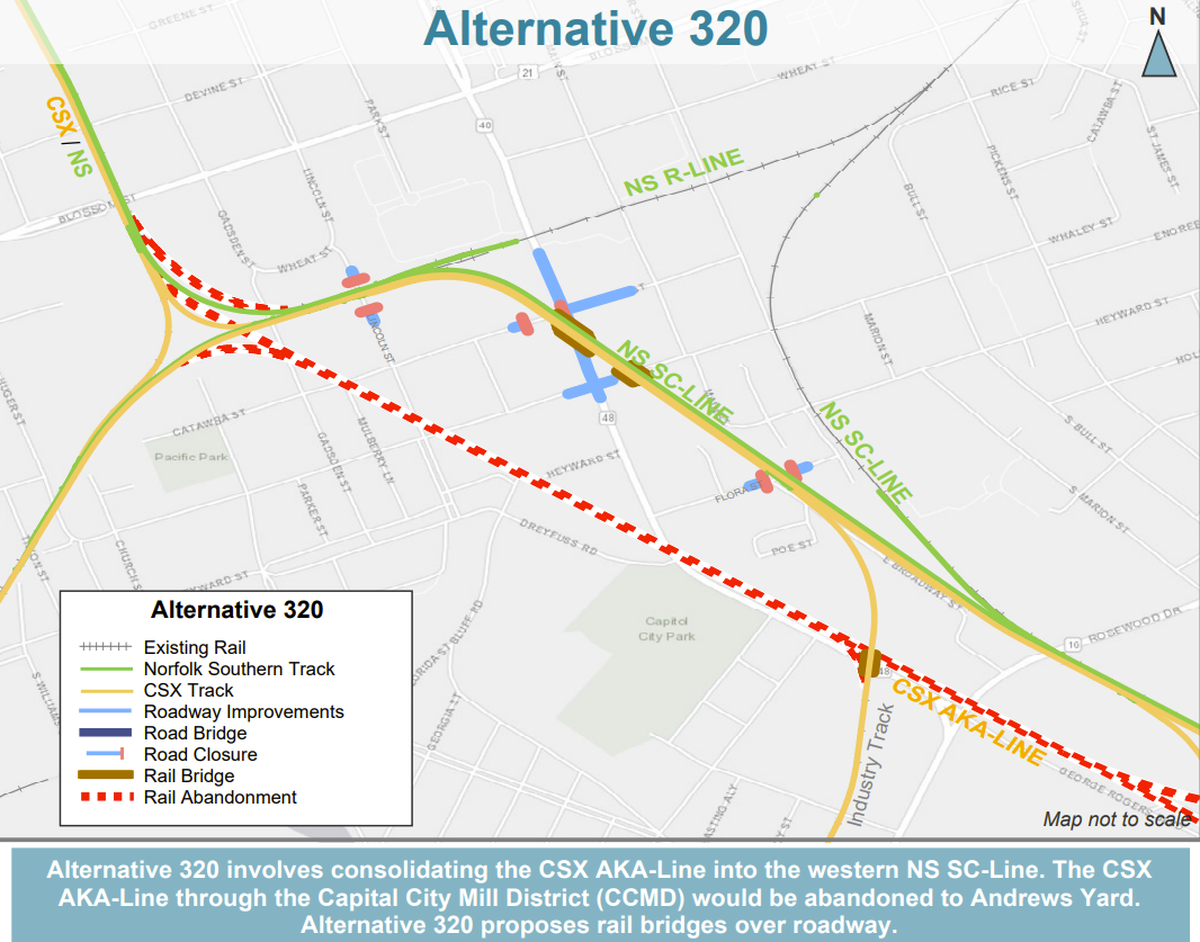
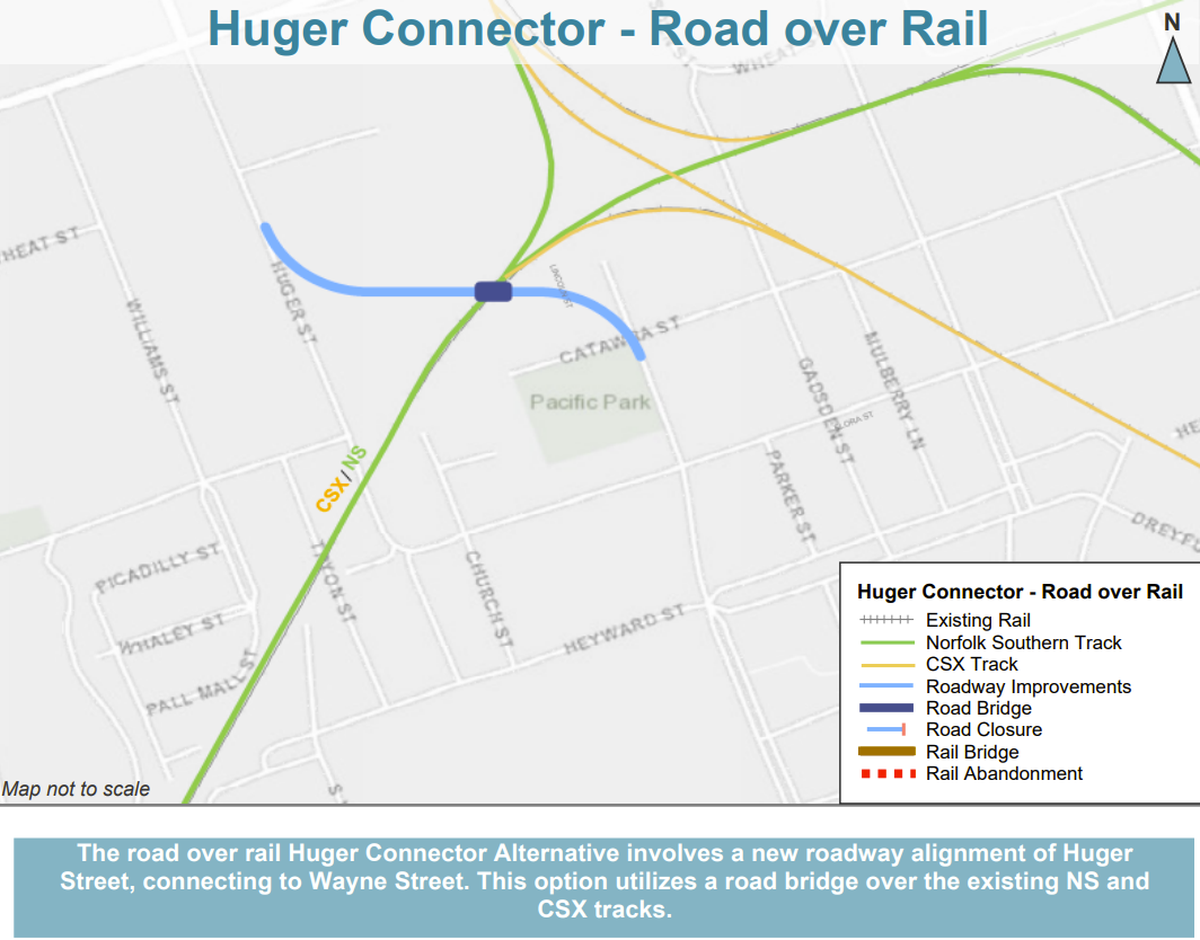
This latest proposal takes a mix from past ideas to fix the problem, which have included raising the tracks over the road, raising the road over the tracks, consolidating the rail lines and closing crossings in more residential areas.
The train crossing conversation in Columbia has been ongoing since at least the early 1980s, when an initial environmental impact study was conducted. Portions of track have been addressed since that initial study, but what to do with the Assembly Street corridor has remained up in the air.
A feasibility study regarding this stretch was published in 2009. One of the reasons for the long delay has been a litany of federal study and assessment requirements.
The primary reason to fix the train problem is traffic, according to state transportation officials and the Federal Railroad Administration. But the work is also about safety. In recent years, multiple people have died when their vehicle was struck by a train while attempting to cross the tracks.
This story was originally published May 2, 2022 at 5:49 PM.