
‘We can’t sit by.’ Former gang members meet to talk how they’re helping stop gun violence
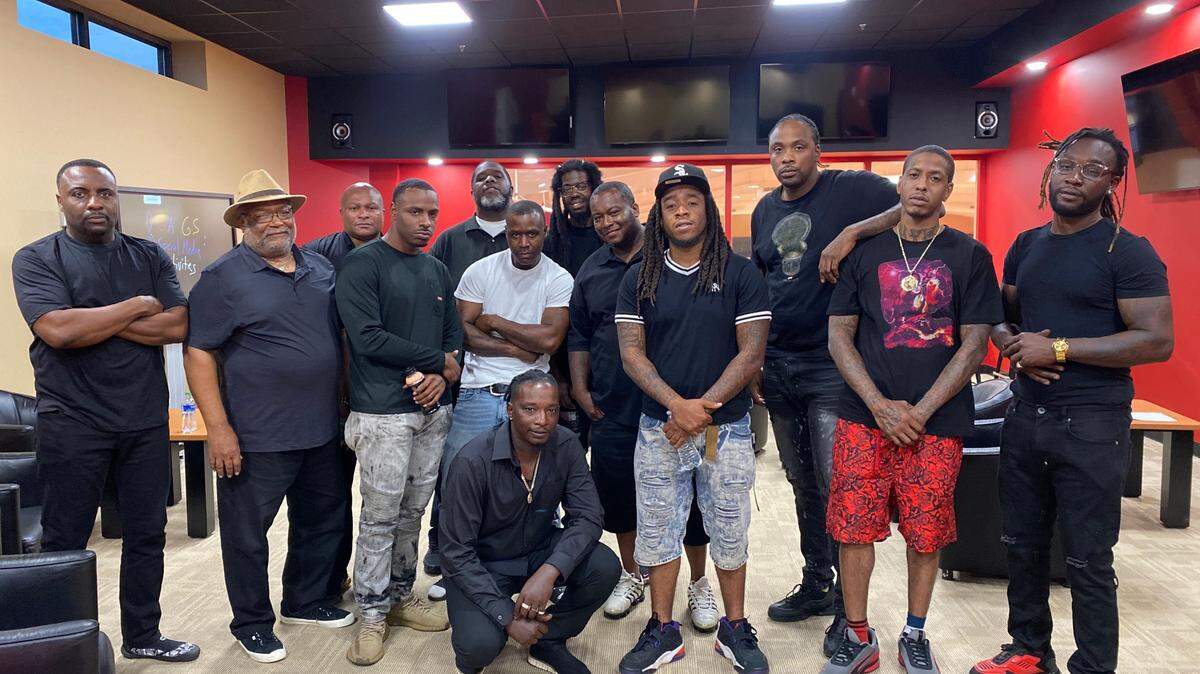
Judah Loc sees the trauma in MIdlands’ communities: parents losing children, friends losing friends, people living with the pain of shattered relationships.
“You have people who grew up with you as friends and their kids end up killing each other and that’s been going on for a minute,” Loc said.
Thursday, in the recreation center of Word of God Church off Broad River Road, Loc and about a dozen former gang members and gang “ambassadors” came together to talk about their role in trying to stop the wave of gun violence in Richland County that’s killing young people or sending them to prison.
“We’re stepping up and saying the time is now,” said Mark Hill, one of the men at the gathering. “We can’t sit by the wayside and continue to lose our youth and lose innocent bystanders that have nothing to do with the shootings.”
Gun violence has risen in Richland County and Columbia during the last two years, pushing shootings to the forefront of discussions about crime in the area.
The Richland County Sheriff’s Department has had 17 murder cases from shootings this year, on pace to surpass last year’s total of 32. The Columbia Police Department has had four shooting murder cases. In the last 30 days, Richland County and Columbia have had at least six shootings, and five students have been charged with bringing guns to schools. The majority of the victims and the shooters are between 14 and 28 years old, according to police.
Thursday the group announced that they’re forming an organization — Getting A New Generation Started in Peace, or G.A.N.G.S in Peace — that will mentor teenagers and young people in hopes of keeping them away from violence.
With their backgrounds in gangs, the nascent group and its members can appeal to young people like no else can, said Jay Five, another of the men at the gathering. Institutions and organizations like churches, schools and police that have historically helped young people rise above violence are no longer effective, Jay said. Parents are often a letdown for kids who are living a dangerous lifestyle.
“I think that’s the defining factor with us. You got dudes that got that special type of influence or respect with the young generation,” Jay said. “There’s a lot of us who have been there and done that, did time (in jail), lost homeboys, been shot . . . We want to prevent that young generation from going down that same path and (from) not being able to move around the obstacles that are set for them out there.”
The group of former gang members and ambassadors has come together with the help of the church’s Bishop Eric Davis and Craig Khanwell of Vision Walkers, a group that works for the better of Black communities.
“The whole community is saying now” is the time to act against gun violence, Davis said. “But the whole community can’t do what this group can do.”
Their place and power in the community resounds among the group.
“It’s going to take our people to reach out to our people in order to see the difference we want to see in our community,” Alonzo Canzater said. “I was once part of the problem. I feel it’s my position from once being part of the problem to solving the problem.”
While acknowledging they can be agents for positive change, they also recognized they’re fighting against forces beyond their control that lead young people to violence. Forces like poverty, lack of community resources, community and personal trauma as well as harmful stereotypes portrayed in the news.
Beyond having positive mentors, one solution to curbing violence that’s frequently discussed among the group is getting more resources into communities. It’s simple, the group says: Give teenagers and young people positive things to do that parents can afford or don’t have to pay for.
Loc said that kept him and his friends out of trouble in the 1990s. He was involved with a summer sports and learning program. When those programs went away, his peers started getting into trouble.
Toward the end of the discussion Thursday night, Tory Sims spoke up. A lot of the questions The State asked focused on how the group members were helping Black communities, Sims said.
“This movement, hopefully we can get it to expand to different states,” he said. “At the end of the day, it ain’t just for the Black community, it’s for all communities.”
This story was originally published June 3, 2022 at 4:58 PM.