
Did Richland County Council’s pay raise violate SC law? A member wants to know
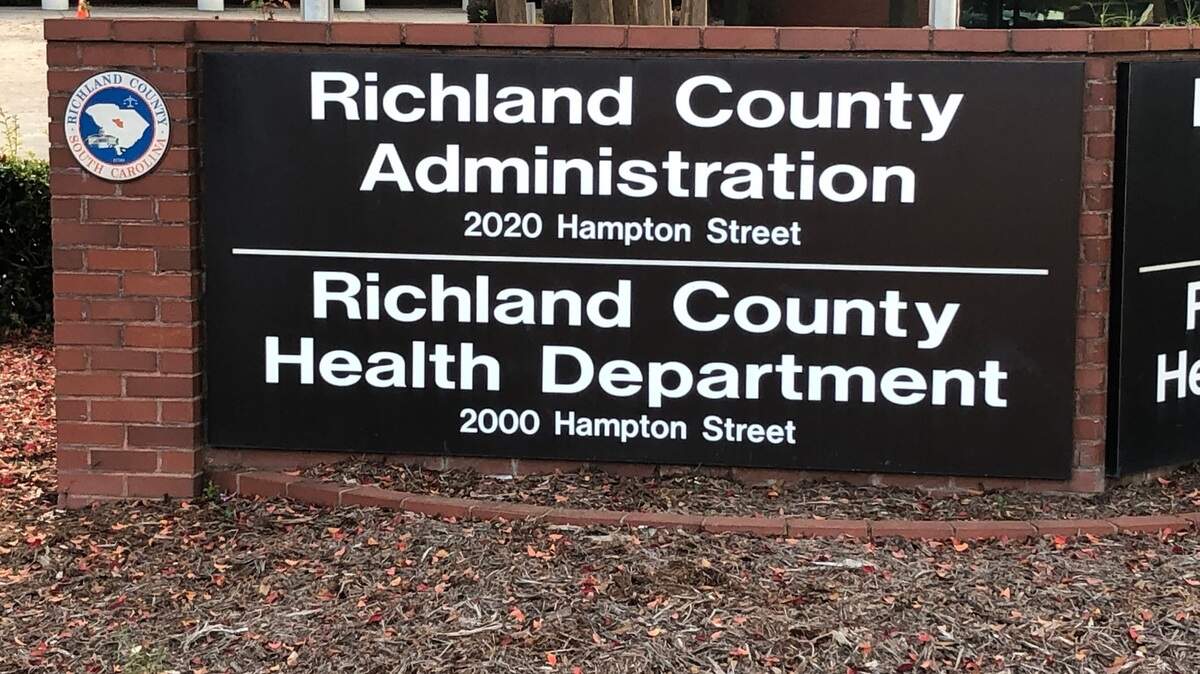
An outgoing member of Richland County Council has asked the S.C. Ethics Commission for an opinion on the council’s decision to vote itself a raise.
This week, Richland County Council members formally approved a nearly $8,000 bump in their paychecks next year, after passing a motion that will set the part-time council members’ pay to 80% of the lowest-paid county employees.
In a letter to Ethics Commission Executive Director Meghan Walker, Councilman Joe Walker asks whether the decision is in line with state ethics law, citing clauses that prohibit elected officials from approving financial benefits for themselves and prohibiting conflict-of-interest votes.
“It would seem from a strict reading of the aforementioned provisions of law that no Richland County Council member could benefit from any salary increase for which they voted and that only those members who did not vote for a salary increase could benefit, including new council members elected in the future,” Joe Walker argues in his letter.
“Also of note, it is abundantly clear that the spirit of the (statute) is to force those voting for salary increases to face the scrutiny of an election following said vote, allowing for the court of public opinion to weigh in on such an action,” Joe Walker said, since any pay increase can’t go into effect until after an election. “In this case, let it be noted that ALL the Richland County Council members voting in favor of this raise are either not up for election, or are in uncontested elections, obviously circumventing the spirit of the statute.”
Council members will now earn about $25,600 per year, with an additional 10% pay for the council chairperson. It’s an increase of $7,823 over the $17,777 council members have been paid for the past 10 years, and an increase of more than $11,000 over what is set in the council pay ordinance.
“The compressed timing of this process speaks to that as well, having called a special called meeting on October 25, 2022, in conjunction with a Board of Zoning Appeals meeting to ensure third reading (Occurred November 1, 2022) occur prior to the November 8, 2022, election,” Joe Walker’s letter said.
Council members Derrek Pugh, Yvonne McBride, Paul Livingston, Allison Terracio, Gretchen Barron, Overture Walker, Jesica Mackey and Cheryl English voted in favor of the raise. Voting against the raise were council members Bill Malinowski, Joe Walker and Chakisse Newton.
Joe Walker is stepping down from the council this year, with Democrat Bryan Burroughs and Republican Don Weaver competing for his District 6 seat. Incumbents Livingston, Terracio and Newton are running unopposed in Districts 4, 5 and 11, respectfully. Jason Branham is the sole candidate to replace outgoing councilman Malinowski in District 1, but a write-in campaign has been launched for Malinowski.
Meghan Walker quickly wrote back to the county councilman on Thursday, saying any opinion from the S.C. Ethics Commission must be “prospective in nature” and can’t be issued about a third party’s conduct. If Joe Walker suspects a violation of the state Ethics Act occurred, he should file a formal ethics complaint that would launch an investigation, she writes.
“I understand Director Walker’s position, I just wish there was a way to review it rather than me accuse my colleagues of something that I’m not the subject matter expert in,” Joe Walker told The State. “But what we’ve heard a lot is that just because you can do something doesn’t mean you should, and I think this is one of those cases.”
Walker sent the letter on behalf of his constituent John Crangle, a longtime ethics watchdog in state and local government. Crangle was active in passing the S.C. Ethics Act and said he thinks County Council’s vote shows “a clear conflict of interest under the law.”
“Given the history of Richland County Council, they don’t deserve a pay raise, they deserve a pay cut,” Crangle said.
He suggested an alternative path of asking for an advisory opinion on a hypothetical situation similar to what Richland County Council did this week. The Ethics Commission is also empowered to launch its own investigation if commissioners believe an action violates the Ethics Act, Crangle said.
Council Chairman Overture Walker did not immediately respond to a request for comment. In a statement to The State ahead of this week’s council vote, Overture Walker said the pay change is in line with the county administrator’s recommendations in the county’s 2023 budget, goes along with a 4% across the board pay increase for county employees, and updates a 27-year-old pay ordinance that was out of line with the council’s actual pay practices approved by the council in the years since it was adopted.
“Unfortunately, the Council pay increase item is being used as a political straw man to create a public narrative that County Council is increasing its pay at the expense of employees and public safety,” Overture Walker said in his emailed statement. “Said narrative is just patently false and borderline reprehensible.”
In a separate press conference Thursday, two candidates for seats on the council denounced the council’s decision to raise its own pay. Jason Branham, the Republican running in northwest Richland County to replace Malinowski, and Don Weaver, the Republican candidate running for the seat being vacated by Joe Walker, both called on the council to reverse the decision. And Weaver promised if elected he would donate his increased salary to local charities and nonprofits.
“These eight Democrat (sic) county council members who voted for this tremendous increase just in time for their reelection should be ashamed,” Weaver said. “They ran for any office knowing what the expected pay was.”
Weaver noted that Sheriff Leon Lott called on County Council to raise pay in his department so he could retain more deputies at the same time council was pushing through its own pay increase.
“What’s happened here with this vote and this pay increase is a result of one political party having an overwhelming majority on Richland County Council,” Branham said. “You have the Democratic Party with 82% of the vote on county council. That’s a 4-to-1 ratio, double what Republican Party has in the State House. ... It shows me you are way too comfortable in your position of power. A greater balance of power has always been good in American government.”
This story was originally published November 4, 2022 at 10:41 AM.
.jpg)