Columbia vape shops have boomed on delta-8 hemp products. Now, police will sweep them off shelves
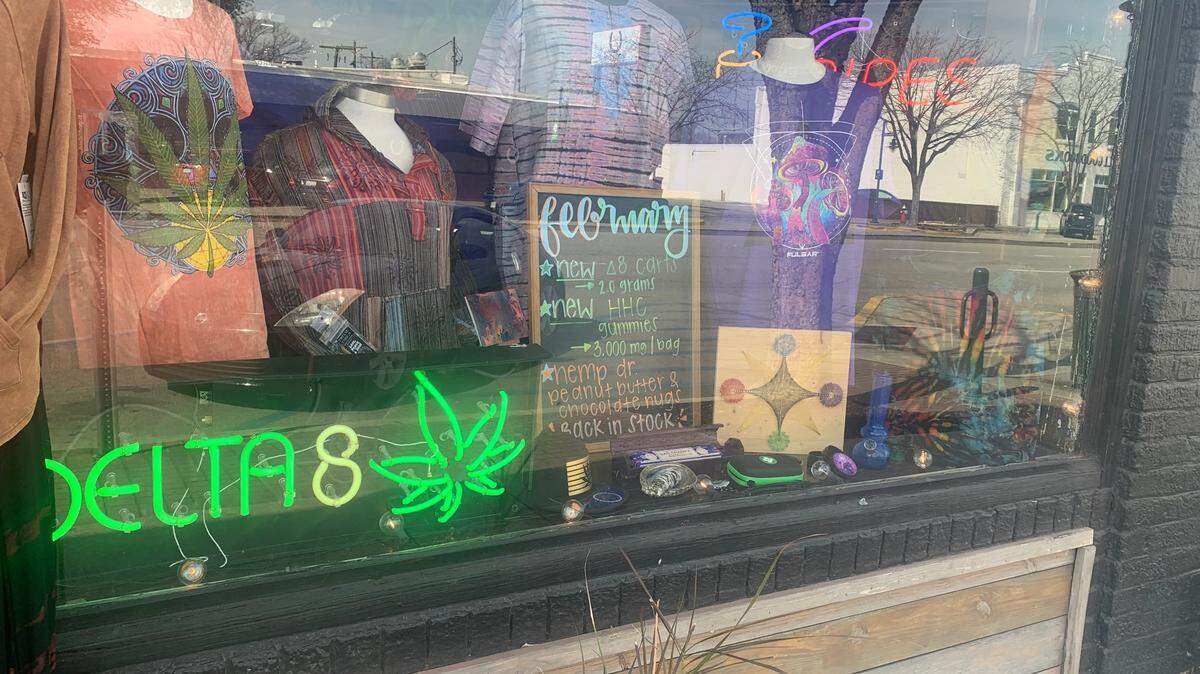
Columbia shoppers who have become used to buying delta-8 and other hemp products at Columbia vape shops soon will have to look elsewhere for the vape cartridges and edible gummies that have become popular across the nation. Columbia police say delta-8 is illegal, and shops are now being told to get rid of the products.
The shift comes after one Columbia vape shop was raided by police for allegedly selling unprocessed hemp.
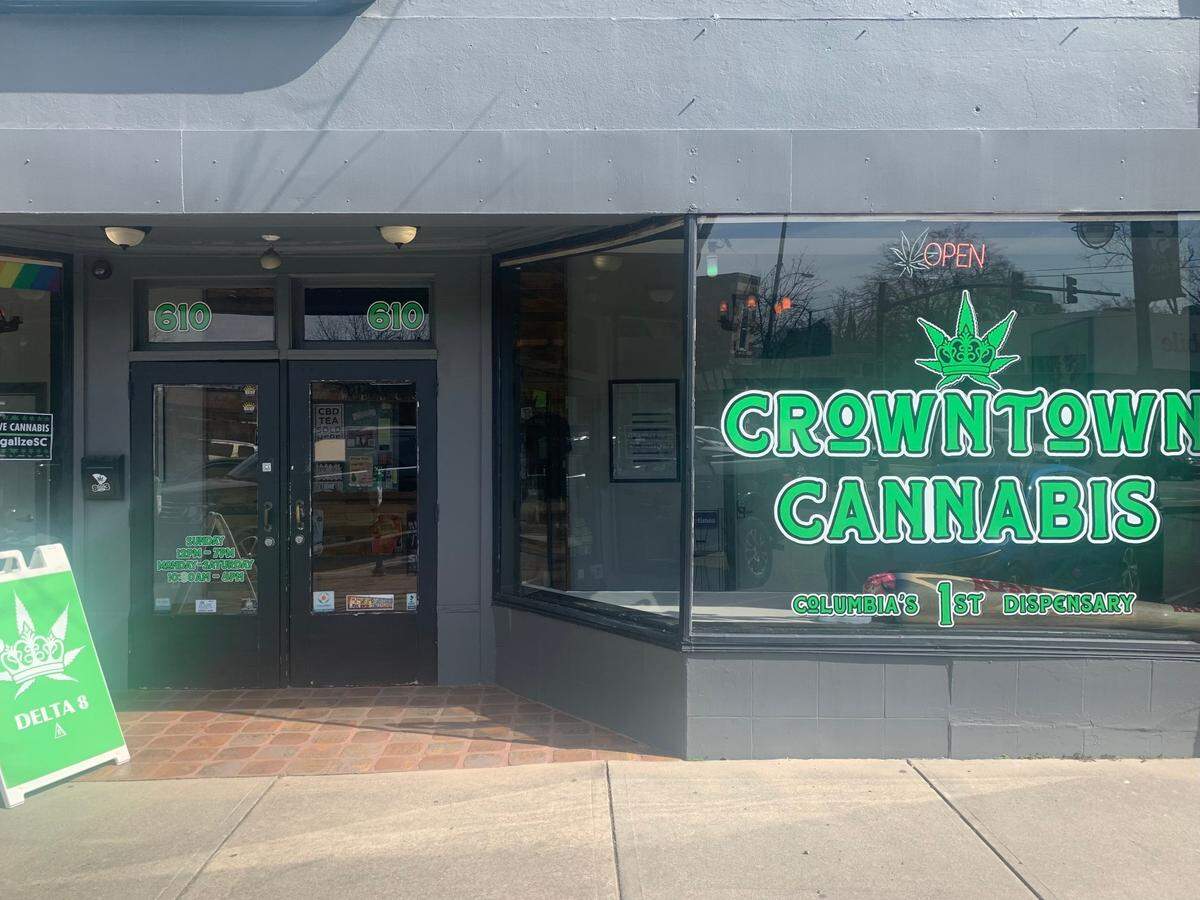
The Columbia Police Department and the South Carolina Law Enforcement Division descended on Crowntown Cannabis on Jan. 18 to investigate the popular Five Points vape shop they believed to be selling illegal substances.
Police confiscated 15 to 20 pounds of “green, plant-like material” they “perceived” to be marijuana. They ticketed employees at the shop for possession of hemp without a license and arrested the store manager on charges of conspiracy to distribute marijuana.
The agencies were enforcing a South Carolina attorney general’s opinion published in 2021 that forbade the selling of unprocessed hemp.
The shop’s owner, Mike Sims, said he thinks Columbia police wanted to make an example of the shop, but he doesn’t think the store was breaking the law. He asserts that the store was never selling marijuana, but it did sell hemp-derived THC products he believes are federally legal.
Now, as one of his employees faces jail time and he worries his business will be shuttered, The State newspaper has learned that police are preparing to treat all delta-8 THC products as illegal, after allowing their sale for years. Sims’ shop won’t be the only one affected.
A minefield of inconsistent enforcement has surrounded the sale of hemp and delta-8 products in South Carolina, law enforcement, hemp farmers and retailers have all agreed.
Columbia police say they’re simply doing their job and enforcing laws interpreted by the Attorney General’s office.
As the confusion hits a fever pitch, shop owners who have invested in the products say they aren’t sure what to believe.
’We’re in the process of educating them now’
More than a year ago, Columbia vape shops recall being told they weren’t allowed to sell unprocessed hemp at their stores. That meant hemp flower, the buds harvested from hemp plants, wasn’t allowed to be sold, shops recall being told by law enforcement.
Shop owners believed they could still sell hemp flower as pre-rolled cigarettes. Then, a few weeks before the raid on Crowntown Cannabis, Sgt. Lance Reeves with the Columbia Police Department’s Organized Crime and Narcotics Unit told store owners that even those products weren’t allowed.
Natural Vibrations, a Five Points vape shop, stopped selling raw hemp flower years ago but sold pre-rolled joints with hemp flower up until recently, believing they were following the law, said owner Jahson Wildes. Sometimes hemp flower products are also advertised as containing high levels of delta-8.
Natural Vibrations continues to sell delta-8 products including vape cartridges and gummies because those are processed hemp products, Wildes said.
Reeves did not tell shop owners their non-flower delta-8 products were illegal, such as gummies and vape cartridges. Reeves told The State he did explain that he was unsure and would return once he learned more.
“When we were first educating ourselves, we were telling them we knew 100% the flower was illegal,” Reeves said. “We’re in the process of educating them now” on the other delta-8 products.
Most shops complied with the directive to get rid of all hemp flower, but when contacted by The State Wednesday, owners said they were not yet aware that police had plans to crack down on all delta-8 products.
The Columbia police decision comes from an attorney general’s opinion that says delta-8 is illegal in South Carolina. That opinion came out in 2021, but police are just now enforcing the dictate on delta-8 locally.
Even though some Columbia shop owners disagree with being required to follow an attorney general’s opinion that hasn’t been codified as law, they say they’re forced to comply or face potentially huge consequences, like Crowntown Cannabis.
“It’s not law, but it’s the guidelines we’re going to use going forward,” Reeves said of the attorney general’s opinion.
That means no more delta-8 products on the shelves at Columbia stores.
Sims, owner of Crowntown Cannabis, said he’s been told different things from law enforcement. When the shop was raided in January for selling hemp flower products, he thought the store was in compliance with the attorney general’s opinion on unprocessed hemp by bagging the hemp flower or by selling it as pre-rolls. He said he thought those actions constituted processing the flower.
But Reeves said Crowntown Cannabis had been warned weeks before the January raid.
“We had educated them in the past and advised them to make sure that it was off the shelves,” Reeves said. “So we ended up executing a search warrant on that business for the hemp,” as well as what Reeves perceived to be marijuana.
Sims asserts that the shop was never selling marijuana. It was selling hemp-derived products with THC, he said, with the understanding that the 2018 federal Farm Bill and a federal court deemed delta-8 legal.
A press release shared by the police department after the raid said the agency also confiscated hash oil and edible samples from the shop. All the items taken from Crowntown Cannabis are being tested by SLED. Columbia police had not received the results of those tests as of Wednesday afternoon.
Several store owners also believe SLED’s testing method is imprecise and that it changes the chemical makeup of the products by adding heat. Rod Kight, a North Carolina-based hemp attorney representing Sims, agreed that SLED’s testing method is not always accurate.
Testing of delta-8 and other hemp products nationwide is inconsistent, Kight said, because there’s no standardized testing method.
SLED agents declined to be interviewed for this article. A spokesperson did not respond to a request for information regarding the claim about the agency’s testing method.
Sims said his business is already struggling following the raid. His employees don’t want to come to work for fear of more charges. When local police begin telling shops no delta-8 products are allowed, he fears he’ll lose his customers, too.
It “would be a death sentence” for his business to no longer be able to sell delta-8, Sims said.
Lindsey Strickland, a sales clerk at Smoker’s Town in Five Points said not being able to sell hemp flower with delta-8 has already affected the shop. People have come in looking for pre-rolls, and she’s had to explain they aren’t allowed to sell them.
When Strickland was told that Columbia police had plans to enforce a ban on all delta-8 products, she was skeptical.
“I highly doubt that they’re going to make delta-8 illegal because it’s legal federally,” Strickland said. “ Every so often we get wind of a police department saying they’re going to ban it or make it illegal — it’s never actually happened.”
It’s still unclear if shops will be able to challenge the attorney general opinion and continue selling delta-8 products.
Common theme of confusion
Understanding which hemp-derived products are legal to sell in South Carolina has been a source of confusion since hemp was legalized by South Carolina’s Hemp Farming Act in 2019.
Hemp can be used to make fiber, for textiles, but it can also be used for the cannabinoids, which are types of chemicals, it contains. The cannabinoid delta-8 THC naturally occurs in small amounts in both hemp and marijuana.
Part of the confusion from law enforcement has been that while THC — tetrahydrocannabinol — is a controlled substance in South Carolina, the 2018 federal Farm Bill and South Carolina’s 2019 Hemp Farming Act both permit a small amount of delta-9 THC to be present in hemp. But those laws don’t address other THC variants such as delta-8.
Many in the hemp industry argue that because the law does not forbid other variants of THC, including delta-8, it’s not illegal.
The U.S. Drug Enforcement Agency has said delta-8 derived from hemp is not a controlled substance, but synthetic delta-8 is a controlled substance. A federal court in California has agreed that hemp-derived delta-8 is legal under federal law, in part because federal statute “is silent with regard to delta-8 THC.”
But in South Carolina, law enforcement agencies were having a hard time understanding what to enforce. So in 2021, SLED asked for clarity from the state Attorney General’s Office.
“Our goal since this law had come out was to educate the stores that were selling the product,” said Reeves, the Columbia police sergeant.
“As we were educating ourselves, we would go around to some of the stores and try to educate them as well because … I didn’t feel comfortable going straight into a store and hemming them up on something that wasn’t really clear on their end as well,” Reeves said.
To answer SLED’s question, the Attorney General’s Office issued an opinion that delta-8 is not legal under the Hemp Farming Act, since the act only expressly allows small quantities of delta-9.
“Our office agrees with SLED’s essential analysis that the Hemp Farming Act did not legalize THC except as defined in lawful hemp,” the attorney general’s opinion reads. “If the General Assembly intended to undertake legalization of THC on the scale that the industry posits, they would have done so expressly and unambiguously.”
Prior to issuing the opinion, the Attorney General’s Office asked for the perspective of the hemp industry.
Kight, the hemp lawyer, submitted a position paper to the South Carolina Attorney General’s office in 2021 arguing that delta-8 is not a controlled substance when it is derived from hemp, because the state’s Hemp Farming Act removed hemp from the state’s list of controlled substances.
“We were hopefully optimistic the attorney general would agree with us,” he said. “Unfortunately, they did not.”
But Kight asserts that by the state’s own definition of hemp, which references the federal definition, delta-8 derived from hemp is legal, regardless of the attorney general opinion.
Despite the opinion, law enforcement has let shops in Columbia sell certain delta-8 products. Until now.
How each product differs
The hemp industry exploded after the passage of the 2018 Farm Bill removed hemp from the federal list of controlled substances.
“It was a green rush,” said Cody Callarman, a Charleston hemp farmer.
Hemp-derived products such as CBD were suddenly available almost everywhere. Even gas stations began selling CBD products.
Soon, other cannabinoids pulled from hemp, including delta-8 and delta-10, grew in popularity. In its first two years, delta-8 made $2 billion, according to one industry analysis.
Callarman said the sudden emergence of these products can make it hard for a layperson to understand how they’re all different.
Hemp and marijuana are both derived from the same plant species, cannabis sativa, and contain many of the same cannabinoids,which are types of chemicals, just to different degrees.
Prakash Nagarkatti, the University of South Carolina’s senior research adviser to the president, has studied cannabinoids for nearly 20 years.
The most well-characterized cannabinoid is delta-9, which is psychoactive and gives users the “marijuana high,” he explained.
Delta-8 is a variant of delta-9 and has become very popular recently, Nagarkatti said. Because of how it binds to receptors in the brain, delta-8 is less psychoactive than delta-9. Essentially, it gets the user less high.
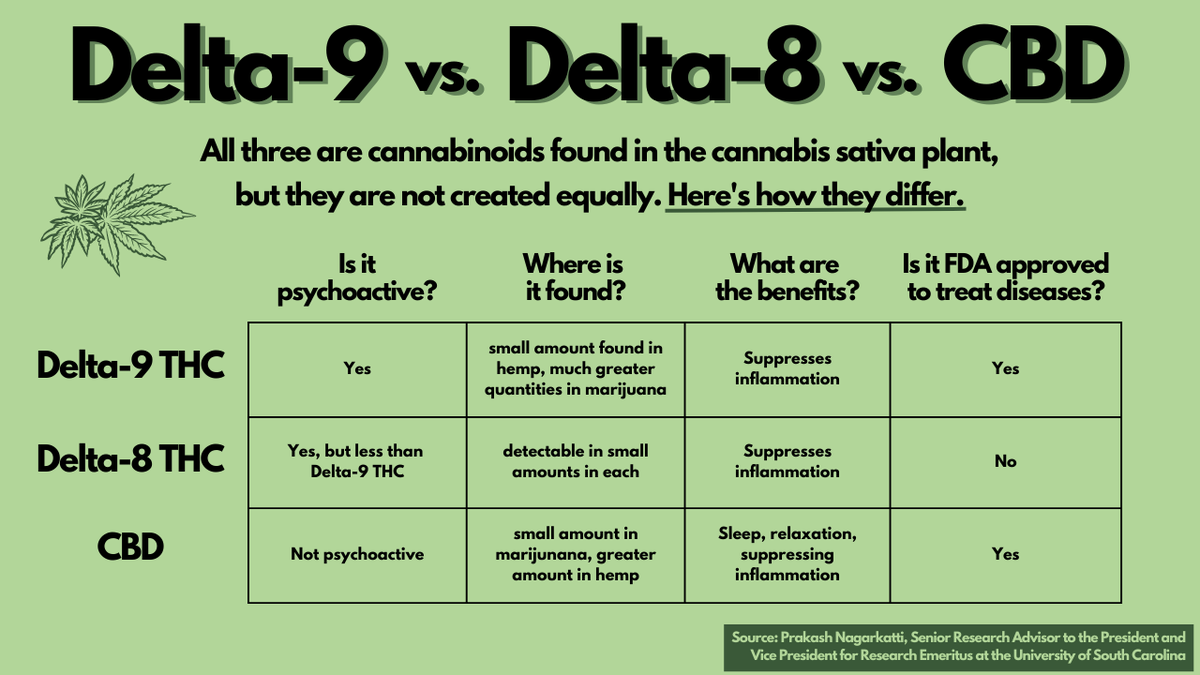
Nagarkatti said there are also potential medicinal benefits of delta-8. Preliminary research shows it can suppress inflammation. Still, it’s the “new kid on the block,” he said. “Not much is known, but everybody is excited.”
People who smoke delta-8 find it to be more relaxing than delta-9, he said.
Carter Brown, a customer of Natural Vibrations in Five Points, said that’s exactly why he uses it.
Brown typically buys delta-8 vape cartridges and edibles from the store and uses them about four times a week to help sleep and to relieve anxiety, he said.
“It’s like whether you want to drink a glass of wine for your dinner, and enjoy that glass of wine, sipping a little bit at a time throughout your dinner, versus if you really want to drink a glass of scotch and finish it in five minutes and get high,” Nagarkatti said. “A lot of people prefer a glass of wine, so in the same way, a lot of people prefer delta-8 because it doesn’t give them as much of a high feeling, but it just makes them relax and enjoy.”
Nagarkatti also said it’s important for delta-8 users to be cautious. When a product is unregulated, there’s a risk of harmful chemicals or heavy metals being introduced in the process to extract the cannabinoid.
A gray area moving forward
Delta-8 hangs in a gray area, both Nagarkatti, the researcher, and Callarman, the hemp farmer, agreed.
In Callarman’s opinion, he agrees the products need to be regulated the same as marijuana is regulated in states that have legalized it.
“It’s a giant loophole right now, and it’s getting exploited,” he said, adding that many delta-8 companies oppose strict regulation because it would likely come with much higher taxes.
It comes down to safety and quality, Callarman said. He’s personally bought and tested delta-8 oil that didn’t contain the potency it claimed or that contained other unnatural additives.
He also pointed to a Maryland Medical Cannabis Commission review of delta-8 products that found that warning labels on delta-8 products were inconsistent and didn’t always contain warnings about its psychoactive properties.
That review also found that edible products did not have the accurate potency listed on the packaging.
There are good actors and bad actors, Callarman explained. But the inconsistency is a concern. He’s an advocate for legalizing marijuana, and he thinks these other products could make that work harder.
“The fear we have about getting medical cannabis passed this year is people are not going to want to participate because they could have had bad experiences (with CBD or delta-8) because it’s unregulated,” he said.
Sims also favors regulation. Hemp products are a newborn industry that could benefit from standardization, he said.
He wants standardized testing of the products and universal laws to make sure his business isn’t harmed by uneven enforcement practices. He’d like to meet with law enforcement to come up with a compromise.
“But I think law enforcement’s perspective on this is going to be all or nothing,” he said.
Many in the hemp industry, including Sims and Callaraman, expect the state Legislature to get involved with the delta-8 issue. They also expect Congress may revisit the substance in a 2023 revision of the Farm Bill.
Callarman said he is worried for others in the industry, calling enforcement inconsistent and uneven.
“You’re going to throw some bad people in jail or punish them, sure, but you’re also going to throw some good people in jail,” he said.
For now, shop owners and delta-8 users will wait and see.
This story was originally published February 10, 2023 at 10:22 AM.