Feeling the heat? USC study reveals areas in Columbia should worry about summer weather
Summer temperatures are predicted to finally arrive in the Midlands this week.
After weeks of unseasonable mild weather, temperatures are predicted to rise into the mid 90s. Columbia’s “famously hot” reputation will once again be earned.
But in a city that doesn’t hide its boiling reputation, what areas are the hottest?
Last August, a team of “citizen scientists,” along with Kirstin Dow, a geography professor at the University of South Carolina, tried to answer that question. They spent a day recording temperature and humidity data from one end of the Columbia area to the other, spanning 190 miles of Richland and Lexington counties.
Researchers took 71,872 different measurements, with a high of more than 100 degrees.
Results of the study found that temperatures vary widely across the city, Dow said. At certain times of day, the difference was more than 18 degrees.
Highly developed areas were the hottest, retaining the most heat throughout the day. Swathes of concrete, like parking lots, more readily absorb heat, and spots with few trees were particularly susceptible to the summer sun.
Asphalt, large buildings, cars and — ironically — air conditioning units are often some of the biggest culprits of Columbia’s high temperatures.
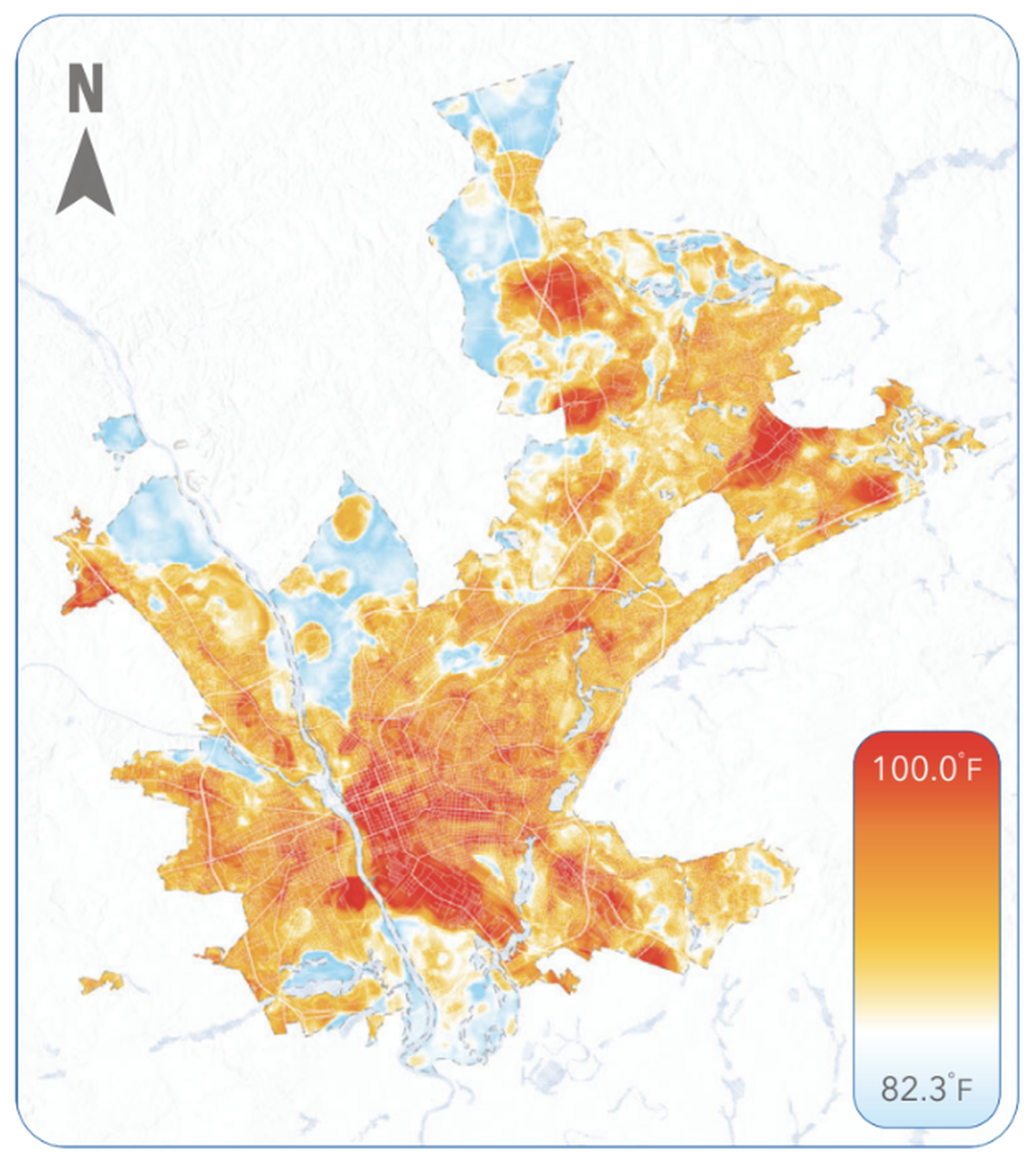
Downtown areas like the Main Street District and the Vista, along with USC’s campus, bear the brunt of Columbia’s “famously hot” weather. But down Shop Road, the sun bakes South Carolina State Fairgrounds, Williams-Brice Stadium and the Jim Hamilton-LB Owens Airport.
Corridors like Garners Ferry Road and Fort Jackson Boulevard and development at the Village at Sandhills and near Cayce and Blythewood also stood out.
To seek refuge from the heat, Columbia residents should venture by the Congaree River, Harbison State Forest or the Congaree Creek Heritage Preserve. Where there’s trees, there’s shade. And shade is important, Dow said.
Last year, USC researchers found that the city lost nearly 22% of its tree canopy from 2005 to 2019. That means once-shaded areas became more vulnerable to hotter temperatures.
Even areas by the Oaks Hills Golf Club on Fairfield Road benefit from the vegetative cover of the green, the study shows.
It’s especially important to be aware of the dangers of heat in the spring and early summer, Dow said. While our bodies can usually acclimate to higher temperatures, that is lost during the winter months and must be rebuilt.
“It’s a time when people are more likely to see heat hospitalizations,” Dow said.
Extreme heat is considered the deadliest weather event by the National Oceanic and Atmospheric Administration. Everyone should be aware of its dangers, but elderly people, children and those with health conditions are most at risk. Lower-income communities are disproportionately affected as well.
The heat island mapping effort was led by Columbia’s Tree and Appearance Commission and funded by the National Integrated Heat Health Information System, the Richland County Conservation Commission and Columbia Green.