A dead dog was tossed into a dumpster at the Columbia animal shelter. Was it normal?
The video began circulating in early October. The shaky, seconds-long clip shows a dead and apparently frozen dog being haphazardly tossed into a dumpster that is about to be lifted into a garbage truck. When the dog hits the rim of the dumpster, it bounces stiffly backward, frozen solid.
Columbia Animal Services has confirmed the video was taken at its shelter off Shop Road.
The video has been posted to numerous social media accounts, including to an Instagram account with the banner, “stop animal cruelty at Columbia Animal Services.”
The shelter’s leadership asserts that while it may be distressing, the video shows an industry standard practice – grim as it is. Animal shelters across the state euthanize thousands of animals each year, and many of those animals’ bodies are disposed of in landfills.
But Columbia is ahead of the curve when it comes to disposing of animal remains, city leaders say.
Standard procedure?
The viral video of the frozen dog was filmed at the Columbia shelter, but it is likely at least a year old or older, Columbia Animal Services Superintendent Victoria Riles said.
Many shelters across the U.S. send the remains of euthanized animals to their local landfill, including many shelters in South Carolina. Columbia is unique because it typically does not do that. Instead, the shelter has its own large incinerator, and animal remains are usually burned away rather than thrown away.
“We’re actually ahead of the game with having this incineration unit, and we’re very proud to have it,” Riles said.
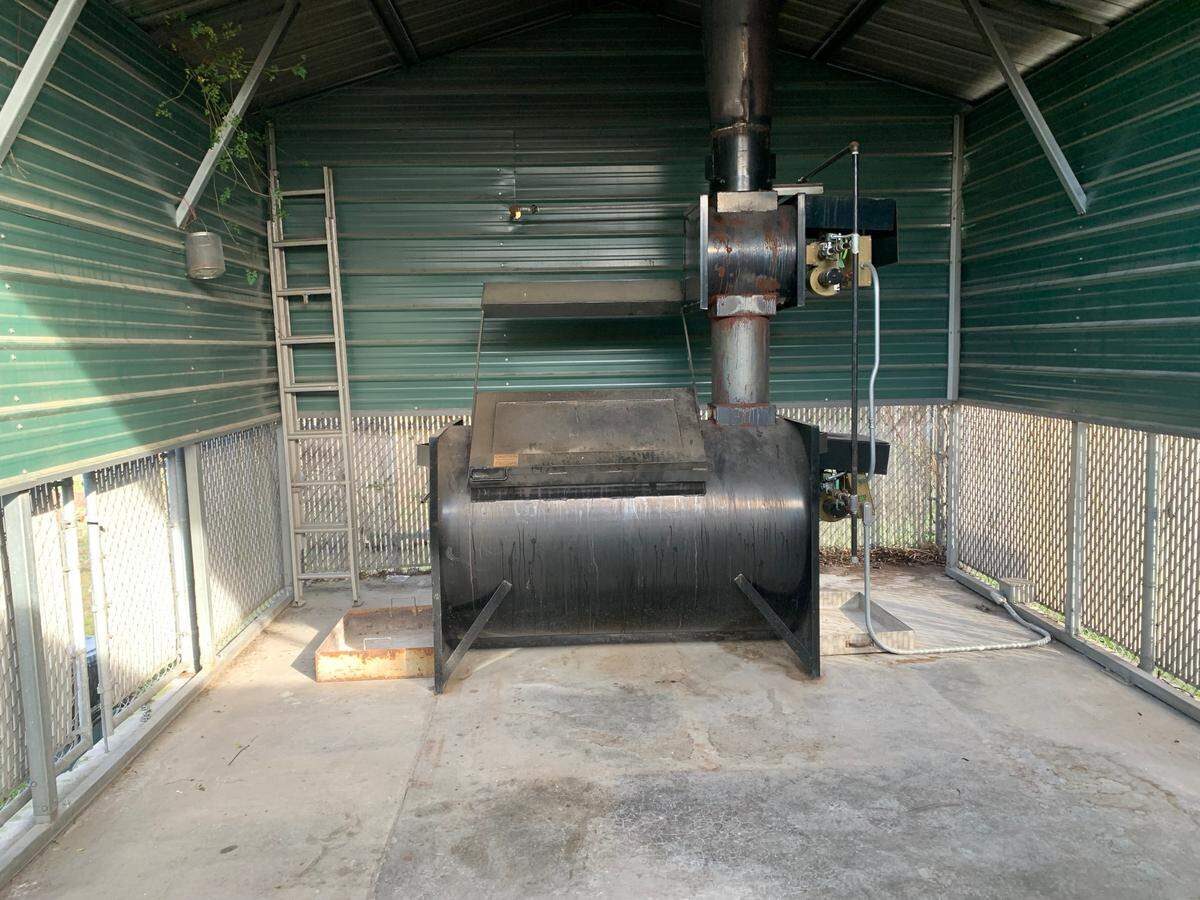
Riles said the viral video was likely taken at some point last year when the shelter’s long-running incinerator broke down and it had to revert to sending animal remains to the landfill. The shelter has since replaced the incinerator and has returned to disposing of remains via incineration.
Those who spoke to the State agreed, however, that incinerators are not common at animal shelters, and disposal of remains via garbage truck and landfill is more standard.
Lexington County Animal Services does not have an incinerator, for example, so animal remains are disposed of in trash bags and then picked up by a waste management company and taken to the county’s landfill, explained Holly Hallman with the Lexington County shelter.
Hallman also agreed that while the visual is unpleasant, disposing animal remains in a dumpster before they can be taken to a landfill is a standard practice. Hallman has worked at the Lexington County shelter for 17 years and said the shelter has always handled animal remains by sending them to the landfill.
Columbia spent roughly $50,000 to replace the incinerator at the shelter last year. It’s a cost the Lexington County shelter hasn’t chosen to prioritize, Hallman added.
“The funds that are saved from not cremating are put into the animals that are living,” Hallman added, as another reason why the Lexington shelter has never prioritized the equipment. The shelter will, however, refer people to a private business that will cremate people’s pets for them if they are willing to pay.
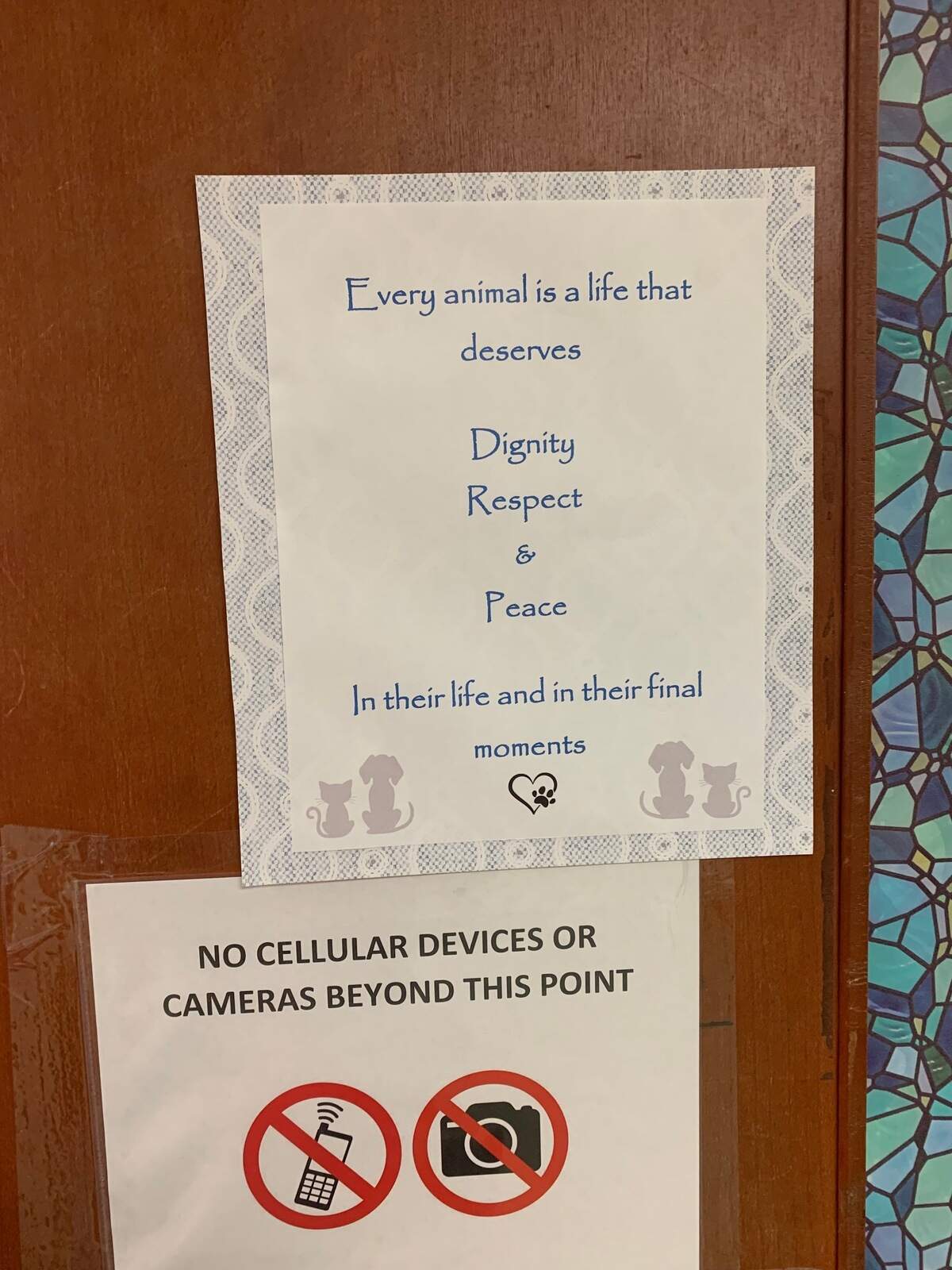
In Columbia, the euthanization process looks like this:
An animal will be brought into a small, mostly bare exam room with a metal table at the wall. It will be injected with xylazine and ketamine – a sedative and anesthetic. Then it will be injected with a “Fatal-Plus” cocktail including Sodium Pentobarbital.
In most cases, the animal will die within 15 minutes.
The shelter’s incinerator can hold eight to 10 animals’ bodies at a time and runs extremely hot – up to 1,500 degrees.
A euthanized animal may be placed directly into the incinerator, but the remains may also be placed in a nearby walk-in cooler if the incinerator is already in use.
“On some days, we don’t burn it at all,” Riles said.
Euthanasia trends
Columbia Animal Services is striving to become a no-kill shelter, a status that requires a euthanasia rate of 10% or less. For the last few years, Columbia’s rate has hovered around 20%.
“In a perfect world, no healthy or treatable animal will ever be euthanized for space,” said Jen Coody, executive director of the local nonprofit Animal Mission. “We hope that one day we can see the Midlands be in that place, but right now every day is a space struggle, for every municipal shelter.”
The Columbia shelter has taken in around 5,000 animals a year for the past several years, and the euthanasia rate has steadily declined.
While the shelter is not at no-kill status, it is as close as it’s ever been to reaching it. In the 2022-23 fiscal year the shelter’s euthanasia rate was 21% (Of 5,000 animals taken into the shelter, just over 1,000 were euthanized.) In 2015, the euthanasia rate was at more than 50%. Prior to 2007, the shelter was regularly euthanizing more than 80% of the animals taken into the shelter – killing more than 10,000 animals a year.
“We really do have this new era of operations around us. … We don’t want to just impound your pets,” Riles said.
Earlier this year, local TV news station WIS reported that nearly half of the dogs euthanized at the shelter between Jan. 1, 2022, and Feb. 2, 2023, were killed within five days of entering the facility. The shelter is legally required to hold stray animals for five days to ensure potential owners can claim the animal, unless the animal is a danger to others, is in pain or near death.
The TV station also reported that healthy dogs were being euthanized as well.
Shelter and city leadership have aggressively denied any claims of wrongdoing made in the article.
“We were disappointed in the lack of accuracy in this report and offer the following information to correct the record,” read a city press release issued June 16 in response to the WIS article.
Riles said a lack of clear record-keeping was one factor that led to the confusion with the WIS article, but she again asserted that the shelter is not breaking any laws.
The Humane Society of South Carolina has received complaints about the Columbia shelter, and an investigation into the facility is ongoing, an agent with the organization confirmed. The Humane Society did not specify what the complaints entailed or any other details about the investigation.
Riles said the shelter has made considerable strides to rekindle community trust, including by publishing detailed intake and euthanasia data on social media each month. The shelter has also created the Facebook page COC Animal Services Rescue Needs, where it shares when animals are likely to be euthanized because of space issues.
In November, the shelter took in 430 animals and euthanized 84 of them – that’s about a 20% euthanasia rate.
The month prior, the shelter took in 467 animals and euthanized 77, 20 of which were owner-requested. The shelter offers free euthanasia for animals at the end of their lives because private euthanasia can be expensive. People also surrender animals to the shelter and sometimes request that the animals be euthanized. Riles said those requests are only accepted if the animal meets the conditions for euthanasia, such as being at the end of life.
Columbia still lags behind other shelters in its goal to reach no-kill status. Nineteen counties in South Carolina were given “no-kill” status in 2022 by the nonprofit Best Friends Animal Society. Eight counties were considered “nearly no-kill” communities, including Lexington County.
Richland County remained squarely in the “not no-kill” category, but the Columbia shelter, which also takes in animals found in Richland County, also took in more animals than most other shelters across the state, according to the Best Friends data. Intake from the county makes up more than 60% of the animals at Columbia’s animal shelter, on average.
Only Greenville and Charleston vastly outpaced Richland County’s intake figures, recording roughly twice as many animal intakes. But both communities were still closer to the no-kill goal. Greenville was considered “nearly no-kill” and Charleston earned “no-kill” status last year, according to the data.
“You’re often not comparing apples to apples,” said Columbia assistant city manager Clint Shealy. A more rural community might let non-aggressive strays wander, for example. “We don’t have that option in the city. (Euthanasia rates) may vary from county to county and jurisdiction to jurisdiction.”
Riles stressed that the shelter has a number of volunteer programs to try to increase adoption, and the shelter is always seeking foster parents to take care of dogs and cats while they wait to find permanent homes.
Coody, of the nonprofit Animal Mission, said one factor that is out of the shelter’s hands is the availability of veterinarians to perform spay and neuter surgeries.
The Animal Mission’s main goal as a friend of the shelter is to promote spay/neuter and to help make the procedures more affordable. The Animal Mission gives away vouchers for between $30 and $75, depending on the animal and gender, to help reduce the costs of those procedures. But Coody said another contributing problem is a lack of veterinarians to perform the surgeries.
“We can put all the vouchers in the world into the hands of pet owners, but the availability of those appointments is what’s causing most of the backup in the system right now,” Coody said.
The earliest available spay or neuter appointment for a dog in Columbia was 30 days out when Coody spoke with The State.
Coody and Riles both said that spaying and neutering pets is one of the top ways to reduce the population of stray animals.
Columbia Mayor Daniel Rickenmann has strongly refuted the recent claims of wrongdoing against the animal shelter. The claims have led to Riles and others with the city government receiving threatening emails and phone calls, which Rickenmann said could lead the city to legal action.
“If it continues, we will prosecute those folks,” Rickenmann told The State. “If people threaten our employees, we will prosecute it.”
Rickenmann added that the city is hoping to invest in a new shelter facility in a more visible area to increase fostering and adoption numbers.
“At the end of the day, do you wish you could keep every animal alive? Absolutely. But it’s just not feasible,” Rickenmann said.
This article has been updated to clarify that Mayor Daniel Rickenmann has refuted recent claims against the shelter.
This story was originally published December 28, 2023 at 5:30 AM.