Quieting Columbia train horns is closer to reality. Here’s what’s happening
Columbia has gotten another step closer to quieting a handful of the noisy railroad crossings across the city.
The city is almost finished designing safety improvements for 14 railroad crossings that stretch from Gadsden Street to Beltline Boulevard and is now waiting for the railroads to approve the plans. Then, work will be able to begin on building safety measures that will allow trains to go through the crossings without blowing their horns, assistant city manager Missy Gentry confirmed to The State.
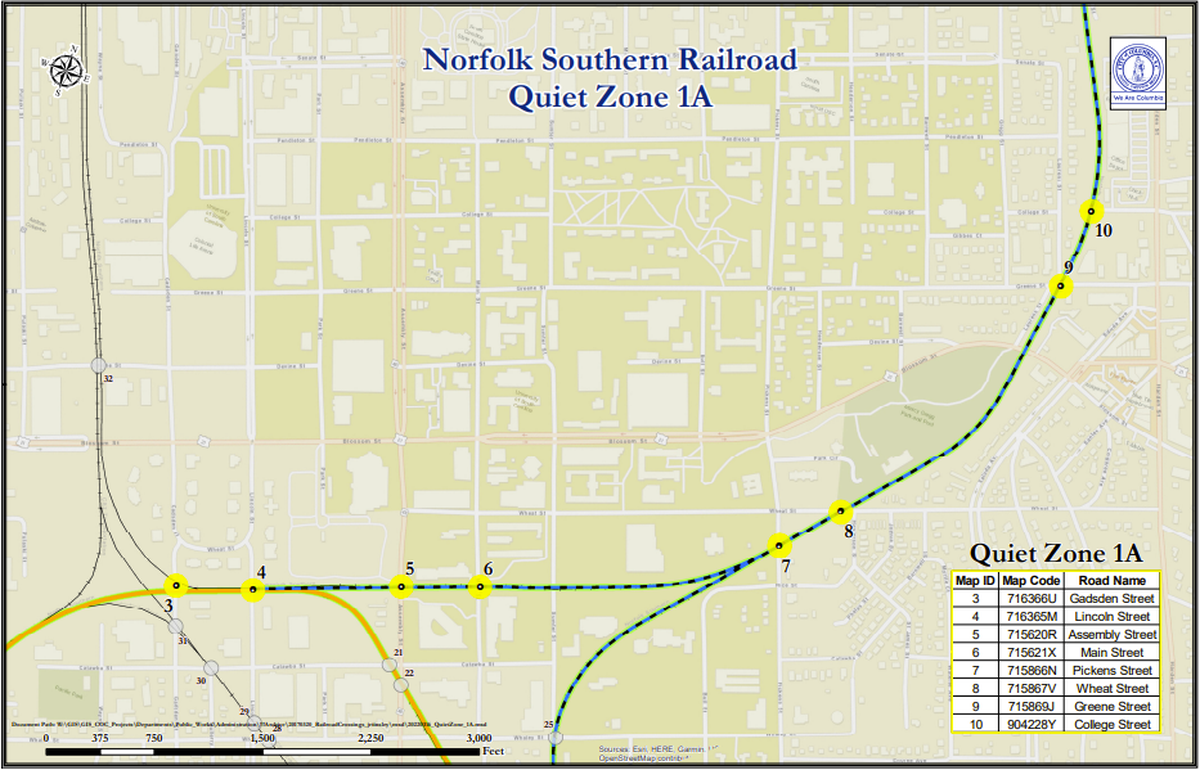
Gentry said she does not yet know when work will begin, but she said she does not anticipate the railroad asking for anything but minor adjustments to the plans.
The work, which Gentry said is expected to cost $5 million, has been years in the making.
More than a dozen trains are estimated to roll through Columbia each day, between the Norfolk Southern and CSX railway companies. Those trains are required to begin sounding their horns 15 to 20 seconds before they reach a street crossing, according to the Federal Railroad Administration. The sound of those horns echo throughout the city daily — white noise to some, but a nuisance to others, especially those who live near tracks.
Columbia began weighing the cost of creating railroad quiet zones in 2017. Establishing a quiet zone — where train horns are only used in emergencies — requires the city to install added safety measures at each crossing in the designated zone. Installing those safety measures costs millions of dollars, with the burden on the city, not the railway companies.
South Carolina State Sen. Dick Harpootlian, D-Richland, has lobbied for the changes for years.
“It’s like living in some two-bit, rural, redneck town where the trains wake everybody up all night long,” Harpootlian told The State in 2017. He lives in Columbia’s Wales Garden neighborhood, not far from Five Points and a prominent rail line. ”We’re supposed to be a sophisticated city.”
For reference, a train horn sounds between 96 and 110 decibels. A rock concert clocks between 120 and 129 decibels.
In 2022, Columbia leaders approved spending $1.5 million on the quiet zones project, with a portion of the money coming from the state budget.
Gentry said there is still a funding gap to complete all 14 crossings between Gadsden Street and Beltline Boulevard, but she believes the city will get the remainder of the needed money before construction begins.
Harpootlian said he is hoping to get more state money to assist the project.
Gentry added that the crossings in that section were chosen because it is the zone where the highest number of people are affected by the train noise.
Elsewhere, the city is hoping to secure federal dollars to help separate railroad crossings on Assembly and Huger streets from the roadway, which would alleviate the frequent headache Columbia drivers face when they get stuck behind a seemingly never-ending freight train in traffic.
That project would cost up to $220 million and has not moved forward yet.
This story was originally published February 20, 2024 at 5:30 AM.