Shock and awe: How a Columbia horror filmmaker is carving out a bloody name for himself
Not everyone buys stage blood in 5-gallon buckets.
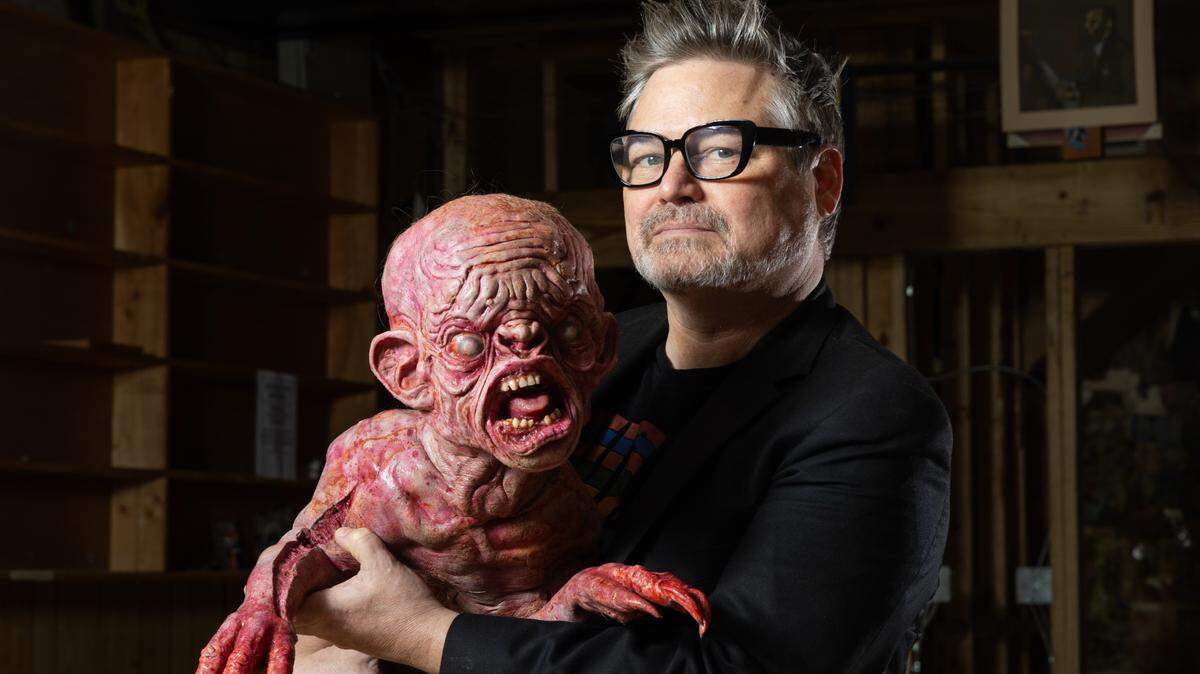
But for Columbia’s Christopher Bickel, an increasingly acclaimed director on the independent horror movie circuit, there’s simply no substitute for a good, realistic looking mixture.
“In the past we made our own stage blood,” the filmmaker says, with a smile. “But now we buy it, because if you buy professional blood, there’s an ingredient in it that makes it easier to wash off your skin. The homemade blood we used to use would stain people’s faces for days, which is not cool. So now we buy it in 5-gallon buckets.”
Choosing the right blood is just one of a number of decisions Bickel had to make for his latest feature, the psychedelic scare pic “Pater Noster and the Mission of Light.” The film, which is available on streaming service Night Flight+ and is in the midst of select theatrical screenings across the U.S., is the third full-length directorial effort from Bickel, following 2017’s “The Theta Girl” and 2021’s “Bad Girls.”
With the new film, Bickel has continued to grab national notice in independent film circles, offering a few direct nods to Columbia along the way.
The reach of “Pater Noster” has extended far beyond Columbia, with various well-known horror websites and national outlets penning strong reviews. For instance, venerable cinema site Film Threat calls the movie a “haunted house joyride back to the bloody golden age of exploitation films” that “clicks along with manic pressure.” The publication calls Bickel “a master of making wildly insane and entertaining films on almost no budget.”
Columbia fixture
Bickel, 53, has long been a recognizable figure in the Columbia music scene. He’s been a member of various punk bands, including the revered and brutal In/Humanity, and has spent decades associated with record shops in the capital city. He once was a co-owner in a record shop called New Clear Days, and, since 2001, he has worked as a vinyl buyer for the Five Points mainstay Papa Jazz.
But all along the way, Bickel harbored dreams of making films, particularly in his beloved horror genre. Inspired by silver screen directors such as John Carpenter, George Romero and Russ Meyer — “Guys who were doing a lot with limited budgets,” Bickel noted — he said he “always knew” he wanted to make movies of his own.
There was even an attempt to make a feature back in 2000, a project that was ultimately sidelined when all of his film equipment at the time was stolen. It was a setback that led him to put his directorial plans aside for a number of years.
But the idea of making his own features became more tangible about a decade ago when he saw a horror feature from another Columbia filmmaker, Tommy Faircloth. That 2014 movie was called “Dollface,” and it opened Bickel’s eyes to the kinds of horror films that could be made on very low budgets.
“I’d known Chris even before he started making films,” Faircloth told The State. “He came to a festival [to see ‘Dollface’] and watched it and, when it was done, he was just like, ‘My God, that was fun.’ Later, he told me, ‘After seeing your movie, it just made me realize I want to do this, and I’m going to do it myself.’”
Bickel has also been pushed along by the opportunities presented by modern independent moviemaking. His features, like many these days, are shot digitally, rather than on expensive film stock. Bickel has used internet crowdfunding to help pay for his movies — “Bad Girls” had a budget of $16,000, while “Pater Noster and the Mission of Light” cost $21,000. And the films are promoted across the web, particularly by horror sites and blogs where fans revel in cult classics and outrageous horror efforts.
“When I originally wanted to be a filmmaker, everything was shot on film,” Bickel said. “So, even to shoot something on 16mm, you’d be looking at $50,000 just for the film and processing, and that’s not even including the budget of the movie. So, I didn’t have access to that kind of money. And, really, I still don’t, but crowdfunding is a thing that exists now, which also didn’t exist back then.
“The internet blew everything open. There were all these barriers to entry back then that don’t exist now.”
A record shop and a demon baby
As it turns out, one critical piece of making a successful low-budget film is using locations and assets that are available to you.
And on “Pater Noster and the Mission of Light,” one such location was Papa Jazz, the popular, decades-old record shop in Five Points. The film centers on a group of record store workers who encounter a rare vinyl that features music from a 1970s hippie cult. Through a series of events, they are eventually drawn into discovering more about the cult and its hidden commune, and eventually bloody carnage ensues. Think “Clerks” meets “The Texas Chain Saw Massacre.”
“Papa Jazz is the main thing,” Bickel told The State during a recent interview, as he enjoyed beef tips and macaroni at 52-year-old Cayce hole-in-the-wall The Kingsman. “When you do a low-budget film, you have to write around things you have access to. I had access to a record store because I work in one. So, half the movie takes place in a record store.”
There are other local touches Midlands residents will notice. For instance, local resident Dog West is featured dancing in the opening credits of the film. And the main character states her address as 2112 Devine St., which was the address of former Columbia rock club Rockafellas.
Tim Smith is the longtime owner at Papa Jazz. The record shop has been open since 1980 and Smith said this is the first time he remembers scenes from a movie being shot inside the store.
“It’s cool,” Smith said. “A little more fame for the shop can’t hurt. ... I think a lot of people who are into music are also into movies, like Chris. It’s neat that he has found an outlet like this. Chris has played in bands off and on for a long time, too. This is another outlet for him to be creative.”
And another outlet for him to set himself apart. Faircloth said, through the course of Bickel’s first three directorial efforts, a distinct style has emerged.
“He’s totally into the whole grindhouse, throwback, Russ Meyer, insane drive-in type of films,” Faircloth said. “And that’s great. I’m sure he’ll always stay that way.”
Leaving a mark
Bickel said he’s been heartened by the reception to “Pater Noster,” from the filmmaking community and national reviews.
“When I finished the movie — it took a very long time to finish it — I was so close to it that I couldn’t see it. I thought it was probably a big pile of [crap],” Bickel said, with a laugh. “So, all I could do is just put it out there and see If my notion that it was a pile of [crap] was validated or not. I was really happy to see people did respond really positively to it. It’s nice to see.”
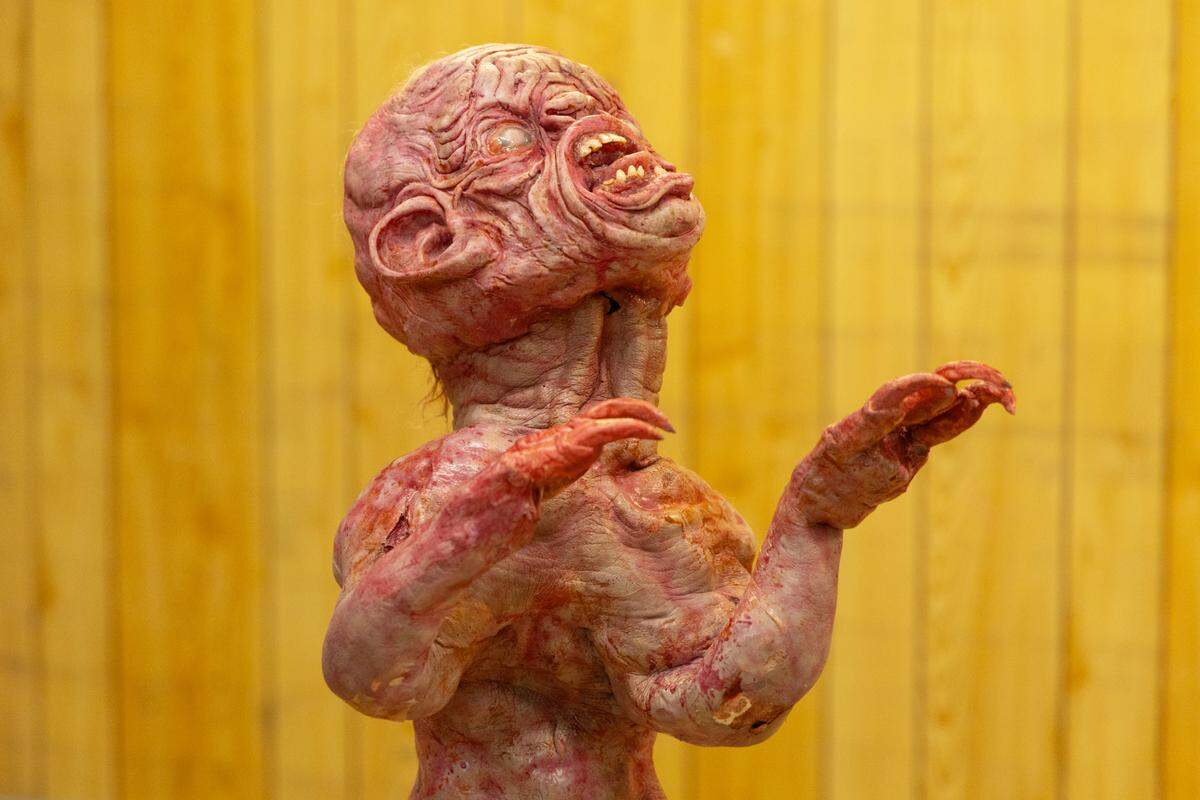
To be certain, there is shock value to “Pater Noster,” which is an unrated film. It is veritably soaked in the aforementioned stage blood, with horror and gore effects abounding, particularly in the back half of the film. “Pater Noster” even features a demon baby called The Aleph, a creature made by well-known Hollywood special effects guru Joe Castro.
Bickel, who directed, wrote, produced, shot, edited and scored “Pater Noster,” said horror effects and shock value help in promoting the film in low-budget horror circles.
“I feel like, if I want to reach a wide audience at the budget level I’m operating under, I have to have some elements that are shocking,” the director said. “Things that people would talk about after the film is finished. Because word-of-mouth is really all I have in terms of promoting the movie. I can’t hire a publicist. So there have to be things in there that will be on people’s lips after the film is finished.”
For now, “Pater Noster” continues to find its way to audiences. It has had theatrical showings in Charlotte and Atlanta, and recently played at the South Carolina Underground Film Festival at the Nickelodeon Theater in Columbia. There are screenings scheduled in San Francisco, Austin and Orlando in December. A digital copy of the movie is available on the Pater Noster Indiegogo site, and it’s streaming on Night Flight+. Blu-Ray copies of the film are expected to be available as soon as December.
It all likely leaves cult film fans wondering what might be next for Bickel. Surprise: It will be a horror movie.
“I’ve got an idea,” the Columbia filmmaker said with a wry smile. “I still have to work it all out. It’s going to be weird.”
This story was originally published November 25, 2024 at 5:00 AM.