What’s the plan for the Hunter-Gatherer building on Columbia’s Main Street? What we know
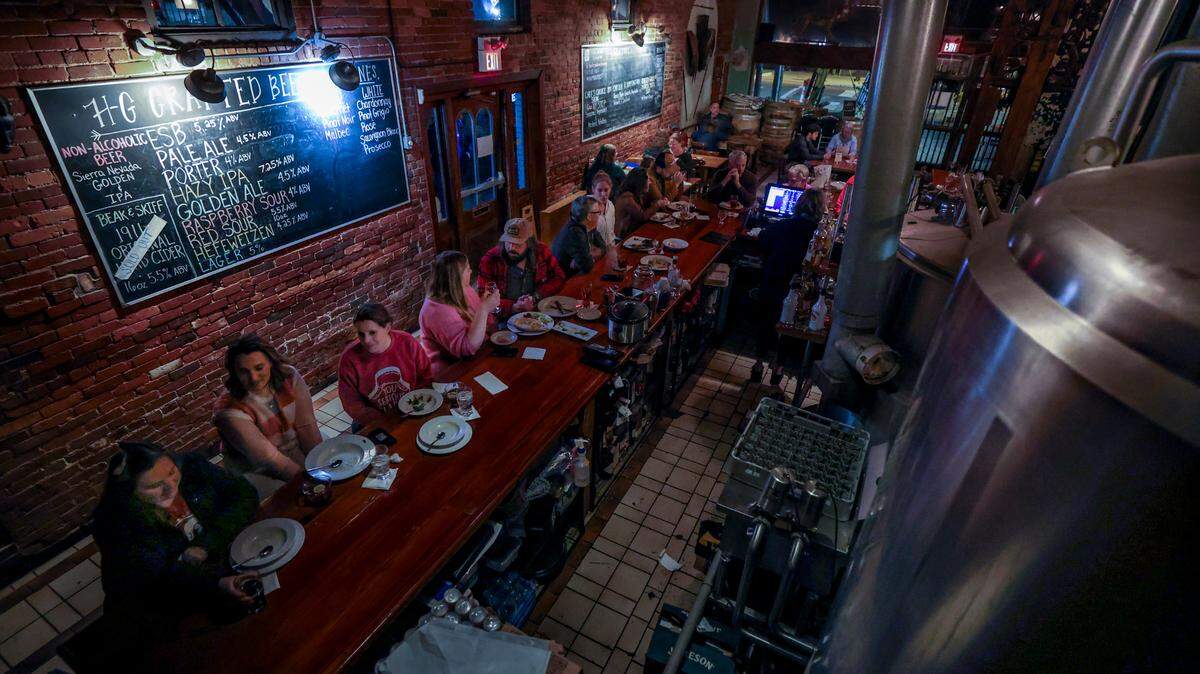
A downtown building that has long been home to a beloved Columbia brewery is now owned by the University of South Carolina Development Foundation.
The foundation, which makes real estate investments that benefit USC, purchased the building at 900 Main St., long home to Hunter-Gatherer Brewery & Ale House, in October, according to a statement from president and CEO Jason Caskey.
“We were contacted by the [previous] owners of the property last spring inquiring as to our interest in the property,” Caskey said in a statement. “Since we knew this was in the path of the future growth of the University of SC, we engaged in discussions and ultimately, agreed to purchase the property.”
Since 1995, the building at 900 Main St. has been home to Hunter-Gatherer Brewery & Ale House, which was Columbia’s first micro-brewery. H-G founder Kevin Varner said the current lease on the building is coming to and end, and the last day on Main Street will be Dec. 28. The Hunter-Gatherer Hangar location on Jim Hamilton Boulevard will remain open, Varner said.
Caskey said the foundation is in discussions with USC leaders about what the short-term uses of the building at 900 Main could be. However, the purchase was largely made with USC’s long-term development plans in the south Main Street corridor in mind, the foundation leader said.
“The property at 900 S Main Street is in one of the main areas of focus outlined by the University of South Carolina in its most recent Master Plan update, USC Next,” Caskey wrote in an email to The State. “For those reasons, the Foundation purchased this strategic property in preparation for that growth.”
USC Next is a master plan of proposed improvements and capital projects designed to meet the needs of USC’s Columbia campus through 2034.
Richland County property tax records say the building at 900 Main St. was built in 1949. However, research from Historic Columbia indicates it was constructed in 1913. By 1919 it was split down the middle and housing a bank and a store, according to information shared by Historic Columbia director of preservation John Sherrer. It hosted a number of other businesses through the years, and Hunter-Gatherer started there in 1995.
Among other aspects, the brick building has a mural on its north wall depicting the late Aaron Graves. He was a revered Columbia musician and the lead singer of the indie rock band Those Lavender Whales. Graves died of cancer in 2019.
Sherrer told The State that, since Hunter-Gatherer announced it was closing the Main Street brewery, he has been receiving calls and questions about the historic nature of the building and any preservation possibilities. He noted the building is not formally designated as a local landmark, and it does not have any preservation restrictions on it.
But he was quick to note it does hold historic significance.
“The building does have historic value,” Sherrer said. “It is going to have historic value to a lot of people who remember it as Hunter-Gatherer. We are looking at a generation now who identify that northeast corner [of Main and College streets] with craft beer and local small business ownership. And the building itself is a tangible link to an earlier time period for south Main, south of the State House.”
Without preservation restrictions on the property, Sherrer notes that it’s possible USC could one day choose to demolish the building and redevelop the land entirely. But he is hopeful that a future project could make use of the building.
“What I would challenge any owner to do — whether it was [USC] or anybody else — is to consider incorporating the building, in its entirety, quite frankly, into whatever comes to be built on that land and in that area,” Sherrer said. “Look at other cities, one of them that has done it really well in a couple instances is Cleveland, [Ohio]. There are some amazing [new] buildings that have been erected around old, historic buildings.”
This story was originally published December 17, 2024 at 12:05 PM.