A century-old Columbia house is for sale. Residents fear it will become student rentals
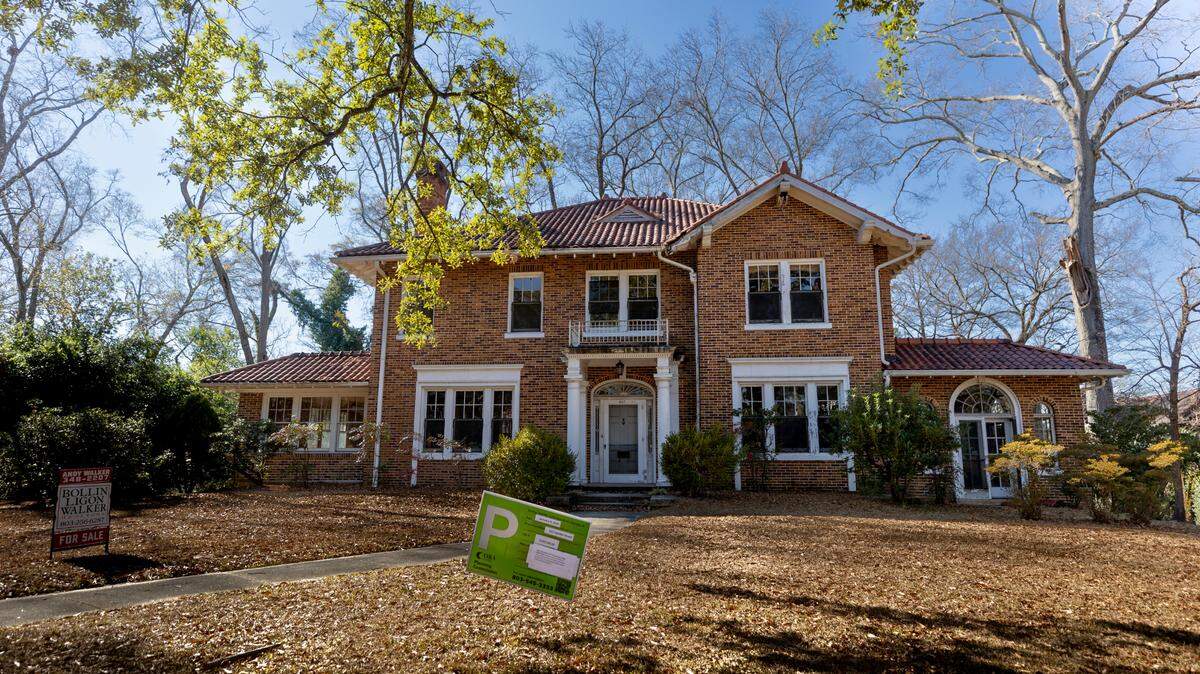
The red and tan brick house at 427 Harden St. is a time capsule for Columbia.
It was built in 1925 by famed local architects Lafaye & Lafaye, around the time the neighborhoods of Shandon and Wales Garden were coming into focus. It has been owned by just two families over the last century.
But in October, the house went up for sale. For $969,500 anyone with the funds could own this little piece of Columbia history — or, neighbors worried, bulldoze it to make way for something bigger and more efficient.
“It’s doomed if we don’t get this changed,” said local attorney Myers Truluck in a plea to Columbia’s Planning Commission last week, explaining that because the house is just outside of Wales Garden, it is not protected by the neighborhood’s historic overlay. “It will be torn down. It will be student housing.”
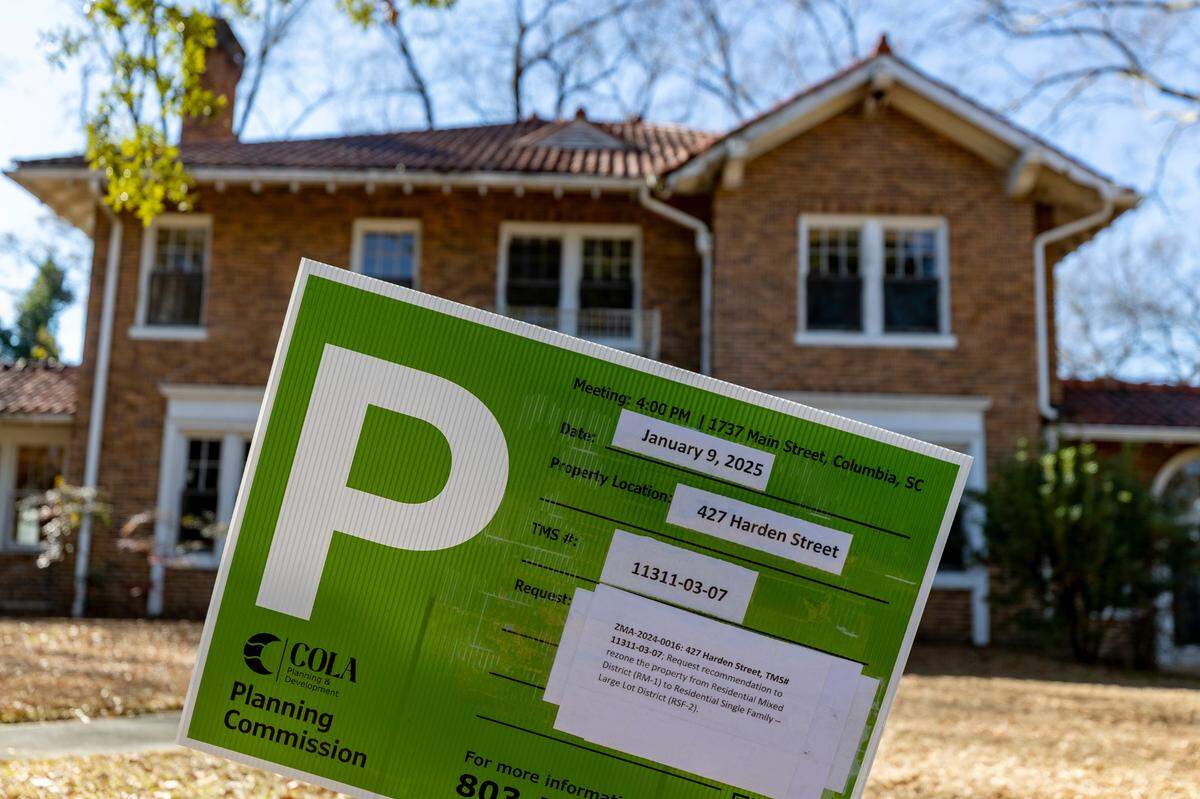
Truluck was one of several dozen residents of the Shandon and Wales Garden neighborhoods who last week asked city planning officials to protect the property from what they felt would be it’s inevitable fate otherwise. Residents wanted to save a historic home, but they also wanted to block the chance for new student apartments.
Planning officials complied, agreeing to change the property’s zoning from residential mixed district, which allows for multi-family projects and townhomes, to residential single-family, which prohibits apartments and similar projects. Columbia City Council must still approve the change.
The effort by neighbors to step in front of student housing before a plan is even proposed is perhaps a canary in the coal mine for the future of development in Columbia. Residents in neighborhoods all across the city have raised concerns about student rentals hurting home values or changing the character of their neighborhoods.
They say something has to change. Will anything?
On high alert
Residents at Thursday’s meeting shared rumored plans for new student housing, but planning officials said no proposals had been submitted to the city. Still, 427 Harden’s neighbors feared if there wasn’t already an interested developer, there would be one soon.
“We feel like there is an intrusion with student housing,” state Rep. Seth Rose, D-Richland, told the Planning Commission Thursday.
Public dollars are being invested in Five Points to make the area more appealing to young professionals and families — people who will hopefully buy a house and stick around. Rose shared concerns that replacing historic homes with student housing will only undermine that work.
And while residents were successful in circumventing one possible development at 427 Harden Street, it doesn’t guarantee the house will stay standing or that it won’t be rented out, and new housing is still popping up all over the neighborhoods that border the University of South Carolina.
“Let’s just say it’s hot,” Dr. Bambi Gaddist previously told The State of the housing market in the Martin Luther King neighborhood adjacent to Five Points. New townhouse projects are being planned, and single-family homes are being purchased by out-of-state investors and being flipped for student renters.
“It’s clear [they are] designed for single people who have a certain income, who want to live close to what’s happening, with no necessary commitment to the legacy of the community that currently lives there,” Gaddist said while talking to The State for a different article about new housing developments in the historically Black neighborhoods of Martin Luther King, Waverly and Lyon Street.
But while residents worry about more apartments, students themselves are struggling to find housing on campus and often feel forced to look beyond downtown.
USC grew its student body by more than 9,000 over the past 15 years, but its on-campus housing stock has only increased by about 2,840 beds in roughly the same time, according to an analysis by The Daily Gamecock and The State newspaper published in 2024.
Just over a third of USC students are able to live on campus, leaving most of the rest to comb the greater Columbia area for rentals.
Future intervention?
It’s a problem the university has been aware of since at least the early 1990s, when it hired an expert planner to envision a new growth path in an attempt to cause less stress on neighborhoods as the student population expanded.
But neighborhoods are still feeling the tension.
“I couldn’t decide which analogy to use, death by a thousand cuts or the boa constrictor,” said Kit Smith, president of the Wales Garden neighborhood association, speaking of the best way to describe what residents feel is the slow decomposition of their historic communities.
“When you start losing homes to short-term rentals or to student housing, you start losing the integrity of your neighborhoods,” she said.
They are not opposed to students, residents say, usually with a joke about how they were themselves once a rowdy undergrad. But the question is how to build enough housing supply for temporary residents who are probably going to participate in some youthful antics, while making sure homeowners who have invested their savings in those neighborhoods don’t feel disrupted or disrespected.
City of Columbia leaders say they’re aware of the growing tensions and agree that some kind of intervention will likely be needed.
“Some people use the word tension. Another word could be vigilance,” said Columbia City Councilman Tyler Bailey, saying that it’s clear residents are noticing a gap between their quality of life and the trajectory of growth in the city, particularly in central-city neighborhoods.
Columbia wants students to live here, Bailey said. The challenge is meeting everyone’s needs.
He hopes the city will conduct a broad housing study to assess not only what housing stock is available, but also where people are being priced out of their neighborhoods, who is buying single-family homes and where historic properties are under threat. Then, he believes the city can take targeted action.
The outcome of that study could be the creation of new overlay districts to protect historic properties, or zoning changes to better align the city’s growth goals, if the rest of city council agrees to persue it.
“We haven’t really looked at the data holistically,” Bailey said. “We do want density, but it has to be a balance.”