Is the Midlands seeing an increase in the construction of townhomes? Here’s what we found
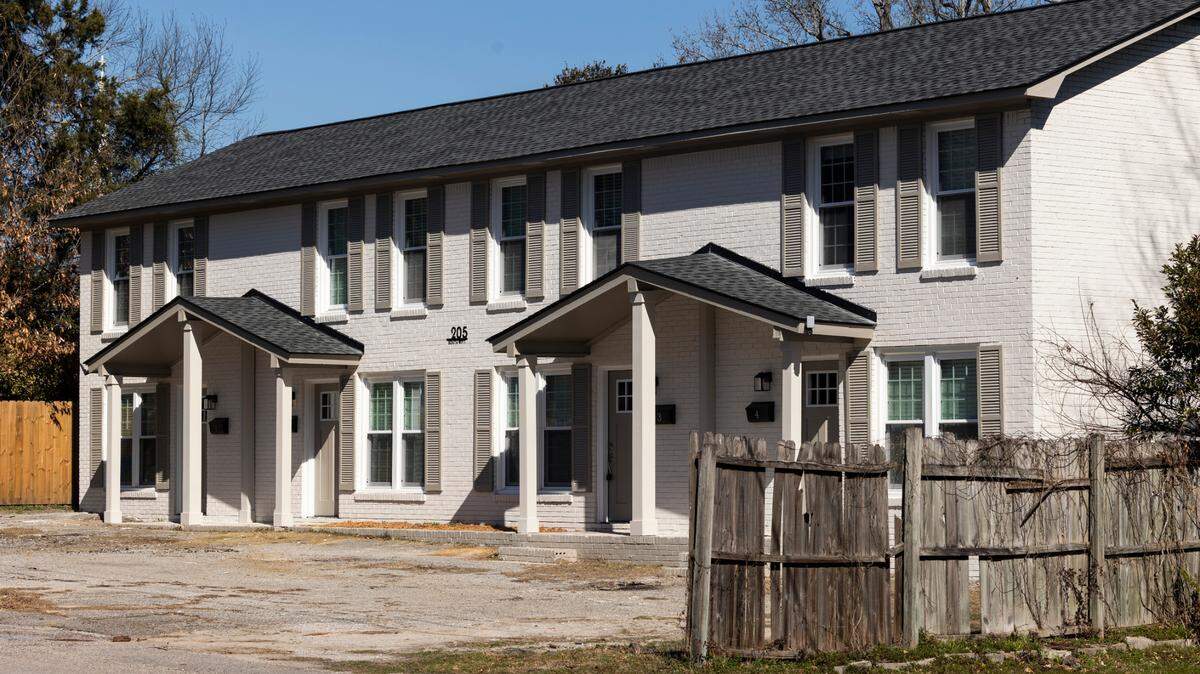
Across the street from the home longtime West Columbia resident Carl Roberts grew up in, developers want to pack more than 50 townhomes on a dilapidated 3-acre lot.
“There’s going to be 52 units of people and automobiles and I think it’s going to put more stress on those streets and on that little system than it can very well take … [it] will be a problem just bringing that many people to the area,” Roberts said during a public hearing Jan. 27.
That townhome project would join at least five others set for the growing city across the Congaree River from the state’s capital, as developers look to maximize space in West Columbia and add to the stock of available housing.
In Columbia, it’s a similar story, with new townhome projects emerging in neighborhoods all around the city. Residents have pushed back at these projects, worrying about the impact to traffic and the character of their streets.
Civic leaders agree that more housing is needed in the Midlands, as Richland and Lexington counties are projected to add more than 50,000 new people by 2040. That will require homes with a smaller footprint that can be bunched closer together. But despite the perception that the Midlands are burgeoning with townhomes, industry experts say there’s not been as much of an explosion as it seems.
“I don’t think they’re out of control by any means,” said Graeme Moore, a Columbia Realtor and owner of local real estate agency The Moore Company.
The popularity of townhomes has certainly been on the rise, Moore said. But from what he’s observed in Columbia, it’s been more of a steady increase over time rather than a sudden boom.
Moore is the listing agent for all of the townhomes at TownPark in the BullStreet District, which will have 28 townhomes when finished, with a mix of two- and three-story properties. Of the 23 townhomes already built in that development, just three are still for sale. The final five townhomes in the project are expected to be finished in 2026.
While almost all of the available BullStreet townhomes are now spoken for, that was not immediately the case.
“It took a little while to sell all of those out,” Moore told The State.
“I think some of that was people having to get comfortable with the BullStreet area,” he said. “But also … it’s a smaller pool of people looking for a townhome.”
Steady growth
Townhomes are on the rise nationwide. In the third quarter of last year, new townhome constructions hit their highest rate on record, comprising an estimated 18% of new home constructions in quarter three of 2024, according to the most recent data made available by the National Association of Home Builders.
In Richland and Lexington counties, new construction of townhomes has increased by around 10% every year for the last three years, said Taylor Oxendine with Central Carolina Realtors. That increase was most significant last year.
In the last five years, 108 townhome units, all in one development, have been built in West Columbia and at least five projects are expected to bring nearly 200 units in the future.
New projects are also underway in Columbia and Richland County, including a new 99-unit townhome project in Northeast Columbia between Farrow Road and Interstate 77.
Still, the Midlands hasn’t seen as much of an increase in the construction of new townhomes as other parts of South Carolina — notably the coastal areas, which have seen anywhere from a 20-30% increase, Oxendine said.
What’s driving demand?
Most people still want a single-family home with a fence and a backyard, Moore said. But those who do want townhomes tend to fall into a few specific categories. For example, Moore estimates about half of the BullStreet townhome sales were to retirees or empty-nesters looking to downsize.
The push to build and invest in townhomes is two-fold, driven by demand and saving money. As baby boomers look to downsize and younger homebuyers look for affordable options near downtown areas, demand has increased.
“[Young people] want to live, work, play all in one area – not have to drive around or maintain a lawn so you’re also seeing an increase in that type of housing closer to the Main Street districts to allow for that to happen,” Oxendine said.
This coincides with an increase in cost of production for single-family homes — as the price of supplies shot up after the COVID-19 pandemic and labor shortages in the construction industry continue to impact the expense of building a home. The cost of many materials, like steel mill products and electrical supplies, are four times more expensive than they were four years ago, according to the National Association of Home Builders.
Another factor comes down to how much room is available for new housing in a given area. Most of Columbia’s urban neighborhoods don’t have much land for new single-family homes, but there are lots that could be used to build multiple townhomes. That helps meet a need in Columbia, a city that is estimated to be around 16,000 housing units short of what’s needed to meet demand.
“We need townhomes, quadplexes and maybe 12-plexes here and there,” Columbia Mayor Daniel Rickenmann recently told reporters in response to questions about housing density. Rickenmann said growth needs to be strategic, but ultimately, there is a need for more dense housing projects, townhomes included.