There’s a new review process for homes going up in Lexington County. Will it slow growth?
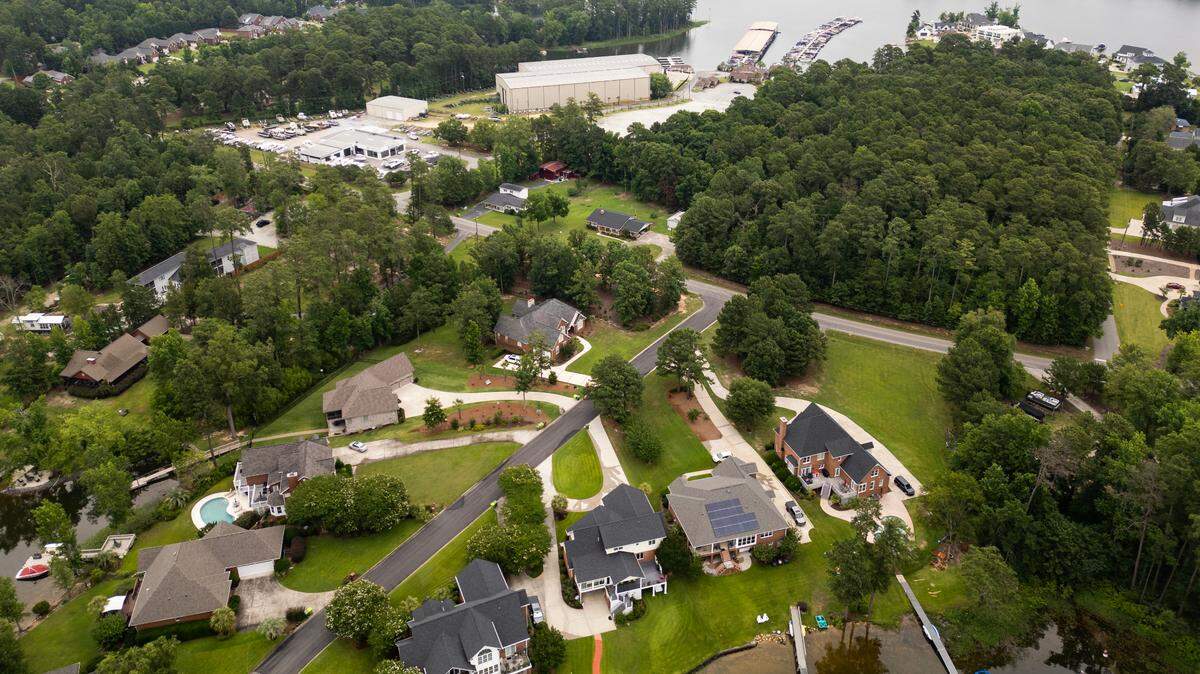
With a planned 200-home subdivision on the docket, officials in Lexington County are seeing a major project through a new set of development regulations enacted in June.
The new single family housing development set for 80 acres along Edmund Highway is the sixth project to go through the county’s new concurrency review process, where various county agencies like local school districts and public safety departments help inform the decision about whether or not to approve a new development.
Rather than go through a review solely by Lexington County’s planning commission, the concurrency rules adopted last summer require a project to get a review from multiple agencies and public service providers in the area. The hope is that any challenges those departments will face from an influx of new residents will be flagged early enough in the process that any necessary changes can be made.
Other developments went through an abbreviated review period while the ordinance was in the process of being approved, a county spokesperson explained.
Lexington is the first, and so far only, county in the state to use concurrency review as a way to get a hold on the rapid growth it’s experienced in the last several decades. The new ordinance could slow down the process for new developments of detached homes, mobile homes or tiny homes with 10 or more dwellings on an average lot of less than 1.5 acres, or on any duplex, multifamily, townhome or assisted living development.
“Whenever you’re going to develop at the rate Lexington as a whole is developing, it’s in everybody’s interest that we include the stakeholders – solid waste, first responders, schools,” Lexington County Councilwoman Beth Carrigg told The State.
How the process works
Lexington County Community Development Director Robbie Derrick said that the process involves soliciting feedback from Lexington County Emergency Medical Services, the Lexington County Sheriff’s Department, the Lexington County Solid Waste Management Department and the Lexington County Fire Service or Irmo Fire District (depending on the jurisdiction). Public school districts also submit a questionnaire to the Planning Commission, which reviews each proposal before submitting it to the county council for final review.
“Once the sketch plan is approved by staff, there is a 20 working day policy to receive comments from all entities,” Derrick said in an email. “Subsequent Planning Commission and Council reviews follow this process, which could take an additional one to two months, depending on agenda deadlines.”
The sketch is reviewed for zoning and open space concerns, and while full submissions are not prohibited, the county prefers to complete its concurrency review before it gets into those details, Derrick said.
While public schools are included in the review, council members who spoke to The State said they didn’t expect negative comments from the districts because they are obligated to serve any children who move into the area.
“We welcome all students within our attendance boundaries into our schools and look forward to loving and growing them in accordance with our mission,” a spokesperson for Lexington-Richland 5, which serves students in the Irmo-Chapin area, said in response to a question from The State about its input in the concurrency process. “School District Five has previously responded to the Lexington County Community Development Department with demographic information about our schools, but the District is not able to issue an opinion on whether a new development should be authorized.”
Lexington 1 is the county’s largest district serving students in areas surrounding the towns of Lexington, Gilbert and Pelion. It noted that it worked with the county administration to come up with a questionnaire that could provide the county with information that might be useful in its review, but declined to discuss the district’s role in the process otherwise.
“At this stage, we are primarily looking at district facilities – do we have enough space in the current zoned school(s) to service the estimated influx of new students, for example, or will we need to consider expanding with portables or new construction?,” a spokesperson for Lexington 2, which serves students in and around West Columbia and Cayce, said in an email to The State. “We certainly appreciate the opportunity to work with the county as part of their information-gathering process.”
The town of Chapin manages the water system that serves many homes in the northern part of the county. But a town spokesperson said they had not been contacted to weigh in on any new developments in the area, although the town previously adopted its own concurrency standards and worked with county staff in the early stages of developing a concurrency process.
Slowing down development?
Lexington County put concurrency in place last year in hopes of more thoroughly vetting new development as the county deals with a growth spurt. But County Council Chairman Todd Cullum said it’s unclear to him if the process can even result in a project being stopped completely.
“Will it ever be a situation where they say no?” Cullum wondered. “The landowner’s going to want to know, how long is it a ‘No’? If you can’t provide the service, when will you be able to provide the service? And what’s an acceptable timeframe to postpone their ability to improve their property?”
The time for the county to receive a new fire engine, for example, could take 18 to 24 months, Cullum said, leaving a developer in limbo in the meantime.
But Councilwoman Beth Carrigg said the process has likely curtailed some developers’ plans because it requires them to conform to what public agencies can accommodate.
“To date, we have not had anyone turned away, but I believe there have had to be some adjustments made,” Carrigg said.
She notes that most of the new development requests the county has received since concurrency came into force have been in the denser, more urbanized eastern part of the county. But more development further west, where much recent development has taken place, will eventually require the county to build more first responder stations or waste collection sites in the area.
“I do think people are being more thoughtful, more careful,” she said.
But not everybody’s happy with the new process. Taylor Oxendine, co-executive officer with Central Carolina Realtors, said the need to complete the concurrency review before the county considers the project in full costs time and could lead to increased prices for home buyers.
“That obviously slows down that housing process and just adds additional red tape and regulation and costs time on some of these developments,” he said. “That can increase prices and delay housing affordability to get them built in time.”
Councilman Glen Conwell said much of his district sits inside the West Columbia city limits, but he supported concurrency because of the concerns of council members in more outlying parts of the county.
“A lot of this for me personally, is traffic-driven,” Conwell said. “If you didn’t have traffic, nobody would be fussing, but if you put in the rooftops, people come and traffic comes.”
Looking to the future
While Lexington County is the first in the state to adopt concurrency rules, the county did look to similar rules that have been adopted statewide in Florida, with some variables for different localities. But the county council members ultimately decided to draw up their own rules.
“None was an exact fit for us,” Carrigg said of the out-of-state equivalents. “We went with what was best for Lexington County, and it could be modified again.”
So far, the process hasn’t seemed to create any extra work for county staff, Conwell said, while developers are coming to appreciate the process.
“At first it was kind of a shock, but once you bring people to the table to talk, they just don’t want something to be dropped on them. They want to be able to voice their input,” Conwell said. ”Tell me the rules and we’ll play by the rules.”
Carrigg thinks Lexington County could serve as a model for other counties. Already some fast-growing counties in the Lowcountry are taking similar steps, she said, even without adopting a full concurrency framework.
“I think it’s operating now,” she said. “It’s doing what it’s intended to do, and it’s an education for the council and the developers.”
.jpg)