Finally taking advantage? City envisions park, apartments, dining on Columbia riverfront
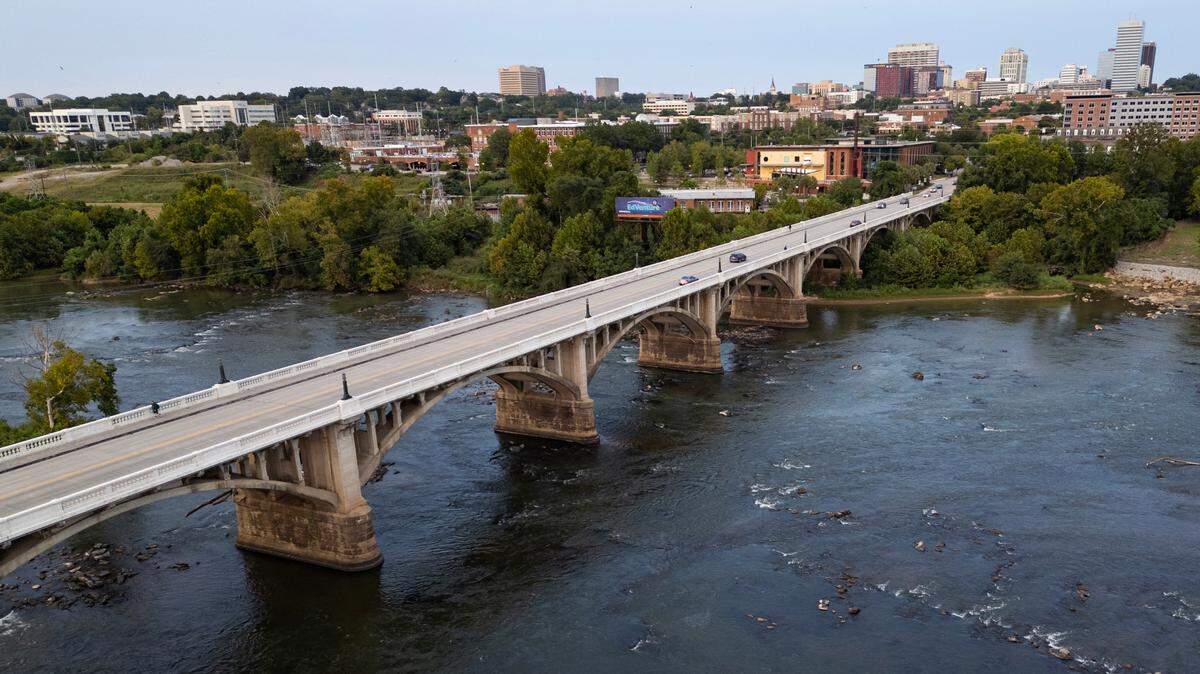
Columbia has three beautiful rivers running along its border, but from downtown you wouldn’t necessarily know that.
For decades, city leaders have wanted to take better advantage of the natural allure of the rivers but factors ranging from the condition of the water to land ownership have kept those dreams at bay. But now, a riverfront park in the busy downtown stretch between Blossom and Gervais streets seems to actually be on the horizon.
Earlier this month, the city of Columbia began looking for designers and developers who already have experience building “world-class” waterfront parks to come up with a design for one in Columbia.
The park, which leaders hope will become “the primary riverfront destination in Columbia,” would be situated on roughly 80 acres between the Blossom and Gervais street bridges, with the possibility of adding another 16 acres south of Blossom Street, according to the city documents.
The city earlier this month posted a “request for qualifications” seeking qualified builders for the project.
Columbia leaders have envisioned a waterfront park in Columbia for decades, if not longer. Today’s vision began in earnest in the 1990s in the form of a master plan developed by local leaders and the University of South Carolina.
That plan imagined a sprawling public park with an amphitheater and boardwalks, an ornate fountain and easy river access for a variety of recreational activities, as well as room for shops, restaurants and apartments along the bank of the Congaree River.
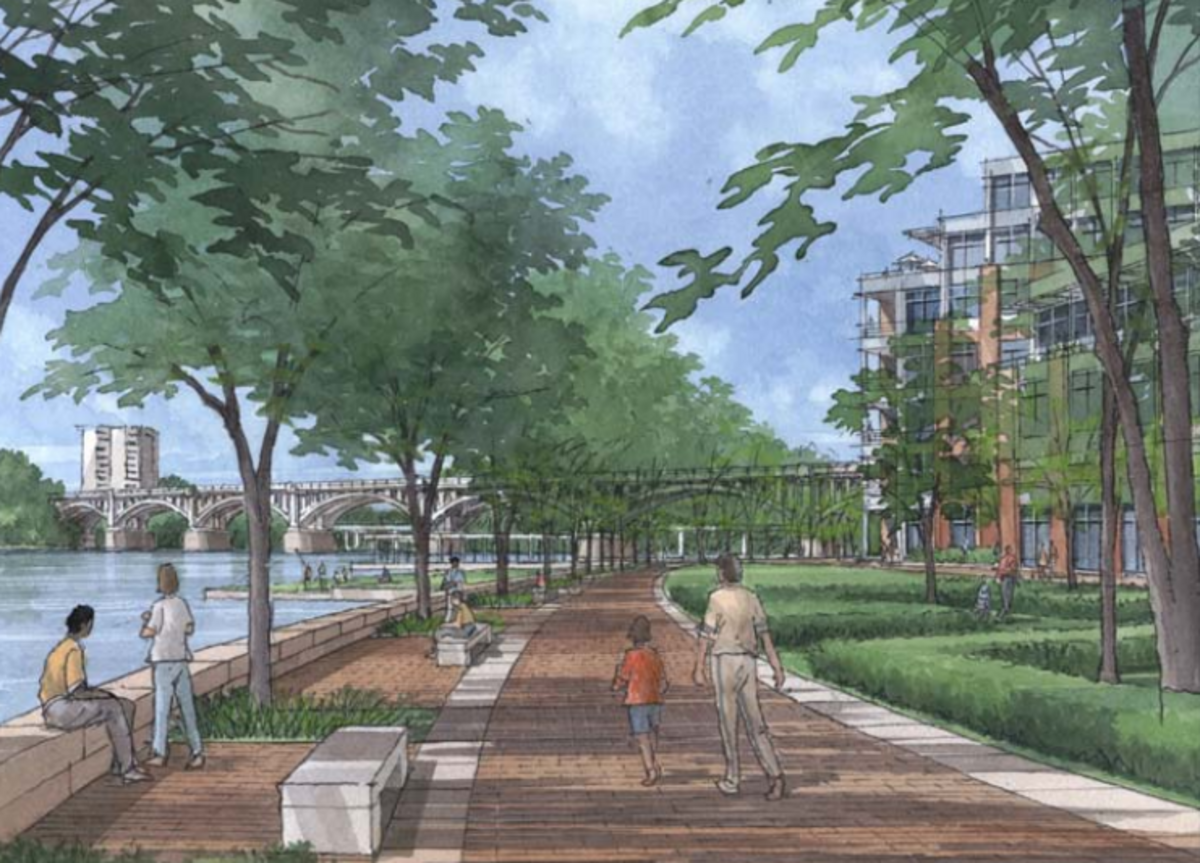
This is just a vision for what the park could look like. Experts must still create a formal design for the project, and exactly what they will come up with remains to be determined.
The city’s request to developers also emphasizes a desire to maintain natural features and incorporate elements of the city’s unique history as a Southern capital city: “While the Waterfront Project is a forward-looking endeavor, it will necessarily recognize our natural history through the restoration of landscape features such as freshwater marshes and creeks while celebrating the cultural remnants of quarries, sawmills, brickworks, and the Columbia Canal which supported the growth of our city from an idea on a plan to a thriving metropolitan area of regional significance,” the city’s information for developers reads.
The park would also include greenspaces and trails, and a connection for the trails in Granby Park and an eventual connection to the trails at Columbia’s existing Riverfront Park, which largely consists of a trail running along the earthen wall separating the Columbia Canal from Broad River. While that trail starts near downtown, most of the roughly 2.5 miles that is currently accessible is situated north of downtown.
The riverwalk along the canal did previously connect down to the Gervais Street Bridge, where pedestrians could cross over to the riverwalk that runs through Cayce and West Columbia, but that connection was washed out in the “1,000-year flood” of 2015.
The city is asking professionals interested in creating Columbia’s new park to submit their plans and qualifications by March 14. After that, there would still be a number of formal steps the city would have to take before the park could be designed.
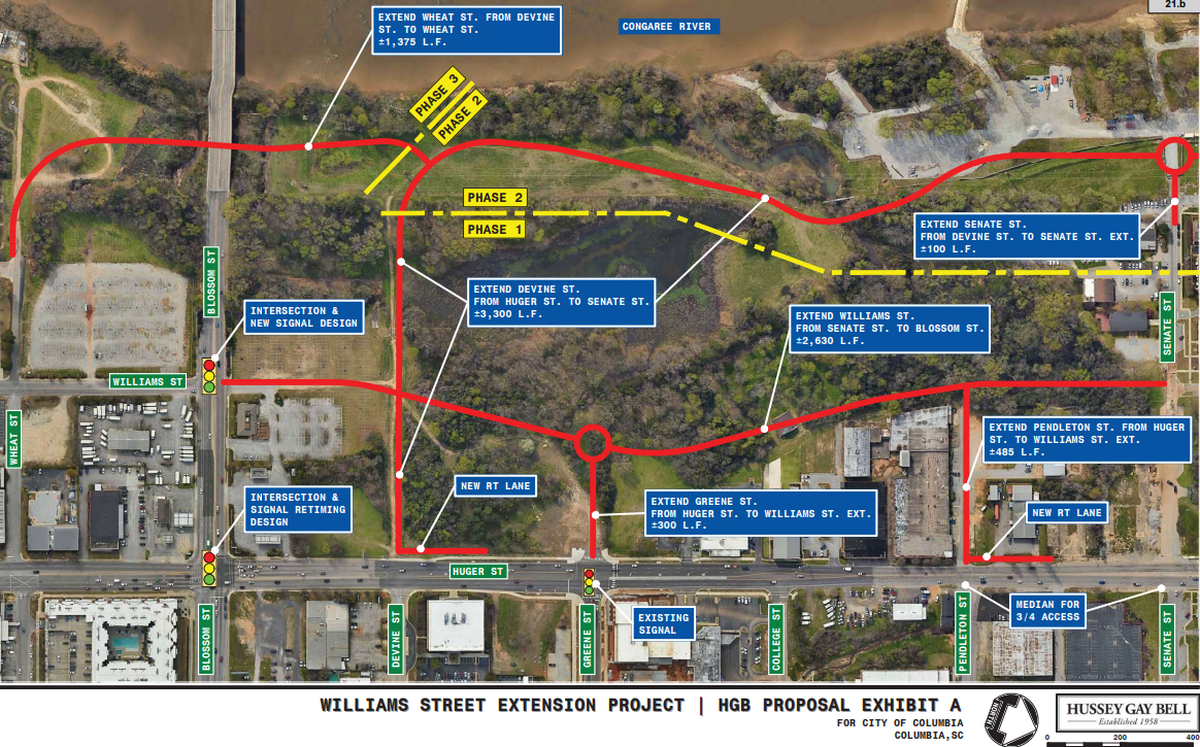
In the meantime, the city is building a new road that will create the riverfront access needed to build the park at all. That road extends the existing Williams Street, stretching it between Blossom and Senate streets to create a North-to-South connection through the land along the river. That project is set to cost roughly $21 million and is expected to be completed in 2026.
While not all of the new Williams Street would be developable because of the floodplain, the city is also hoping whoever builds the riverfront park will have a vision for new apartments, restaurants and offices that could become an entirely new riverfront district for the city. City Councilman Will Brennan has also previously shared hopes of new development on the river with The State, saying that despite the floodplain, there will be space along the new stretch of Williams Street for residential projects and that he hopes to see hotels and apartments on the horizon.
Congaree Riverkeeper, a local nonprofit that works to safeguard area waterways, responded to the park plans on social media, emphasizing the need to prioritize river access and protecting the river.
“As conversations about riverfront development in Columbia move forward it is important to remember that much of the area being discussed is in the floodplain and floodway, and the primary goal should be a public park that provides access to the river while protecting and restoring the riparian buffer, floodplain and wetlands,” a post on the Congaree Riverkeeper Facebook reads.
The city’s request to prospective developers asks them to “suggest possible uses for such sites that will provide opportunities for live, work and play at various times of the day and night to activate the park.”
It’s unclear how much the new park’s design and construction could cost. George Bailey, president of the Darnall W. and Susan F. Boyd Foundation, told The State Monday that the foundation is helping pay for a portion of the park’s design. The historic Columbia Guignard family has also donated most of the land the city plans to build the park on.
The timeline for when the park could become a reality is also yet to be determined.
“The master planning portion of this work will provide cost estimates and set the schedules for design and construction of a world class public park and amenities,” a city spokesperson said in a provided statement.
The new riverfront park is an entirely different venture from the city’s redevelopment of downtown’s Finlay Park, which had previously been called the city’s “crown-jewel” public park. It’s been closed for years, and before that had fallen into disrepair. But now the city is in the midst of a $24 million overhaul of the site, which is expected to be completed by this fall.
This article has been updated with a statements from the city of Columbia and the Congaree Riverkeeper.
This story was originally published February 24, 2025 at 1:11 PM.