Columbia wants to transform flood-prone riverfront with a ‘world-class’ park. Can it work?
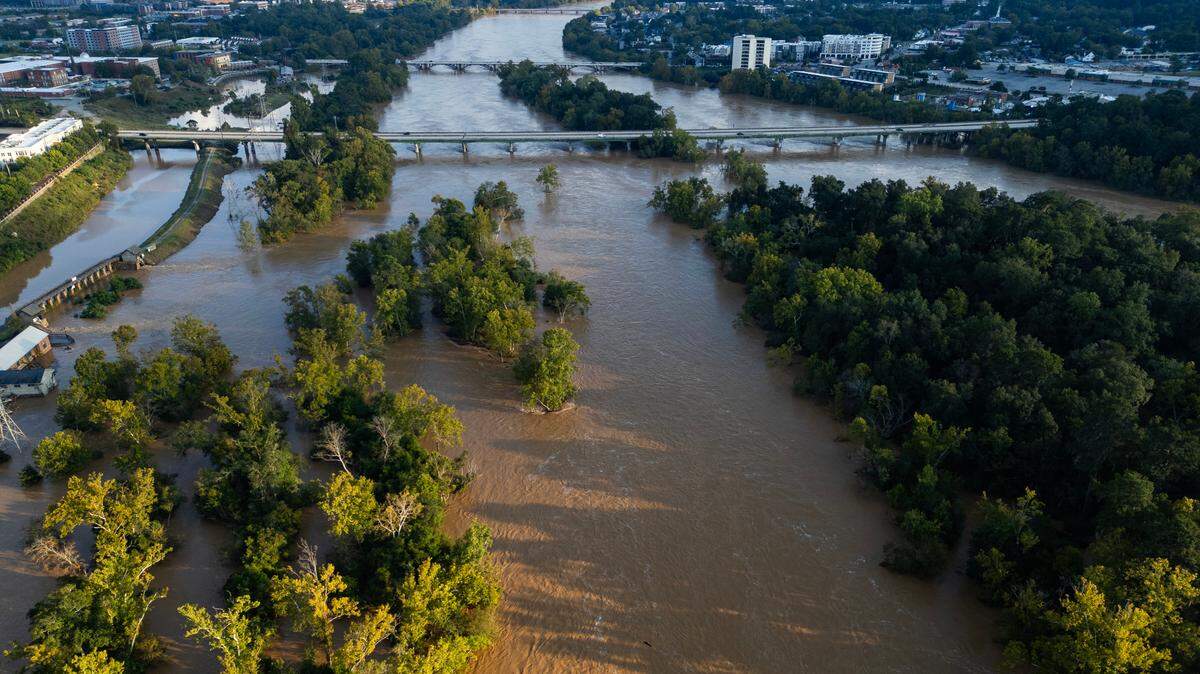
There are those who look out onto the wooded and wild land along the downtown stretch of the Congaree River, untouched for over a century, and see an oasis unfurling across the fen below.
Where there are currently undeveloped wetlands, they see landscaped boardwalks through a blooming marsh. Where there are now stands of trees, they see a sprawling lawn to host events, walking and biking trails to welcome residents and visitors, and maybe an amphitheater to draw even more activity to one of Columbia’s defining assets.
Where there is currently a dead-end road, they see a path for a new connection, and room for hotels, restaurants, apartments and more.
Since Columbia’s inception as a city, the vision of a bustling waterfront has been more like a mirage: beautiful but beyond reach. Because despite the clear will to make something of the wide piece of land between the University of South Carolina’s Founder’s Park baseball field and the South Carolina State Museum, it just hasn’t been possible. The property is flood-prone, currently inaccessible by road, and almost entirely privately owned.
But slowly and then suddenly, things have changed. A land donation, a river cleanup and a new street project have re-energized the dream. Earlier this year, Columbia took its most formal step yet toward developing a park along this stretch of untamed riverfront, asking design firms to rise to the challenge of planning it out. Nearly 20 firms from across the country have responded with their qualifications.
That’s not to say it’s a done deal. While city leaders and others are eager to see the riverfront transformed, there are those who worry these big dreams could mean trading away the river’s natural beauty for concrete, and who question what is really possible in an area that is so flood-prone that it has a special FEMA designation.
So exactly what kind of park and surrounding development is possible along Columbia’s riverfront, and what might it look like?
Conflicting visions
The nearly 80 acres along the Conagree River where Columbia hopes to build its “world-class” waterfront park were recently underwater.
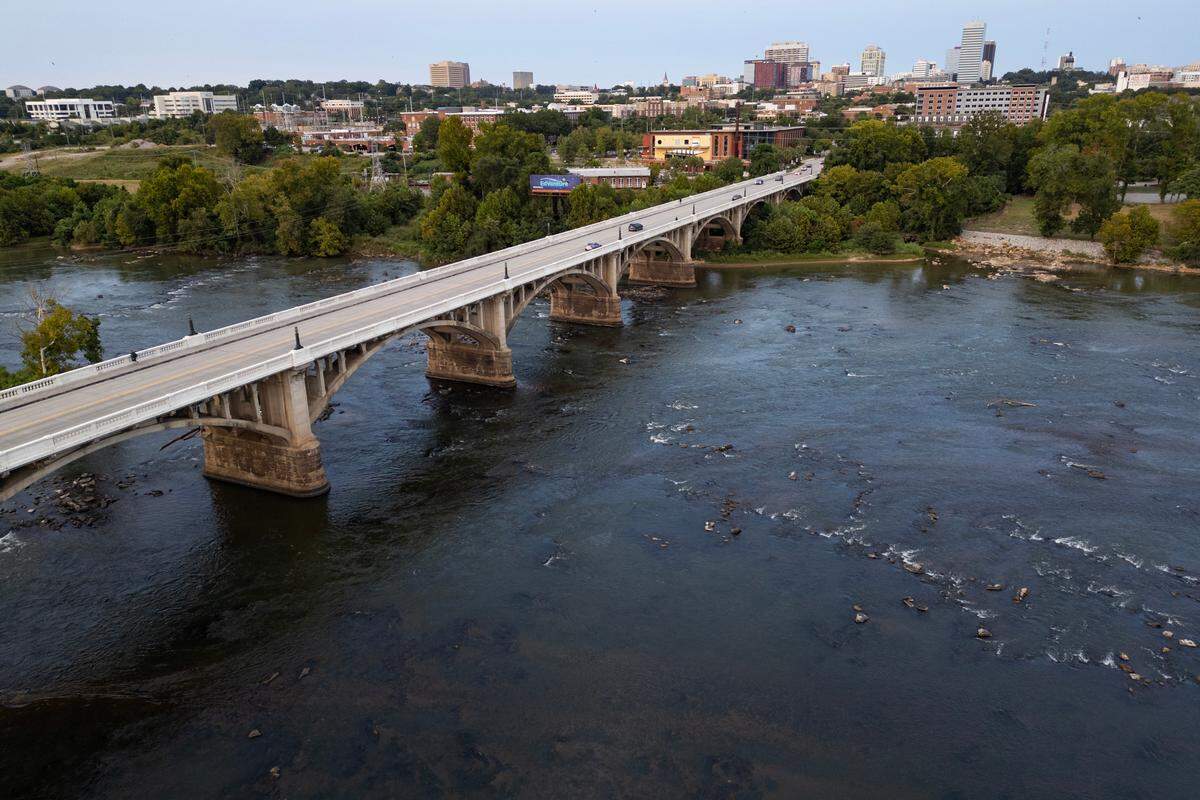
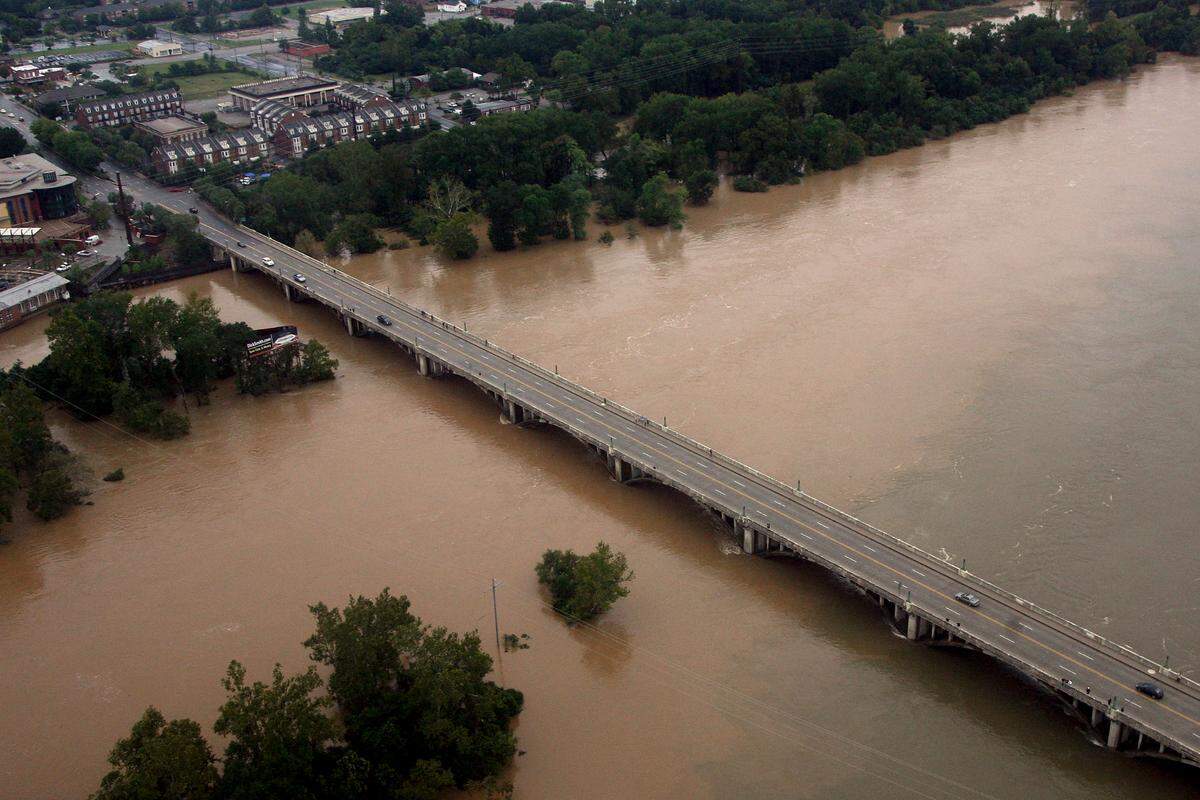
On the last day of September 2024, after Hurricane Helene had dropped all the rain it could on the Midlands and the Upstate in the days prior, the Congaree swelled to more than 30 feet above the river floor, drenching most of the overgrown park site.
It was only the second-worst flood Columbia has seen in the last decade. During the historic flood of 2015, the river reached almost 32 feet there, gurgling up to city streets in some areas. The next big storm promises to flood the land again.
“Knowing what can and can’t be done in the flood area is important,” said Columbia City Councilman Will Brennan, acknowledging that while the property is a crucial parcel for the city, it also comes with hurdles.
Some people might hear riverfront development and think of Savannah or San Antonio, where shops and restaurants sit basically at the water’s edge. When river advocates heard news of the park project, several shared concerns online that the plans could crowd the natural landscape.
“The best days of these rivers were when only a handful of folks knew their way around them and took care of them with random cleanups on the way to or from fishing. None of the development has done the river any favors,” one person wrote in response to a Facebook post from Congaree Riverkeeper nonprofit leader Bill Stangler, who raised questions about building in a flood zone.
“I’d be happier if they built nothing,” another comment on the Riverkeeper’s post read.
As Riverkeeper, Stangler works to protect the landscape and habitats contained within Columbia’s rivers. He wants more people to enjoy the rivers, so he’s in favor of plans to make the Congaree more accessible. But he also said he wants people to understand what is realistic on the site, given it’s in a flood zone.
“I know people like this, and they seem to want this, but you’re not going to see like a San Antonio river walk down here. You’re not going to put a bunch of bars and restaurants on the edge of the water,” he said, “We have a real river, and it moves up and down, and it has a big floodplain.”
The best practice in his view would be to create improved access to the river by completing the Three Rivers Greenway, adding more boat launch points, and leaving the rest of the site, which also includes almost four acres of protected wetlalnds, pretty much alone.
This is the tightrope Columbia leaders must walk as they consider plans for the riverfront. There are mixed opinions about how ambitious the project should be, and just how much should be built close to the water.
“We’re not going to go and change the riverfront,” Brennan said. “We’re going to work with what I guess time has carved out for us here in the Midlands with the three rivers, and really highlight those features of it.”
And that’s what the city told prospective park designers, too. Designers should be prepared to restore a freshwater marsh on the site and incorporate “cultural remnants” like quarries, sawmills, brickworks and the Columbia Canal, according to the city’s instructions to companies looking to bid on the work.
But the city’s call for designers also clearly states a desire to see private commercial development fill in the spaces immediately surrounding the park. And past designs considered by city leaders have already suggested building hotels, restaurants and apartments right at the water’s edge on Senate Street, which is within a floodplain.
Boston-based firm Sasaki penned that past plan in 2007 to help focus the city and USC’s westward expansion.
Their vision set a vibrant central lawn at the end of Greene Street, with ramps that would take visitors down into “flowering gardens” and a restored freshwater marsh. Visitors wold be “surrounded by cypress and azaleas, before reaching a large amphitheater and an area along the river for active public use.”
North of the park, Sasaki envisioned a mixed-use plaza along Senate Street, with drawings suggesting space for a hotel, retail shops, restaurants and apartments all along the water, plus a vision for even more development along the bluff just west of Huger Street.
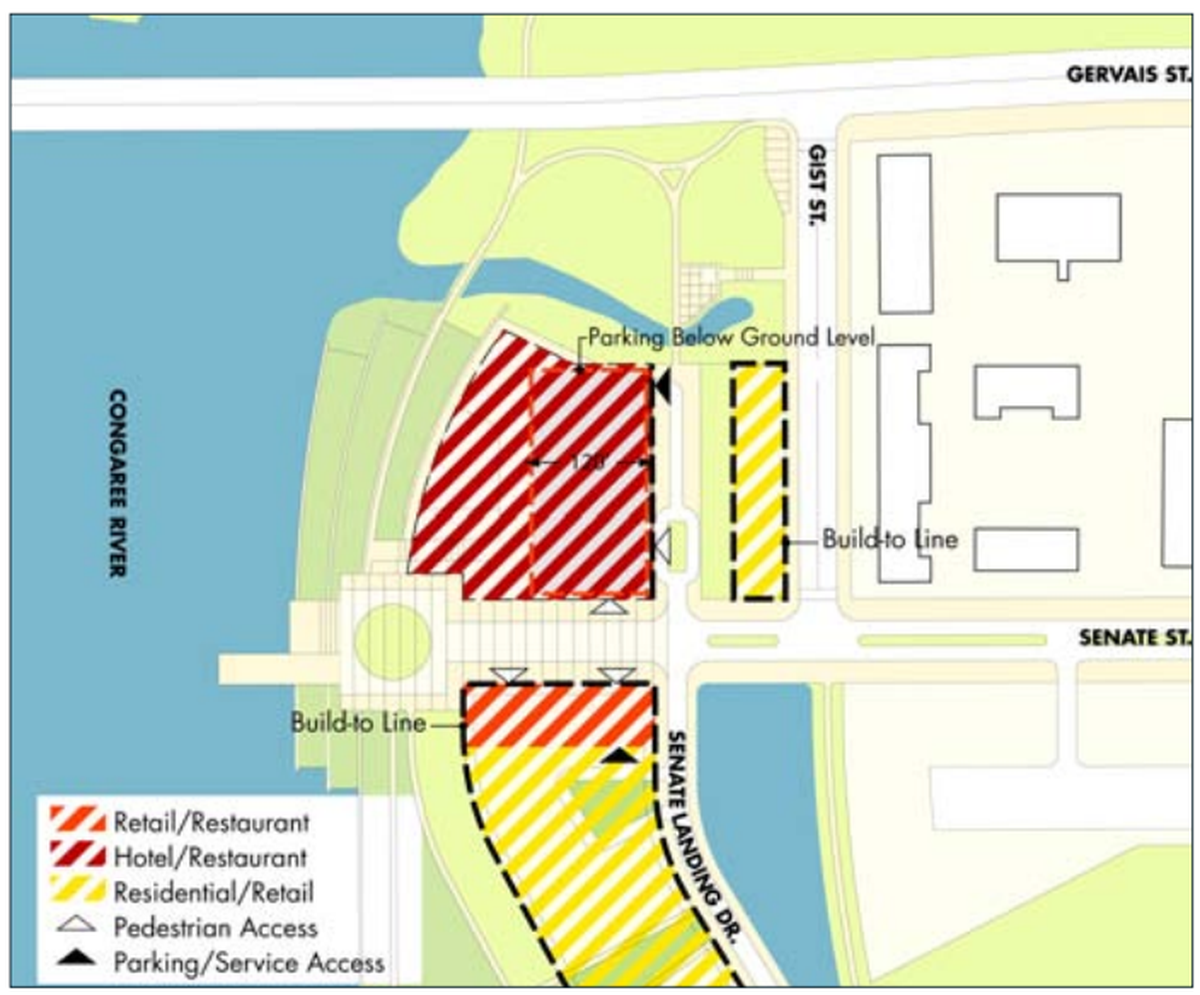
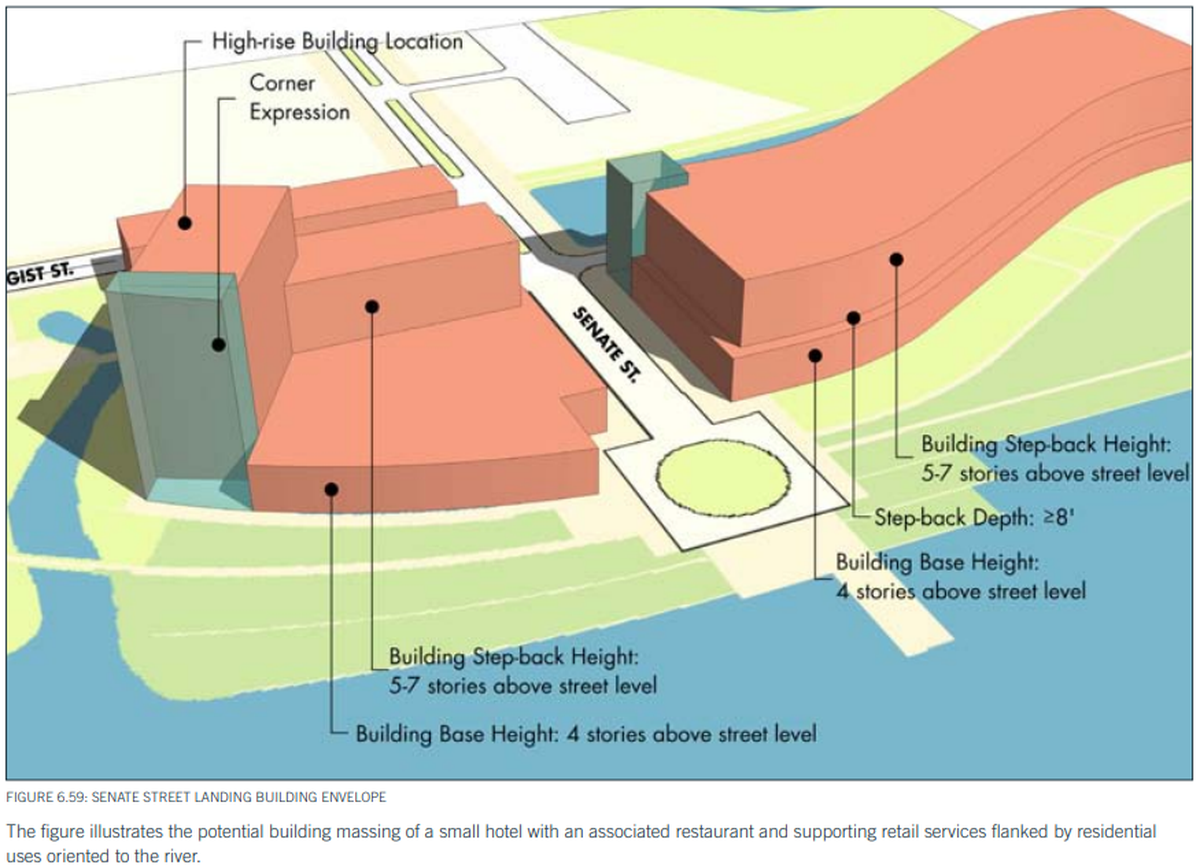
The Sasaki plan was never a formal design for the park or adjacent project, just a portrait of what could be. And even that portrait laid out some likely expensive caveats, like having to elevate buildings above the base flood level or otherwise ensure the work wouldn’t contribute to even higher flood waters during a storm.
Flood zone
In late February, the city of Columbia quietly issued a call asking for experts to pitch themselves as the ones to design the riverfront park, presenting a unique opportunity to architects and engineers to play with a fresh canvas.
Nineteen firms from 10 states responded to that call, and their credentials range from work on behemoth, billion-dollar projects, to comparatively simple greenway plans. Columbia leaders plan to spend the coming weeks narrowing that list.
Columbia’s city council already has identified a few non-negotiables for the park. It must include a greenway to connect Granby Park to the Columbia Canal, finishing the Three Rivers Greenway. The project must acknowledge Columbia’s history on the river, and it must include a vision for development beyond the park’s boundaries.
But the exact features, and cost of the work, won’t be known until Columbia chooses a design firm from the pack to begin putting pen to paper. So far, a price tag of between $40 and $60 million has been floated for the park, Brennan said.
The park site is in a flood zone, where there are strict rules about what can be built and how. Because of that, the more ambitious the designs the higher the price tag will almost certainly be, said Melih Calamak, an engineer and instructor with University of South Carolina’s College of Engineering and Computing.
The site where Columbia plans to build a riverfront park is in a Special Flood Hazard Area, a designation given by the Federal Emergency Management Agency. Inside the special flood hazard zone, the property gets divided further to show where floodwaters are going to be moving and how during a flood. The channel where water would be rushing through in a flood shouldn’t be built in, but the surrounding flood area has more flexibility, experts said.
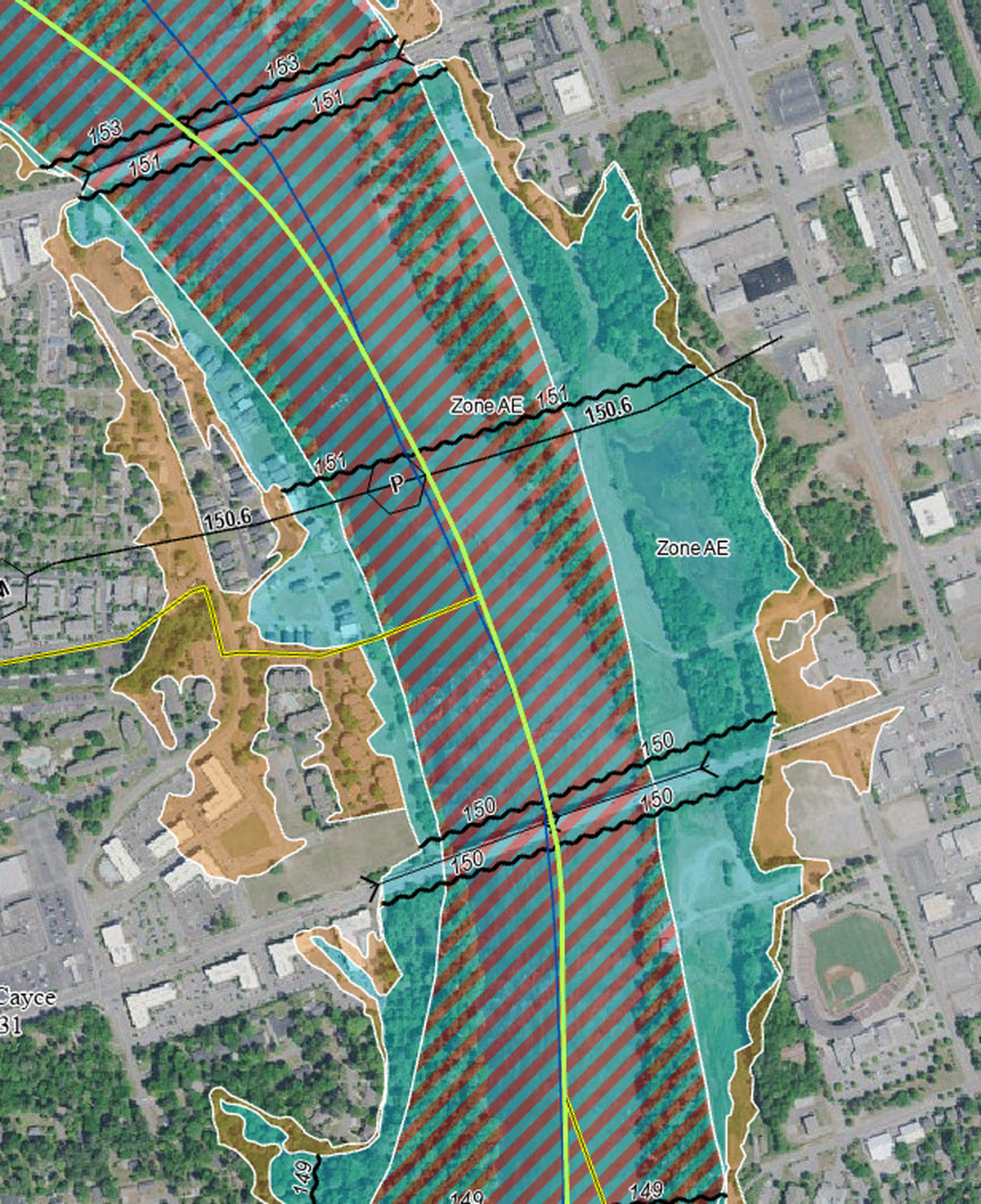
“You don’t lose total use of the land,” explained Columbia’s deputy director of engineering Andrea Bolling. Typically, things like athletic fields and walking trails are built in flood zones because they can handle the water without much problem, and because there is less of a risk of debris getting picked up in the current and becoming a projectile downstream, she added.
“It’s not to say that structures are 100% not allowed ... there are just additional requirements,” like having to elevate buildings above the base flood level and get an engineer to certify the structure won’t have an impact on flood levels later on, Bolling said. “Of course, any additional requirements typically add cost.”
A park is generally considered a practical development in a flood zone for those same reasons, but that also depends on what kinds of things the park offers and if it’s built in a way that anticipates flooding already.
For example, a riverfront park in Fort Wayne, Indiana has helped the city store an additional 3,000 cubic yards of flood water during storms than it was able to before the project through the strategic use of large stairs, according to a case study by the Urban Land Institute.
Learn from the past
The city isn’t the only decision-maker involved in determining the future of the riverfront. Guignard Assoiciates, a family land trust overseeing parcels owned by some of Columbia’s first inhabitants, owns the bulk of property where the park will go. Charles Thompson co-owns and manages the land. He said he did not want to share his thoughts on the park yet, but he resisted the notion that the land should remain mostly unchanged.
“I don’t think that we would be going into this process if the expectation was that it remain just as it is,” Thompson said. “But that’s not to suggest that it’s going to be Savannah either.”
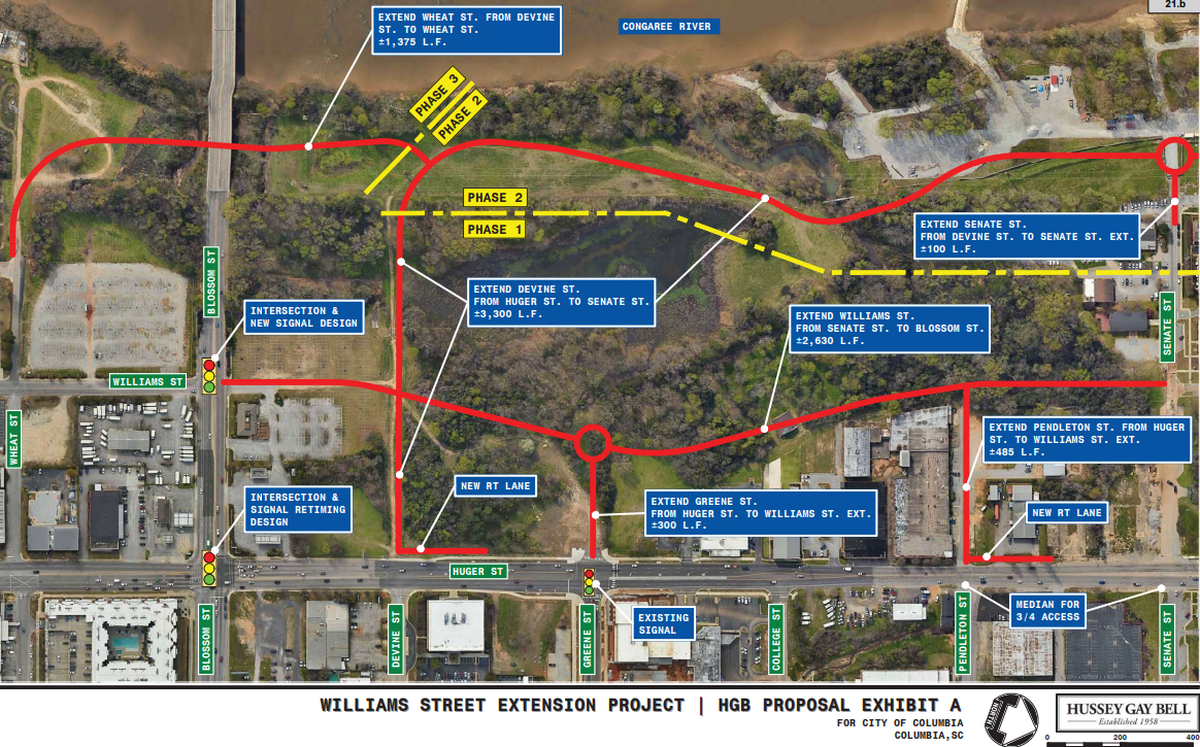
Even if the plans don’t ultimately bring commercial structures along the water, they will certainly encourage private development higher up the river bluff, just west of Huger Street. The city is already in the midst of a $21 million road project to create more space for that development.
The road would connect Williams Street between Senate and Blossom streets, and eventually the city hopes it could lead to a whole network of roads in that corridor.
As city leaders endeavor to chart a new future for the Columbia riverfront, Stangler, the Congaree Riverkeeper, raised an example from the past as a cautionary tale.
In the late-1990s, developers going by the name Columbia Venture pitched turning 4,600-acres of damp farmland formerly held by Burwell Manning in a different floodplain along the Congaree River into “a city within a city,” complete with a golf course, hospital, technology park and 5,000 houses.
The project never happened despite developers spending more than a decade fighting federal regulators and environmentalists. One of their biggest hurdles was a FEMA analysis showing that if the project were built, it would have raised flood levels by three feet for hundreds of nearby homes, according to reporting from the time.
Columbia isn’t proposing anything so massive as the Green Diamond plan, but Stangler said building anything in a flood zone comes with risk.
“Things are possible in engineering,” USC’s Calamak said. “You can elevate the building on pillars or on something so that it doesn’t change ... the flood elevation there, but it’s going to be very expensive.”
Developers make this choice all the time. Housing and commercial projects are built in floodplains often. Between 2000 and 2016 the number of people living in 100-year floodplains grew by 14%, according to an analysis by the trade publication Governing.
That kind of construction also comes with risks, Calamak said. Particularly at this site because while it has seen significant flooding in recent years, the recent floods haven’t actually been as severe as scientists warn they could be. The water levels in 2015 rose high enough at some parts of the Congaree to be considered a “100-year flood,” which is a regulatory term used to describe a flood so severe its estimated to have a 1% chance of occurring in a year. But at the site where this park will be built, the water levels were just shy of that number, Stangler and Calamak both confirmed.
“It was high, it was really big. But that’s not even our 100-year flood,” Stangler said.
City leaders say they understand the responsibility of taking on this development and they promise the public will have a say later in the process.
“We have one shot at this,” Brennan said.