Investors bet industry will follow Scout Motors to Columbia. Where will they build?
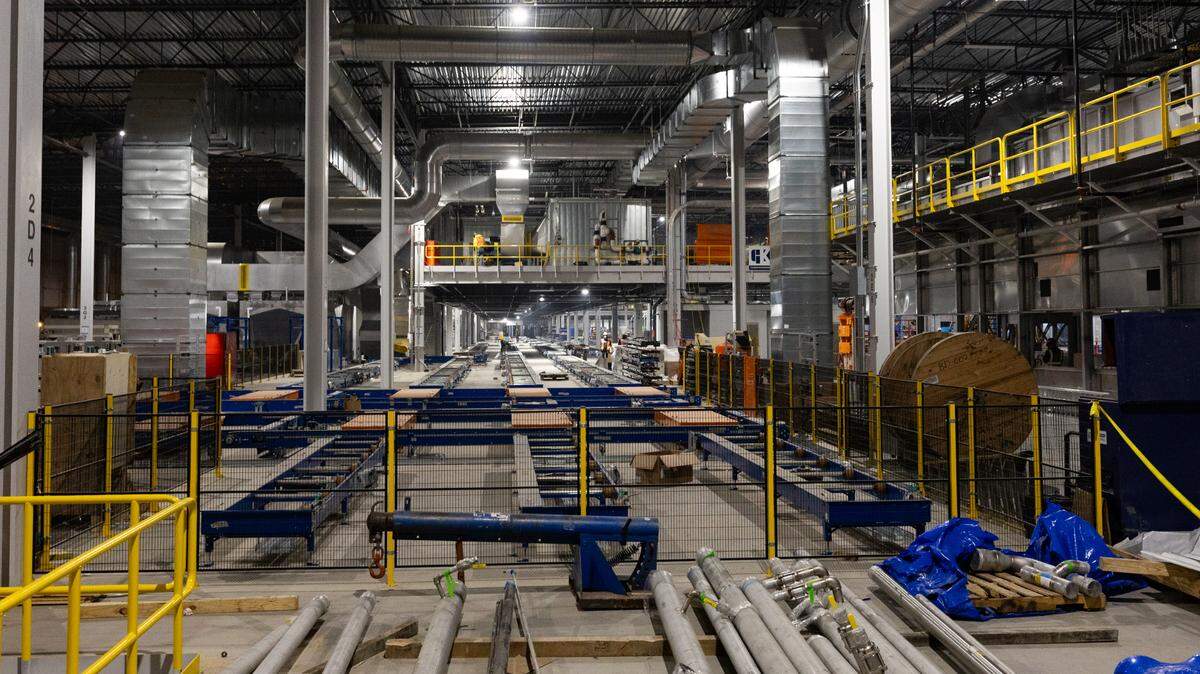
Scout Motors has promised to transform the Midlands with a $2 billion state-of-the-art production center for new electrically powered Scout trucks and SUVs, which are now expected to start rolling off the line in late 2027.
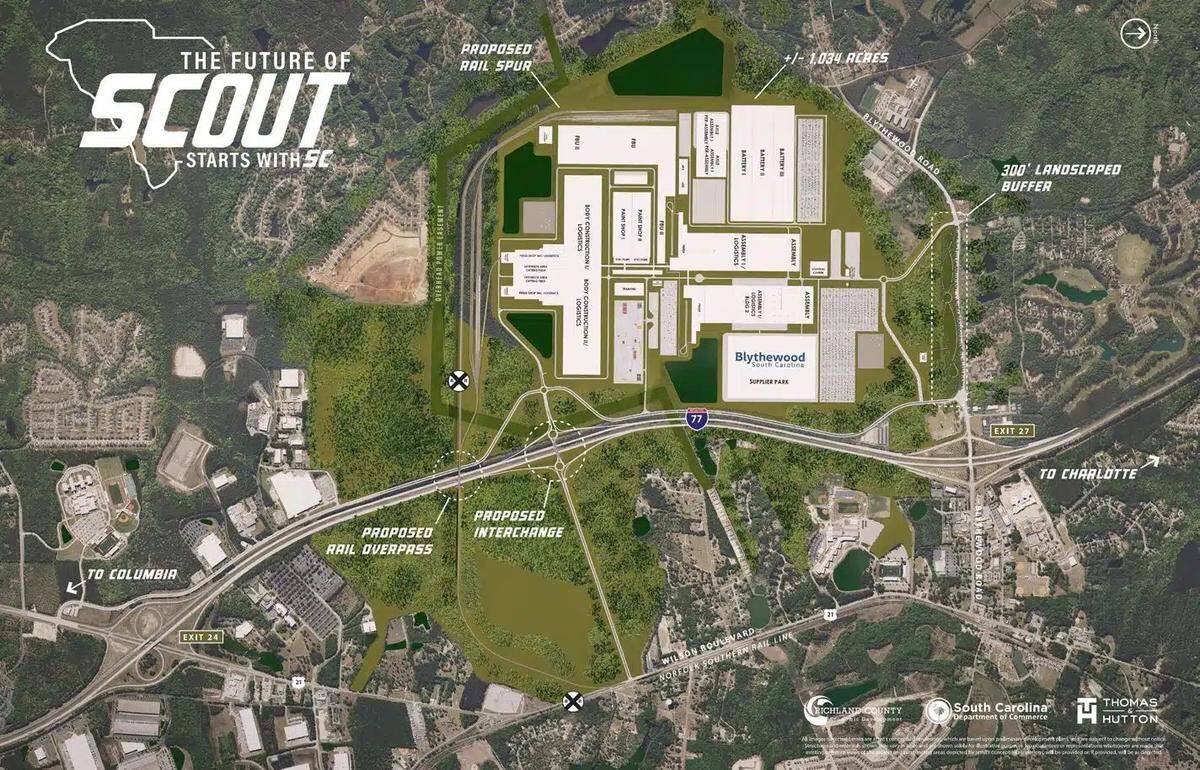
The vehicle plant is being built on 1,100 acres northeast of Columbia and just south of the once-rural town of Blythewood, with mixed reactions from residents who often say they settled in the area because they wanted to be away from the activity of a big city.
Now, with the Scout plant well underway, developers are buying property nearby with the expectation that more industry will follow, and that those companies will need warehouses, distribution centers and their own manufacturing facilities.
But will Columbia have enough space for them, and will Richland County want them here?
Anticipating Scout Motors’ impacts
“It’s no secret that the Columbia market, whether it be industrial development or retail development or single family home development, [is] growing and it’s growing outwards,” said Thomas Beard, vice president and industrial specialist with Colliers, a national real estate consultancy company with offices across the country.
In anticipation of that growth, developers are buying land on the bet that if it’s prepped and ready, industry will come for it.
One such example is a 35-acre property less than 10 miles from the Scout construction site offering over 300,000 square feet for as-yet unbuilt industrial buildings expected to supply Scout’s operations.
The real estate company NAI Columbia is marketing the site, dubbed the Carolina Pines International Commerce Center, with that in mind.
Bill Lamar, a broker with NAI Columbia, said the project is “absolutely” geared toward potential Scout suppliers, but it could also easily be grabbed by an unrelated manufacturer.
“We’re just scratching the surface of the demand that we’re going to experience ... and the ripple effect that the Scout project is going to create across our market,” Beard said.
Scout officials have promised that in addition to the 4,000 people it needs to run its production plant, it also expects to create another 5,500 jobs via suppliers that set up shop to support the main plant.
The northwest corner of the Scout site is reserved for future suppliers, and the county has another 465 acres across Interstate 77 that Scout gets first dibs on, if it decides it wants to use that land for suppliers or other needs.
Richland County economic development director Jeff Ruble said it makes sense, then, that investors are buying land near the site with the hopes that the investment pays off when more companies choose to locate near the Scout site.
“When [Scout] went vertical, that’s when you saw things pick up,” Lamar, with NAI, said of when work began on the production plant. NAI is handling the leasing for the Carolina Pines industrial site, and he said requests to view other industrial sites increased when investors realized that Scout meant business.
“I think a lot of folks don’t necessarily want to pull the trigger and build,” Ruble added, but he also said developers are securing property now anticipating that suppliers will come by the time the Scout plant is finished.
Not all industry fits in Richland County
Civic and business leaders have promised that Scout will raise the tide for everyone in Richland County, and likely surrounding counties, too. But, while leaders say they are excited about the new energy Scout will bring, the county isn’t welcoming every company wanting to plant a flag here.
“Since 2022, we’ve had more and more companies come in that we said no to for the first time ever,” Ruble said.
“When I first started in economic development in the early ’90s, we did backflips for any company that was willing to look, so it’s a new day,” he added.
This means that for the first time in at least 30 years, Richland County has real leverage to decide how the county’s industrial sector grows. Ruble said they hope to use that leverage to attract companies that pay better wages, and also to look beyond manufacturing to future-looking industries like biosciences, he added.
Already, the county is turning away companies that a few years ago would have gotten the royal treatment. For example, Ruble said a solar panel manufacturer wanted to set up shop here and promised to create 500 jobs. But the jobs were low-paying, so the county said it wasn’t interested.
Beyond the decisions the county chooses to make regarding industry, Beard said another limiting factor is simply land availability.
Southeast Columbia is already an industrial hub, with big businesses like the China Jushi fiberglass plant and Mark Anthony Brewing’s White Claw facility. A new industrial park completed in 2024 is already filling up. But there is only so much room to grow south of Columbia.
In the Northeast, he expects there will be more room as developers that already own land decide what to do with it. Exactly how that shakes out is hard to say.
Right now, only about 1 million square feet of space needed for industrial projects exists in the Midlands market. That may sound like a lot, but Beard said it is nowhere close enough to keep up with demand.
Beard said he expects industrial development to really pick up in the second half of 2025 and the first half of 2026.
“It’s not going to be the tidal wave of new development where ... it’s done kind of in an irrational, irresponsible way,” Beard said, but it will come. “Ultimately it’s going to continue to create jobs ... it’s going to benefit everyone in the long run.”
For now, with the projected start for Scout’s Columbia operations still a couple years off, it remains a wait-and-see proposition. The factory’s full impact, and how far that impact ripples, won’t be felt for at least five years, Ruble guessed.
This story was originally published April 14, 2025 at 5:00 AM.
CORRECTION: A previous version of this article misstated the number of supplier jobs Scout is expected to create. It is expected to create 5,500.