SC Attorney General Alan Wilson demands Columbia repeal conversion therapy ban
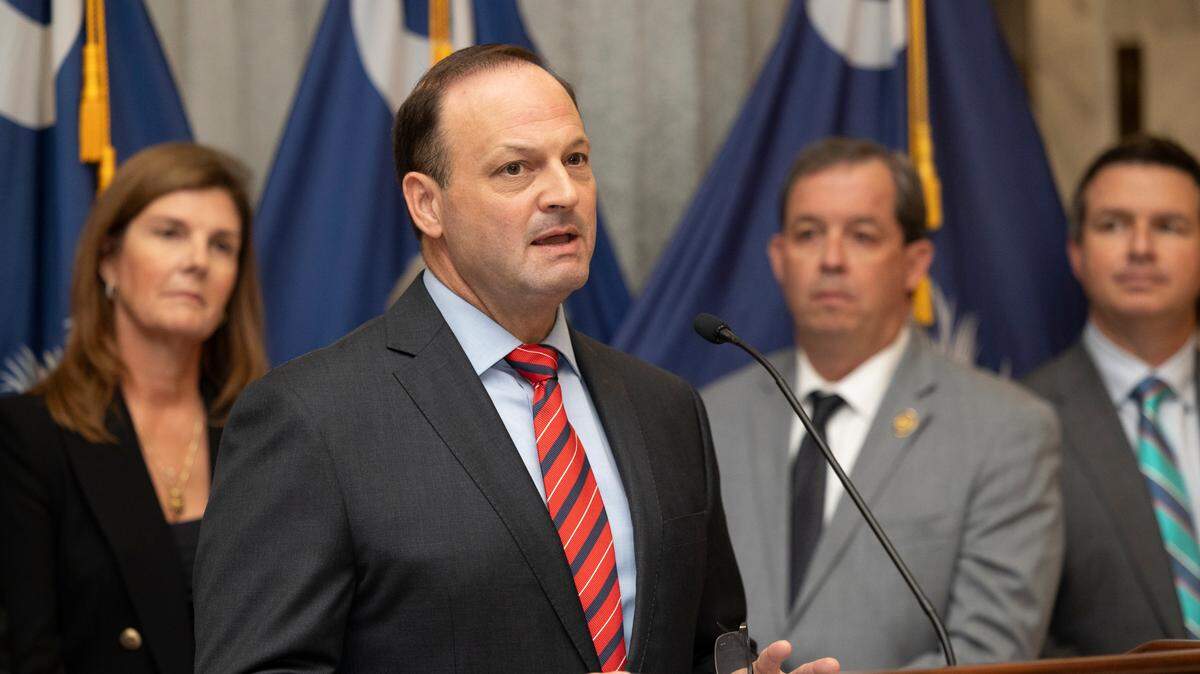
South Carolina Attorney General Alan Wilson is demanding that the city of Columbia repeal a ban on conversion therapy for minors that the city council passed in 2021.
Wilson argues that the city’s ordinance is unconstitutional and violates a state law called the Medical Ethics and Diversity Act, passed in 2022. That law specifically tells municipalities that they can’t have laws that restrict, limit or otherwise control medical care provided by a medical practitioner.
Wilson further states that Columbia does not have the authority to regulate professions requiring statewide uniformity, like therapists.
In response to the April 22 letter Wilson sent to the city, Columbia Mayor Daniel Rickenmann told reporters Wednesday afternoon, “I have a whole lot of other priorities.”
The city ordinance has never been used. There have been no complaints, no fines issued, no concerns, Rickenmann said.
“This hasn’t been an issue for four years,” he told reporters, adding that his main question for the Attorney General is “Why now?”
“Is it just a reminder or ... is it political season?” Rickenmann said, adding that for now the city is waiting for legal counsel before making any moves.
Wilson, a Republican, is considered a likely candidate for the next governor’s race.
In 2022, his office in response to a request from Sen. Josh Kimbrell, R-Spartanburg, issued an opinion about the city’s conversion ban ordinance saying that it likely violates First Amendment free speech rights. But no action against Columbia followed that opinion.
Background on the ordinance
Conversion therapy is a controversial counseling practice meant to change a person’s sexual orientation or gender identity. It’s opposed by prominent medical and psychology organizations across the globe, but some faith organizations have supported the practice, and many argued against Columbia’s ban in 2021.
The ordinance restricts any licensed healthcare or mental health provider in Columbia from providing conversion therapy, and promises a fine of up to $500 per violation. Rickenmann said no fines have been issued since the ordinance was passed.
The policy came from conversations with LGBTQ members of the public and therapy practitioners who specifically asked for it.
“This ordinance was put in place for a reason,” said Dylan Gunnels, president of SC Pride and one of the people involved in the conversations while Columbia was writing the ordinance in 2021.
The process to write the ordinance took time and research, he said.
“We believe that it’s protecting people who are most marginalized, who need the protection,” he said, adding that even if the ordinance has not been used by the city, it is still an important guardrail.
Still, it was controversial out of the gate.
It passed in a 4-3 council vote in June 2021, with Rickenmann and former Mayor Steve Benjamin both voting against it at the time. The other no vote was Councilman Rev. Ed McDowell, who along with Rickenmann has remained on the council since that vote.
Of the four council members who voted in favor of the conversion therapy ban in 2021, just Will Brennan is still on the council.
Brennan did not respond to a request for comment Wednesday.
The public was also divided over the issue. Faith leaders across different religions largely came out against the ordinance, but members of the LGBTQ community as well as doctors supported the conversion therapy ban. The American Academy of Pediatrics as well as the American Academy of Child and Adolescent Psychiatry also both oppose conversion therapy.
Opposing views
WIlson’s letter to Columbia leaders states that his office “has steadfastly maintained a position dedicated to safeguarding, upholding, and advancing the rights of South Carolinians to freely exercise their respective religious beliefs.”
He argues that Columbia’s policy encroaches on the rights of faith-based counselors. He goes on to say that conversion therapy is misunderstood and “conjures images of draconian and harmful treatments, like electroshock therapy or other physical cruelties,” the letter to Columbia officials continues.
A 2020 report to the United Nations from researcher Victor Madrigal-Borloz indicates that “acts of physical, psychological and sexual abuse, electrocution and forced medication, isolation and confinement, verbal abuse and humiliation,” are methods used in modern conversion therapy by some practitioners.
A quote directly from Madrigal-Borloz’ report says there is evidence that electric shock treatments were still being used in the U.S.
“Other aversion practices include injecting nausea-inducing or paralysis inducing drugs while exposing the subject to erotic material on a large screen, reportedly still being used in Iran ... and the United States,” that report continues.
Gunnels said he is not surprised, but disappointed by Wilson’s actions, which he believes is a political stunt more than anything.
Gunnels underwent conversion therapy when he was 15 years old and he knows first-hand the harm the practice can have on a person, he said. He knows others in South Carolina who have also been subjected to conversion therapy.
“None of us have been invited for a conversation” with the attorney general, Gunnels said. “When you have an attorney general that is blatantly disregarding facts and data, and then also not spending the time to even get to know the stories of the humans [affected], it’s a scary place to be.”
Wilson’s letter to Columbia leaders states that he is willing to meet to discuss a resolution, but that he expects a response from the city by May 5.
He says the city must “swiftly” repeal the ban on conversion therapy “to avoid any future legal action.”
During debate on the Senate budget Wednesday, Republican Sen. Kimbrell, in reference to Wilson’s opinion on Columbia, proposed an amendment to the state budget to claw back money from municipalities that ban conversion therapy. That proposal still requires full legislative approval.
This story was originally published April 23, 2025 at 11:10 AM.