
Old Lexington County hotel will soon house homeless families. Here’s where

Midlands advocates for the homeless have long focused on Richland County, where most of the region’s homeless populations can be found. But now they’re on the verge of making a serious move into neighboring Lexington County, where they say people’s housing struggles are less visible.
Lila Anna Sauls, president and CEO of the nonprofit Homeless No More, said Lexington County approached the group three years ago about introducing more help for people in need of housing on the other side of the river.
Almost exactly three years later, the nonprofit Homeless No More has closed on the old Suburban Studios hotel on Bush River Road off of Interstate 20. Once it is converted into the new “St. Andrews Village,” they hope to set up 31 housing units for people transitioning out of homelessness.
The homeless services group has struggled to provide services to people in Lexington County as it often has to direct them to help located on the other side of Columbia.
In the previous three years, 60% of the people who made contact with Homeless No More’s Lexington County case manager declined an offer of temporary shelter because all of the offerings were in Richland County.
“Their schools, their families, their safety net are all there,” Sauls said in an interview at Homeless No More’s Columbia headquarters. “We knew we needed to offer more services in Lexington, we just needed to know what we could develop to fit those needs.”
There’s a growing need for housing services in Lexington County, she said. Between 2021 and 2023, the group saw a 744% jump in requests for help in the county.
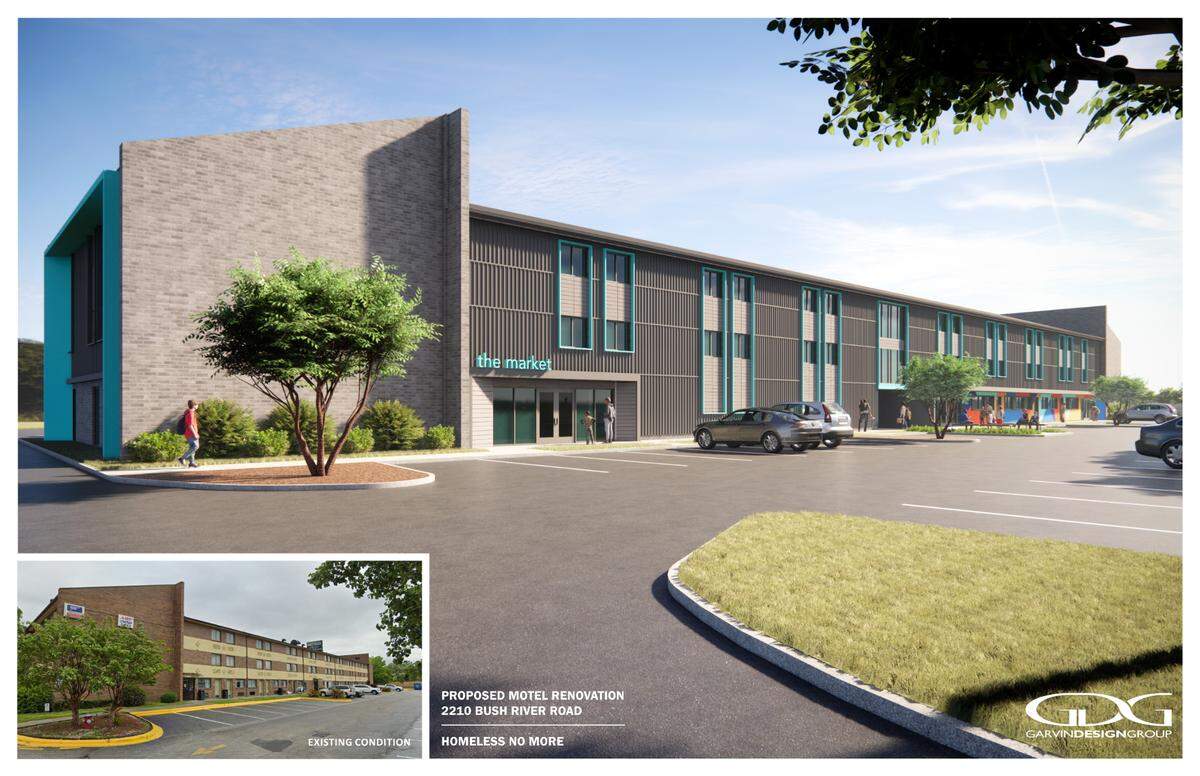
Homeless No More has secured a total of $12 million to convert the old hotel into new housing, including $3 million in federal grants distributed by Lexington County. The county will hold the first mortgage on the property. Another $3.6 million came from the South Carolina Housing Trust Fund, and $1 million each from United Way of the Midlands and Southeastern Freight Lines. A total of $3 million will come from tax credits.
Now the hotel, which dates back to the 1980s, will be renovated to provide 31 new apartment-type housing units for families needing temporary housing. Those staying there for six to 12 months will be required to go through Homeless No More’s program.
“You have to at least have progress on getting a job,” she said. “You need to create a budget for what you’ll need on the other side.”
Residents will receive a variety of life skill classes, while also having access to a small on-site grocery store and a child care facility that will also be open to the neighboring community, Sauls said. The program is specifically geared toward families with children experiencing homelessness, she said.
The program has had a successful track record of placing people into permanent housing, Sauls said.
The group worked to get the surrounding community to buy in to the idea of having transitional housing nearby.
“Everything we do is meant to fit into the community,” she said.
“I’ve learned the importance of letting advocates fight our battles,” Sauls said. When someone sent her a post from the website Nextdoor questioning the development, “all the comments were, ‘This is not new, we’ve had neighborhood meetings about this.’”

Neighbors are traditionally weary of a “homeless shelter” opening nearby, Sauls said, although she doesn’t think the negative associations they might have with that term apply to the families that Homeless No More is seeking to help.
“We seem to be short on empathy as a society right now,” Sauls said. “We’re not just housing. We want to make sure these families don’t cycle back into homelessness. They might be sitting next to you in a restaurant or at church and you wouldn’t know.”
The site will have 24-hour staff and security, something Lexington County wanted to see before the project received approval.
After closing on the property Tuesday, the nonprofit expect renovations to be finished and units to open to residents within 18 months.
At the time Homeless No More moved to acquire the property, there were still some guests living there long-term, part of a population that has turned to hotel rooms as their most affordable housing option. Those residents are being moved into other long-term housing programs, Sauls said.
This story was originally published May 1, 2025 at 5:00 AM.
.jpg)