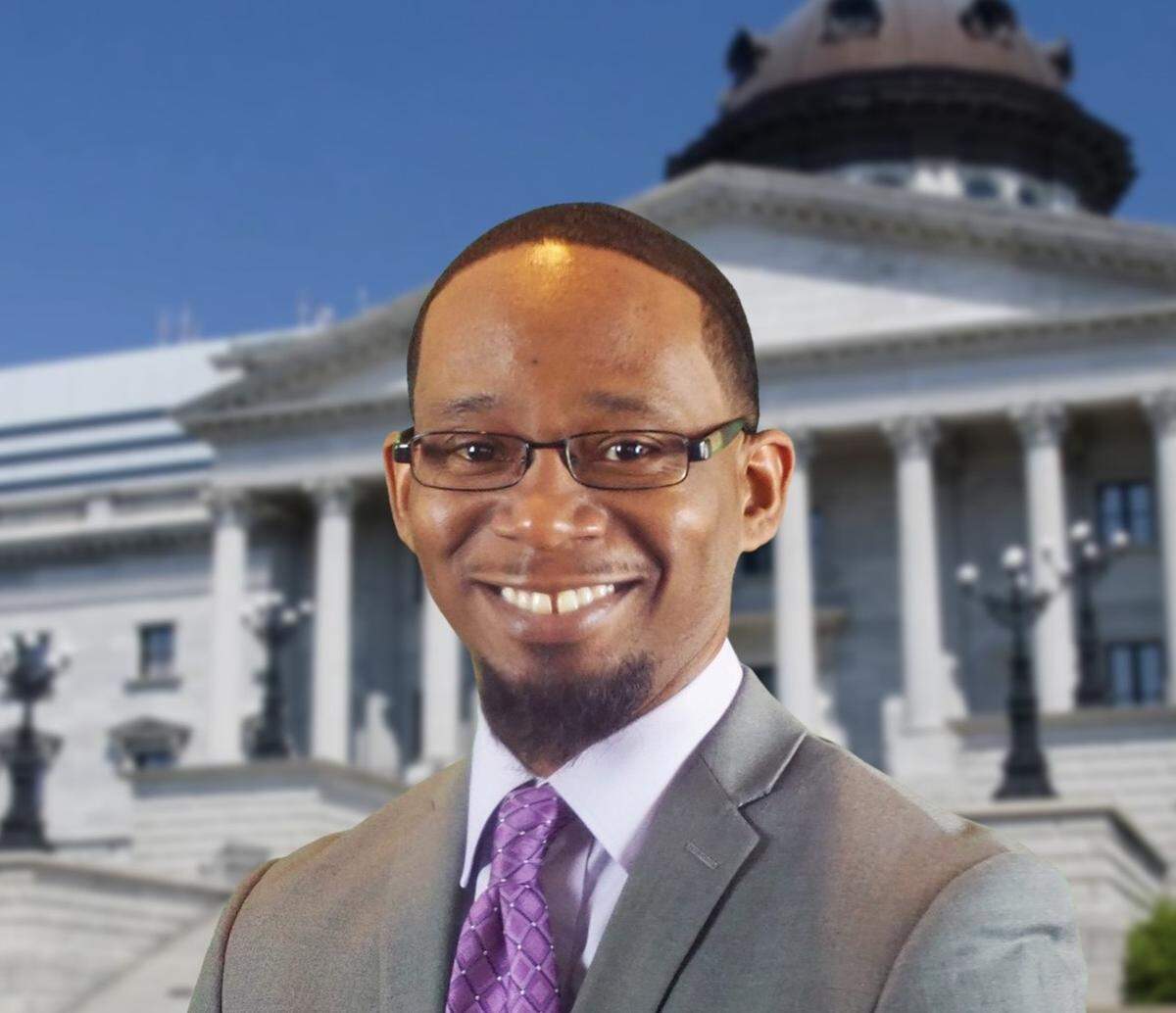
Investigation into death of Irmo firefighter reveals departmental mishaps
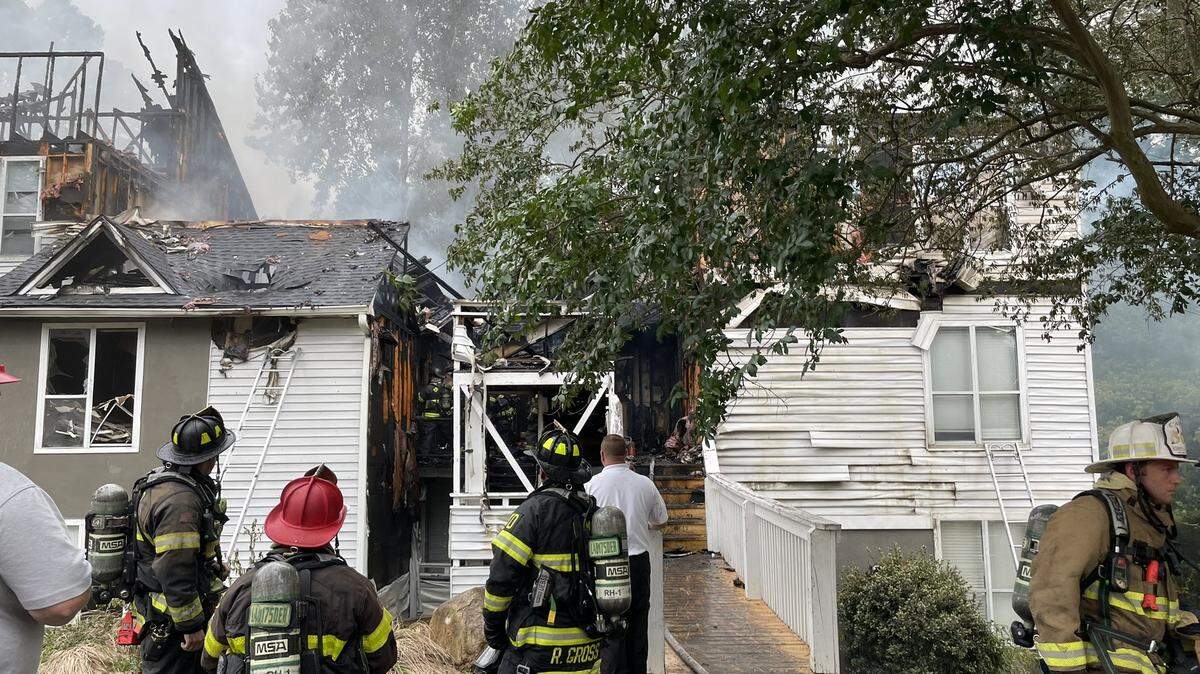
As jets of water from hoses and powerful cannons mounted on fire trucks pounded the apartment building consumed by flames, a Mayday call went out. The lightweight wooden construction, weakened by water and flame, had given way. Two floors of the burning building had collapsed, trapping four Irmo firefighters on the second floor of the burning building.
Three would make it out. But James Michael Muller, 25, would later be pronounced dead at an area hospital.
A recently released report from the National Institute for Occupational Safety and Health, or NIOSH, revealed how miscommunications between crews at the scene of the 2023 Tropical Ridge apartment fire in Columbia, South Carolina, snowballed into tragedy.
The report comes nearly two years after Muller, 25, died fighting a fire that consumed a building on Stoneridge Drive near Riverbanks zoo and displaced 19 people. The young father and husband, known affectionately as “J,” was the first Irmo firefighter killed in the line of duty.
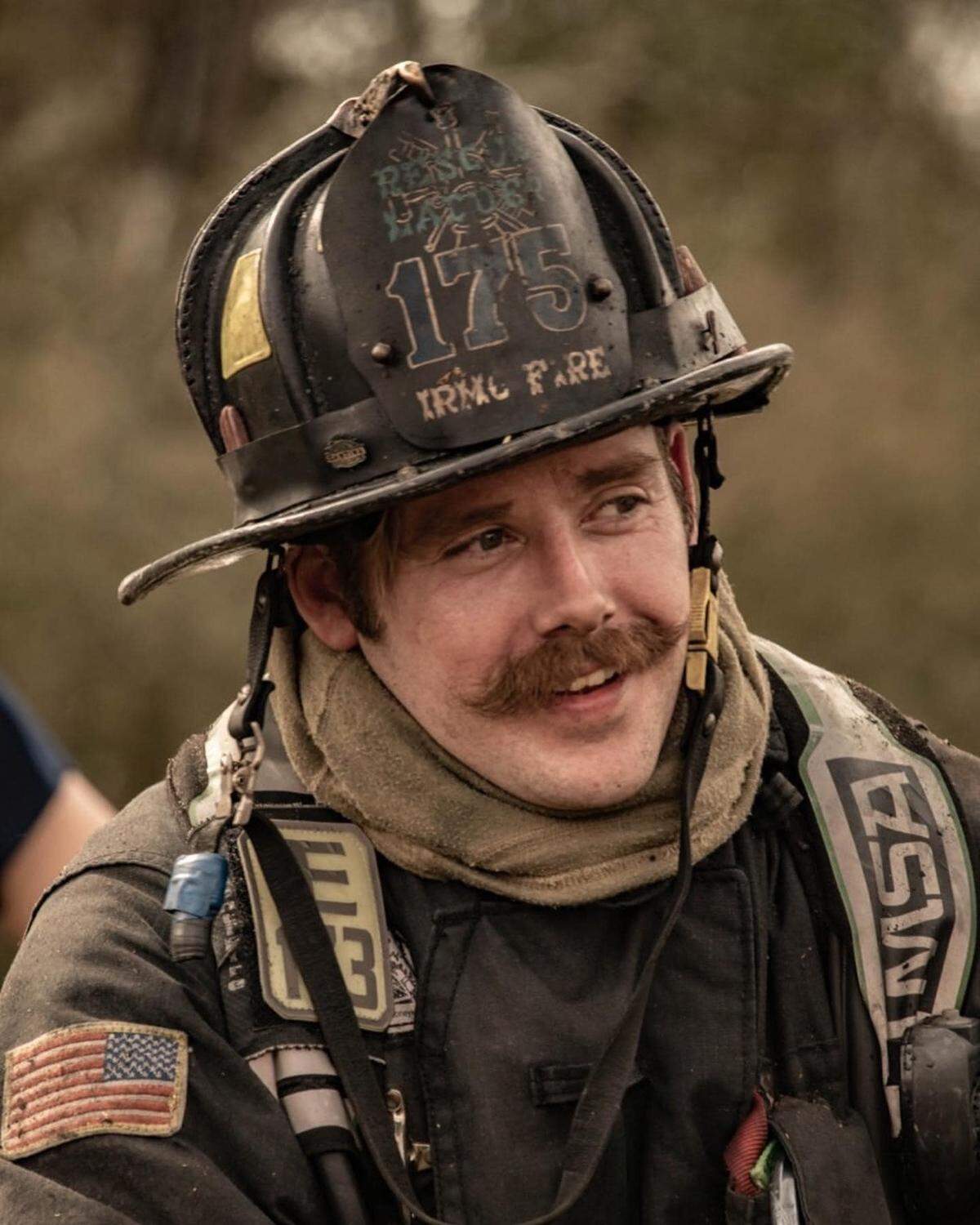
The detailed investigative report released by the Irmo Fire District cited miscommunication, a failure to keep track of personnel at the scene, and inadequate knowledge of a burning building’s structural integrity in the death of Muller, a career firefighter who had been with the department since he was 18.
The report, released April 29, outlined more than a dozen improvement recommendations. It follows a series of citations and fines — totaling $3,600 — levied by S.C. OSHA against both the Irmo Fire District and the Columbia-Richland Fire Department. The Irmo Fire Department is currently contesting those fines.
Mike DeSumma, a spokesperson for the Columbia-Richland Fire Department, said that it had “no comment at this time” because department officials had not officially received the NIOSH report. He also declined to say whether the department was contesting the state OSHA fines.
Irmo Fire District Chief Michael Sonefeld said the agency decided to release the report, which at times is critical of communication between the two departments, in the interest of full transparency and accountability.
“We looked at it and concurred,” said Sonefeld, “It is what it is.”
Speaking to The State, Sonefeld said that his department would not change its policy of providing automatic aid to other departments and had already taken steps to correct the shortcomings outlined in the report.
“We make adjustments (and) we learn from every single call,” Sonefeld said.
Miscommunication
The alarm went out at 4:13 p.m. on May 26, 2023. Multiple units from the Columbia Richland Fire Department raced to the Tropical Ridge apartments a 167 Stoneridge Drive in Columbia in response to reports of an apartment fire that had spread across multiple units. A cooking fire involving fry oil had grown out of control, spreading throughout the apartment and threatening the entire building, which sat on a dead end cul-de-sac.
Three buildings in the same apartment complex had been destroyed in past fires, including in 2013 and 2017. Two firefighters were injured during the 2017 fire.
As they drove, firefighters could see a black plume of smoke in the sky above the bluff overlooking the Congaree and Broad rivers. From the back of the building, they could see tongues of flame consuming the top two floors and roof of the apartment building. They called for a second alarm, requesting more units. Muller’s engine company was one of the units that responded.
A firefighter from one of the Columbia crews was able to rescue an apartment occupant, but crews struggled to get urgently-needed water to the scene because the metal cap of the closest fire hydrant was seized shut.
But on the rapidly unfolding scene, crucial communication appeared to break down. One supervisor, initially assigned to one part of the building but reassigned to another, appeared confused about what units he was in charge of and continued to use his old area designation, according to the report.
Around 4:30 p.m., as flames continued to billow from the building, Muller and his crew relieved Columbia firefighters who had initially led a hose into the building to attack the blaze where it had started, at the back of a second floor apartment.
The fire was fast moving. There were 12 apartment units across the three-floor building, with a single fourth story loft bedroom. The units were connected by open breezeways and constructed using lightweight wooden trusses — a type of construction that can collapse within five minutes of being exposed to an open flame, according to the report.
As the Columbia fire crew exited the apartment where the fire began, they told Muller’s crew that the floor on the second story of the building was beginning to sag.
That information never made it to supervisors on the scene.
Upon entering the burning building, Muller and crew “found the floor of the second floor to be solid and were unsure what sagging (Columbia fire) was referring to,” according to the report.
At 4:41 p.m., as Muller’s crew fought the fire on the second floor, an on scene incident commander warned crews to be “mindful” as debris was beginning to fall from the third floor of the building.
As Columbia crews on the third floor broke down walls directly above the apartment where Muller’s team was working, the fire engines in the parking lot turned the powerful “deck guns,” water cannons mounted on the trucks onto the roof of the building. Water began to fall on the third floor teams, and the floor suddenly dropped several feet, sending a flood of water onto the floor below where Muller’s team was working to extinguish fires hidden in the walls and ceiling of the second floor apartment.
As the third floor crews scrambled back to the openings they had made in the walls, a Mayday call was sent out at 4:44 p.m.. Seconds later, the fourth floor loft, scorched by fire and pounded by water, collapsed. It crashed through the third floor, landing on top of the Irmo firefighters.
The collapse buried two firefighters from Columbia fire and the four men on Muller’s crew in debris.
Two firefighters from Muller’s crew were able to free themselves and attempted to declare a second Mayday but were unable to because of heavy radio traffic, the report said.
No one on scene was aware Muller’s team had also been trapped under debris from the third floor collapse. In the parking lot, Muller’s crew heard the initial Mayday call from a division supervisor and thought it was for them.
They were wrong.
Personnel accountability
In the chaos following the roof collapse, supervisors struggled to account for their personnel.
“Neither of the two division supervisors or their assigned crews knew about the other division’s situation,” the report said. “As crews entered the structure to assist in the rescue, they encountered trapped firefighters and assumed they had found the only personnel involved in the collapse.”
All but Muller, who was working with three other firefighters, either escaped or were rescued from the building minutes after the Mayday call.
Members of the Columbia fire crew, while aware that the Muller crew was beneath them, were unaware that Muller’s crew had been trapped, according to the report. Likewise, Muller’s crew, aware that Columbia firefighters were above them, was not aware that those firefighters had been trapped after the second collapse, leaving each crew to assume that the radio traffic being heard and communicated to the incident commander was specific to their respective Mayday operations, according to the report.
An Irmo firefighter, trapped near Muller, was rescued by a rapid response team working with both hand and hydraulic tools. But Muller remained trapped in the building.
At 5:07 p.m., more than twenty minutes following the Mayday call, a supervisor on scene reported “an active and on-going Mayday of a trapped (Irmo) firefighter on the second floor of (the building),” the report said. “Prior to this, incident commander did not know how many firefighters were trapped or which (department) they were from.”
Tunneling through debris on his stomach, a firefighter located Muller and noticed his oxygen tank still contained air, but was unable to hear any inhalation, according to the report. The rescuer tried to feed Muller oxygen from a backup tank and attempted to move him, but running low on his own oxygen, he was forced to pull back.
A second firefighter was dispatched. At 5:29 p.m., according to the report, the rescuer was forced to cut the straps of Muller’s breathing rig to free him from the wreckage. He then dragged Muller through the tight tunnel of debris and out of the building.
Once outside, CPR and resuscitave measures were performed on Muller as he was transported to an area hospital. It was too late. Muller’s breathing had stopped at 5:07 p.m., around when they noticed he was missing, according to the report. He was pronounced deceased shortly after arriving in the emergency room.
Structural integrity
The report advised that first responders be aware of a burning building’s structural integrity to successfully fight the fire.
Apartment buildings at Tropical Ridge were deemed “lightweight construction,” having a tendency to collapse within just minutes of exposure to a fire.
Prior fires at the complex had resulted in the destruction of three buildings, which were never restored, according to the report.
The report recommended that fire crews should’ve conducted a “risk/benefit analysis” before beginning operations at Tropical Ridge.
“Personnel should be trained on the various types of structures found within their response areas, the impact that fire can have on these structures and understanding how fire travels throughout various structure types,” the report said.
OSHA fines & a delayed investigative report
The Irmo Fire District received four citations from the state Department of Labor, Licensing and Regulation in November 2023 following Muller’s death.
The department determined the Irmo Fire District failed to provide its employees with a safe working environment when it neglected to:
- “clear radio communications to allow Mayday calls to be heard and addressed (which) effectively resulted in a Mayday call being cleared when firefighters remained trapped within the burning structure
- take responsibility for the safety and health of responders ... when defensive and offensive firefighting tactics were utilized together resulting in the use of deck guns on exterior portions of the structure while firefighters were in the interior and no action was taken to correct this imminent hazard or to prevent firefighters from entering the structure
maintain constant awareness of the position and function of all responders and a safety officer was not appointed.”
Sonefeld said his agency is contesting OSHA’s findings, and had asked an administrative judge to stay the case until the report by the National Institute for Occupational Safety and Health was released.
NIOSH, an organization is under the Center for Disease Control, provides research and recommendations to prevent workplace deaths. It regularly prepares reports on firefighter deaths across the country. NIOSH and the CDC more broadly have experienced extensive layoffs under the leadership of Secretary of Health Robert F. Kennedy Jr. and President Donald Trump’s “DOGE” initiative, led by billionaire Elon Musk.
Following a nearly two-year delay in the institute’s findings, Sonefeld said he urged the institute to release the report in order to bring closure to family.
“The family really needed to see (the report),” Sonefeld said. “It was really important for them to move on.”
Earlier this year, the institute completed the report and allowed the Irmo Fire District to review and approve the draft — the department is permitted to correct errors but not findings. The department then had a week to go over the report with Muller’s family and the fire district.
“Then NIOSH went out of business,” Sonefeld said, adding that he doesn’t think it will be gone for good.
This story was originally published May 5, 2025 at 10:13 AM.