Massive Saharan dust cloud moving toward SC. Here’s when, where it’ll hit & the impacts
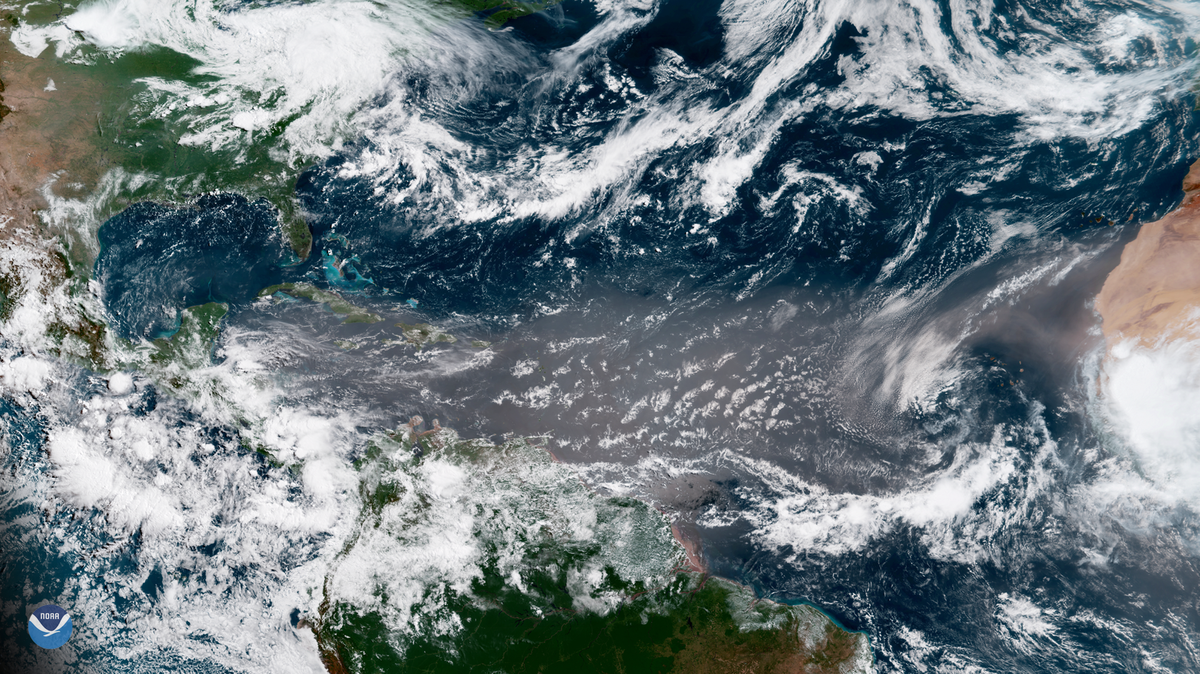
A large plume of dust from the Saharan Desert is expected to drift across a good chunk of South Carolina by the end of the week, forecasters say.
According to AccuWeather as of Tuesday evening, the Saharan dust will move across the Atlantic and reach much of the South Carolina Lowcountry and coastal areas on Thursday, and then drift over the Midlands and other parts of the state on Friday.
The plume is about 2,000 miles wide from east to west and 750 miles long from north to south, AccuWeather states. The plume — the apparently largest to reach the U.S. so far this year — is expected to move over Florida on June 4, then continue on over the Gulf Coast the following days.
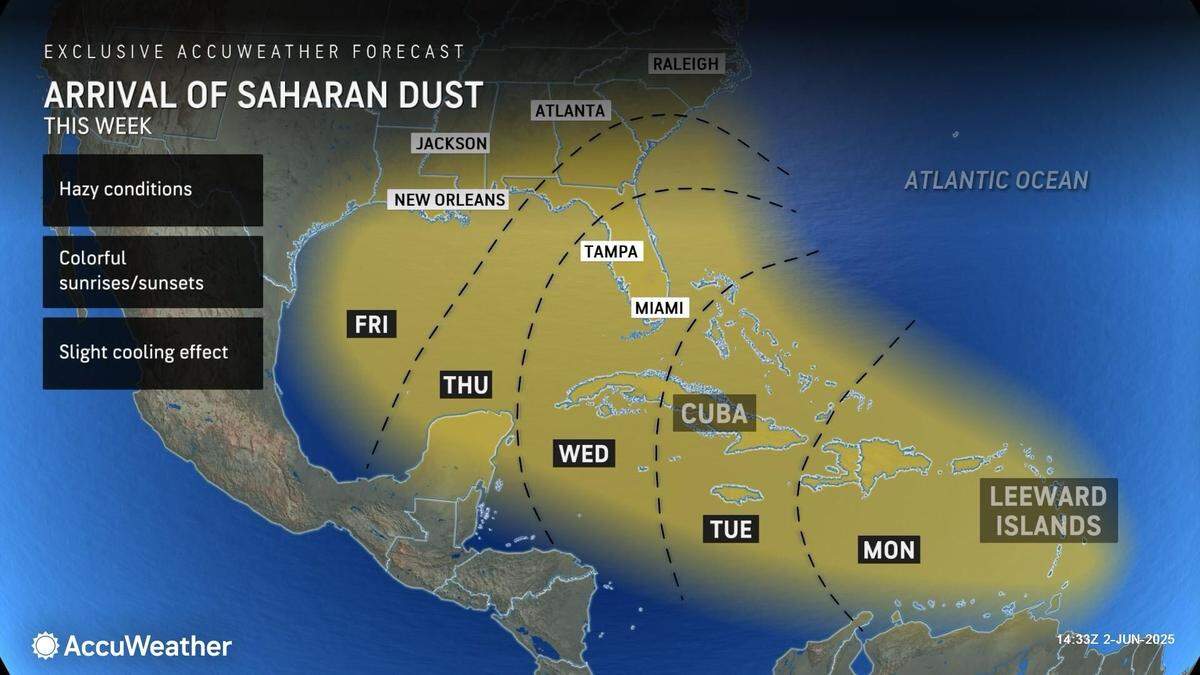
Saharan Dust impacts
Most of the dust will likely remain thousands of feet high in the atmosphere, meaning it should have minimal impact on air quality at the ground level in South Carolina.
Still, AccWeather warns that, “People who are sensitive to dust or vulnerable to the effects of poor air quality should monitor air quality conditions and forecasts.” Air quality forecasts can be found at the National Weather Service website or at AccuWeather.com.
Other impacts from the dust cloud could include hazy conditions, more colorful sunrises and sunsets and a slight cooling effect in some areas.
“Many people will notice more colorful sunrises and sunsets and a milky or hazy look in the sky,” said Alex DaSilva, AccuWeather lead hurricane expert.
Facts about Saharan dust
While the currently approaching Saharan plume is unusually large, dust from the Sahara Desert blows out toward the U.S. often.
“It is very common to see large plumes of Saharan dust coming across the Atlantic toward the United States in June and July,” DaSilva said.
- According to NASA, winds pick up an estimated 100 million tons of dust from the Sahara Desert every year — a sizable amount blows out over the North Atlantic Ocean.
- Dust plays a major role in Earth’s climate and biological systems. The airborne particles absorb and reflect sunlight, which impacts the amount of solar energy that reaches the surface. The particles also can promote or reduce cloud and storm formation.
- The dust, which is rich in iron and other minerals, can act as a natural fertilizer for ocean ecosystems and lands downwind.
- The Sahara Desert is Earth’s largest source of airborne dust. In winter and spring storms, Saharan dust often fertilizes the soils of the Amazon rainforest.
This story was originally published June 4, 2025 at 5:30 AM.