Why this historic, downtown Columbia church has sat empty for 30 years
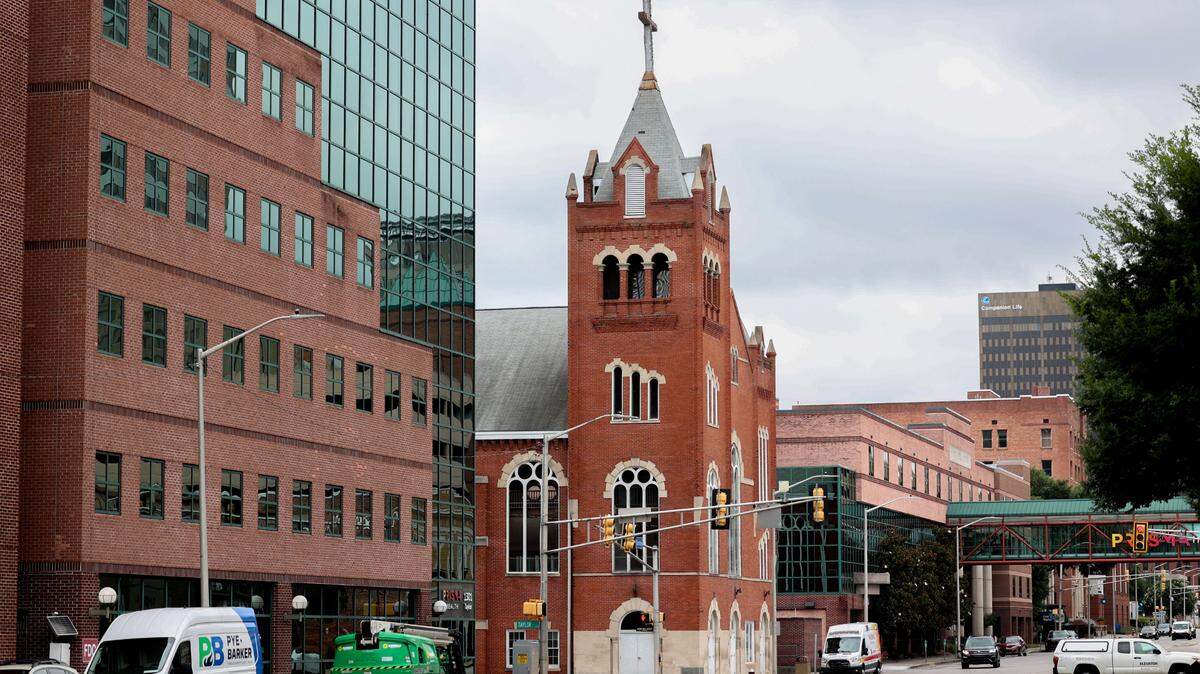
For nearly 130 years, downtown Columbia’s historic Bethel AME Church provided the city’s African American community with much more than a place to worship.
The first wooden sanctuary, built in 1869, was a place where former slaves found permanence and belonging. The current Romanesque Revival structure, built in 1921 by trailblazing Black architect John A. Lankford, was a place where civil rights pioneers gathered for protection and inspiration.
Despite Bethel AME’s long history as a community pillar, the historic church building has sat empty and unused for nearly 30 years. The church sits at one of Columbia’s major intersections - the corner of Sumter and Taylor streets — in the same block as Prisma Baptist Hospital.
Through the decades, the historic church has accumulated a market value of over $1 million, according to the Richland County Assessor’s Office, yet little progress to sell, renovate or restore the building has been made.
For nearly twenty years, various efforts were made to revitalize the building, but perhaps the most aggressive plan ended in 2021. Since then, the church has been publicly mum about what may be next.
1995: Bethel AME’s Congregation relocates from historic building
After nearly 75 years of calling 1528 Sumter St. home, Bethel’s clergy began to consider relocating for a number of reasons.
The aging building was increasingly difficult to maintain, causing the church to consistently spend thousands of dollars on upkeep.
“We began to realize just how much money it would take to restore the property and weighed that against building a new church and relocating,” said Bishop Ronnie E. Brailsford Sr., Bethel’s pastor from 1992 to 2016.
Additionally, the church was landlocked by Palmetto Health Baptist hospital — now Prisma Health Baptist — which limited its ability to host events and expand its ministries.
All things considered, Brailsford and the clergy decided that the congregation and ministry’s goals were worth the investment.
After months of consideration and searching for a new property, Bethel AME Church officially relocated in September 1995 to its current 89,000-square-foot campus on Woodrow Street, the former site of Shandon Baptist Church.
After relocating from Sumter Street, the Bethel clergy wanted to transform the historic building, which was included in 1982 on the National Register of Historic Places, into a tourist attraction.
“We knew we wanted to make it a historic site and have it a part of the historic tour of Columbia,” said Brailsford.
2004: Historic Bethel gets new owners
In 2004, nine years after relocating from the historic Bethel site, the clergy delegated the renovation efforts to the Renaissance Foundation. This decision came after ongoing difficulties in securing city support, largely because of the church’s status as a religious institution.
The Renaissance Foundation, founded in 1996 by a few members of Bethel AME, is a 501(c) non-profit organization that focuses on community outreach and education.
When asked to take on the Bethel renovation project, the Renaissance Foundation’s board of directors knew they needed an experienced leader to spearhead the initiative. The board ultimately decided to name Mary Skinner Jones as executive director.
Jones, a South Carolina native and longtime non-profit associate, had previously done renovation work with the Conference of National Black Churches in Atlanta. Her experience gave her proper insights to imagine a new Bethel.
“Because I had worked with CNBC to rebuild those churches, they (the Renaissance Foundation) asked if I would come in and consider taking the position to work with them on historic Bethel,” Jones said.
Once Jones was onboarded, she immediately began dreaming up concepts for a new Bethel.
“They didn’t have a plan so I developed a concept which was to turn it (historic Bethel) into a cultural arts center and civil rights museum,” Jones said.
Bethel AME and the Renaissance Foundation directors embraced Jones’ vision, and by the end of 2004, they had drafted a lease agreement officially granting the Renaissance Foundation a 99-year lease on the building. The agreement included a clause stating that the lease would be terminated if renovations were not completed by 2010.
2010-2021: Efforts to renovate
For the first six years of the lease, the Renaissance Foundation spent most of its time raising money to stabilize the historic Bethel building.
Richland County gave the Renaissance Foundation hundreds of thousands of dollars worth of grants, but each grant was quickly exhausted by the costs of repairing the building’s stained glass windows and structure deterioration among other things.
“When you do historic preservation, you don’t know what you run into,” Jones said. “It just costs so much money and when you go into it, you don’t know exactly how much it’s going to cost.”
Bethel AME was understanding of the process, and so in 2011, the church added an addendum to the Renaissance Foundation’s lease stating that the foundation now had until July 31, 2020, to complete the renovation project.
From 2011 to 2019, the Renaissance Foundation stabilized the building and continued raising money for construction, Jones said.
According to minutes from a 2017 Richland County Council, approximately $950,000 was invested in the renovation of historic Bethel between 2006 and 2017.
In 2018, the county committed an additional $1.5 million, contingent upon a review of the Renaissance Foundation’s completed progress and evaluation of the building’s historic tax credits.
When the COVID-19 pandemic hit in 2020, the Renaissance Foundation was temporarily shut down and efforts to renovate the historic building paused.
Although the lease with Bethel was not updated to reflect time lost by the pandemic, the Renaissance Foundation resumed the renovation process once restrictions were lifted.
In early 2021, the Renaissance Foundation hired Michael Allen, the CEO of Greenville’s MOA Architecture, as the lead architect of the project. Allen visited Bethel that spring and assessed the building for routine pre-design analysis.
The Renaissance Foundation and Allen’s team had hope for the project’s future and even hosted a community open house on May 26, 2021, to allow local residents to see the building before its transformation.
But just a month later, on June 25, 2021, Jones received a letter from Bethel AME’s lawyer stating that the lease with the Renaissance Foundation was terminated.
“It is our understanding that the renovation has not been completed as of June 24, 2021,” Jones said as she read the letter to a reporter.
Jones said she and the Renaissance Foundation weren’t expecting this letter because she thought Bethel understood that the global pandemic prevented the foundation from completing renovations by the agreed upon date.
Additionally, Rev. Caesar R. Richburg, who was the pastor of Bethel at the time, was on the Renaissance Foundation’s board of directors and had never mentioned any intention to cancel the lease to Jones or the rest of the board.
“If he sat on the board, why didn’t he just tell y’all that the church was canceling the lease?” Jones said community members asked. “That’s what we didn’t understand.”
Richburg did not respond to The State’s attempts for comment.
2021-Present
After canceling the lease with the Renaissance foundation in 2021, Bethel now has full control over the historic building.
Bethel’s presiding bishop did not respond to The State’s multiple requisitions for comment on what’s next for the building.
Despite Bethel’s current state, the historic church means so much to Columbia, and many historians and community leaders still hope to see it restored.
“We must dig a little deeper and do more to preserve this landmark to renovate, restore, and indeed to resurrect— so that this amazing history will not be lost,” said Bobby Donaldson, the executive director of USC’s Center for Civil Rights History and Research.
This story was originally published July 7, 2025 at 5:00 AM.