Palmetto Trail expedition highlights SC efforts to protect nature amid growth
Hurricane Hugo devastated South Carolina when it made landfall near Sullivan’s Island in 1989. The Category 4 storm destroyed many homes, including one in Charleston belonging to Native American kayaker Robyn Deerchaser.
She volunteered with the Red Cross for months after the hurricane while raising her two-month-old child in a trailer. Earlier this month, over 30 years after Hugo, she looked on trees split in half by Hurricane Helene, their felled trunks obstructing the otherwise serene view in Congaree National Park.
“After Hugo, I see damage like this, that reminds me of it,” Deerchaser said. “You definitely get PTSD watching that, and going back to Charleston afterwards, being on I-26 and seeing a house in the middle of the road.”
She now lives “off the grid” in rural South Carolina. But she said natural disasters have never deterred her love of nature. It brought her out to the park on July 15 after being invited by friends to join the SC7 Expedition.
The expedition, a collaboration between non-profit organizations Global Eco Adventures and the SC National Heritage Corridor, seeks to inspire such an unshakable love of nature in other residents of the Palmetto State. It’s an annual 30-day journey along the state’s 350-mile Palmetto Trail that highlights the nonprofit organizations’ efforts to protect it.
Highlighting ‘wonders’
Organized six years ago at the request of Gov. Henry McMaster, the expedition highlights the seven geographic wonders unique to South Carolina.
From east to west, those wonders include Sassafras Mountain, the Jocassee Gorges, the Chattooga River, Congaree National Park, the Edisto River, Ace Basin and Bulls Island, according to the National Park Service.
The project is spearheaded by Department of Natural Resources Director and adventurer Tom Mullikin. He was celebrating his 65th birthday on the day of the hike and called the turnout “a great birthday present.”
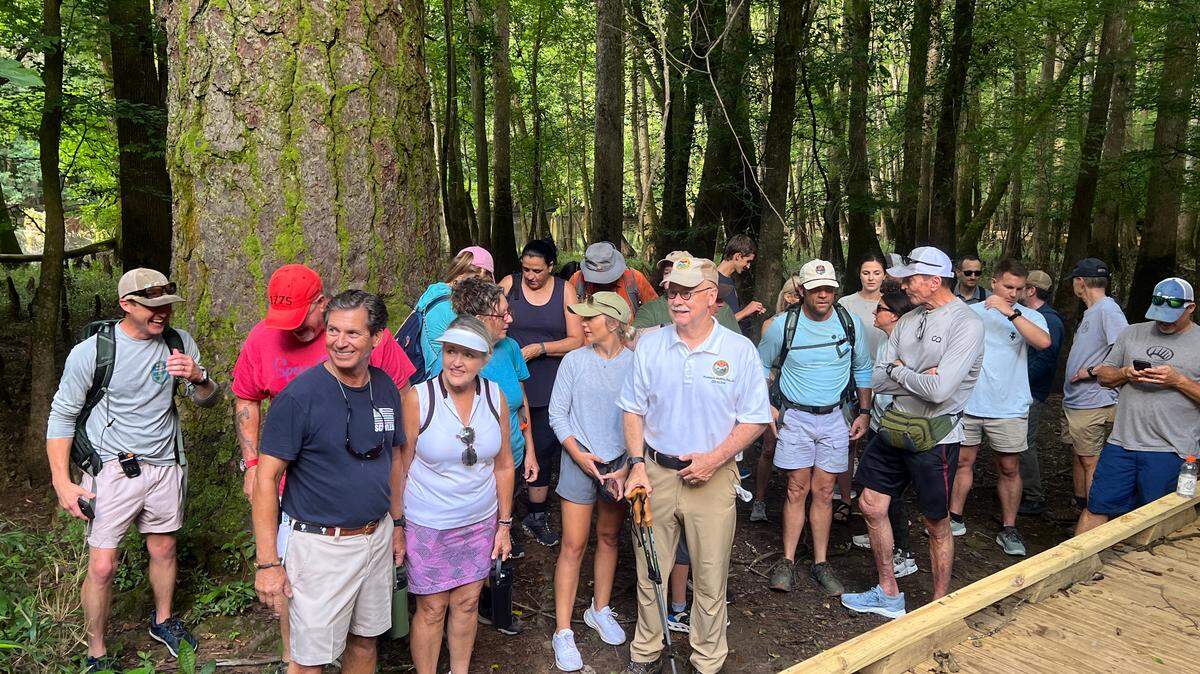
At least 60 people gathered July 15 to see these sights. Many said it was their first time hiking Congaree National Park despite being longtime state residents.
The hike was the 15th day of the expedition, marking Congaree as the 4th of the seven wonders throughout the trip. The group passed through the Midlands last week. It started in Oconee State Park and will end at Beaufort’s Spanish Moss Trail.
Mullikin joked, or was perhaps serious, that after the two-mile hike, he would go walk another 10 miles.
The expedition this year had drawn in nearly 2,000 participants as of the stop at Congaree National Park, Mullikin said. They reached the first thousand after only a week on the Palmetto Trail.
“When people understand and are more familiar with something, they’re more willing to protect it,” said Lily Howie, a climate researcher at Coastal Carolina University who has been working with SC7 since its launch.
Participants spanned various ages and backgrounds. Foreign accents could be heard in the crowd on the park’s boardwalk trail. They were brought together by word of mouth from longtime participants of the expedition.
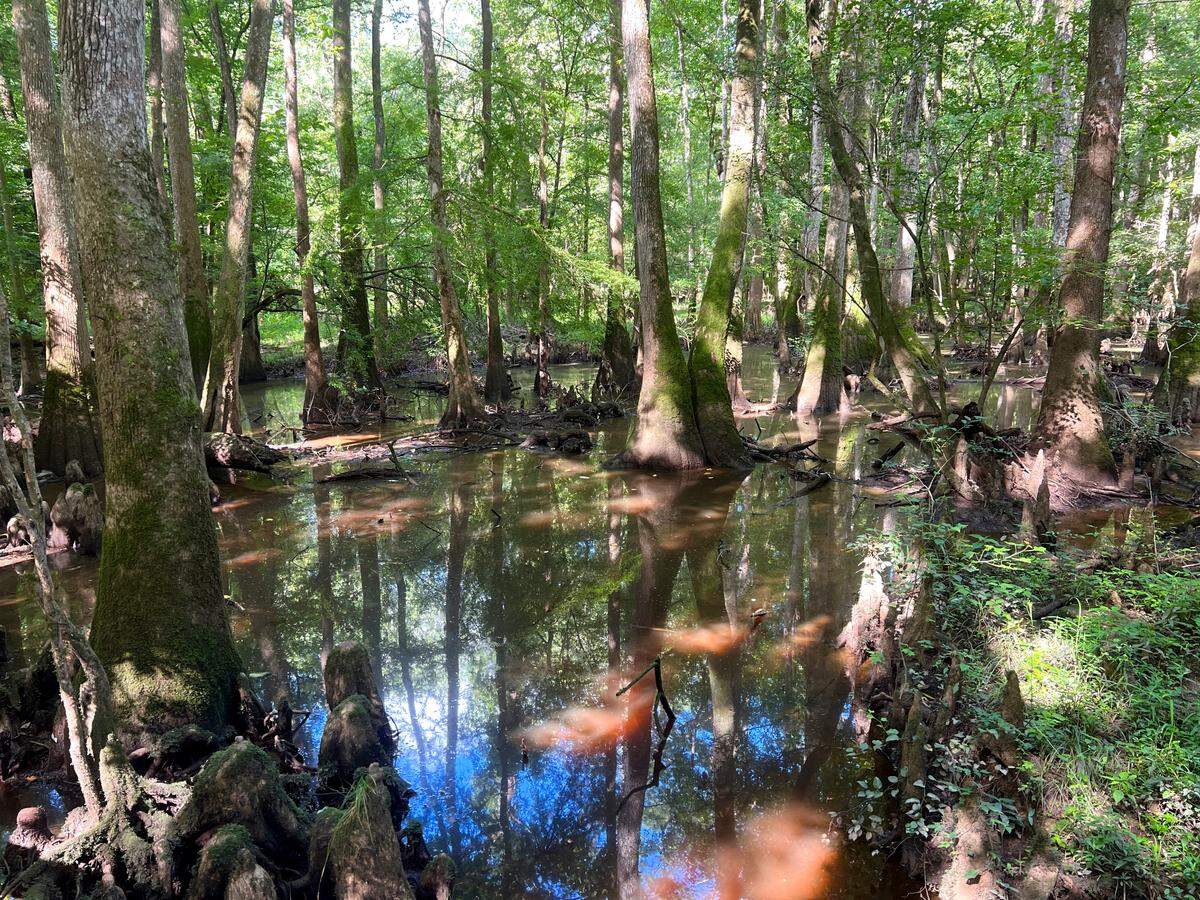
Congaree National Park is only a 30-minute drive south of downtown Columbia, but arriving there can feel like stepping into another world.
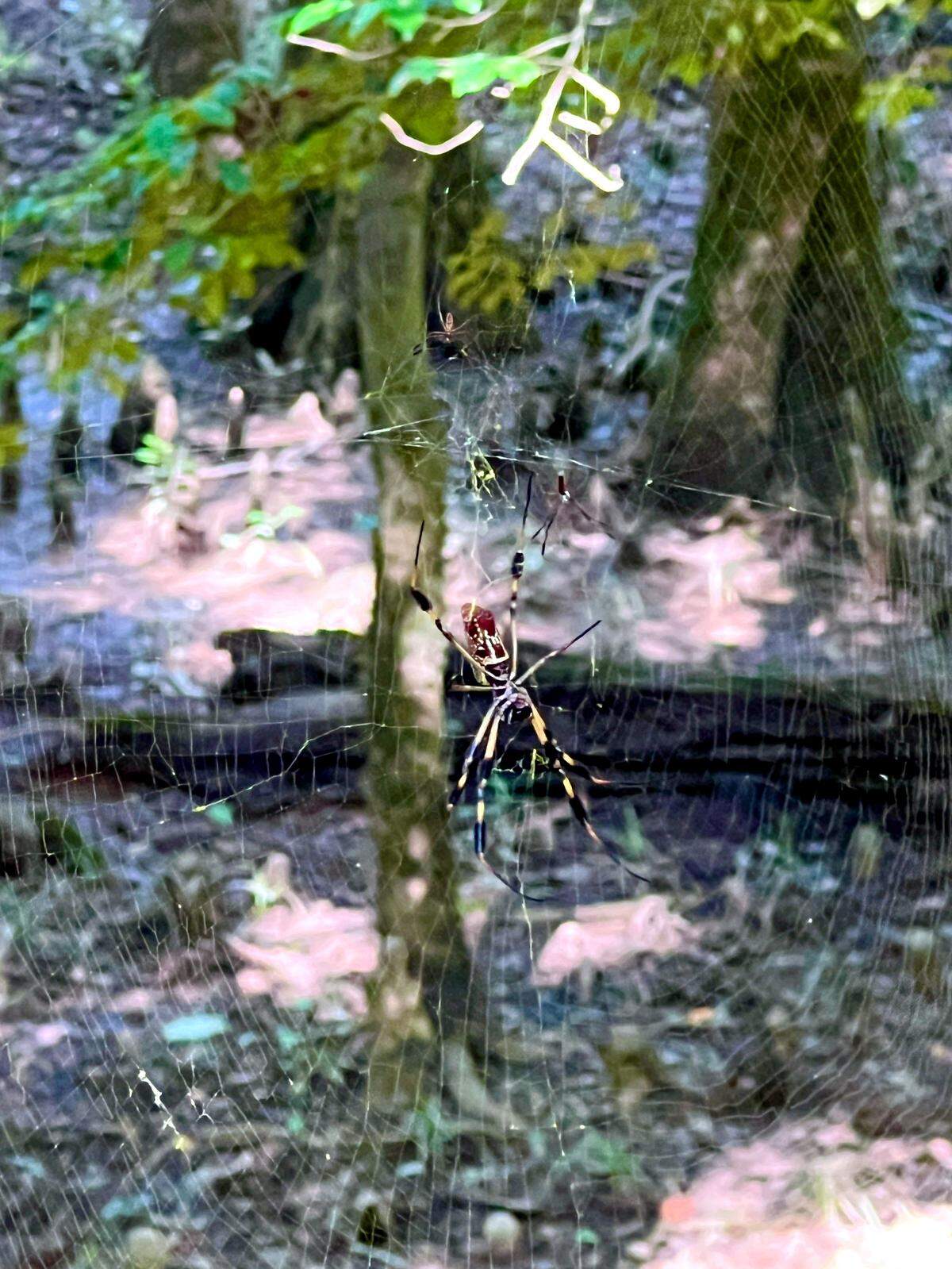
One of the first things you might notice is the plethora of banana spiders and their vast webs, the largest of any spider in the country, embracing the park’s visitor center.
They may alarm children and arachnophobes at first, but their still beauty triumphs. They aren’t aggressive and only give a nuisance bite if threatened.
Other wildlife make themselves right at home. Alligators leisurely swim through the river as hikers pass, visible from a newly built overlook. Snakes rest in the grass away from wandering boots. Owls, especially active in the morning, watch from above.
It’s a peaceful environment accentuated by some of the largest trees in the eastern U.S. Mullikin gathered attendants for a photo in front of the park’s infamous 167-foot loblolly pine. The trees in the park are known as the “Redwoods of the East,” according to SC7.
The park is home to the largest old-growth bottomland hardwood forest in the United States. It’s also known for its synchronous firefly season.
Preserving nature, preserving wildlife
DNR is tasked with protecting natural beauty, and they take the responsibility seriously, Mullikin said.
Nearly 500 pounds of trash were collected during the Day 12 event of this year’s expedition, a litter clean-up on the Saluda Riverwalk overlooking the Congaree River, Mullikin said.
The Congaree hike concluded with a presentation from Sara Green on ways participants can get involved with conservation at home. The executive director of the SC Wildlife Federation highlighted activities such as “plishing” – a combination of fishing and plastic pickup.
Deerchaser said she enjoys cleaning up plastic from the rivers so other kayakers don’t get tangled in the fast-moving water.
Green also highlighted the federation’s backyard wildlife habitat program, which educates people on plants that can be used for food and easy ways to provide shelter and water for animals.
“It’s all about people understanding what they can do,” Mullikin said. “We’re not aspirational, we’re not telling people what they should do.”
A little over 3.5 million of the state’s 20.5 million acres are under conservation, and Mullikin said Gov. McMaster wants to push that to 10 million. Lt. Gov. Pamela Evette, who recently joined the race for governor herself, joined SC7 for the Day 8 trek through Jones Gap State Park in Greenville County.
State Sen. Russell Ott was recognized by Mullikin and state Senate President Thomas Alexander with a True Conservation Hero award after the hike for his agricultural conservation work in the Farm Bureau. A lifelong Calhoun County resident, Ott grew up on his family’s generational farm.
Ott emphasized the importance of conservation efforts amid the population growth South Carolina is seeing. The state’s population climbed from just over 4.6 million to just over 5.1 million between the 2010 and 2020 conductions of the U.S. Census. 2024 estimates have the state’s population nearing 5.5 million.
“Keeping South Carolina, South Carolina … it’s harder to do now than ever before,” Ott said. “Everybody wants to be here … so we’ve got to stay vigilant to make sure that we keep it a special place that we know and love.”