
‘Victims of changes’: Why Columbia public art gets taken down, painted over
Sometimes things go away. Such has been the case in Columbia, which has lost a few notable pieces of public art in recent years.
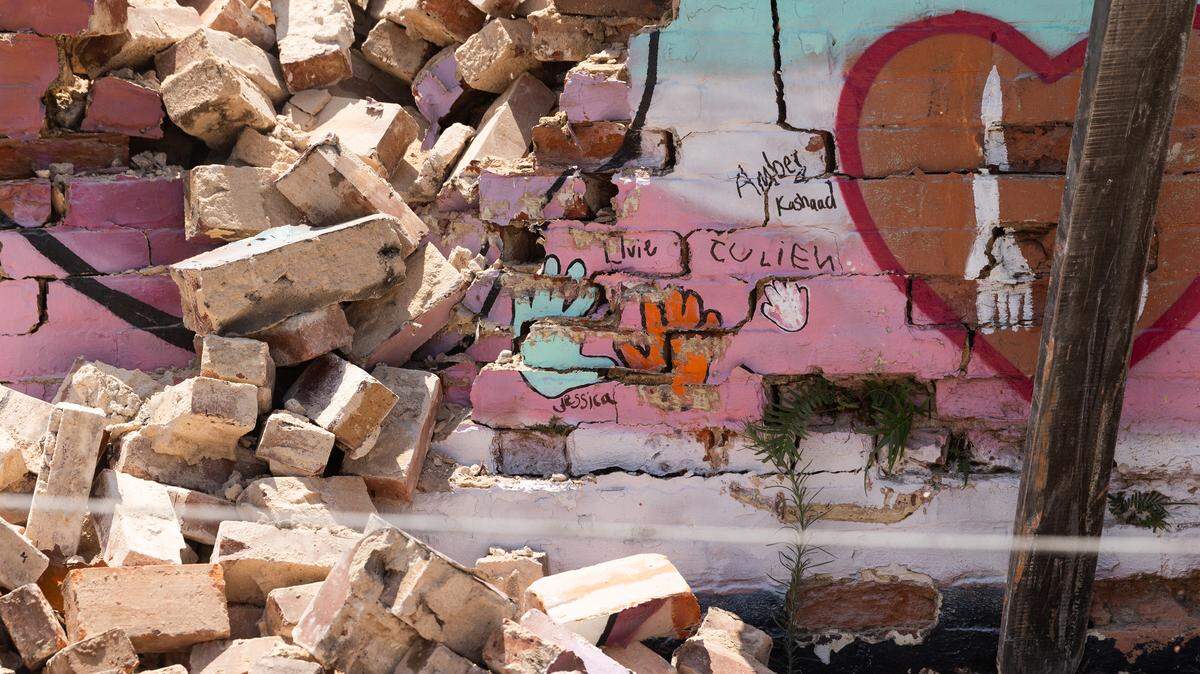
The demolition of the Hunter-Gatherer Brewery and Alehouse building on South Main Street took with it the mural honoring Aaron Graves, a local musician and lead singer of Those Lavender Whales. The building was deconstructed after its acquisition by the University of South Carolina Development Foundation, with hopes of recreating the mural in a new location.
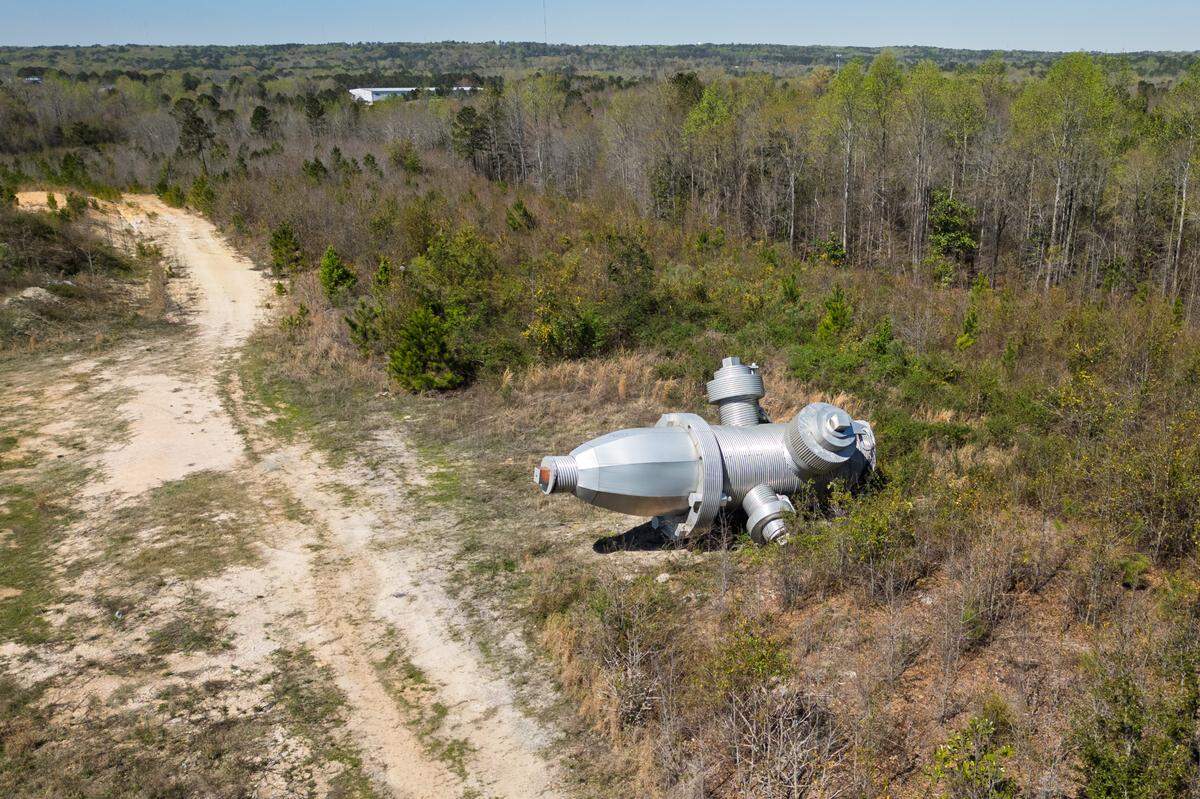
The State found “Busted Plug,” the massive fire hydrant that once stood on Taylor Street, laying on its side in a field earlier this year, two years after it was removed by the city of Columbia at the request of the property owner.
Local artist McClellan Douglas announced the end of his mural “A Southern Affair” in a June Facebook post. The colorful piece wrapped around a building on Rosewood Drive and featured portraits of 13 different locally important people along with other iconic South Carolina elements. It was removed when a new tenant moved into the space.
And there are other examples of public art being changed or seeing its surroundings shift. Ija Charles’ massive Main Street mural commemorating the city’s old Black business district is set to see the parking lot that sits next to it replaced with a pair of new housing towers, restricting the way passersby can view the piece.
What do such losses and absences and moves mean for Columbia, a city that has put an emphasis on expanding the public art giving vibrancy and identity to its neighborhoods? And how do artists who make them process the inherently transient nature of outdoor works that exist at the whims of changing property owners and the unyielding elements?
Preservation is good, but turnover is natural
Public artworks have a natural life span, according to Pamela Zeljak, the public arts administrator at One Columbia for Arts and Culture, a city-backed arts booster described by the mayor as Columbia’s “public art quarterback.”
Though not an official arm of the city, One Columbia gets funding from the city’s hospitality tax coffers and advises the city on the placement and commissioning of public art, connecting local artists with available resources.
Murals tend to last 10 to 20 years, depending on the quality of their upkeep, Zeljak said, and powder-coated sculptures need their coating replaced every 15 to 20 years.
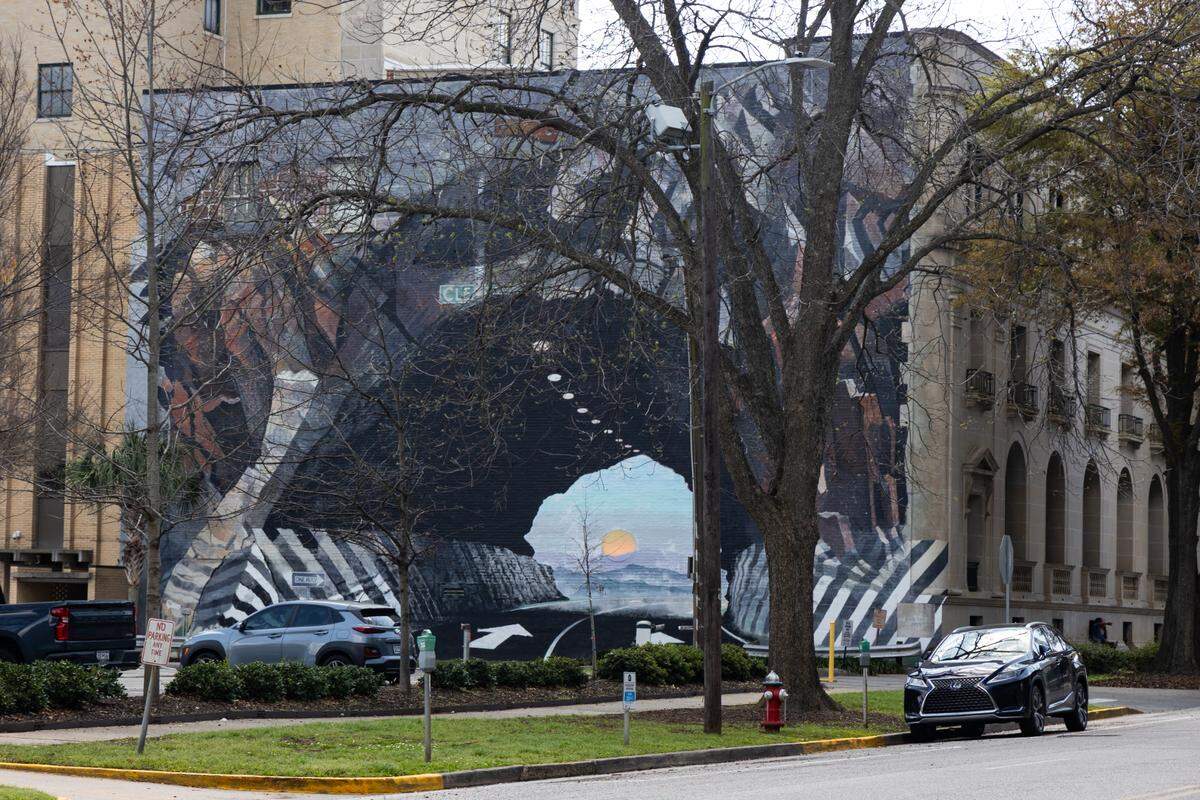
Rigorous maintenance can extend these ranges. Blue Sky’s “Tunnelvision,” a well-known mural that once shared a parking lot with “Busted Plug” and depicts a hole in its wall leading to a brilliant sunset, is approaching its 50th anniversary, having been completely repainted several times.
“These murals, even when I’m using the very best materials and special burnishes and ultra-violet inhibitors and all that, they fade,” Blue Sky said. “So there’s a natural turnover. There’s a lifespan. … ‘Tunnelvision’ would have been gone, nothing there by now, if I’d left it.”
Indeed, not all public art works last, and sometimes that’s OK, Zeljak said.
“Turnover is not always bad. It gives us an opportunity to do something new,” she offered. “Maybe that person who just bought the building doesn’t want that mural for whatever reason, but maybe they would be in favor of doing something different.”
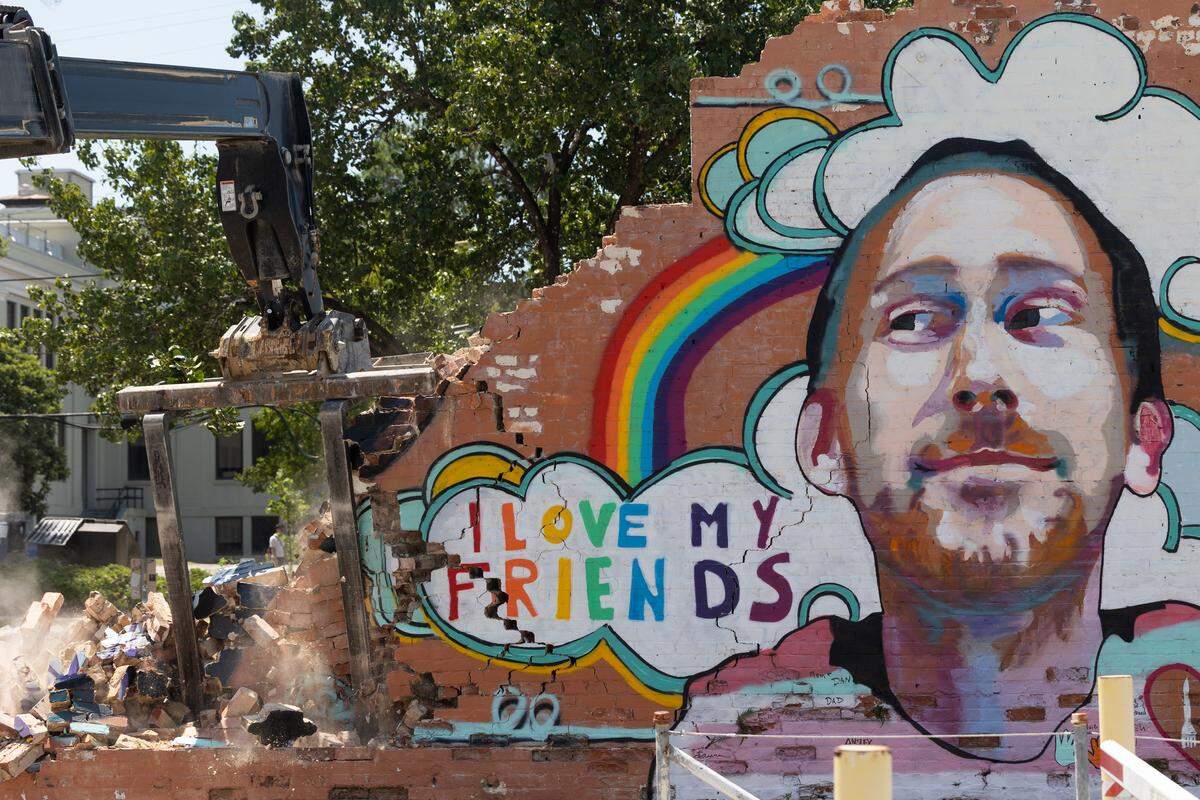
Lauren Andreu, the artist behind the mural of Aaron Graves, was sad to see a representation of someone she and others in the community loved coming down, she said. Those considering removing public art should be mindful that it can become part of a city’s identity, she added.
“Turnover, of course, is expected as a city changes and grows,” Andreu said. “But public art does become a part of the, I would say, personality of a city, and the murals and artwork or sculptures become almost landmarks.”
Lee Snelgrove, the former executive director of One Columbia and current arts and culture manager at the Richland Library, said public art can act as a physical representation of the creative talent, extending beyond the mediums used in public projects.
“Columbia has a lot of talented artists,” Snelgrove said. “Many of those artists are performers, musicians. People aren’t seeing their stuff up on the walls. They’re more ephemeral in their performances. But when somebody rolls into town from another place, they will see public art, and they’ll say, ‘This is a creative place,’ and they’ll know that there are going to be lots of artists of all types in that place.”
It’s often a matter of ownership
“Busted Plug,” “A Southern Affair” and the Aaron Graves mural all came down as a result of property changing hands. There isn’t much anyone can do to prevent a property owner from removing an art piece if they want it gone.
Zeljak said One Columbia encourages muralists to enter agreements with property owners to keep their work up for a certain amount of years, but once that property changes hands, there’s no guarantee that the artwork will remain there.
A city could also potentially reach an agreement for an easement with a property owner to gain more control over the fate of the art, but owners are reluctant to enter these agreements because the restrictions could complicate future sales of the property, Snelgrove said.
“It does often rely a lot on trust and discussions upfront and setting expectations,” Snelgrove said. “It’s obviously never going to be perfect because no public art is fully permanent.”
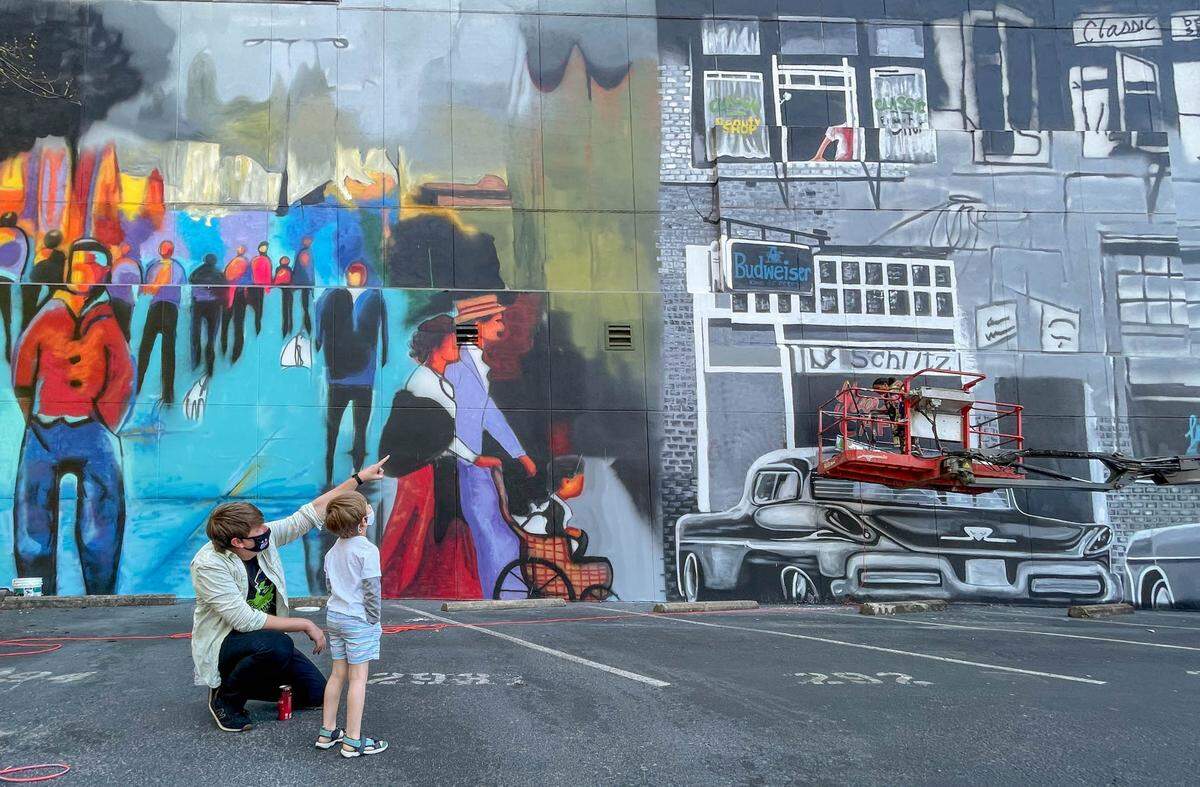
While he lamented the loss of “A Southern Affair” in his Facebook post, Douglas acknowledged that it’s the kind of business decision that artists go into such projects knowing is possible.
“The owner of the building owns the mural,” he posted. “As bad as it hurts to watch them paint over my grandfather’s face, this is a part of life. I, like all artists, hope deep down that some [of] my works will last far beyond my time on this earth but most important is that I’m enjoying my life right now. I’m very proud that I got to display my grandfather’s face in the neighborhood he grew up in.”
Douglas couldn’t be reached for further comment.
Snelgrove said an important role of One Columbia is educating property owners and developers of the value of public art.
“I think there’s some education for artists too about what public art is and what its purpose is, so that everybody can kind of learn together how we might protect things, how we might make things that are lasting, how we might make art that is important to people and therefore it does last, because it is important,” he reasoned.
“That’s not to say that the things we’ve lost recently weren’t important,” he added. “They were victims of changes that weren’t always in everyone’s control. But you would hope that when they were set up with that property owner, there was some expectation of what the lifespan was and what you hope to get out of it.”
This story was originally published August 15, 2025 at 5:00 AM.