
Growth in Lexington County can mean clear-cutting old woods. What are the rules?
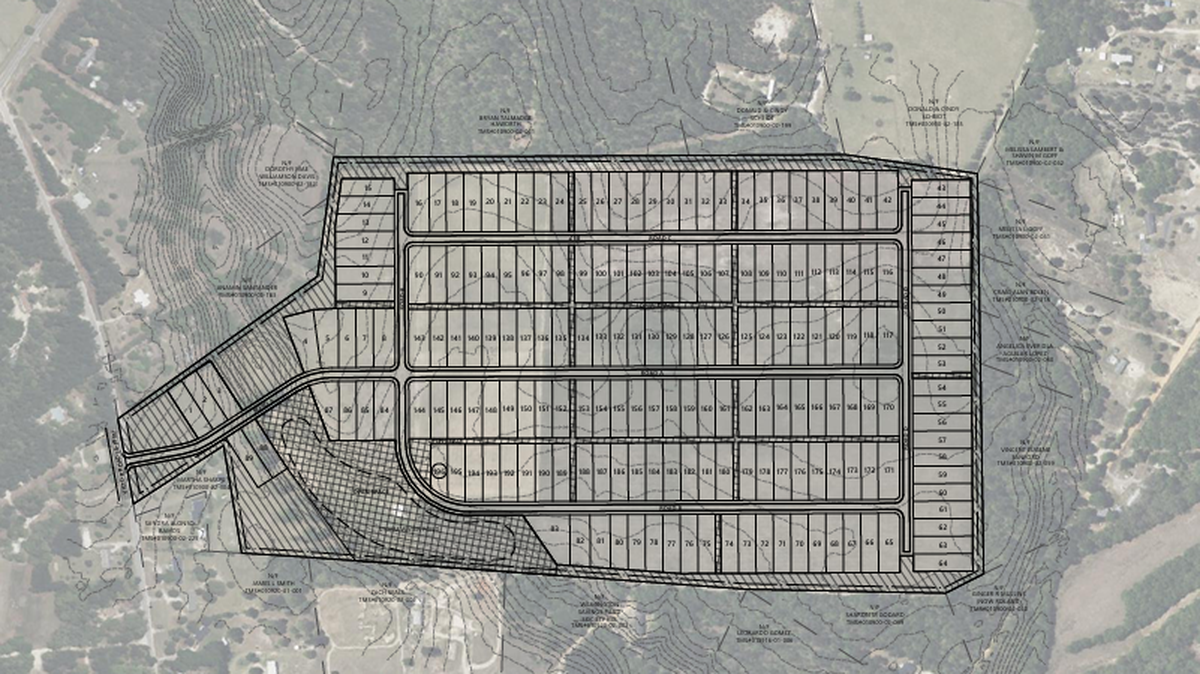
Growth is a constant in Lexington County today, with the frequent development of big new housing tracts often being a cause of concern in rural areas.
Part of neighbors’ worries revolves around the loss of what, for as long as anyone can remember, were wooded areas that form a key part of the landscape.
With development spilling out into more rural areas, where large tracts of undeveloped land are more plentiful, what rules are in place around tree-cutting in Lexington County?
The county adopted a specific ordinance regulating landscaping and open space last year to balance the need for forest maintenance with the county’s bursting development needs.
“Timber harvesting is recognized as a practice beneficial to individual property owners, and also to the local economy,” the county’s ordinance on landscaping and open space says in opening its clear-cutting section. “However, trees are also recognized as playing a key role in the quality of the economic and environmental future of the County.”
But the ordinance sets rules for clear-cutting trees in order to open ways for new development.
When can you clear-cut trees in Lexington County?
“Clearcutting associated with development may occur only after the provisions of this Ordinance have been met for the proposed development,” the ordinance says.
To meet those standards, a developer would typically need to submit a plan to the county’s landscape administrator for review and approval. For forest management, the same rules apply to “the final harvest without plans for future sustainable forest management activities.”
“(If) the intent is to develop the property or market the property for development, the harvest must be reviewed by the Landscape Administrator to ensure there is no loss of essential water quality protection, beneficial trophy tree preservation, or vegetation along designated Scenic Corridors,” the ordinance said, “to ensure the activity does not cause irreplaceable damage to the long-term benefits to the County or the property owner.”
Protecting water quality is a concern, because stormwater runoff from a clear-cut construction site can be a major concern, especially when development runs up to the shores of Lake Murray or another water source.
But those in the building industry say clear-cutting allows for better management of runoff issues long-term.
“By moving to a mass-grading/clear-cutting approach — where the site is cleared and graded in a comprehensive, engineered manner — developers are able to deliver a more consistent and reliable finished product,” Emily Martin, government affairs director for the Building Industry Association of Central South Carolina, a trade group, said in a statement. “This method allows developers to precisely manage stormwater, reduce future drainage issues for homeowners, and ensure the long-term performance of the community’s infrastructure.”
‘The only way to install everything safely and correctly’
Developers are not unaware that cutting down trees can affect surrounding communities and irk homebuyers’ future neighbors.
“We understand that seeing a cleared lot can raise questions, and that’s completely fair,” said Mark Nix, executive director of the Home Builders Association of South Carolina. “But with today’s complex stormwater rules, tree-protection zones, and infrastructure needs, starting with a clean site is often the only way to install everything safely and correctly.”
Often, too many trees can simply stand in the way of large-scale construction building whole new neighborhoods, and removing them is unavoidable, he said.
“Trying to build around existing trees usually damages their root systems and can create long-term hazards,” Nix said. “By clearing first and then replanting with native species suited to South Carolina’s climate, builders create a healthier, more sustainable tree canopy that will thrive for the next 50 to 100 years and give the neighborhood a landscape that matures beautifully over time.”
Forestland is exempt from Lexington County’s ordinance if it is being used to harvest timber, as long as the property is taxed as forestland and has a forest management plan; has a recognized forest certificate or conservation easement; or is managed and harvested under best practices of the state forestry commission.
But protections around development still apply even for timber forests. If 80% or more of existing trees are removed, the property cannot be permitted for regular development for the next 60 months, the ordinance says. If trees and a buffer area are protected during the harvest, however, permitting for development can move forward.
Developments on a county-defined “scenic corridor” will require a buffer between the development and the road, including at least one canopy tree, two understory trees and three medium shrubs per every 200 square feet of buffer area.
“Larger tree planting sizes, not to exceed 6-inch caliper, will be required for such re-vegetation plans,” the ordinance says, and no more than 10% “non-native species” is allowed. “Plantings must be evenly distributed throughout the designated buffer area and single row, linear-type plantings are not permissible.”
.jpg)