Some in this Lower Richland community want it to become a town. Can it happen?
The South Carolina community of Hopkins in Lower Richland has for centuries been a place all its own: mostly Black, mostly homeowners, tight-knit and deeply historic.
But despite carrying a proud identity touting Black and Civil War history and serving as a gateway to Congaree National Park, the rural community of about 2,500 people about 15 miles from downtown Columbia doesn’t have the authority to govern itself. It’s not a city or a town, but a census-designated place governed by Richland County. That has left at least some in the small community worried about the fate of Hopkins as Columbia continues to grow southeast.
“Hopkins is being squeezed out,” said Rev. John Middleton, a local historian and minister at the New Light Beulah Baptist Church in Hopkins, who is a lead driver in trying to see the community become an official municipality.
Middleton said he thinks establishing Hopkins as a town would give residents the ability to chart their own future better than if they remain unincorporated.
But can Hopkins actually become a municipality? A judge in 1977 said no. Hopkins has waded into these waters before, even electing a mayor and council members before a judge ultimately voided Hopkins incorporation citing a state law that prohibits communities from incorporating if they are within five miles of another municipality’s border.
In order for this renewed effort to have any chance, Middleton said he will also need support from state lawmakers and a possible change in state law.
Can a storied Richland County community become a real town?
The area of Hopkins represents deep history in Richland County – first named for a slave plantation owner in the 1700s, then later for a railroad turnout that was installed in the early 1800s. It became a safe place for freed slaves looking to buy land after the Civil War, and today is connected by a tapestry of churches, farm land and small businesses. Below it rest the vast swamps of Congaree National Park.
Incorporation would partly help Hopkins better leverage its proximity to the park, and it would also help preserve the community’s long and particular history, Middleton hopes.
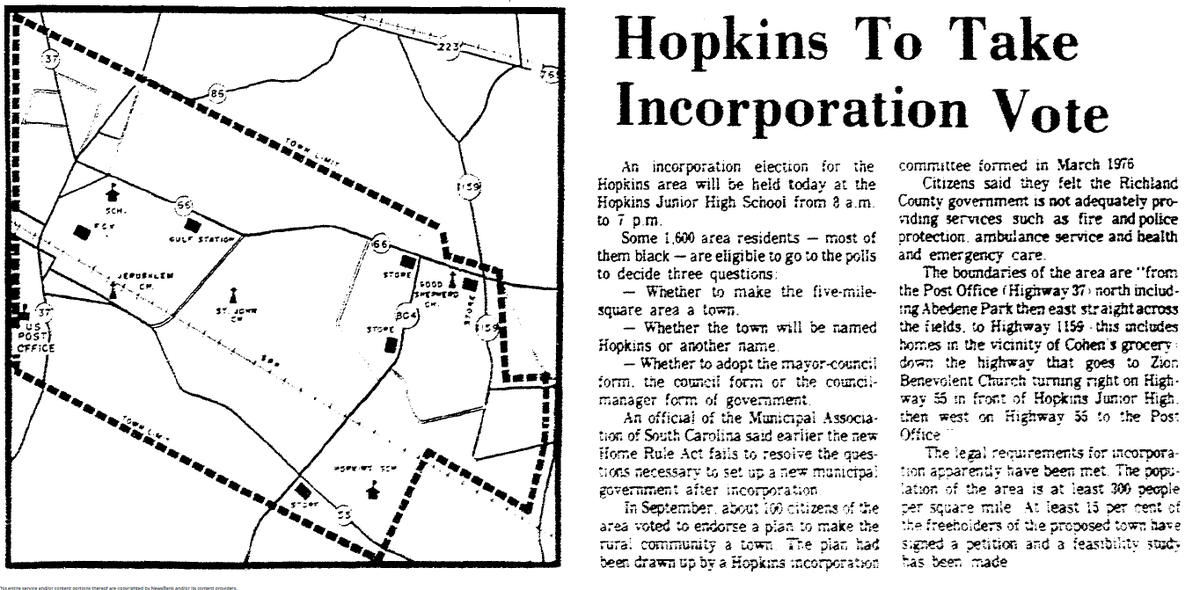
For Hopkins residents to even be able to vote on the issue of incorporation, it has to meet several requirements set by state law. This includes having a population density of at least 300 people per square mile based on the most recent census, completing a study on how the town would provide or contract for municipal services, and providing plans for how the town would offer things like local police, code enforcement, water and sewer, or other local services.
Hopkins remains marked by the 1977 case in which their vote to incorporate was struck down by the courts because the boundary of Hopkins would fall within five miles of the city of Columbia boundary.
“I think personally that the state laws are very antiquated when it comes to annexation and incorporation,” Middleton said, adding that the ruling is almost 50 years old. “It’s probably time for it to be reconsidered again.”
Middleton added that he is still in the early phases of putting feelers out and beginning conversations amongst other residents, but he said it is his intention to organize a vote on the matter in the future. He couldn’t say how long it might be before that election takes place, as there is a laundry list of requirements Hopkins would still have to meet to hold the vote, regardless of the five-mile rule.
It will also cost Hopkins money to conduct the needed studies on population density, boundaries and providing services, and to pay the $300 incorporation fee levied by the state for areas of Hopkins’ size. Exactly how much the effort costs will largely depend on how Hopkins resident approach the process, explained Charlie Barrineau, field services manager for the Municipal Association of South Carolina.
How much an area spends on incorporation is always case-by-case, Barrineau said. Some communities hire consultants, or suffer extended legal challenges. That all adds up. Typically, private money is also raised for the effort. In some cases, that has meant tens of thousands of dollars, he said.
Right now, there are 6 to 10 communities in South Carolina that are having the conversation about incorporation, Barrineau said. The one link between all of those communities is growth in the communities and at their peripheries, he said.
The last community to successfully incorporate in South Carolina was Van Wyck, near Rock Hill, in 2017. Other examples include James Island in Charleston County, which incorporated in 2012 and remains incorporated despite legal challenges including from the city of Charleston. Just before Hopkins voted in 1977 to incorporate, North Charleston in 1972 successfully incorporated, and also faced a protracted legal battle over the matter.
Another coastal community, the Waccamaw Neck region, is also in the process of incorporating, along with a handful of other communities across South Carolina, Barrineua said.
Hopkins tried to become a town in 1977, and failed
Hopkins was close, once, to establishing itself as its own town with its own government and charter. Of Hopkins’ roughly 1,600 registered voters in 1977, just over 200 voted on the issue: approving incorporation 142 to 92. They even elected a mayor and four council members to lead the new town.
But Mayor-elect Clemon Stocker, and would-be council members Lillie Bates, Rev. William Henderson, Willie Gilyard and Martha Johnson lost those seats when a judge voided the incorporation vote. Residents in favor of incorporation then tried to appeal to the state supreme court, but were unsuccessful.
Through that effort, advocates for incorporation said Richland County wasn’t adequately providing for the Hopkins community in areas like public safety and community health. Middleton said today, he is happy with some of what Richland County can provide, but he wants to see the community better resourced to provide for itself.
Among his ideas for how incorporating Hopkins can boost economic development in the area is better leveraging the community’s position as the front door to Congaree National Park.
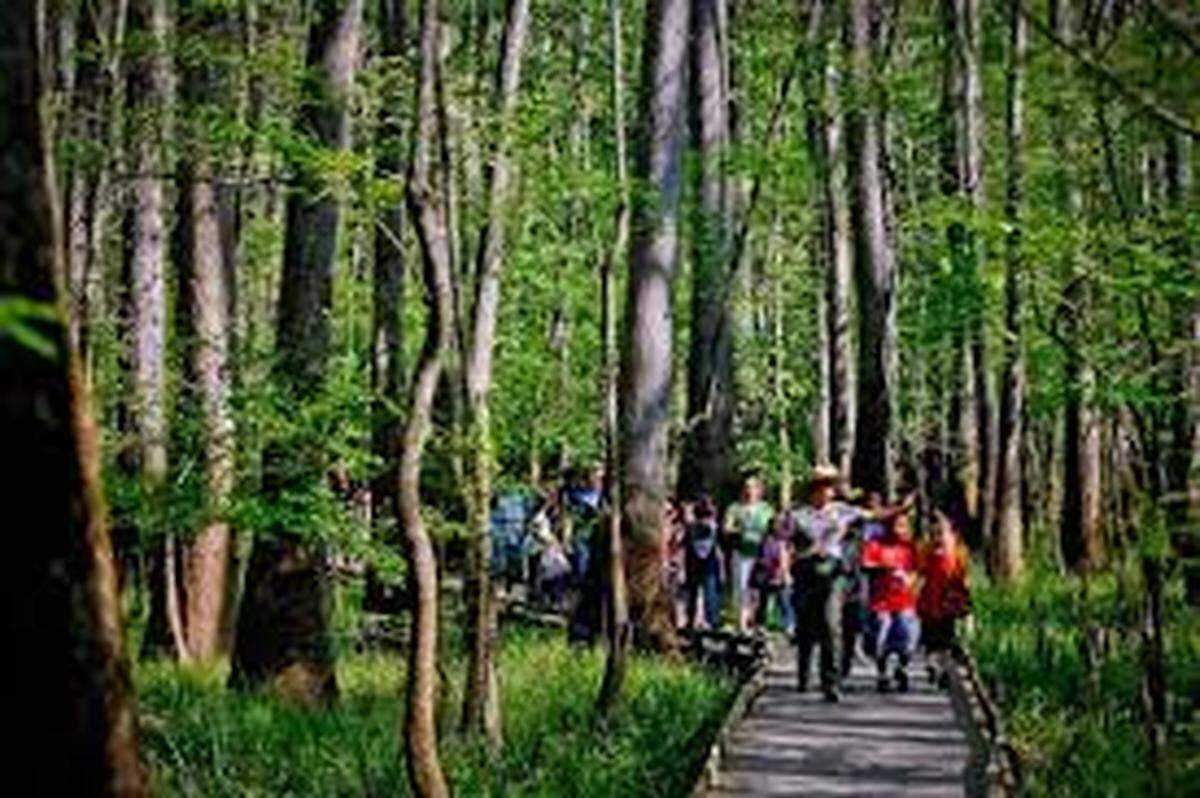
One idea he is pushing includes asking area churches and businesses to help develop a site for a Quick Trip convenience store and gas station, and possibly other offerings, just north of the national park. That is only an idea at this stage.
“The concept here is that the area around the Clarkson road and the Bluff Road area could be developed,” Middleton said, both to serve Lower Richland residents and park visitors. He said he believes development opportunities like what he is pitching could help provide revenue for the town, “without excessive taxes being places upon the citizens.”
Middleton said he expects to host community meetings in coming months to get a better idea of what others in Hopkins think about the effort, to build support and to answer community questions.
This story was originally published December 8, 2025 at 8:41 AM.