A Columbia church advertised financial help. Then dozens were turned away. Why?
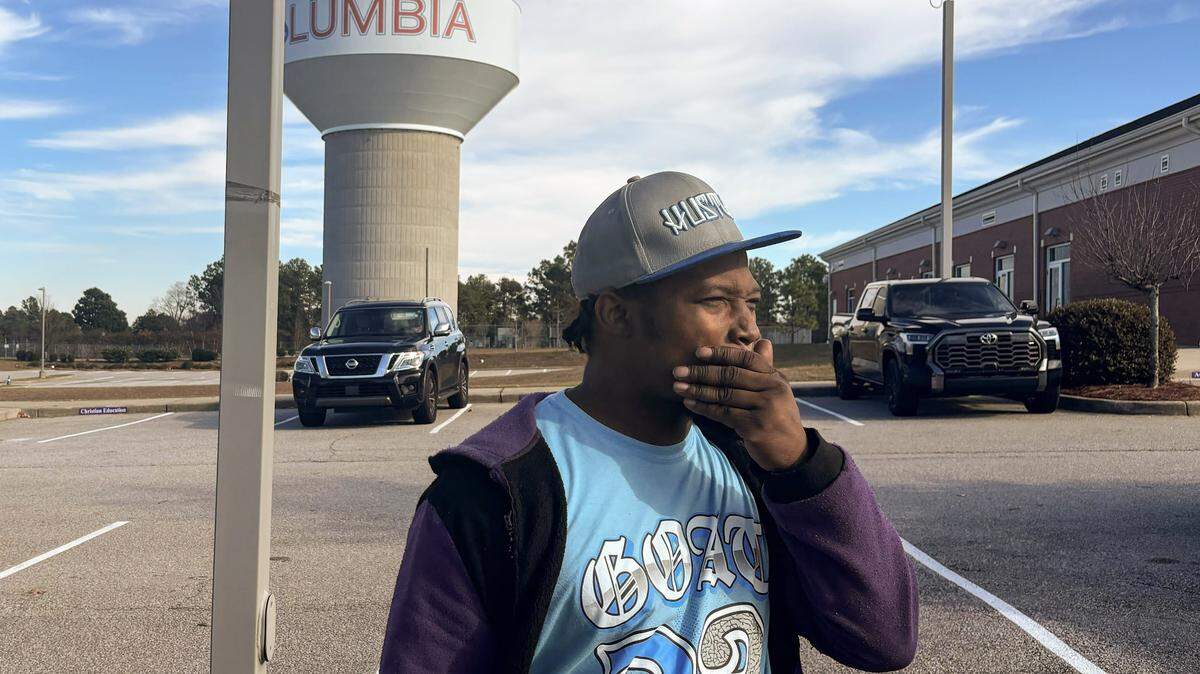
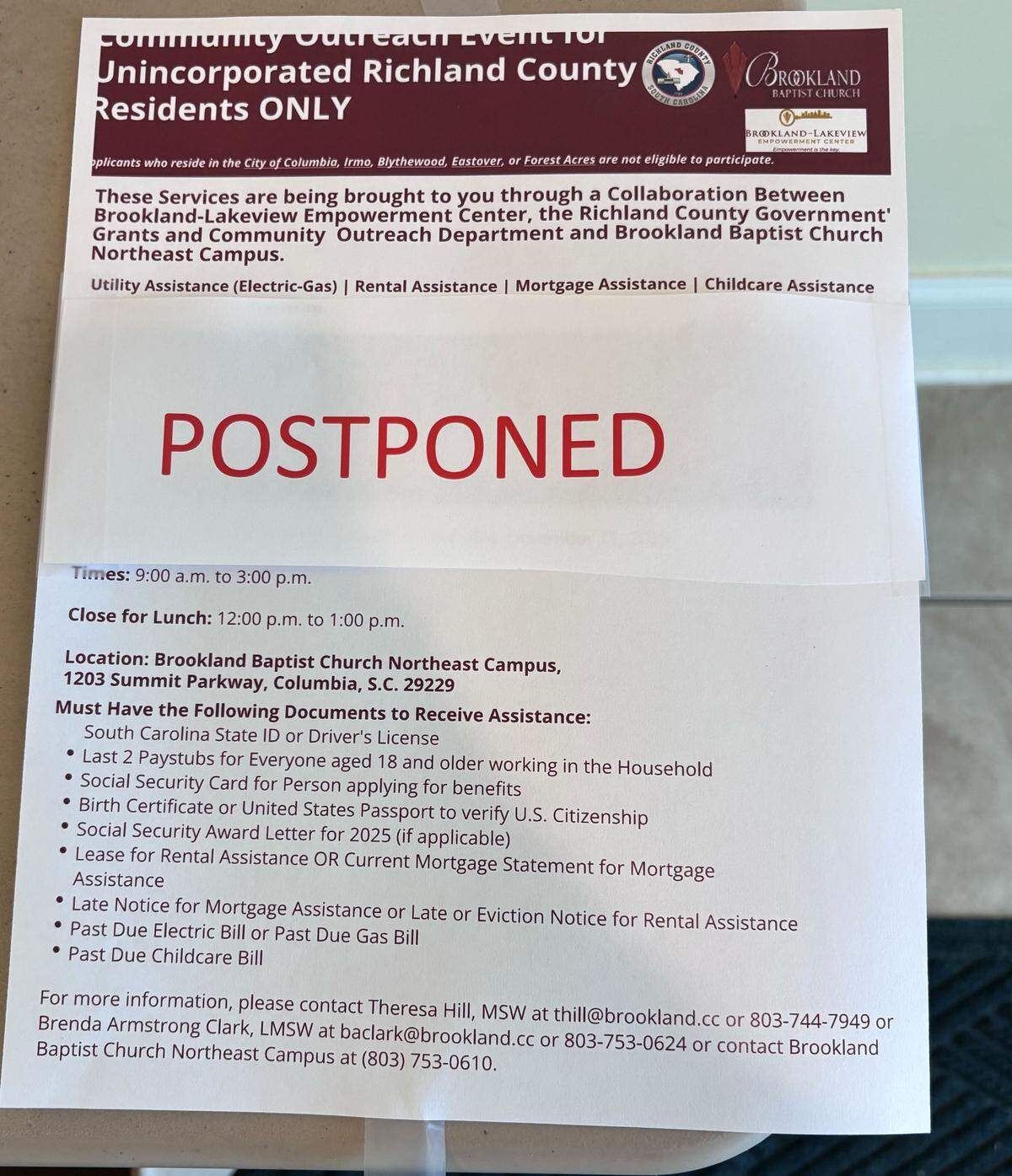
Residents in unincorporated Richland County were promised an opportunity to get help paying for rent, utilities, childcare and other expenses during a special outreach event Dec. 10 and 11 at Brookland Baptist Northeast church.
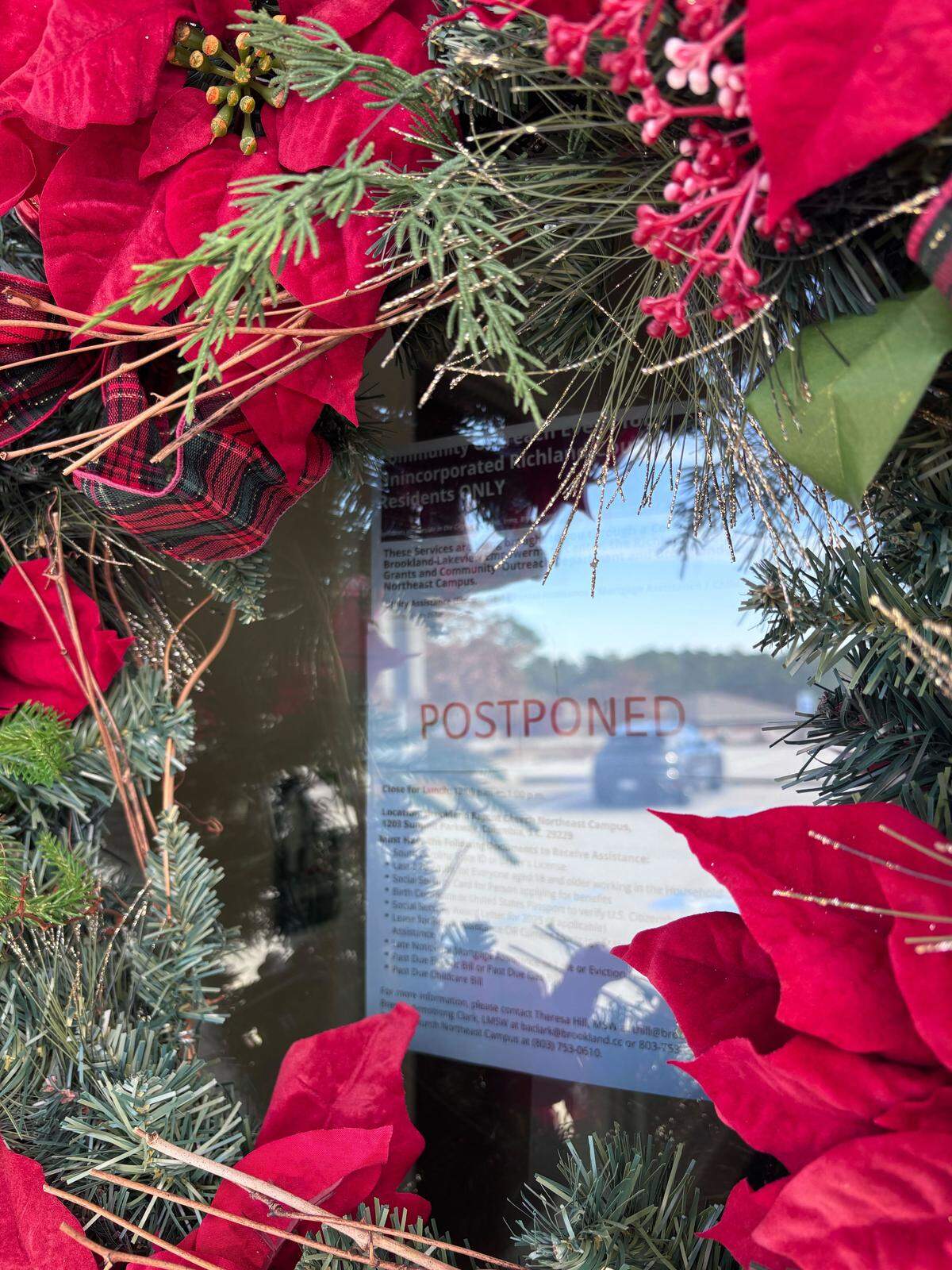
But just days before it was meant to take place, the event was canceled and dozens who showed up Wednesday were turned away.
Why? Because for the first time this year Richland County is being mandated by the federal government to verify the immigration and citizenship status of every person who receives assistance through the federal Community Development Block Grant program – the grant intended to pay for the financial assistance event that has for now been postponed.
To accomplish that verification, the county must use a system called SAVE, run by the U.S. Citizenship and Immigration Services of the U.S. Department of Homeland Security.
“The delay in gaining access to SAVE, training county staff, and performing verification on individuals will unfortunately impact the timing of certain grant-funded public service activities,” said Keywa Henderson, Richland County’s public information officer, in an email to The State.
The U.S. Department of Housing and Urban Development issued the new federal guidelines Nov. 26.
The event Wednesday was supposed to be the result of a partnership between the Brookland Baptist Northeast church, the Brookland-Lakeview Empowerment Center and Richland County. More than $53,000 in federal dollars had been directed to the financial assistance program.
But now, all the community organizations that have been promised that federal money will have to wait until the county is able to meet the new federal requirements.
“We recognize the extraordinary needs of our low and moderate-income community, and know that this delay in funding is disheartening,” Henderson said.
Dozens seeking help were turned away Wednesday
A piece of paper announcing the event at the church had been postponed sat hidden behind a Christmas wreath on the building’s front entrance Wednesday. The church also posted a notice online Dec. 5 and Dec. 9.
But not everyone got the memo. Dozens of people showed up to the church Wednesday looking for financial help. By just after 1 p.m., more than 40 people had been turned away after leaving their contact information on a yellow legal pad at a table by the front door.
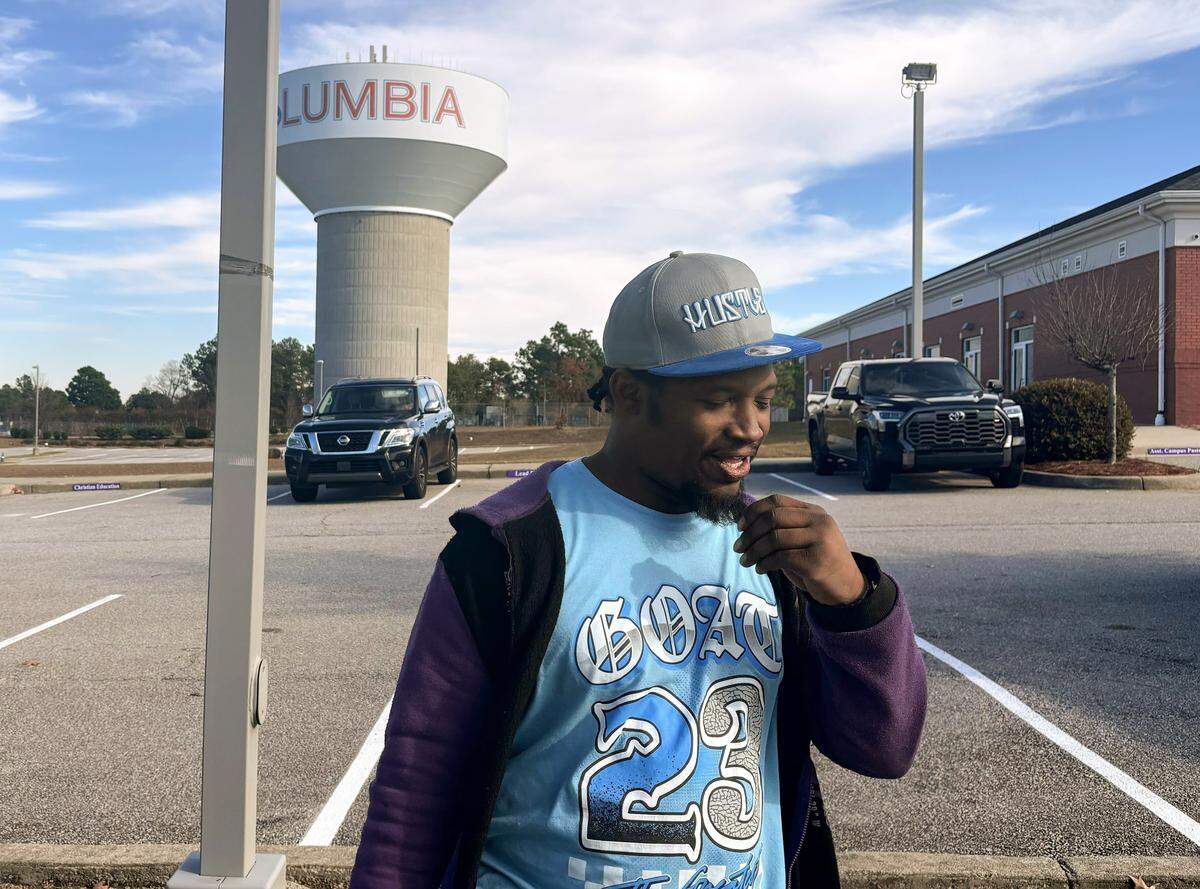
Among those disappointed by the event’s cancellation was Columbia garbage collector Teddy Williams Jr.
Williams, who turns 35 in two weeks, just wanted to catch a break, he said, shifting his weight and squinting into the sun. He saw an advertisement for the outreach event online and hoped to get at least something to help him pay rent.
“I have to think of something else now,” he said.
In June, the Brookland Center of Community Economic Change, also known as the Brookland-Lakeview Empowerment Center, received an email from Richland County stating that the agency had been recommended to receive $53,399 to support residents in the unincorporated areas of the county.
“This funding will support low-to-moderate income individuals in unincorporated Richland County in gaining financial literacy and achieving long-term self-sufficiency,” read that email, shared on the church’s Facebook page Wednesday alongside a message from the church apologizing to those who had hoped to benefit from some of that money.
The event was always going to be limited. Up to 25 families could be served per day, over the two-day event, meant to last from 9 a.m. to 3 p.m. Wednesday and Thursday. For now, it'’ been postponed indefinitely.
“We apologize that a grant we were supposed to receive in the amount of $53,000 to assist families with mortgages, rent and home utilities has been suspended by the federal government until further notice,” the Brookland Baptist Northeast church wrote on Facebook Wednesday. “While this suspension is beyond our control, our commitment and our promise remain the same: we will continue working to help families in need. We ask for your patience as we navigate this setback and do everything possible to make this right for our community.”
Henderson said that once the county is finished with the verification process, and the federal government clears the money, Richland County will update the entities that were set to get those dollars. She did not say how long that process might take.
Making ends meet in Columbia gets harder
Williams is still shuffling his feet, moving from side to side, fidgeting some.
Rent keeps going up, and without the help from the cancelled program, he’s thinking about what he’s going to do next.
A single bedroom apartment in the Columbia area averages between $1,200 and over $1,800 per month depending on the neighborhood. That’s a lot of money to spend “on something that’s never gonna be yours from the jump,” Williams said.
It used to be that a person would rent an apartment to save money for a house. Now, he said, it feels like both renting and owning are beyond reach.
And it’s not just rent. It’s gas. It’s living expenses. It is having a little bit of spending money at the end of the month. Making ends meet has gotten harder.
“You can’t even – it’s just hard. Trying to pay rent. Trying to do everything,” he said.
To make a living wage in the Columbia area, a single person without children needs to make over $21 an hour. For a family of four, that rises to almost $39 an hour, according to a living wage calculator created by the Massachusetts Institute of Technology.
Statewide, a person making minimum wage – $7.25 an hour – has to work 125 hours a week to afford “a modest” one-bedroom rental at fair market rent, according to the National Low Income Housing Coalition.
Williams said he recently started a job with Columbia’s solid waste division, riding on the garbage trucks and collecting trash. He likes the job – he likes people, and he sees a lot of them travelling house to house. He said he makes between $13 and $15 an hour.
The State has contacted the Brookland-Lakeview Empowerment Center for more information about the assistance program, but did not hear back by deadline.
This story was originally published December 11, 2025 at 5:30 AM.