Lawsuit between two Midlands cities has cost taxpayers more than $1M since 2023
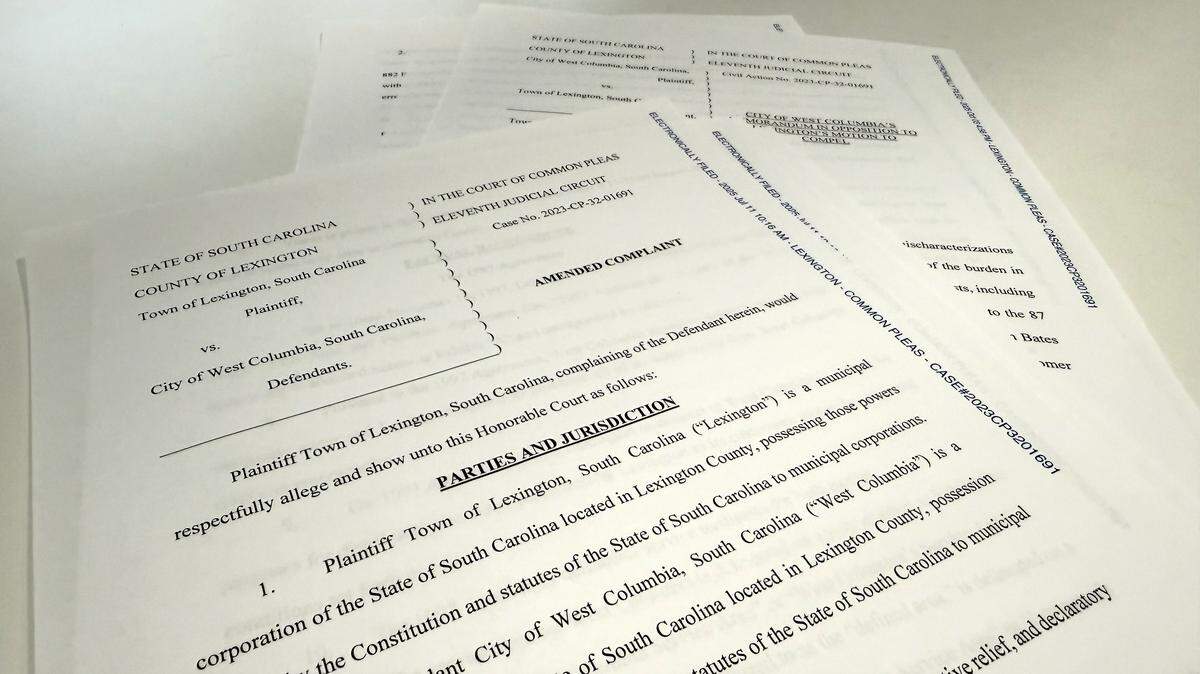
A lawsuit that’s dragged on for nearly a decade between the City of West Columbia and the Town of Lexington has cost Midlands taxpayers more than $1.3 million in attorney’s fees.
The litigation, over which municipality gets to service a handful of water customers, began in 2018. Since the case was reopened in 2023, West Columbia has dropped more than $1 million in attorney fees and Lexington nearly $400,000.
The costs were first made publicly available after The State filed a request under the Freedom of Information Act for invoices of legal fees related to the 2023 case.
Both municipalities stand to lose out on revenue and potential water customers, they’ve said in court filings, all as new developments, requiring water service, crop up across Lexington County. In the last two decades, the county has added some 100,000 people to its population.
“This is an issue that, until it’s resolved, it’s going to keep popping up because it’s a disputed service area between two [towns] that are in the water and sewer business together,” West Columbia Mayor Tem Miles told The State. “We’re trying to reach resolution on an issue that, until it’s resolved one way or the other, will continue to create issues.”
The lawsuit is scheduled for a two-week trial in March.
What’s at stake?
The feud over water service is a decades-old one, and it’s not the first time the municipalities have gone to court over the issue. A disagreement over who could serve water customers in the ‘90s led to a lawsuit between the two, according to a May 2025 legal filing. Eventually the municipalities came to an agreement outlined in a 1997 contract.
That contract was re-upped in 2007. The way West Columbia understood it, some of the same water service areas outlined in the 1997 contract carried over. The way Lexington saw it, new customers that came after that ‘97 contract were supposed to be theirs. What’s followed has been a complicated, drawn-out civil case that has been deemed a “complex case” by the courts.
Both West Columbia and Lexington have contended in legal filings that the loss of water customers has, or could, impact their bottom lines. In a legal filing from West Columbia, a study, conducted by an independent firm hired by the city, found that it lost out on around $2.3 million in revenue between 1998 and 2025.
Lexington has argued that West Columbia has been providing water to customers that were added after the 1997 contract was signed. Between 1998 and 2007, the city “added at least 87 customers within this area without authority or consent,” former assistant town administrator Stuart Ford said in a written affidavit filed in May of last year. The town believed that West Columbia had added more customers since 2007, but said the exact number was not known, it said in legal filings. It’s unclear how much revenue the town could’ve generated from those accounts.
When reached with questions about the ramifications of the suit and the water service areas for West Columbia, Anna Huffman, the city spokesperson, declined to answer, citing pending litigation.
Rachelle Gleaton, the town administrator for Lexington, also declined to answer questions, saying instead that the town would “continue to speak through our court filings.”
How much has been spent?
The City of West Columbia initially filed a suit against the town of Lexington in March 2018, arguing that Lexington was breaching an existing contract that regulated which municipality was allowed to serve water customers in certain areas.
West Columbia claimed, in that initial lawsuit, Lexington was serving water customers that were meant to be West Columbia’s and sought to recoup revenue from the town. The city of West Columbia first became aware of the issue in 2016, according to legal filings and subsequently filed the lawsuit in 2018.
When questioned about whether West Columbia officials took any action to remedy the situation with Lexington prior to filing the formal lawsuit, Huffman, the West Columbia spokesperson, declined to answer, citing pending litigation.
Both municipalities retained prominent law firms to deal with the case. Since 2023, West Columbia has paid $1,032,000 to Womble Bond Dickinson, a firm with more than two dozen locations across the United States and nine in the United Kingdom. That includes a January 2026 payment of $252,000, at least three payments of more than $75,000 each and two individual payments that topped $100,000.
Lexington initially retained Maynard Nexsen to deal with the case in 2018. The town kept the large firm, which has nearly 30 locations across the country, as its legal counsel until January 2025 when it instead hired Parker Poe, a firm with eight locations across the southeast.
The three main attorneys representing Lexington in the lawsuit make anywhere from $450 to $625 an hour for their work on the case, a Jan. 8, 2025 engagement letter from the law firm to the town showed.
In total, between the two firms, the town has spent $388,250 on the 2023 suit.
It’s unclear how that’s divided among the two firms. The State requested “all invoices or proof of payments” made to attorneys at either law firm related to the case under the Freedom of Information Act, a state law that guarantees citizens have the right to access public documents.
Officials for the town of Lexington told a reporter with The State newspaper that providing the documents requested would be a “time-consuming process.” In South Carolina, public bodies are allowed to charge a fee for the time it takes to search and redact requested records. The town instead offered to provide the total amount of money spent on the suit at no cost to The State newspaper.
The same request filed by the newspaper with the City of West Columbia yielded a list of payments made to Womble Bond Dickinson law firm. That document was provided to The State free of charge and a week before the state-imposed deadline to provide the materials.