Columbia to spend $160k+ on ‘homelessness’ consultant despite earlier task force
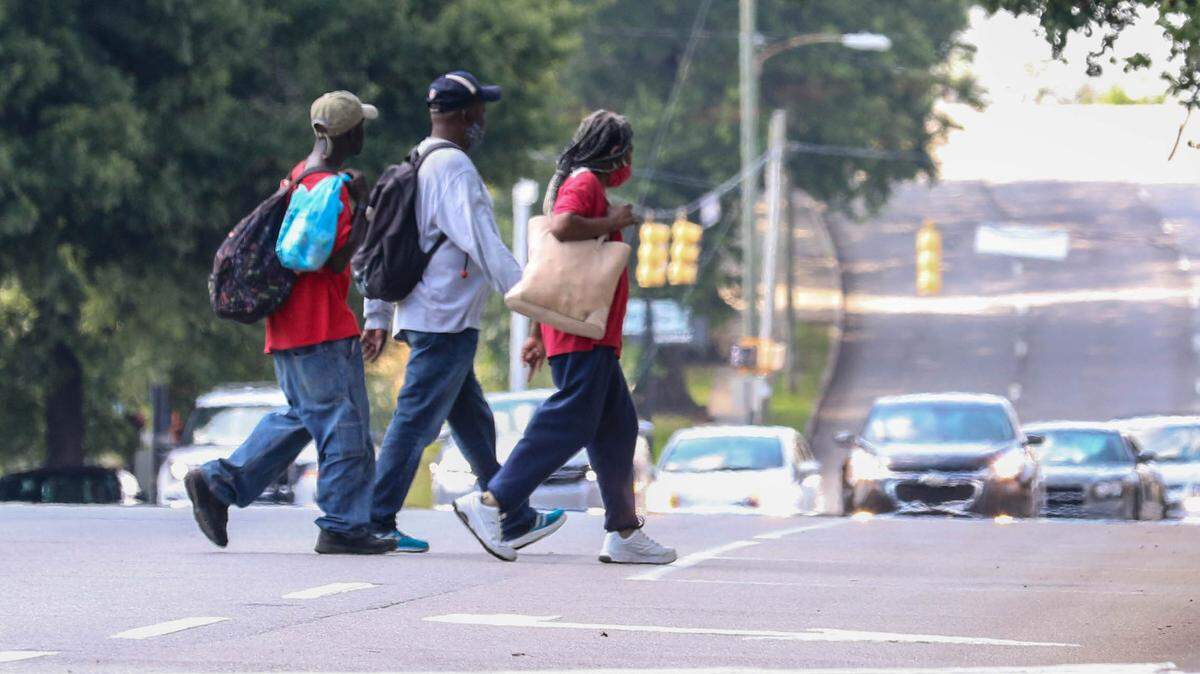
Years after the city of Columbia formed a special committee tasked with addressing the city’s unhoused population, Columbia has dolled out more than $160,000 to a third party, out-of-state consultant for help.
The move comes after years of tension between the city and nonprofits tasked with helping Columbia’s unhoused population and is one that city officials hope will give them an unbiased look at possible solutions.
“I don’t think that the community would 100% receive [our] recommendations,” Kameisha Heppard, director of Columbia’s homeless services, told The State in an interview. “Let’s say, the mayor says to Kameisha, ‘Okay, you’ve been here for the past three years, now give us your assessment’ ... I’ve been doing this long enough to know that the community wouldn’t fully engage with it. They would still [think] the assessment is biased because I work for the city.”
Columbia city council voted December to enter into an eight-month, $168,000 contract with Health Management Associates, a Michigan-based consulting firm. Heppard said she thinks the city made the right decision in getting an outside perspective.
City officials, like Columbia’s Mayor Daniel Rickenmann, contend that providers of homelessness support services have been territorial and unwilling to work with each other or the city, while nonprofit leaders contend the city hasn’t included them.
“What you’re basically telling us is that those of us who are doing the work that you are bringing someone in from Michigan to tell us how to do the work,” said Lila Anna Sauls, the CEO of Homeless No More.
‘Y’all are wasting money again’
Three years ago, in the spring of 2022, the city formed a task force with the purpose of addressing the city’s homelessness problem. At the time, the Columbia police department had identified around 200-250 unsheltered people, according to one of the task force’s agendas. That number doesn’t include the total number of people experiencing homeless who weren’t actively living on the street.
At least 837 people are considered homeless across Richland by federal definitions, according to a 2025 count of those individuals. The annual count of an area’s homeless, called the point in time count, is also almost always considered an undercount by experts because it’s just a snapshot taken one day each year, The State previously reported.
At the time, the city circled a lack of resources for the unhoused population after 5 p.m. and on weekends as a problem to address. Three years later, the city hired the Michigan-based firm to help them identify those same gaps. City officials have said this time is different, but expressed fear in council discussions about the amount of time and effort its taken to not find a viable solution.
“I’m not sure that rehashing a lot of information that everybody already knows, I already can hear one of the neighborhoods screaming in my ear, ‘Y’all are wasting money again,’” Rickenmann said during a February council work session.
Other council members agreed that while the city didn’t want to pay a consultant to tell them what problems they already knew existed, the previous taskforce could be a useful jumping off point.
“We’ve had this conversation for decades. There’s been blue ribbon panels, committees, I think having some of the lessons learned of what has not worked would be helpful,” councilman Sam Johnson said at the February meeting.
What did the last task force accomplish?
The task force, chaired by former councilwoman Aditi Bussells, identified 100 providers of services and $40 million spent towards dealing with the problem. The new consultant, officials have said, is meant to help identify where the gaps between those providers are and give a roadmap for addressing them.
“Clearly it’s not a money issue, it’s a priority issue ... I think it made people realize that there’s a lot of redundancy out there as well,” Rickenmann said in an interview with reporters. “What I didn’t want to happen is for this consultant to come in and tell us what we already know ... we don’t need to know that we’ve got an unsheltered problem, that there are not enough beds. We know that, that’s not our issue.”
Heppard, whose role with the city was created by the task force, said the 2022 group helped provide her with a roadmap for what the city’s priorities were as it related to the unhoused population.
She highlighted things like creating a homeless services division and adding 50 available beds as some of the group’s accomplishments and said other goals like figuring out how to address “silos” between providers were still in progress. Rickenmann told reporters that he sees redundancies, meaning some providers are doing the same things while other services go unperformed leaving gaps overall.
Sauls, of Homeless No More, said she disagreed with that narrative.
“This idea that we’re not working together is not accurate because none of us have enough money or staff or capacity to do all of it and very few of us duplicate efforts ... I don’t know what duplication of services they’re talking about,” Sauls, of Homeless No More, told The State.
The city failed to properly include providers during the last iteration of the task force, said Sue Berkowitz, the founder of SC Appleseed, a Columbia-based nonprofit that provides legal assistance to, and advocates for, low-income South Carolinians. She questioned the purpose of bringing in a third party consultant.
“The one thing that I have learned from doing this work, especially when it’s talking about policies or systems that need to be addressed, I may think that I have a great idea, but if I don’t talk to the people who are living it, then shame on me,” Berkowitz said. “There’s no bigger expert than the folks that are living this.”
What will the city get from the consulting firm?
In a Feb. 3 council meeting, the company presented a plan to the city which outlined a roughly eight month span in which Health Management Associates would conduct 10 interviews, hold six focus groups, employ a community survey and hold a town hall meeting.
The idea, Heppard explained, is that the city would walk away with a better picture of how to address the issues. The company would complete what it calls a “comprehensive needs assessment” and produce a final report to city council.
“Things we’re going to be looking for is, what’s working, what’s not working and what’s missing and what can be enhanced,” Trish Marsik, a principal at Health Management Associates, told city council in February.
Reporter Morgan Hughes contributed to this story.