From ‘no-man’s land’ to park? Columbia gives first look at riverfront designers
For the first time since Columbia launched its push to build a major new riverfront park along the Congaree River, residents this week got to hear from the people designing it.
Nearly 200 people Wednesday packed the Senate’s End wedding venue, where on a normal day happy couples pose against a green, wooded backdrop at the very edge of the riverfront land Columbia hopes to transform.
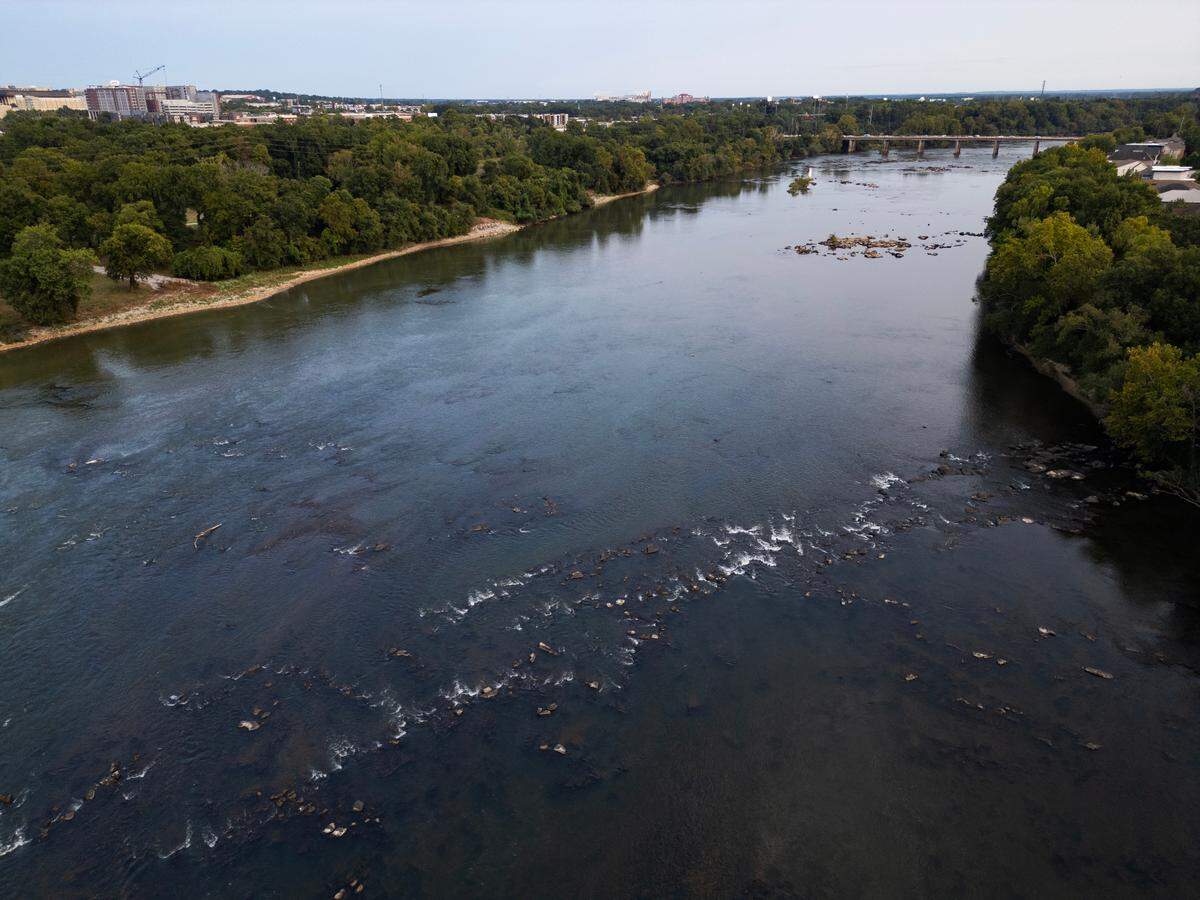
The property, which spans from Senate Street to Founder’s Park baseball stadium, has been mostly untouched for generations. It’s been privately owned and difficult to get to through heavy vegetation and few entry-points. City leaders over the years have envisioned parks and trails on the site. But now, there’s real momentum.
In December, Columbia leaders signed a $1.7 million contract with New York City-based design firm Field Operations to create a master plan for a park, trail connections and a framework for future private development nearby.
The firm has worked on major projects across the U.S., including Manhattan’s High Line, park built atop a former elevated rail line, and upgrades to Chicago’s Navy Pier.
Designers with the firm opened the Wednesday meeting by calling Columbia’s site “one of the largest urban waterfront opportunities in the southeast,” standing at nearly 100 acres on land mostly untouched since Columbia’s inception.
“I wonder how many of you, in your mental map that you have of your community and city, think of this site as kind of a black hole, or no-man’s land?” asked Field Operations partner Sarah Astheimer of the crowd.
The waterfront project, she said, is a chance to reconnect the river’s edge to downtown, and to complete a missing link in the Three Rivers Greenway.
What the riverfront becomes will be shaped by residents’ feedback, the realities of building on a flood-prone site, and city leaders’ push for additional private development nearby, potentially including hotels, apartments, shops and restaurants.
Residents: Keep it green, keep it accessible
Around the venue Wednesday hung posters asking things like, “What do you want to do in the future riverfront park?” and “Which park themes resonate with you the most?”
As residents moved between comment boards, a few themes emerged: protect the natural landscape, keep things green, but make it easier to get to the water and to do things near it.
Boardwalks, meadow trails, restored creek banks, recreation space, park pavilions and nearby dining were among the popular ideas listed on a large poster where residents were asked to place a sticker if they agreed.
Rosie Craig, a founder of the Vista arts district, said she was “beyond excited they’ve hired this level of talent,” pointing to Field Operations’ resume. For the design, she said protecting trees, greenspace and “embracing the natural world” should be the priority.
Fellow Vista founder and local artist Clark Ellefson echoed that point. Ellefson’s Lewis + Clark studio is a stone’s throw from Senate’s End.
Ellefson also expressed excitement for the project and that he thinks it will be a boon to the Vista as a whole. But he hopes the project emphasizes greenspace.
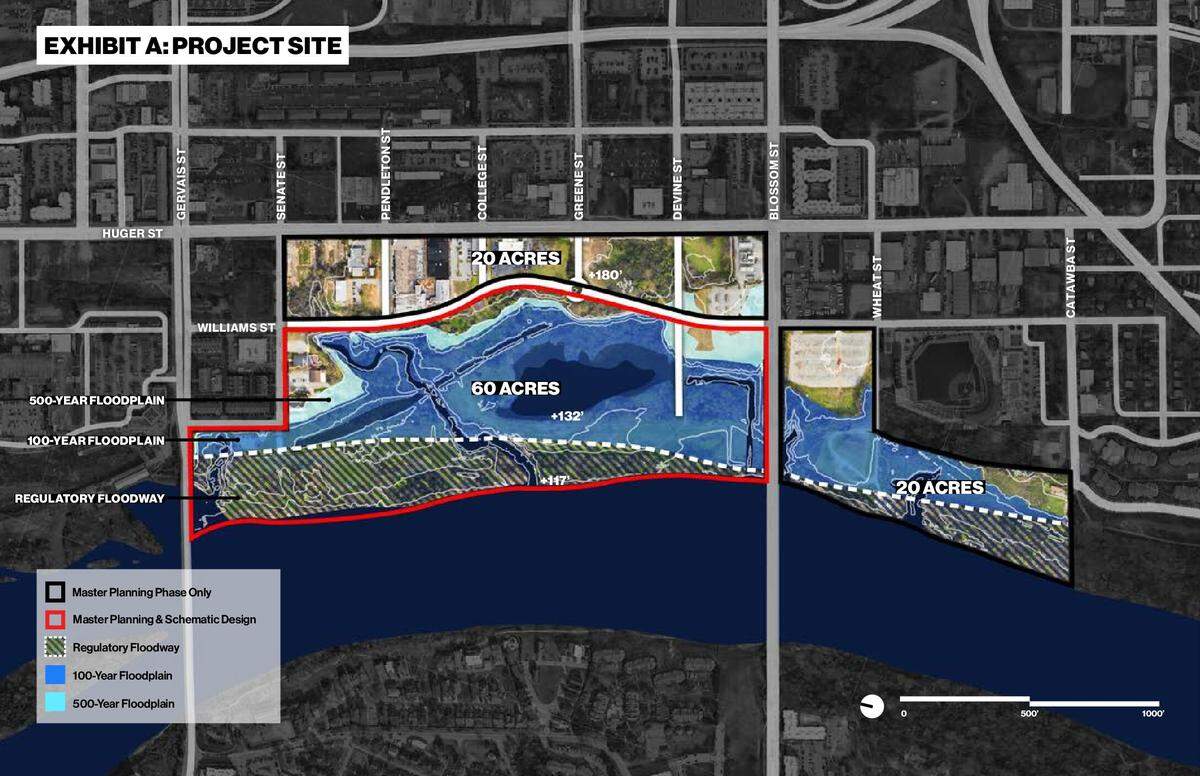
Between his studio and the future park, the city is also building a new road. That project will connect Williams Street between Senate and Blossom streets, creating more access to the river site and more space for future development. But it will also mean traffic where there’s never been any before.
“We’re kind of a hidden valley back here,” he said. “I wouldn’t want to see a Finlay Park down here.”
One factor limiting what can be built on the site is that much of the property sits in a floodplain. The land has been underwater in recent history, including after Hurricane Helene and during the historic 2015 flood.
Astheimer in her presentation said the flood-prone landscape, as well as existing wetlands, a creek, and utilities crossing the property, will dictate what can realistically be built close to the water.
Congaree Riverkeeper Bill Stangler, an advocate for river conservation, said his biggest concern is turning that floodplain into a hard, impermeable surface.
“What I don’t want to see is aggressive hardscaping, a lot of concrete.” Stangler said. He’s been involved in conversations with the designers, including a roundtable with others in conservation and development to help guide the direction of the project.
Tourism boon
Michael Mayo makes his living on the water. His Palmetto Outdoor Center leads guided canoe trips through Congaree National Park, and tubing expeditions down the Saluda and Congaree rivers.
“It’s been a lifetime coming,” he said of Columbia’s riverfront plans.
The majority of his clients are from out of state, and he’s seen more than one person take a trip down the river and decide they never want to leave. Columbia’s plans could create unprecedented access to the water. That wouldn’t only boost tourism, it would put Columbia on the map for an entire industry, Mayo said.
“We want to see [river] access like they build Burger Kings and McDonald’s right across from one another,” he said. “It’s going to be a world-class tourist attraction.”
Columbia City Manager Teresa Wilson, too, said she thinks the riverfront plans could ripple beyond even the Midlands.
Though the scope and cost of the project remain open questions. Wilson estimated the project cost as “easily” over $100 million.
City leaders are hoping to get money from the state budget to help pay for the project, though right now it’s just talk.
Wilson said they are in the process of “actively educating our legislators on the project,” and that she feels “it’s our time” for Columbia to receive a high-level investment from the state.
Astheimer told residents that her team and the other firms working on the project would return to the public in late July, “and soon thereafter” finish the master plan. That plan will sketch out the park site, but it will also envision how the park “can and will be a catalyst” for future development, she said.
She hinted that construction could begin as early as next year.
“Could we begin breaking ground in 2027? I don’t know. Maybe,” she said.
This story was originally published April 3, 2026 at 7:00 AM.